Kirjojen hintavertailu. Mukana 12 390 323 kirjaa ja 12 kauppaa.

Kirjailija

Brian Roffel

Kirjat ja teokset yhdessä paikassa: 6 kirjaa, julkaisuja vuosilta 2003-2019, suosituimpien joukossa Advanced Practical Process Control. Vertaile teosten hintoja ja tarkista saatavuus suomalaisista kirjakaupoista.

6 kirjaa

Kirjojen julkaisuhaarukka 2003-2019.

Computer Control in the Process Industries

Computer Control in the Process Industries

Brian Roffel; Patrick Chin

CRC Press
2019
nidottu
Techniques such as dead time compensation, adaptive control and Kalman filtering have been around for some time, but as yet find little application in industry. This book tries to promote the use of advanced control techniques by taking the reader from basic theory to practical implementation. It is therefore of interest to practicing control engineers in various types of industries, especially the process industry. Graduate and undergraduate students in control engineering will also find the book extremely useful since many practical details are given which are usually omitted in books on control engineering.
Computer Control in the Process Industries

Computer Control in the Process Industries

Brian Roffel; Patrick Chin

CRC Press
2017
sidottu
Techniques such as dead time compensation, adaptive control and Kalman filtering have been around for some time, but as yet find little application in industry. This is due to several reasons, including: Articles in the literature usually assume that the reader is familiar with a specific topic and are therefore often difficult for the practicing control engineer to comprehend. Many practicing control engineers in the process industry have a chemical engineering background and did not receive a control engineering education. There is a wide gap between theory and practical implementation, since implementation is primarily concerned with robustness, and theory is not. The user therefore has to build an "expert shell" in order to achieve the desired robustness. Little is published on this issue, however.This book tries to promote the use of advanced control techniques by taking the reader from basic theory to practical implementation. It is therefore of interest to practicing control engineers in various types of industries, especially the process industry. Graduate and undergraduate students in control engineering will also find the book extremely useful since many practical details are given which are usually omitted in books on control engineering.Of special interest are the simulation examples, illustrating the application of various control techniques. The examples are available on a 5-1/4" floppy disk and can be used by anyone who has access to LOTUS 1-2-3. Chapter 1 is the introduction; Chapters 2 through 6 deal with distributed control system networks, computer system software, computer system selection, reliability and security, and batch and continuous control. Chapter 7 gives and introduction to advanced control. Chapters 8 through 11 deal with dead time compensation techniques and model identification. Chapters 12 through 14 discuss constraint control and design, and the adjustment and application of simple process models and optimization. Chapter 15 gives a thorough introduction to adaptive control, and the last two chapters deal with state and parameter estimation.This book is a valuable tool for everyone who realizes the importance of advanced control in achieving improved plant performance. It will take the reader from theory to practical implementation.
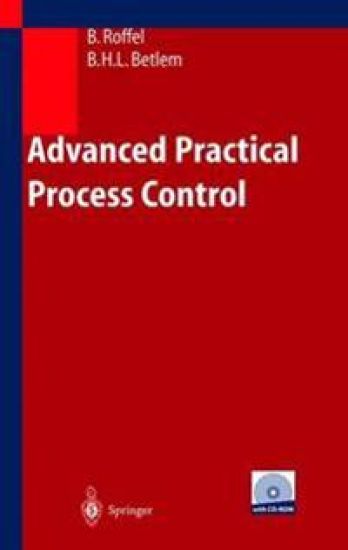
Advanced Practical Process Control

Advanced Practical Process Control

Brian Roffel; Ben Betlem

Springer-Verlag Berlin and Heidelberg GmbH Co. K
2013
nidottu
In the process industries there is an ongoing need for improvement of the opera­ tion of the process. One of the disciplines that will help the process engineer to achieve this is process control. There are many industrial automation systems to­ day that will offer powerful tools to meet the process control needs of industries with continuous, batch and discrete operations. Advanced control solutions sustain and improve the plant's competitiveness by ensuring: - safe operations - compliance with environmental regulations - effective use ofraw materials and energy - efficient production - manufacturing ofhigh quality products - flexible accommodation ofchanging process requirements This book was written from the perspective of introducing advanced control con­ cepts, which can help the engineer to reach the aforementioned goals. Many ad­ vanced control techniques have been implemented in industry in recent years, since hardware and software platforms are becoming increasingly powerful. Manufacturers ofprocess control equipment call this hardware and software envi­ ronment generally 'distributed control system'. The distributed control system equipment offers the engineer an excellent plat­ form for writing and implementing advanced control solutions. However, most large chemical and petrochemical manufacturers hire control specialists to imple­ ment these control solutions, while small manufacturers often lack the funds to hire these professionals. Therefore it is our experience that in the latter case, proc­ ess engineers often write the control programs required to improve process opera­ tion.
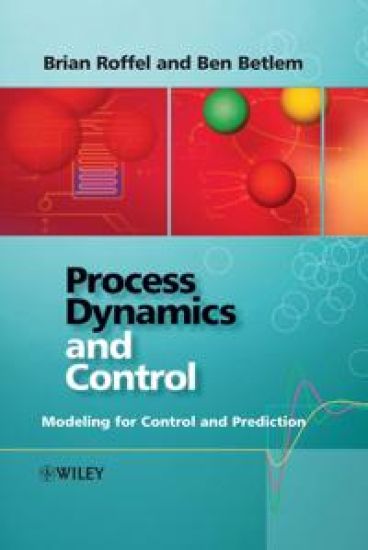
Process Dynamics and Control

Process Dynamics and Control

Brian Roffel; Ben Betlem

John Wiley Sons Inc
2006
sidottu
Offering a different approach to other textbooks in the area, this book is a comprehensive introduction to the subject divided in three broad parts. The first part deals with building physical models, the second part with developing empirical models and the final part discusses developing process control solutions. Theory is discussed where needed to ensure students have a full understanding of key techniques that are used to solve a modeling problem. Hallmark Features: Includes worked out examples of processes where the theory learned early on in the text can be applied.Uses MATLAB simulation examples of all processes and modeling techniques- further information on MATLAB can be obtained from www.mathworks.comIncludes supplementary website to include further references, worked examples and figures from the book This book is structured and aimed at upper level undergraduate students within chemical engineering and other engineering disciplines looking for a comprehensive introduction to the subject. It is also of use to practitioners of process control where the integrated approach of physical and empirical modeling is particularly valuable.
Process Dynamics and Control

Process Dynamics and Control

Brian Roffel; Ben Betlem

John Wiley Sons Inc
2006
nidottu
Offering a different approach to other textbooks in the area, this book is a comprehensive introduction to the subject divided in three broad parts. The first part deals with building physical models, the second part with developing empirical models and the final part discusses developing process control solutions. Theory is discussed where needed to ensure students have a full understanding of key techniques that are used to solve a modeling problem. Hallmark Features: Includes worked out examples of processes where the theory learned early on in the text can be applied.Uses MATLAB simulation examples of all processes and modeling techniques- further information on MATLAB can be obtained from www.mathworks.comIncludes supplementary website to include further references, worked examples and figures from the book This book is structured and aimed at upper level undergraduate students within chemical engineering and other engineering disciplines looking for a comprehensive introduction to the subject. It is also of use to practitioners of process control where the integrated approach of physical and empirical modeling is particularly valuable.
Advanced Practical Process Control

Advanced Practical Process Control

Brian Roffel; Ben Betlem

Springer-Verlag Berlin and Heidelberg GmbH Co. K
2003
sidottu
In the process industries there is an ongoing need for improvement of the opera­ tion of the process. One of the disciplines that will help the process engineer to achieve this is process control. There are many industrial automation systems to­ day that will offer powerful tools to meet the process control needs of industries with continuous, batch and discrete operations. Advanced control solutions sustain and improve the plant's competitiveness by ensuring: - safe operations - compliance with environmental regulations - effective use ofraw materials and energy - efficient production - manufacturing ofhigh quality products - flexible accommodation ofchanging process requirements This book was written from the perspective of introducing advanced control con­ cepts, which can help the engineer to reach the aforementioned goals. Many ad­ vanced control techniques have been implemented in industry in recent years, since hardware and software platforms are becoming increasingly powerful. Manufacturers ofprocess control equipment call this hardware and software envi­ ronment generally 'distributed control system'. The distributed control system equipment offers the engineer an excellent plat­ form for writing and implementing advanced control solutions. However, most large chemical and petrochemical manufacturers hire control specialists to imple­ ment these control solutions, while small manufacturers often lack the funds to hire these professionals. Therefore it is our experience that in the latter case, proc­ ess engineers often write the control programs required to improve process opera­ tion.