

Kirjailija
Brian Thorne
Kirjat ja teokset yhdessä paikassa: 17 kirjaa, julkaisuja vuosilta 1991-2022, suosituimpien joukossa Anger Management. Vertaile teosten hintoja ja tarkista saatavuus suomalaisista kirjakaupoista.
17 kirjaa
Kirjojen julkaisuhaarukka 1991-2022.


Person-Centred Counselling in Action
Dave Mearns; Brian Thorne; John McLeod
SAGE Publications Ltd
2013
sidottu
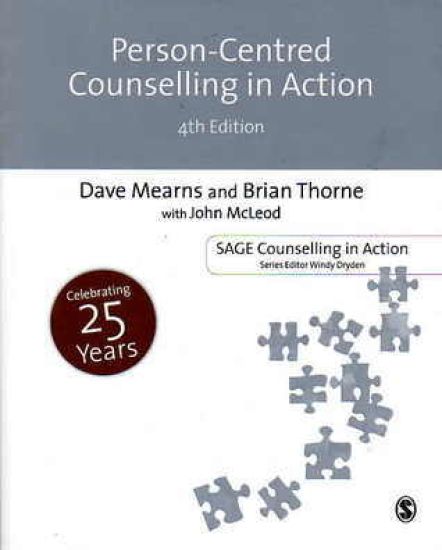
Audio book out now. It is now 25 years since the first edition of Person-Centred Counselling in Action appeared, offering the definitive exposition of the theory and practice of the person-centred approach. Since then the book has supported and inspired hundreds of thousands of trainees and practitioners worldwide. This important Fourth Edition maintains the book's accessibility, clarity and verve whilst incorporating new developments in the approach. John McLeod joins authors Dave Mearns and Brian Thorne to contribute an exciting new chapter on research relevant to the person-centred field. Person-Centred Counselling in Action, Fourth Edition will be an invaluable resource for those embarking on their first stages of training. Well-established practitioners and even seasoned scholars will continue to find much to interest and stimulate them. Dave Mearns is professor of counselling and retired Director of the Counselling Unit of the University of Strathclyde. He has written seven books including Working at Relational Depth in Counselling and Psychotherapy (with Mick Cooper) and is co-editor of the international journal, Person-Centered and Experiential Psychotherapies. Brian Thorne is Emeritus Professor of Counselling at the University of East Anglia, Norwich where he was previously Director of Counselling and of the Centre for Counselling Studies. He is also a Co-founder of the Norwich Centre and continues to work there as a Professional Fellow. John McLeod is Emeritus Professor of Counselling at the University of Abertay Dundee and adjunct Professor of Psychology at the University of Oslo, Norway.
Person-Centred Counselling in Action
Dave Mearns; Brian Thorne; John McLeod
SAGE Publications Ltd
2013
nidottu
Audio book out now. It is now 25 years since the first edition of Person-Centred Counselling in Action appeared, offering the definitive exposition of the theory and practice of the person-centred approach. Since then the book has supported and inspired hundreds of thousands of trainees and practitioners worldwide. This important Fourth Edition maintains the book's accessibility, clarity and verve whilst incorporating new developments in the approach. John McLeod joins authors Dave Mearns and Brian Thorne to contribute an exciting new chapter on research relevant to the person-centred field. Person-Centred Counselling in Action, Fourth Edition will be an invaluable resource for those embarking on their first stages of training. Well-established practitioners and even seasoned scholars will continue to find much to interest and stimulate them. Dave Mearns is professor of counselling and retired Director of the Counselling Unit of the University of Strathclyde. He has written seven books including Working at Relational Depth in Counselling and Psychotherapy (with Mick Cooper) and is co-editor of the international journal, Person-Centered and Experiential Psychotherapies. Brian Thorne is Emeritus Professor of Counselling at the University of East Anglia, Norwich where he was previously Director of Counselling and of the Centre for Counselling Studies. He is also a Co-founder of the Norwich Centre and continues to work there as a Professional Fellow. John McLeod is Emeritus Professor of Counselling at the University of Abertay Dundee and adjunct Professor of Psychology at the University of Oslo, Norway.
Brian Thorne relays powerful insights into the passionate commitment of a bridge-builder between the worlds of counselling and psychotherapy and mystical theology.

As founder of the person-centred approach, Carl Rogers (1902-1987) is arguably the most influential psychologist and psychotherapist of the 20th century. This book provides unique insights into his life and a clear explanation of his major theoretical ideas. This Third Edition is co-authored by Brian Thorne and Pete Sanders, leading person-centred practitioners and bestselling authors. Pete Sanders contributes a new chapter on "The Ongoing Influence of Carl Rogers", covering topics such as research, the emerging tribes in person-centred tradition, and its interaction with the medical profession. Brian Thorne draws on his experience of having known and worked with Rogers to beautifully describe the way in which Rogers worked with clients and from that, to draw out the practical implications of what is, in effect, a functional philosophy of human growth and relationships. In the twenty years since the first edition of Carl Rogers appeared, the book has continued to provide an accessible introduction for all practitioners and students of the person-centred approach.
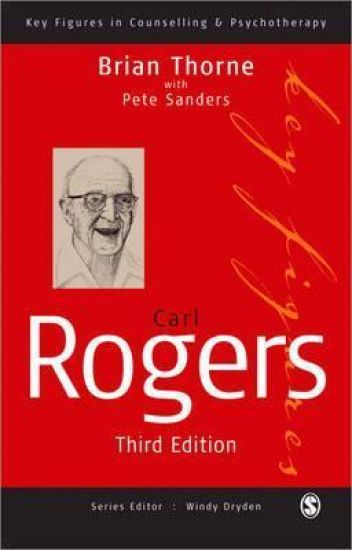
As founder of the person-centred approach, Carl Rogers (1902-1987) is arguably the most influential psychologist and psychotherapist of the 20th century. This book provides unique insights into his life and a clear explanation of his major theoretical ideas. This Third Edition is co-authored by Brian Thorne and Pete Sanders, leading person-centred practitioners and bestselling authors. Pete Sanders contributes a new chapter on "The Ongoing Influence of Carl Rogers", covering topics such as research, the emerging tribes in person-centred tradition, and its interaction with the medical profession. Brian Thorne draws on his experience of having known and worked with Rogers to beautifully describe the way in which Rogers worked with clients and from that, to draw out the practical implications of what is, in effect, a functional philosophy of human growth and relationships. In the twenty years since the first edition of Carl Rogers appeared, the book has continued to provide an accessible introduction for all practitioners and students of the person-centred approach.
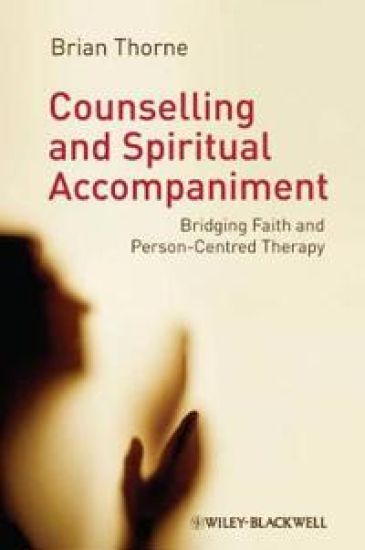
Counselling and Spiritual Accompaniment presents the key spiritually-focused writings of Brian Thorne, one of the most influential thinkers on the convergence of spirituality with counselling, along with new material reflecting his recent work in spiritual accompaniment. Reflects the increasing focus on spiritual issues as an essential part of therapyRepresents the culmination of an intellectual quest, undertaken by the most senior figure in the field, to integrate spirituality with counselling and the person-centred approachFeatures chapters that span thirty years of work, along with new writings that bring readers up to date with the author's most recent work in spiritual accompanimentAn invaluable guide for counsellors and therapists who acknowledge the importance of spirituality to their clients, but doubt their abilities to help in this area
Counselling and Spiritual Accompaniment presents the key spiritually-focused writings of Brian Thorne, one of the most influential thinkers on the convergence of spirituality with counselling, along with new material reflecting his recent work in spiritual accompaniment. Reflects the increasing focus on spiritual issues as an essential part of therapyRepresents the culmination of an intellectual quest, undertaken by the most senior figure in the field, to integrate spirituality with counselling and the person-centred approachFeatures chapters that span thirty years of work, along with new writings that bring readers up to date with the author's most recent work in spiritual accompanimentAn invaluable guide for counsellors and therapists who acknowledge the importance of spirituality to their clients, but doubt their abilities to help in this area
Person-Centred Counselling for People with Dementia
Danuta Lipinska; Brian Thorne
Jessica Kingsley Publishers
2009
pokkari
Although currently many people with dementia are not given the opportunity to receive professional counselling, this book explores the value of counselling for men and women living with this condition and how it enables them to make sense of their lives and their notions of themselves. The author explores the pervasive myth that all experiences of living with dementia are entirely negative and shows counsellors and carers how a person-centred counselling experience can have positive outcomes for those with dementia and the people who care for them.Based on the author's own experiences of counselling people with dementia, the book covers the fundamentals of the counselling process and precisely what a person-centred approach entails. The book then brings together several theories of counselling such as the role of the 'spiritual' in the counselling relationship; working with concepts of relational depth and configurations of Self; and the author's own theories of relating to a person's spiritual core. Accumulating findings from over 20 years of counselling experience in both the UK and the US, this book explores the importance of the Self and recognising each individual's worth and value. Dialogue from the author's counselling experiences is used to illustrate the person-centred counselling approach.Providing a comprehensive guide to person-centred counselling for people with dementia, this book gives an illuminating perspective on the subject and will be of value to counsellors, health and social care professionals, carers, people with dementia and their families.
This accessible book comprises a collection of 80 tried-and-tested exercises, with guidelines for applying them and advice for devising new ones. Liesl Silverstone offers a variety of exercises for a diverse and multicultural client base, such as guided fantasies, one-to-one and group work focusing on the group dynamic, and some examples of working with adults with learning difficulties and children.Focusing on the non-directive, non-interpretive person-centred approach to art therapy, this inspirational book is the perfect complement to Art Therapy – The Person-Centred Way, also by Liesl Silverstone and published by Jessica Kingsley Publishers.Art Therapy Exercises is an invaluable book for art therapists and art therapy students, counsellors, psychotherapists and all professionals working in the field of human development.

Prayer in Counselling and Psychotherapy
Peter Madsen Gubi; Brian Thorne
Jessica Kingsley Publishers
2007
pokkari
Peter Gubi's book, the fruit of both his own extensive research and a detailed study of the available literature, explores in depth the way prayer is, and could be, used in counselling and psychotherapy.This book would provide excellent material for a group of counsellors to share and reflect on. Gubi's book is a fine guide to anyone ready to seriously explore these issues.'- Thresholds'... [A] challenge to all therapists to examine their own presuppositions and prejudices and to discover, in so doing, an enhanced flexibility without losing their integrity. It is not recommended reading for those settled in their ways or unwilling to acknowledge their own spiritual yearnings or their lack of courage in the face of another's spirituality. Prayer can be a tough discipline and Peter Gubi demonstrates that its incorporation into the work of the therapist requires no little courage and a willingness to explore afresh what constitutes ethical behaviour as opposed to following the rule book.'- from the foreword by Brian Thorne, Professor Emeritus, University of East Anglia, and Honorary Lay Canon, Norwich CathedralWithin mainstream counselling and psychotherapy there is growing interest in the spiritual dimension of counselling. Prayer is at the centre of most spirituality and prayer is important to many people's psychological well-being.Peter Madsen Gubi argues that philosophically, all counselling can be regarded as prayer, particularly when working at relational depth; that prayer plays an important part in maintaining many mainstream counsellors' well-being and, with caution and considered ethical awareness, prayer can be integrated ethically into counselling when working with people of faith. The use of prayer in counselling is not the antithesis of counselling as some have argued, but can be identified with many accepted therapeutic practices.Grounded in his doctoral research among mainstream counsellors whose work includes prayer, this book encourages counselling and psychotherapy practitioners, and those with an interest in the welfare of others, to consider carefully the ethical place of prayer in counselling.
Brian Thorne?s latest book is likely to cause something of a furore in the counselling and psychotherapy world and more particularly among person-centred practitioners and pastoral counsellors. ?The Mystical Power of Person-Centred Therapy? takes the later work of Carl Rogers with the utmost seriousness and, as a result, moves into unexpected and perhaps, for some, dangerously controversial terrain. Rogers discovered towards the end of his life that he had greatly underestimated both the mystical quality of the therapeutic process and the power of the person-centred approach to give access to the spiritual dimension of experience. Professor Thorne takes this concept further and explores the implications of regarding person-centred therapy as an essentially spiritual discipline. The outcome is a book which not only provides new and startling challenges for therapists of all orientations but also suggests that the person-centred way of being may have a major contribution to make to the resolution of some of humanity?s seemingly intractable problems. It should appeal not only to therapists but also to clergy and all those concerned with the spiritual evolution of humanity. In the light of the events of September 11th 2001 and their aftermath such a book could not come at a more opportune time.
`This is a book that is rooted in the origins of person-centred therapy but stands at the cutting edge of new ideas developing in this tradition. It will reinvigorate those of us already immersed in this tradition. It should convince newcomers of the vitality and potential of this approach to therapy' - Tim Bond, University of Bristol `This book is clearly a labour of love by two authors with unique abilities and unparalleled experience: readers will be educated, inspired and encouraged in their own dialogue with the person-centred approach'- Charles J O'Leary, Denver, Colorado `Mearns and Thorne have done Rogers proud in suggesting how person-centred theory and practice can, without losing its essence, evolve in new directions' - Richard Nelson-Jones, Director of the Humanistic Cognitive Institute, Chiang Mai Person-Centred Therapy Today represents a significant contribution to the development of the person-centred approach. It will be read by teachers and students of counselling and psychology who wish to keep their knowledge of the approach fully up to date and by all who consider themselves to be person-centred in their approach to helping clients.
`This is a book that is rooted in the origins of person-centred therapy but stands at the cutting edge of new ideas developing in this tradition. It will reinvigorate those of us already immersed in this tradition. It should convince newcomers of the vitality and potential of this approach to therapy' - Tim Bond, University of Bristol `This book is clearly a labour of love by two authors with unique abilities and unparalleled experience: readers will be educated, inspired and encouraged in their own dialogue with the person-centred approach'- Charles J O'Leary, Denver, Colorado `Mearns and Thorne have done Rogers proud in suggesting how person-centred theory and practice can, without losing its essence, evolve in new directions' - Richard Nelson-Jones, Director of the Humanistic Cognitive Institute, Chiang Mai Person-Centred Therapy Today represents a significant contribution to the development of the person-centred approach. It will be read by teachers and students of counselling and psychology who wish to keep their knowledge of the approach fully up to date and by all who consider themselves to be person-centred in their approach to helping clients.

This second volume of Brian Thorne's collected works, shows convincingly that the spiritual needs and yearnings of many clients presenting themselves to secular counsellors can no longer be ignored, trivialised or pathologised. The book constitutes an impassioned plea both to person-centred therapists to acknowledge the centrality of spiritual issues for many of their clients and also to Christians to embrace the richness of their spiritual tradition without becoming entangled in the death-dealing complexity of religious and institutional power-mongering.

This book draws together chapters, articles and lectures from some twelve years of Brian Thorne?s professional life as a person-centred therapist.