Kirjojen hintavertailu. Mukana 12 255 149 kirjaa ja 12 kauppaa.

Kirjailija

Brian W. Dippie

Kirjat ja teokset yhdessä paikassa: 5 kirjaa, julkaisuja vuosilta 1991-2018, suosituimpien joukossa Art of the West. Vertaile teosten hintoja ja tarkista saatavuus suomalaisista kirjakaupoista.

5 kirjaa

Kirjojen julkaisuhaarukka 1991-2018.

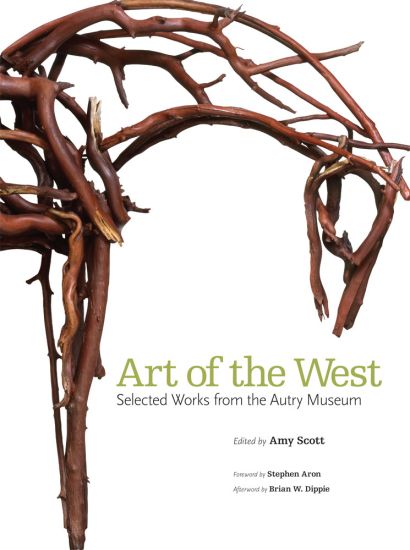
Art of the West

Art of the West

Amy Scott; Stephen Aron; Brian W. Dippie

University of Oklahoma Press
2018
nidottu
Since its founding in 1988, the Autry Museum of the American West has expanded its vision and its collections in profound ways. From its original focus on the history, art, and popular culture inspired by the West and its attendant myths, the museum - located in the heart of Los Angeles - has evolved to embrace a more inclusive, complex, and contemporary approach to the American West. Featuring more than 150 color images, this volume highlights the museum's Art of the West exhibit. Alongside these celebrated works of art, Art of the West showcases essays by prominent scholars and art historians who address various topics, ranging from motorcycles to beadwork and photography. Essays devoted to women's art, Native American art, and Chicano photography are important correctives to more traditional and linear models of western art history, with its emphasis on rugged masculinity, Anglo-American pioneers, and the myth of an ""untamed"" frontier. As Autry Museum curator Amy Scott explains in her introduction, there is not one West; instead, many Wests, comprising diverse collections of places and peoples, form a ""complex tapestry of ethnic mixing and geopolitical spaces, diaspora, immigration, industry, infrastructure, tourism, and environmental degradation."" By addressing such provocative themes, Art of the West challenges us to look beyond surface appearances, superficial caricatures, and cultural assumptions. The American West emerges as a dynamic place in which memory informs, but does not determine, the present.
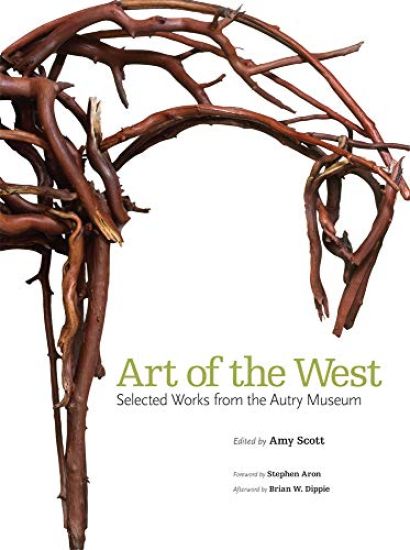
Art of the West

Art of the West

Amy Scott; Stephen Aron; Brian W. Dippie

University of Oklahoma Press
2018
sidottu
Since its founding in 1988, the Autry Museum of the American West has expanded its vision and its collections in profound ways. From its original focus on the history, art, and popular culture inspired by the West and its attendant myths, the museum - located in the heart of Los Angeles - has evolved to embrace a more inclusive, complex, and contemporary approach to the American West. Featuring more than 150 color images, this volume highlights the museum's Art of the West exhibit. Alongside these celebrated works of art, Art of the West showcases essays by prominent scholars and art historians who address various topics, ranging from motorcycles to beadwork and photography. Essays devoted to women's art, Native American art, and Chicano photography are important correctives to more traditional and linear models of western art history, with its emphasis on rugged masculinity, Anglo-American pioneers, and the myth of an ""untamed"" frontier. As Autry Museum curator Amy Scott explains in her introduction, there is not one West; instead, many Wests, comprising diverse collections of places and peoples, form a ""complex tapestry of ethnic mixing and geopolitical spaces, diaspora, immigration, industry, infrastructure, tourism, and environmental degradation."" By addressing such provocative themes, Art of the West challenges us to look beyond surface appearances, superficial caricatures, and cultural assumptions. The American West emerges as a dynamic place in which memory informs, but does not determine, the present.
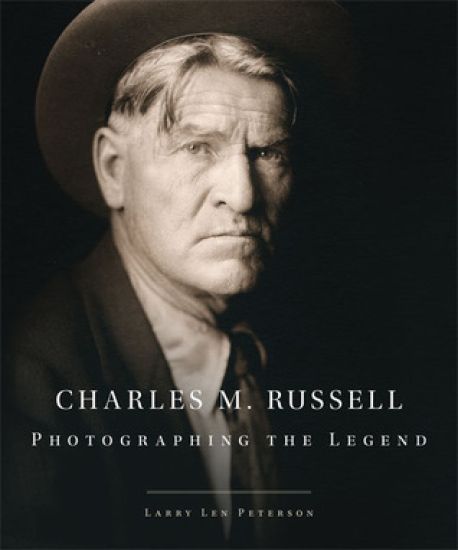
Charles M. Russell

Charles M. Russell

Larry Len Peterson; Brian W. Dippie

University of Oklahoma Press
2014
sidottu
Almost as familiar as the images of the American West he painted and sculpted is the figure of Charles M. Russell himself. Standing or mounted, in boots and wide-brimmed hat, sash knotted at his waist, gaze steady under a hank of unruly hair: he is the one and only ""Cowboy Artist."" What is not so well known is the story that unfolds in the myriad photographs of Russell, pictures that document a remarkable life while also reflecting the evolution of photography and the depiction of the American West at the turn of the twentieth century. This biography makes use of hundreds of images of Russell, many never before published, to explore the role of photography in shaping the artist's public image and the making and selling of his art. More than that, the book shows how the Cowboy Artist personified what he portrayed. Born in 1864 to a well-to-do family in St. Louis, Russell was smitten early on by the burgeoning art of photography and the images of the West that were proliferating as rapidly as the frontier was disappearing. When he moved to Helena at sixteen, his passions came together, as professional and amateur photographers made their way to the Montana Territory to document the cowboy life that Charlie was embracing and beginning to paint. Larry Len Peterson traces Russell's image and his career from these first adventures to his apotheosis as an artist, and then to his California period and his final days as the grand statesman of the American West. Along the way we meet some of the most interesting photographers of the era, as Russell posed for Edward S. Curtis, Roland Reed, Clarence S. Bull, Hildore C. Eklund, and Dorothea Lange, among others. Because Nancy Russell used photographs to promote her artist husband's career and artistic identity, we also see the medium's early application as a marketing tool in the hands of a surprisingly savvy businesswoman. Alongside Peterson's engrossing tale of the life of this American icon, the hundreds of photographs of Russell, his friends, family members, business associates, colleagues, and celebrities of his time offer a unique view of the artist's historic and cultural milieu - a view at once panoramic and intimate.
Custer's Last Stand

Custer's Last Stand

Brian W. Dippie

Bison Books
1994
pokkari
Defeat and death at the Little Bighorn gave General George Custer and his Seventh Cavalry a kind of immortality. In Custer's Last Stand, Brian W. Dippie investigates the body of legend surrounding that battle on a bloody Sunday in 1876. His survey of the event in poems, novels, paintings, movies, jokes, and other ephemera amounts to a unique reflection on the national character.