Kirjojen hintavertailu. Mukana 12 390 323 kirjaa ja 12 kauppaa.

Kirjailija

Bridget D. Arend

Kirjat ja teokset yhdessä paikassa: 4 kirjaa, julkaisuja vuosilta 2012-2025, suosituimpien joukossa Facilitating Seven Ways of Learning. Vertaile teosten hintoja ja tarkista saatavuus suomalaisista kirjakaupoista.

4 kirjaa

Kirjojen julkaisuhaarukka 2012-2025.

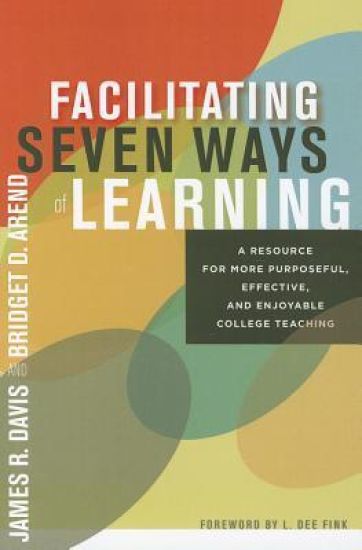
Facilitating Seven Ways of Learning

Facilitating Seven Ways of Learning

Bridget D. Arend; James R. Davis

TAYLOR FRANCIS LTD
2025
nidottu
For busy college faculty who want to catch up on the latest developments in teaching and learning, this book offers an accessible guide to seven key evidence-based strategies for effective instruction.As higher education embraces active learning, online and blended classrooms, and new student expectations, educators are faced with overwhelming choices in teaching methods. How do instructors sort through all the possible options and choose the most appropriate methods for their goals? Streamlining the theoretical background and foundational material of the previous edition, this new iteration allows readers to ground current teaching practices in established theories of learning. Expanded discussion includes applications across classroom modalities, new understandings of culturally responsive teaching practices, and a range of examples across disciplines.With numerous teaching options available, this go-to resource is the ideal companion for any college instructor who wishes to intentionally match the best teaching strategies to their desired learning outcomes, improve student learning, and enjoy teaching.
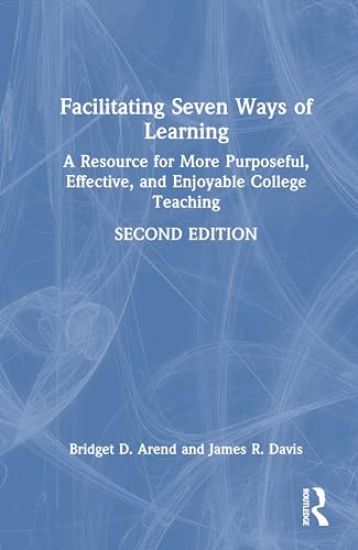
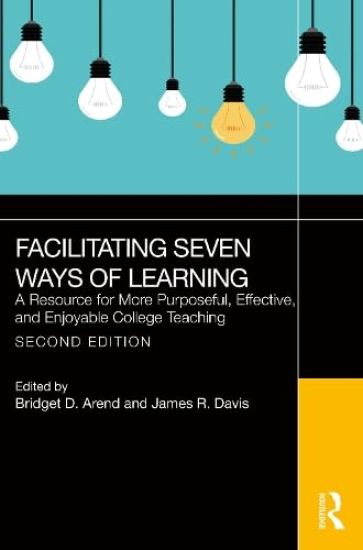
Facilitating Seven Ways of Learning

Facilitating Seven Ways of Learning

Bridget D. Arend; James R. Davis

TAYLOR FRANCIS LTD
2025
sidottu
For busy college faculty who want to catch up on the latest developments in teaching and learning, this book offers an accessible guide to seven key evidence-based strategies for effective instruction.As higher education embraces active learning, online and blended classrooms, and new student expectations, educators are faced with overwhelming choices in teaching methods. How do instructors sort through all the possible options and choose the most appropriate methods for their goals? Streamlining the theoretical background and foundational material of the previous edition, this new iteration allows readers to ground current teaching practices in established theories of learning. Expanded discussion includes applications across classroom modalities, new understandings of culturally responsive teaching practices, and a range of examples across disciplines.With numerous teaching options available, this go-to resource is the ideal companion for any college instructor who wishes to intentionally match the best teaching strategies to their desired learning outcomes, improve student learning, and enjoy teaching.
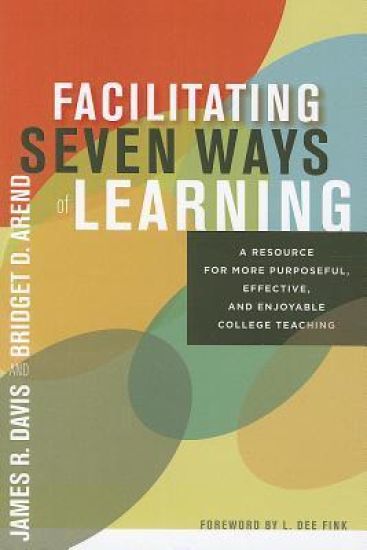
Facilitating Seven Ways of Learning

Facilitating Seven Ways of Learning

James R. Davis; Bridget D. Arend

Stylus Publishing
2012
nidottu
For teachers in higher education who haven’t been able to catch up with developments in teaching and learning, James Davis and Bridget Arend offer an introduction that focuses on seven coherent and proven evidence-based strategies. The underlying rationale is to provide a framework to match teaching goals to distinct ways of learning, based on well-established theories of learning. The authors present approaches that readers can readily and safely experiment with to achieve desired learning outcomes, and build confidence in changing their methods of teaching.Research on learning clearly demonstrates that learning is not one thing, but many. The learning associated with developing a skill is different from the learning associated with understanding and remembering information, which in turn is different from thinking critically and creatively, solving problems, making decisions, or change paradigms in the light of evidence. Differing outcomes involve different ways of learning and teaching strategies.The authors provide the reader with a conceptual approach for selecting appropriate teaching strategies for different types of content, and for achieving specific learning objectives. They demonstrate through examples how a focused and purposeful selection of activities improves student performance, and in the process makes for a more effective and satisfying teaching experience.The core of the book presents a chapter on each of the seven ways of learning. Each chapter offers a full description of the process, illustrates its application with examples from different academic fields and types of institutions, clearly describes the teacher’s facilitation role, and covers assessment and online use.The seven ways of learning are: Behavioral Learning; Cognitive Learning; Learning through Inquiry; Learning with Mental Models; Learning through Groups and Teams; Learning through Virtual Realities; and Experiential Learning.Along the way, the authors provide the reader with a basis for evaluating other approaches to teaching and other learning methodologies so that she or he can confidently go beyond the “seven ways” to adapt or adopt further strategies. This is the ideal companion for teachers who are beginning to explore new ways of teaching, and want to do some serious independent thinking about learning. The book can also be used to prepare graduate students for teaching, and will be welcomed by centers for teaching and learning to help continuing faculty re-examine a particular aspect of their teaching.
Facilitating Seven Ways of Learning

Facilitating Seven Ways of Learning

James R. Davis; Bridget D. Arend

Stylus Publishing
2012
sidottu
For teachers in higher education who haven’t been able to catch up with developments in teaching and learning, James Davis and Bridget Arend offer an introduction that focuses on seven coherent and proven evidence-based strategies. The underlying rationale is to provide a framework to match teaching goals to distinct ways of learning, based on well-established theories of learning. The authors present approaches that readers can readily and safely experiment with to achieve desired learning outcomes, and build confidence in changing their methods of teaching.Research on learning clearly demonstrates that learning is not one thing, but many. The learning associated with developing a skill is different from the learning associated with understanding and remembering information, which in turn is different from thinking critically and creatively, solving problems, making decisions, or change paradigms in the light of evidence. Differing outcomes involve different ways of learning and teaching strategies.The authors provide the reader with a conceptual approach for selecting appropriate teaching strategies for different types of content, and for achieving specific learning objectives. They demonstrate through examples how a focused and purposeful selection of activities improves student performance, and in the process makes for a more effective and satisfying teaching experience.The core of the book presents a chapter on each of the seven ways of learning. Each chapter offers a full description of the process, illustrates its application with examples from different academic fields and types of institutions, clearly describes the teacher’s facilitation role, and covers assessment and online use.The seven ways of learning are: Behavioral Learning; Cognitive Learning; Learning through Inquiry; Learning with Mental Models; Learning through Groups and Teams; Learning through Virtual Realities; and Experiential Learning.Along the way, the authors provide the reader with a basis for evaluating other approaches to teaching and other learning methodologies so that she or he can confidently go beyond the “seven ways” to adapt or adopt further strategies. This is the ideal companion for teachers who are beginning to explore new ways of teaching, and want to do some serious independent thinking about learning. The book can also be used to prepare graduate students for teaching, and will be welcomed by centers for teaching and learning to help continuing faculty re-examine a particular aspect of their teaching.