Kirjojen hintavertailu. Mukana 12 200 108 kirjaa ja 12 kauppaa.

Kirjailija

Bridget Escolme

Kirjat ja teokset yhdessä paikassa: 8 kirjaa, julkaisuja vuosilta 2005-2025, suosituimpien joukossa Shakespeare and Costume in Practice. Vertaile teosten hintoja ja tarkista saatavuus suomalaisista kirjakaupoista.

8 kirjaa

Kirjojen julkaisuhaarukka 2005-2025.

Laughter, power and the unconscious

Laughter, power and the unconscious

Maria Grazia Turri; Bridget Escolme

TAYLOR FRANCIS LTD
2025
sidottu
Laughter, Power, and the Unconscious offers paradigm-breaking insights into the psychological and socio-political dimensions of humour and comedy. Based on an innovative audience experiment at Shakespeare's Globe, the authors develop a revolutionary theory of humour as manic defence, challenging Freud's classic formulations while engaging with contemporary humour theories.The text explores three key domains: first, it establishes and evaluates the theory in comparison to Freud's work in Jokes and their Relation to the Unconscious, while positioning it within major humour frameworks; second, it demonstrates the theory's application to Renaissance comedy, examining characters like Malvolio from Twelfth Night alongside stock figures of cuckolds and madmen in both English theatrical traditions and commedia dell'arte; finally, it investigates the theory's broader sociopolitical relevance by analysing war-related humour and racist jokes, while addressing comedy's dual capacity to both challenge and reinforce existing power structures.This volume will appeal to the scholars and students of psychology, literary theory, and cultural studies interested in the sociopolitical implications of humour.
Shakespeare and Costume in Practice

Shakespeare and Costume in Practice

Bridget Escolme

Springer Nature Switzerland AG
2021
nidottu
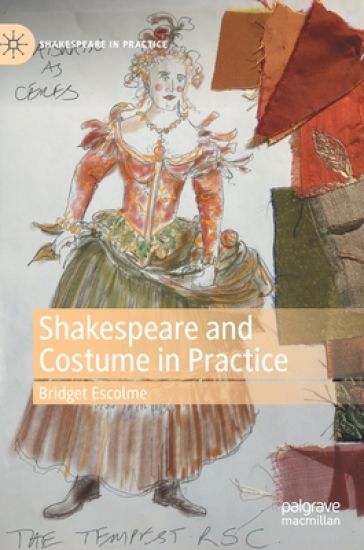
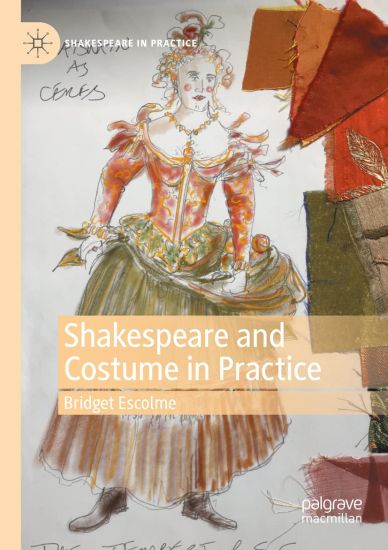
What is the role of costume in Shakespeare production? Shakespeare and Costume in Practice argues that costume design choices are central not only to the creation of period setting and the actor’s work on character, but to the cultural, political, and psychological meanings that the theatre makes of Shakespeare. The book explores questions about what the first Hamlet looked like in his mourning cloak; how costumes for a Shakespeare comedy can reflect or critique the collective nostalgias a culture has for its past; how costume and casting work together to ask new questions about Shakespeare and race. Using production case studies of Hamlet, Much Ado About Nothing, and The Tempest, the book demonstrates that costume design can be a site of experimentation, playfulness, and transgression in the theatre – and that it can provoke audiences to think again about what power, race, and gender look like on the Shakespearean stage.
Shakespeare and Costume in Practice

Shakespeare and Costume in Practice

Bridget Escolme

Springer Nature Switzerland AG
2020
sidottu
What is the role of costume in Shakespeare production? Shakespeare and Costume in Practice argues that costume design choices are central not only to the creation of period setting and the actor’s work on character, but to the cultural, political, and psychological meanings that the theatre makes of Shakespeare. The book explores questions about what the first Hamlet looked like in his mourning cloak; how costumes for a Shakespeare comedy can reflect or critique the collective nostalgias a culture has for its past; how costume and casting work together to ask new questions about Shakespeare and race. Using production case studies of Hamlet, Much Ado About Nothing, and The Tempest, the book demonstrates that costume design can be a site of experimentation, playfulness, and transgression in the theatre – and that it can provoke audiences to think again about what power, race, and gender look like on the Shakespearean stage.
Emotional Excess on the Shakespearean Stage

Emotional Excess on the Shakespearean Stage

Bridget Escolme

The Arden Shakespeare
2013
nidottu
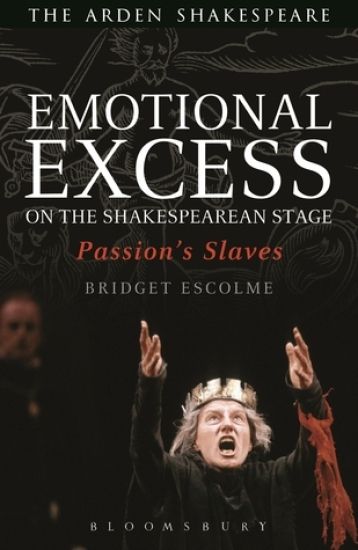
This book is open access and available on www.bloomsburycollections.com. It is funded by Knowledge Unlatched. Emotional Excess on the Shakespearean Stage demonstrates the links made between excess of emotion and madness in the early modern period. It argues that the ways in which today's popular and theatrical cultures judge how much is too much can distort our understanding of early modern drama and theatre. It argues that permitting the excesses of the early modern drama onto the contemporary stage might free actors and audiences alike from assumptions that in order to engage with the drama of the past, its characters must be just like us. The book deals with characters in the plays of Shakespeare and his contemporaries who are sad for too long, or angry to the point of irrationality; people who laugh when they shouldn't or make their audiences do so; people whose selfhood has broken down into an excess of fragmentary extremes and who are labelled mad. It is about moments in the theatre when excessive emotion is rewarded and applauded — and about moments when the expression of emotion is in excess of what is socially acceptable: embarrassing, shameful, unsettling or insane. The book explores the broader cultures of emotion that produce these theatrical moments, and the theatre's role in regulating and extending the acceptable expression of emotion. It is concerned with the acting of excessive emotion and with acting emotion excessively. And it asks how these excesses are produced or erased, give pleasure or pain, in versions of early modern drama in theatre, film and television today. Plays discussed include Hamlet, Romeo and Juliet, The Spanish Tragedy, Twelfth Night, Much Ado About Nothing, Measure for Measure, and Coriolanus.
Emotional Excess on the Shakespearean Stage

Emotional Excess on the Shakespearean Stage

Bridget Escolme

The Arden Shakespeare
2013
sidottu
Emotional Excess on the Shakespearean Stage demonstrates the links made between excess of emotion and madness in the early modern period. This open access book argues that the ways in which today's popular and theatrical cultures judge how much is too much can distort our understanding of early modern drama and theatre. It argues that permitting the excesses of the early modern drama onto the contemporary stage might free actors and audiences alike from assumptions that in order to engage with the drama of the past, its characters must be just like us.The book deals with characters in the plays of Shakespeare and his contemporaries who are sad for too long, or angry to the point of irrationality; people who laugh when they shouldn't or make their audiences do so; people whose selfhood has broken down into an excess of fragmentary extremes and who are labelled mad. It is about moments in the theatre when excessive emotion is rewarded and applauded — and about moments when the expression of emotion is in excess of what is socially acceptable: embarrassing, shameful, unsettling or insane. The book explores the broader cultures of emotion that produce these theatrical moments, and the theatre's role in regulating and extending the acceptable expression of emotion. It is concerned with the acting of excessive emotion and with acting emotion excessively. And it asks how these excesses are produced or erased, give pleasure or pain, in versions of early modern drama in theatre, film and television today.Plays discussed include Hamlet, Romeo and Juliet, The Spanish Tragedy, Twelfth Night, Much Ado About Nothing, Measure for Measure, and Coriolanus.The ebook editions of this book are available open access under a CC-BY-NC-ND 3.0 licence on bloomsburycollections.com. Open access was funded by Knowledge Unlatched.
Antony and Cleopatra

Antony and Cleopatra

Bridget Escolme

Red Globe Press
2006
nidottu
This handbook offers a way in to reading Anthony and Cleopatra theatrically. Through analyses of key productions, an account of the historical conditions in which the play was first produced, and a scene-by-scene account of how the play might be approached in performance, this book focuses on the challenges of staging the notorious lovers.
Talking to the Audience

Talking to the Audience

Bridget Escolme

Routledge
2005
sidottu
This unique study investigates the ways in which the staging convention of direct address - talking to the audience - can construct selfhood, for Shakespeare's characters. By focusing specifically on the relationship between performer and audience, Talking to the Audience examines what happens when the audience are in the presence of a dramatic figure who knows they are there. It is a book concerned with theatrical illusion; with the pleasures and disturbances of seeing 'characters' produced in the moment of performance.Through analysis of contemporary productions Talking to the Audience serves to demonstrate how the study of recent performance helps us to understand both Shakespeare's cultural moment and our own. Its exploration of how theory and practice can inform each other make this essential reading for all those studying Shakespeare in either a literary or theatrical context.
Talking to the Audience

Talking to the Audience

Bridget Escolme

Routledge
2005
nidottu
This unique study investigates the ways in which the staging convention of direct address - talking to the audience - can construct selfhood, for Shakespeare's characters. By focusing specifically on the relationship between performer and audience, Talking to the Audience examines what happens when the audience are in the presence of a dramatic figure who knows they are there. It is a book concerned with theatrical illusion; with the pleasures and disturbances of seeing 'characters' produced in the moment of performance.Through analysis of contemporary productions Talking to the Audience serves to demonstrate how the study of recent performance helps us to understand both Shakespeare's cultural moment and our own. Its exploration of how theory and practice can inform each other make this essential reading for all those studying Shakespeare in either a literary or theatrical context.