Kirjojen hintavertailu. Mukana 12 390 323 kirjaa ja 12 kauppaa.

Kirjailija

Bridget Heal

Kirjat ja teokset yhdessä paikassa: 4 kirjaa, julkaisuja vuosilta 2007-2017, suosituimpien joukossa The Cult of the Virgin Mary in Early Modern Germany. Vertaile teosten hintoja ja tarkista saatavuus suomalaisista kirjakaupoista.

4 kirjaa

Kirjojen julkaisuhaarukka 2007-2017.

Art and Religious Reform in Early Modern Europe

Art and Religious Reform in Early Modern Europe

Bridget Heal; Joseph Leo Koerner

Wiley-Blackwell
2017
nidottu
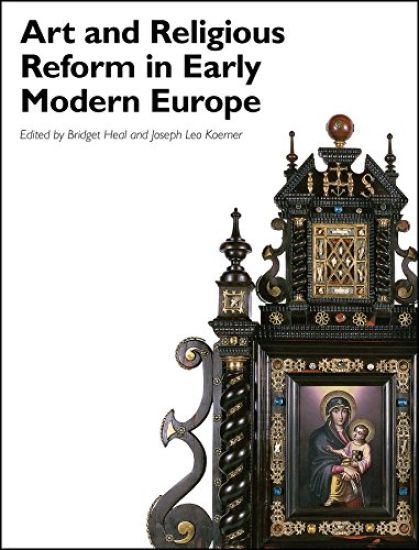
The religious turmoil of the sixteenth century constituted a turning point in the history of Western Christian art. The essays presented in this volume investigate the ways in which both Protestant and Catholic reform stimulated the production of religious images, drawing on examples from across Europe and beyond. Eight essays by leading scholars in the fieldBrings art historians and historians into productive dialogueBroad chronology, from the sixteenth to the eighteenth centuryBroad geographical coverageRichly illustrated
A Magnificent Faith

A Magnificent Faith

Bridget Heal

Oxford University Press
2017
sidottu
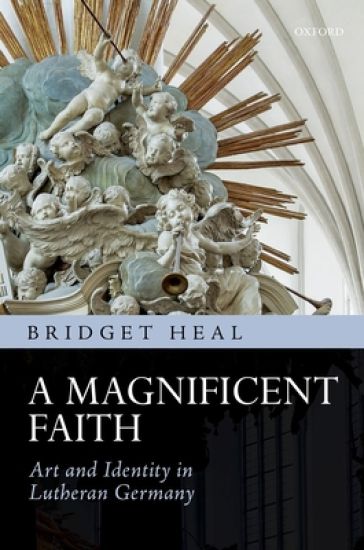
A Magnificent Faith explains how and why Lutheranism - a confession that derived its significance from the promulgation of God's Word - became a visually magnificent faith, a faith whose adherents sought to captivate Christians' hearts and minds through seeing as well as through hearing. Although Protestantism is no longer understood as an exclusively word-based religion, the paradigm of evangelical ambivalence towards images retains its power. This is the first study to offer an account of the Reformation origins and subsequent flourishing of the Lutheran baroque, of the rich visual culture that developed in parts of the Holy Roman Empire during the later seventeenth and early eighteenth centuries. The volume opens with a discussion of the legacy of the Wittenberg Reformation. Three sections then focus on the confessional, devotional, and magnificent image, exploring turning points in Lutherans' attitudes towards religious art. Drawing on a wide variety of archival, printed, and visual sources from two of the Empire's most important Protestant territories - Saxony, the heartland of the Reformation, and Brandenburg - A Magnificent Faith shows the extent to which Lutheran culture was shaped by territorial divisions. It traces the development of a theologically-grounded aesthetic, and argues that images became prominent vehicles for the articulation of Lutheran identity not only amongst theologians but also amongst laymen and women. By examining the role of images in the Lutheran tradition as it developed over the course of two centuries, A Magnificent Faith offers a new understanding of the relationship between Protestantism and the visual arts.
The Cult of the Virgin Mary in Early Modern Germany

The Cult of the Virgin Mary in Early Modern Germany

Bridget Heal

Cambridge University Press
2014
pokkari
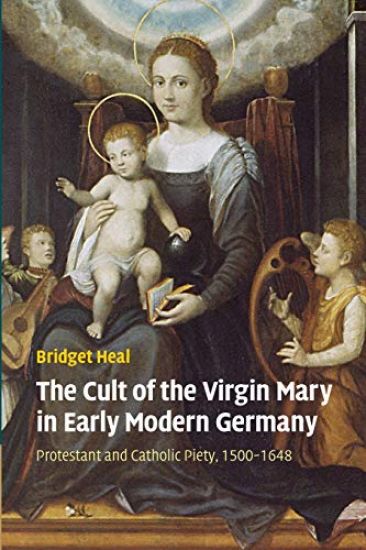
What happened to the fervent Marian piety of the late Middle Ages during Germany's Reformation and Counter-Reformation? It has been widely assumed that Mary disappeared from Protestant devotional life and subsequently became a figurehead for the Catholic Church's campaign of religious reconquest. This book presents a more finely nuanced account of the Virgin's significance. In many Lutheran territories Marian liturgy and images - from magnificent altarpieces to simple paintings and prints - survived, though their meaning was transformed. In Catholic areas baroque art and piety flourished, but the militant Virgin associated with the Counter-Reformation did not always dominate religious devotion. Traditional manifestations of Marian veneration persisted, despite the post-Tridentine Church's attempts to dictate a uniform style of religious life. This book demonstrates that local context played a key role in shaping Marian piety, and explores the significance of this diversity of Marian practice for women's and men's experiences of religious change.
The Cult of the Virgin Mary in Early Modern Germany

The Cult of the Virgin Mary in Early Modern Germany

Bridget Heal

Cambridge University Press
2007
sidottu
What happened to the fervent Marian piety of the late Middle Ages during Germany's Reformation and Counter-Reformation? It has been widely assumed that Mary disappeared from Protestant devotional life and subsequently became a figurehead for the Catholic Church's campaign of religious reconquest. This book presents a more finely nuanced account of the Virgin's significance. In many Lutheran territories Marian liturgy and images - from magnificent altarpieces to simple paintings and prints - survived, though their meaning was transformed. In Catholic areas baroque art and piety flourished, but the militant Virgin associated with the Counter-Reformation did not always dominate religious devotion. Traditional manifestations of Marian veneration persisted, despite the post-Tridentine Church's attempts to dictate a uniform style of religious life. This book demonstrates that local context played a key role in shaping Marian piety, and explores the significance of this diversity of Marian practice for women's and men's experiences of religious change.