Kirjojen hintavertailu. Mukana 12 390 323 kirjaa ja 12 kauppaa.

Kirjailija

Brig -Gen F J Moberley

Kirjat ja teokset yhdessä paikassa: 8 kirjaa, julkaisuja vuodelta 2024, suosituimpien joukossa The Campaign in Mesopotamia. Vertaile teosten hintoja ja tarkista saatavuus suomalaisista kirjakaupoista.

8 kirjaa

The Campaign in Mesopotamia

The Campaign in Mesopotamia

Brig -Gen F J Moberley

NAVAL MILITARY PRESS
2024
pokkari
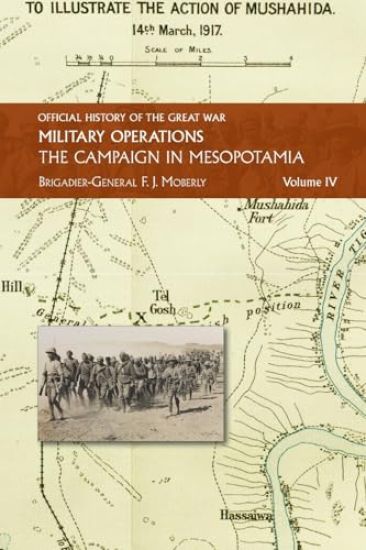
This concluding fourth volume in the Official History of the Mesopotamian campaign takes the story from May 1917 to the conclusion of hostilities and the armistice with Turkey, which came into force on 31 October 1918. It begins with a very useful chronological summary of the campaign in Mesopotamia, showing the respective periods and details of operations covered by each of the four volumes which constitute the history of the campaign. An extensive appendix gives details of the distribution of the troops of the Mesopotamia Expeditionary Force as on 27 May 1917 and, in the following appendix, compares the order of battle of the Turkish Sixth Army and its strength in rifles, sabres and machine guns on 17 August 1917. The narrative opens with the description of the River Euphrates operations and the British victory at Ramadi under General Maude, who tragically died of cholera on 18 November 1917. A very able commander, he was a great loss. Other operations described include NW Persia and the Dunsterville Force; in Kurdistan and on the shores of the Caspian Sea (occupation and defence of Baku); and the advance on Mosul. Only one British division, the 13th (Western), served in Mesopotamia compared with nine Indian divisions (including one cavalry). Total casualties amounted to 92,501, of whom 14,814 were killed in action or died of wounds while 12,807 died of disease. Appendices also give the distribution of the Mesopotamia Expeditionary Force on various dates and list the principal officers (brigadier-generals and above) in the Force on 1 December 1917 and 1 November 1918. There is a good index.This third volume in the official four-volume history of the Mesopotamia (Iraq) campaign takes the story from May 1916 up to 30 April 1917, covering the battle of Kut-Al-Amara, the pursuit of the Turks, the occupation of Baghdad and the subsequent operations around Baghdad. During this period, command of the British forces had passed to General Maude, whose papers were made available to the author by the General's widow, Lady Maude. The Turkish troops proved to be tough opponents, especially on the River Tigris where their XVIII Corps made an heroic stand. Operations here are described in detail, since this phase in the Mesopotamian campaign is the only instance of continuous, close-trench fighting. Appendices provide detailed British and Indian Army order of battle information.
The Campaign in Mesopotamia

The Campaign in Mesopotamia

Brig -Gen F J Moberley

NAVAL MILITARY PRESS
2024
pokkari
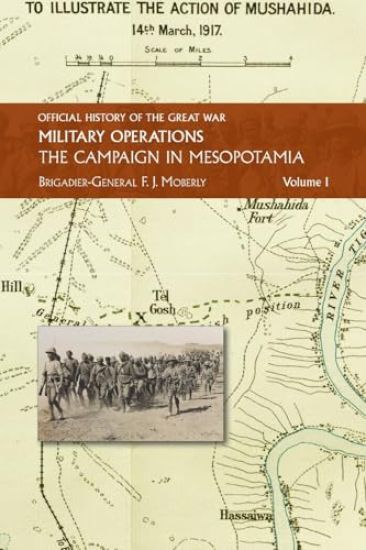
The first of four volumes covering the campaign in 'Mesop' (today's Iraq) that was fought mainly by Indian Army troops - only one British division was there, the 13th (Western) which arrived from Gallipoli in February 1916. This volume opens with background on the geography of the country, the pre-war political scene, the Turks, the Indian Army and the inception of the operations. The history of the campaign opens with the landing of Force 'D' in Mesopotamia in November 1914, the occupation of Basra and capture of Qurna. It covers the defeat of the Turkish counter-offensive, the capture of Amara in June 1915 and on to the Battle of Kut in September, concluding with the situation at the beginning of October 1915.
The Campaign in Mesopotamia

The Campaign in Mesopotamia

Brig -Gen F J Moberley

NAVAL MILITARY PRESS
2024
sidottu
The first of four volumes covering the campaign in 'Mesop' (today's Iraq) that was fought mainly by Indian Army troops - only one British division was there, the 13th (Western) which arrived from Gallipoli in February 1916. This volume opens with background on the geography of the country, the pre-war political scene, the Turks, the Indian Army and the inception of the operations. The history of the campaign opens with the landing of Force 'D' in Mesopotamia in November 1914, the occupation of Basra and capture of Qurna. It covers the defeat of the Turkish counter-offensive, the capture of Amara in June 1915 and on to the Battle of Kut in September, concluding with the situation at the beginning of October 1915.
The Campaign in Mesopotamia

The Campaign in Mesopotamia

Brig -Gen F J Moberley

NAVAL MILITARY PRESS
2024
sidottu
This volume, the second of four on the Mesoptamia (Iraq) campaign, covers October 1915 to April 1916 and begins immediately after the capture of Kut-al-Amara at the end of September by Gen. Townshend's British/Indian force, the main element of which was the 6th Indian Division. It describes the discussions that followed regarding the advisability of exploiting the capture of Kut by advancing on Baghdad. Among the doubters was Kitchener, but eventually the Cabinet decided to authorise the advance. There follows the account of operations in which the Turks halted the advance at Ctesiphon, causing Townshend to retreat to Kut where his force was besieged over the period of the next four months. The narrative describes the unsuccessful efforts of relief columns to get through (three attempts in all) and in the end Townshend was directed to open negotiations with the Turks, leading to the starving garrison's surrender on 29 April 1916. Nearly all the official records of the force in Kut dealing with the operations at Ctesiphon, the subsequent retreat and the siege were destroyed, so the author has had to rely to a great extent on private accounts which have also included the bad treatment of the garrison by the Turks. Numerous appendices give extracts from official documents, correspondence and details on order of battle and casualty figures. As the author says in his introduction: "This volume is mainly a recital of a series of British misfortunes".
The Campaign in Mesopotamia

The Campaign in Mesopotamia

Brig -Gen F J Moberley

NAVAL MILITARY PRESS
2024
pokkari
This volume, the second of four on the Mesoptamia (Iraq) campaign, covers October 1915 to April 1916 and begins immediately after the capture of Kut-al-Amara at the end of September by Gen. Townshend's British/Indian force, the main element of which was the 6th Indian Division. It describes the discussions that followed regarding the advisability of exploiting the capture of Kut by advancing on Baghdad. Among the doubters was Kitchener, but eventually the Cabinet decided to authorise the advance. There follows the account of operations in which the Turks halted the advance at Ctesiphon, causing Townshend to retreat to Kut where his force was besieged over the period of the next four months. The narrative describes the unsuccessful efforts of relief columns to get through (three attempts in all) and in the end Townshend was directed to open negotiations with the Turks, leading to the starving garrison's surrender on 29 April 1916. Nearly all the official records of the force in Kut dealing with the operations at Ctesiphon, the subsequent retreat and the siege were destroyed, so the author has had to rely to a great extent on private accounts which have also included the bad treatment of the garrison by the Turks. Numerous appendices give extracts from official documents, correspondence and details on order of battle and casualty figures. As the author says in his introduction: "This volume is mainly a recital of a series of British misfortunes".
The Campaign in Mesopotamia

The Campaign in Mesopotamia

Brig -Gen F J Moberley

NAVAL MILITARY PRESS
2024
pokkari
This third volume in the official four-volume history of the Mesopotamia (Iraq) campaign takes the story from May 1916 up to 30 April 1917, covering the battle of Kut-Al-Amara, the pursuit of the Turks, the occupation of Baghdad and the subsequent operations around Baghdad. During this period, command of the British forces had passed to General Maude, whose papers were made available to the author by the General's widow, Lady Maude. The Turkish troops proved to be tough opponents, especially on the River Tigris where their XVIII Corps made an heroic stand. Operations here are described in detail, since this phase in the Mesopotamian campaign is the only instance of continuous, close-trench fighting. Appendices provide detailed British and Indian Army order of battle information.
The Campaign in Mesopotamia

The Campaign in Mesopotamia

Brig -Gen F J Moberley

NAVAL MILITARY PRESS
2024
sidottu
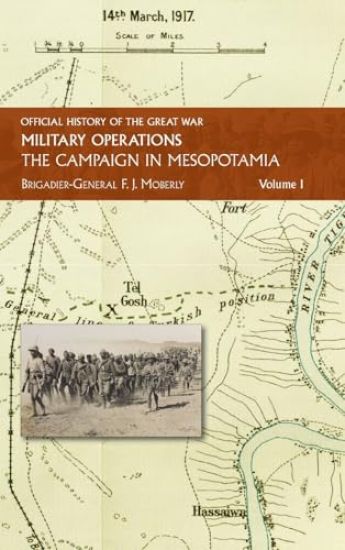
This third volume in the official four-volume history of the Mesopotamia (Iraq) campaign takes the story from May 1916 up to 30 April 1917, covering the battle of Kut-Al-Amara, the pursuit of the Turks, the occupation of Baghdad and the subsequent operations around Baghdad. During this period, command of the British forces had passed to General Maude, whose papers were made available to the author by the General's widow, Lady Maude. The Turkish troops proved to be tough opponents, especially on the River Tigris where their XVIII Corps made an heroic stand. Operations here are described in detail, since this phase in the Mesopotamian campaign is the only instance of continuous, close-trench fighting. Appendices provide detailed British and Indian Army order of battle information.
The Campaign in Mesopotamia

The Campaign in Mesopotamia

Brig -Gen F J Moberley

NAVAL MILITARY PRESS
2024
sidottu
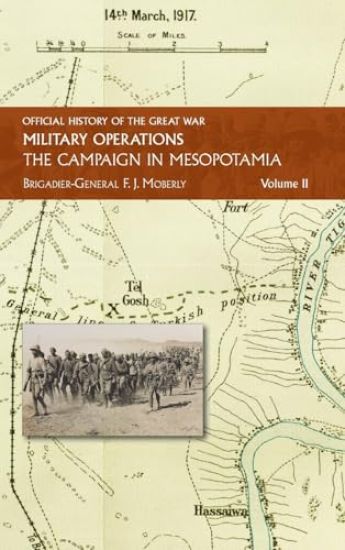
This concluding fourth volume in the Official History of the Mesopotamian campaign takes the story from May 1917 to the conclusion of hostilities and the armistice with Turkey, which came into force on 31 October 1918. It begins with a very useful chronological summary of the campaign in Mesopotamia, showing the respective periods and details of operations covered by each of the four volumes which constitute the history of the campaign. An extensive appendix gives details of the distribution of the troops of the Mesopotamia Expeditionary Force as on 27 May 1917 and, in the following appendix, compares the order of battle of the Turkish Sixth Army and its strength in rifles, sabres and machine guns on 17 August 1917. The narrative opens with the description of the River Euphrates operations and the British victory at Ramadi under General Maude, who tragically died of cholera on 18 November 1917. A very able commander, he was a great loss. Other operations described include NW Persia and the Dunsterville Force; in Kurdistan and on the shores of the Caspian Sea (occupation and defence of Baku); and the advance on Mosul. Only one British division, the 13th (Western), served in Mesopotamia compared with nine Indian divisions (including one cavalry). Total casualties amounted to 92,501, of whom 14,814 were killed in action or died of wounds while 12,807 died of disease. Appendices also give the distribution of the Mesopotamia Expeditionary Force on various dates and list the principal officers (brigadier-generals and above) in the Force on 1 December 1917 and 1 November 1918. There is a good index.