Kirjojen hintavertailu. Mukana 12 390 323 kirjaa ja 12 kauppaa.

Kirjailija

Brinda Karat

Kirjat ja teokset yhdessä paikassa: 3 kirjaa, julkaisuja vuosilta 2021-2024, suosituimpien joukossa Hindutva and Violence Against Women (Edition1). Vertaile teosten hintoja ja tarkista saatavuus suomalaisista kirjakaupoista.

3 kirjaa

Kirjojen julkaisuhaarukka 2021-2024.

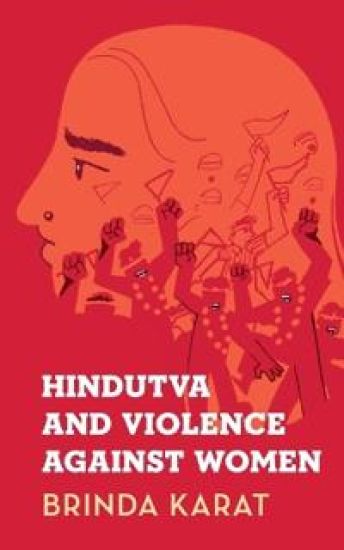
Hindutva and Violence Against Women  (Edition1)

Hindutva and Violence Against Women (Edition1)

Brinda Karat

Speaking Tiger Publishing Private Limited
2024
muu
In this monograph, one of India's leading, most committed political andhuman rights activists examines how women's safety, dignity and security havebeen undermined in the decade since the Hindu right rose to near-absolutepower. Hindutva-the guiding philosophy of the Rashtriya SwayamsewakSangh (RSS), the Bharatiya Janata Party (BJP) and the rest of the SanghParivar-is at its core a majoritarian, militant and regressive thought systemthat draws inspiration from casteist, communal and misogynistic texts andideologues. While injustice in cases of violence against women is not new inIndia, writes Brinda Karat, the political supremacy of Hindutva since 2014has changed the nature and extent of this injustice. The religious identities ofthe victims and the perpetrators determine the approach of powerful leadersand their governments, the police, and, increasingly, the courts. This createsnew rape cultures that ultimately affect the processes of justice for all women.Examining some of the most horrific instances of majoritarian violence againstwomen and the official response (or lack of it) to them-the release of BilkisBano's rapists; campaigns in favour of the men who brutalized little AsifaBano; the covert cremation of the body of the Hathras victim; the rape andmurder of Kuki women in Manipur-Karat shows how, when sexual crimesare communalized, women of oppressed castes are denied justice just aswomen of religious and ethnic minorities are.Impassioned, rigorous and forthright, this is a necessary book for our times.
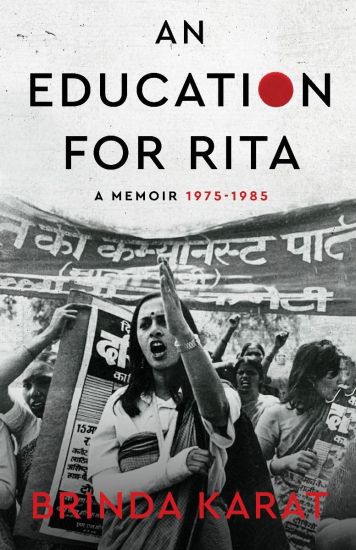
An Education for Rita

An Education for Rita

Brinda Karat

leftword
2024
pokkari
August 1975. The Emergency is barely two months old. A group of communists meet at night in a small room in Kamla Nagar in north Delhi. They sit on the floor around a flickering oil lamp. Thirteen of them are men, workers from the Birla Cotton Textile Mill. One is a woman. She has given up an airline job in London, and dreams of drama school, to come back to India to join the communist party. With arrest a real possibility, she is asked to take on a new name. Thus Brinda becomes Rita, a name she keeps for a decade. An Education for Rita transports us into a Delhi most don't know, introducing us to fascinating characters and tumultuous events - from strikes of the textile workers to the displacement of the poor during the Emergency, from the anti-dowry struggles of the early 1980s to the horrific anti-Sikh violence of 1984. This is the story of a remarkable transformation, of grit and perseverance, and of courage. It is also the story of lifelong bonds that transcend class and background, of comradeship and sisterhood. Above all, it is the story of a young woman of privilege discovering the hard and harsh realities of the urban working class, the industrial areas and the bastis of Delhi, and learning to organise to fight for a better world.
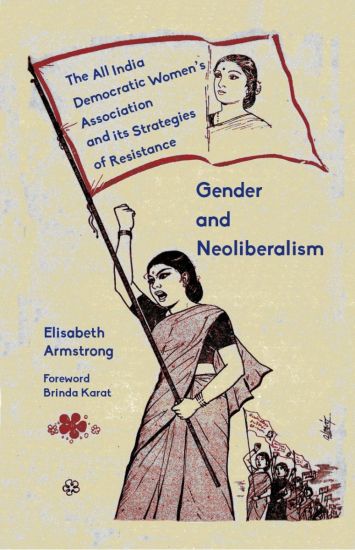
Gender and Neoliberalism

Gender and Neoliberalism

Elisabeth Armstrong; Brinda Karat

Leftword Books
2021
pokkari
This book describes the changing landscape of women's politics for equality and liberation during the rise of neoliberalism in India. Between 1991 and 2006, the doctrine of liberalization guided Indian politics and economic policy. These neoliberal measures vastly reduced poverty alleviation schemes, price supports for poor farmers, and opened India's economy to the unpredictability of global financial fluctuations. During this same period, the All India Democratic Women's Association (AIDWA), which directly opposed the ascendance of neoliberal economics and policies, as well as the simultaneous rise of violent casteism and anti-Muslim communalism, grew from roughly three million members to over ten million. Beginning in the late 1980s, AIDWA turned its attention to women's lives in rural India. Using a method that began with activist research, the organization developed a sectoral analysis of groups of women who were hardest hit in the new neoliberal order, including Muslim women and Dalit women. AIDWA developed what its leaders called inter-sectoral organizing, that centred the demands of the most vulnerable women in the heart of its campaigns and its ideology for social change.