Kirjojen hintavertailu. Mukana 12 390 323 kirjaa ja 12 kauppaa.

Kirjailija

Britt Rusert

Kirjat ja teokset yhdessä paikassa: 5 kirjaa, julkaisuja vuosilta 2017-2027, suosituimpien joukossa The Care Underground. Vertaile teosten hintoja ja tarkista saatavuus suomalaisista kirjakaupoista.

5 kirjaa

Kirjojen julkaisuhaarukka 2017-2027.

The Care Underground

The Care Underground

Britt Rusert; Dean Spade; Alexis Pauline Gumbs

Verso Books
2027
sidottu
This book tells the fascinating history of mutual aid organizing before the twentieth century, showing how its origins intersect with abolitionist and anti-carceral movements in the United States. Mutual aid has gone mainstream over the past couple of years, but few people know how far back it reaches. Dramatic and inspiring, the stories told describe people banding together, often against all odds, in the face of disaster, crisis, violence, and repression, to change the forces of history. From anti-slavery vigilance committees working tirelessly on the frontlines to rescue and protect those vulnerable to kidnapping, incarceration, and violence, to subcultural experiments in communal living and healthcare, nineteenth-century abolitionists, free lovers, feminists, queers, fugitives, and workers came up with a number of collective solutions to racial capitalism's biopolitical imperatives.

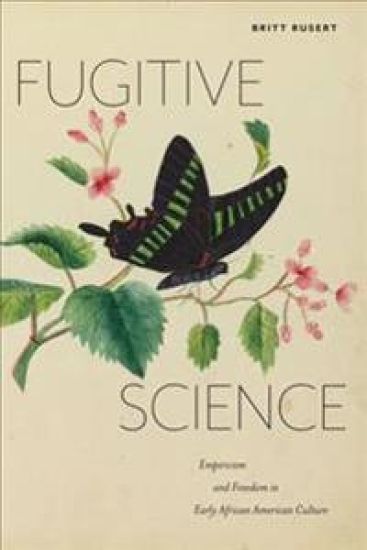
Fugitive Science

Fugitive Science

Britt Rusert

New York University Press
2017
sidottu
Honorable Mention, 2019 MLA Prize for a First Book Sole Finalist Mention for the 2018 Lora Romero First Book Prize, presented by the American Studies Association Exposes the influential work of a group of black artists to confront and refute scientific racism. Traversing the archives of early African American literature, performance, and visual culture, Britt Rusert uncovers the dynamic experiments of a group of black writers, artists, and performers. Fugitive Science chronicles a little-known story about race and science in America. While the history of scientific racism in the nineteenth century has been well-documented, there was also a counter-movement of African Americans who worked to refute its claims. Far from rejecting science, these figures were careful readers of antebellum science who linked diverse fields—from astronomy to physiology—to both on-the-ground activism and more speculative forms of knowledge creation. Routinely excluded from institutions of scientific learning and training, they transformed cultural spaces like the page, the stage, the parlor, and even the pulpit into laboratories of knowledge and experimentation. From the recovery of neglected figures like Robert Benjamin Lewis, Hosea Easton, and Sarah Mapps Douglass, to new accounts of Martin Delany, Henry Box Brown, and Frederick Douglass, Fugitive Science makes natural science central to how we understand the origins and development of African American literature and culture. This distinct and pioneering book will spark interest from anyone wishing to learn more on race and society.
Fugitive Science

Fugitive Science

Britt Rusert

New York University Press
2017
pokkari
Honorable Mention, 2019 MLA Prize for a First Book Sole Finalist Mention for the 2018 Lora Romero First Book Prize, presented by the American Studies Association Exposes the influential work of a group of black artists to confront and refute scientific racism. Traversing the archives of early African American literature, performance, and visual culture, Britt Rusert uncovers the dynamic experiments of a group of black writers, artists, and performers. Fugitive Science chronicles a little-known story about race and science in America. While the history of scientific racism in the nineteenth century has been well-documented, there was also a counter-movement of African Americans who worked to refute its claims. Far from rejecting science, these figures were careful readers of antebellum science who linked diverse fields—from astronomy to physiology—to both on-the-ground activism and more speculative forms of knowledge creation. Routinely excluded from institutions of scientific learning and training, they transformed cultural spaces like the page, the stage, the parlor, and even the pulpit into laboratories of knowledge and experimentation. From the recovery of neglected figures like Robert Benjamin Lewis, Hosea Easton, and Sarah Mapps Douglass, to new accounts of Martin Delany, Henry Box Brown, and Frederick Douglass, Fugitive Science makes natural science central to how we understand the origins and development of African American literature and culture. This distinct and pioneering book will spark interest from anyone wishing to learn more on race and society.