Kirjojen hintavertailu. Mukana 12 491 730 kirjaa ja 12 kauppaa.

Kirjailija

Bronislaw Tomczuk

Kirjat ja teokset yhdessä paikassa: 2 kirjaa, julkaisuja vuosilta 2011-2017, suosituimpien joukossa Linear Synchronous Motors. Vertaile teosten hintoja ja tarkista saatavuus suomalaisista kirjakaupoista.

2 kirjaa

Kirjojen julkaisuhaarukka 2011-2017.

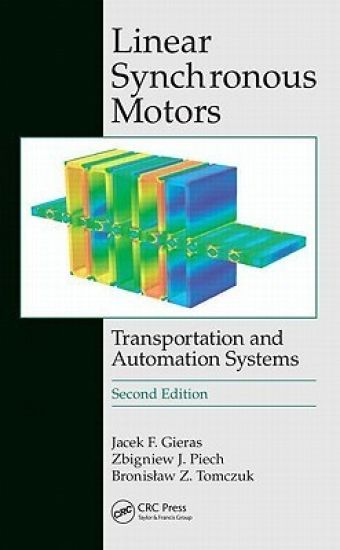
Linear Synchronous Motors

Linear Synchronous Motors

Jacek F. Gieras; Zbigniew J. Piech; Bronislaw Tomczuk

CRC Press Inc
2011
sidottu
Considered to be the first book devoted to the subject, Linear Synchronous Motors: Transportation and Automation Systems, Second Edition evaluates the state of the art, demonstrating the technological innovations that are improving the design, construction, and performance of modern control systems. This new edition not only illustrates the development of linear synchronous motor drives, but it also discusses useful techniques for selecting a motor that will meet the specific requirements of linear electrical drives. New Features for the Second Edition: Several updated and expanded sections, as well as two new chapters on FEM Even more numerical examples, calculations, and mathematical models Broadened target audience that includes researchers, scientists, students, and moreEvaluating trends and practical techniques for achieving optimal system performance, the authors showcase ready-to-implement solutions for common roadblocks in this process. The book presents fundamental equations and calculations used to determine and evaluate system operation, efficiency, and reliability, with an exploration of modern computer-aided design of linear synchronous motors, including the finite element approach. It covers topics such as linear sensors and stepping motors, magnetic levitation systems, elevators, and factory automation systems. It also features case studies on flat PM, tubular PM, air-cored, and hybrid linear synchronous motors, as well as 3D finite element method analysis of tubular linear reluctance motors, and linear oscillatory actuators. With such an exceptional presentation of practical tools and conceptual illustrations, this volume is an especially powerful resource. It will benefit readers from all walks by providing numerical examples, models, guidelines, and diagrams to help develop a clear understanding of linear synchronous motor operations, characteristics, and much more.
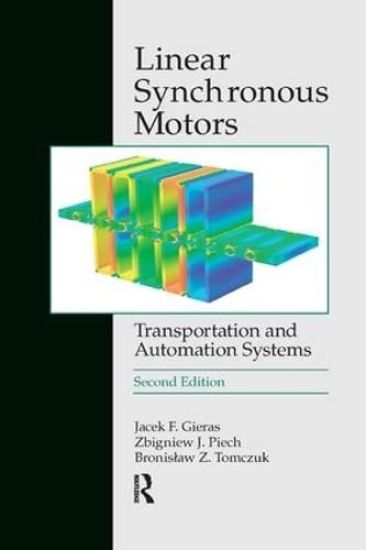
Linear Synchronous Motors

Linear Synchronous Motors

Jacek F. Gieras; Zbigniew J. Piech; Bronislaw Tomczuk

CRC Press
2017
nidottu
Considered to be the first book devoted to the subject, Linear Synchronous Motors: Transportation and Automation Systems, Second Edition evaluates the state of the art, demonstrating the technological innovations that are improving the design, construction, and performance of modern control systems. This new edition not only illustrates the development of linear synchronous motor drives, but it also discusses useful techniques for selecting a motor that will meet the specific requirements of linear electrical drives. New Features for the Second Edition: Several updated and expanded sections, as well as two new chapters on FEM Even more numerical examples, calculations, and mathematical models Broadened target audience that includes researchers, scientists, students, and moreEvaluating trends and practical techniques for achieving optimal system performance, the authors showcase ready-to-implement solutions for common roadblocks in this process. The book presents fundamental equations and calculations used to determine and evaluate system operation, efficiency, and reliability, with an exploration of modern computer-aided design of linear synchronous motors, including the finite element approach. It covers topics such as linear sensors and stepping motors, magnetic levitation systems, elevators, and factory automation systems. It also features case studies on flat PM, tubular PM, air-cored, and hybrid linear synchronous motors, as well as 3D finite element method analysis of tubular linear reluctance motors, and linear oscillatory actuators. With such an exceptional presentation of practical tools and conceptual illustrations, this volume is an especially powerful resource. It will benefit readers from all walks by providing numerical examples, models, guidelines, and diagrams to help develop a clear understanding of linear synchronous motor operations, characteristics, and much more.