Kirjojen hintavertailu. Mukana 12 152 606 kirjaa ja 12 kauppaa.

Kirjailija

Brooke A. Ackerly

Kirjat ja teokset yhdessä paikassa: 8 kirjaa, julkaisuja vuosilta 2000-2020, suosituimpien joukossa Just Responsibility. Vertaile teosten hintoja ja tarkista saatavuus suomalaisista kirjakaupoista.

8 kirjaa

Kirjojen julkaisuhaarukka 2000-2020.

Doing Feminist Research in Political and Social Science

Doing Feminist Research in Political and Social Science

Brooke A. Ackerly; Jacqui True

Red Globe Press
2020
sidottu
Guiding students step-by-step through the research process while simultaneously introducing a range of debates, challenges and tools that feminist scholars use, the second edition of this popular textbook provides a vital resource to those students and researchers approaching their studies from a feminist perspective. Interdisciplinary in its approach, the book covers everything from research design, analysis and presentation, to formulating research questions, data collection and publishing research. Offering the most comprehensive and practical guide to the subject available, the text is now also fully updated to take account of recent developments in the field, including participatory action research, new technologies and methods for working with big data and social media.Doing Feminist Research is required reading for undergraduate and postgraduate courses taking a feminist approach to social science methodology, research design and methods. It is the ideal guide for all students and scholars carrying out feminist research, whether in the fields of international relations, political science, interdisciplinary international and global studies, development studies or gender and women’s studies.New to this Edition:- New discussions of contemporary research methods, including participatory action research, survey research and technology, and methods for big data and social media.- Updated to reflect recent developments in feminist and gender theory, with references to the latest research examples and new boxes considering recent shifts in the social and political sciences.- Brand new boxed examples throughout covering topics including collaborations, femicide, negotiating changing research environments and the pros and cons of feminist participatory action research.- The text is now written in the first (authors) and second (readers) person making the text clearer, more consistent and inclusive from the reader point of view.Accompanying online resources for this title can be found at bloomsburyonlineresources.com/doing-feminist-research-in-political-and-social-science. These resources are designed to support teaching and learning when using this textbook and are available at no extra cost.
Doing Feminist Research in Political and Social Science

Doing Feminist Research in Political and Social Science

Brooke A. Ackerly; Jacqui True

Red Globe Press
2019
nidottu
Guiding students step-by-step through the research process while simultaneously introducing a range of debates, challenges and tools that feminist scholars use, the second edition of this popular textbook provides a vital resource to those students and researchers approaching their studies from a feminist perspective. Interdisciplinary in its approach, the book covers everything from research design, analysis and presentation, to formulating research questions, data collection and publishing research. Offering the most comprehensive and practical guide to the subject available, the text is now also fully updated to take account of recent developments in the field, including participatory action research, new technologies and methods for working with big data and social media.Doing Feminist Research is required reading for undergraduate and postgraduate courses taking a feminist approach to social science methodology, research design and methods. It is the ideal guide for all students and scholars carrying out feminist research, whether in the fields of international relations, political science, interdisciplinary international and global studies, development studies or gender and women’s studies.New to this Edition:- New discussions of contemporary research methods, including participatory action research, survey research and technology, and methods for big data and social media.- Updated to reflect recent developments in feminist and gender theory, with references to the latest research examples and new boxes considering recent shifts in the social and political sciences.- Brand new boxed examples throughout covering topics including collaborations, femicide, negotiating changing research environments and the pros and cons of feminist participatory action research.- The text is now written in the first (authors) and second (readers) person making the text clearer, more consistent and inclusive from the reader point of view.
Just Responsibility

Just Responsibility

Brooke A. Ackerly

Oxford University Press Inc
2018
nidottu
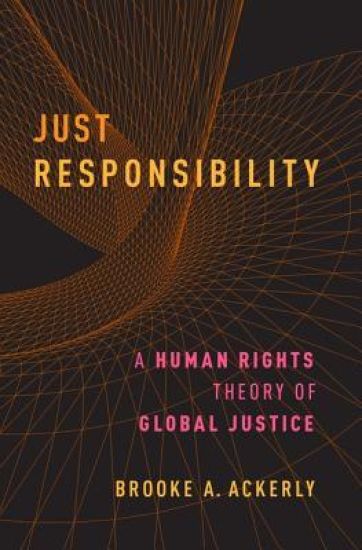
It has been well-established that many of the injustices that people around the world experience every day, from food insecurity to unsafe labor conditions and natural disasters, are the result of wide-scale structural problems of politics and economics. These are not merely random personal problems or consequences of bad luck or bad planning. Confronted by this fact, it is natural to ask what should or can we do to mitigate everyday injustices? In one sense, we answer this question when we buy the local homeless street newspaper, decide where to buy our clothes, remember our reusable bags when we shop, donate to disaster relief, or send letters to corporations about labor rights. But given the global scale of injustices related to poverty, environmental change, gender, and labor, can these individual acts really impact the seemingly intractable global social, political, and economic structures that perpetuate and exacerbate them? Moreover, can we respond to injustices in the world in ways that do more than just address their consequences? In this book, Brooke A. Ackerly both answers the question of what should we do, and shows that it's the wrong question to ask. To ask the right question, we need to ground our normative theory of global justice in the lived experience of injustice. Using a feminist critical methodology, she argues that what to do about injustice is not just an ethical or moral question, but a political question about assuming responsibility for injustice, regardless of our causal responsibility and extent of our knowledge of the injustice. Furthermore, it is a matter that needs to be guided by principles of human rights. As she argues, while many understand human rights as political goals or entitlements, they can also guide political strategy. Her aims are twofold: to present a theory of what it means to take responsibility for injustice and for ensuring human rights, as well as to develop a guide for how to take responsibility in ways that support local and global movements for transformative politics. In order to illustrate her theory and guide for action, Ackerly draws on fieldwork on the Rana Plaza collapse in 2013, the food crisis of 2008, and strategies from 125 activist organizations working on women's and labor rights across 26 countries. Just Responsibility integrates these ways of taking political responsibility into a rich theory of political community, accountability, and leadership in which taking responsibility for injustice itself transforms the fabric of political life.
Just Responsibility

Just Responsibility

Brooke A. Ackerly

Oxford University Press Inc
2018
sidottu
It has been well-established that many of the injustices that people around the world experience every day, from food insecurity to unsafe labor conditions and natural disasters, are the result of wide-scale structural problems of politics and economics. These are not merely random personal problems or consequences of bad luck or bad planning. Confronted by this fact, it is natural to ask what should or can we do to mitigate everyday injustices? In one sense, we answer this question when we buy the local homeless street newspaper, decide where to buy our clothes, remember our reusable bags when we shop, donate to disaster relief, or send letters to corporations about labor rights. But given the global scale of injustices related to poverty, environmental change, gender, and labor, can these individual acts really impact the seemingly intractable global social, political, and economic structures that perpetuate and exacerbate them? Moreover, can we respond to injustices in the world in ways that do more than just address their consequences? In this book, Brooke A. Ackerly both answers the question of what should we do, and shows that it's the wrong question to ask. To ask the right question, we need to ground our normative theory of global justice in the lived experience of injustice. Using a feminist critical methodology, she argues that what to do about injustice is not just an ethical or moral question, but a political question about assuming responsibility for injustice, regardless of our causal responsibility and extent of our knowledge of the injustice. Furthermore, it is a matter that needs to be guided by principles of human rights. As she argues, while many understand human rights as political goals or entitlements, they can also guide political strategy. Her aims are twofold: to present a theory of what it means to take responsibility for injustice and for ensuring human rights, as well as to develop a guide for how to take responsibility in ways that support local and global movements for transformative politics. In order to illustrate her theory and guide for action, Ackerly draws on fieldwork on the Rana Plaza collapse in 2013, the food crisis of 2008, and strategies from 125 activist organizations working on women's and labor rights across 26 countries. Just Responsibility integrates these ways of taking political responsibility into a rich theory of political community, accountability, and leadership in which taking responsibility for injustice itself transforms the fabric of political life.
Universal Human Rights in a World of Difference

Universal Human Rights in a World of Difference

Brooke A. Ackerly

Cambridge University Press
2008
pokkari
From the diverse work and often competing insights of women's human rights activists, Brooke Ackerly has written a feminist and a universal theory of human rights that bridges the relativists' concerns about universalizing from particulars and the activists' commitment to justice. Unlike universal theories that rely on shared commitments to divine authority or to an 'enlightened' way of reasoning, Ackerly's theory relies on rigorous methodological attention to difference and disagreement. She sets out human rights as at once a research ethic, a tool for criticism of injustice and a call to recognize our obligations to promote justice through our actions. This book will be of great interest to political theorists, feminist and gender studies scholars and researchers of social movements.
Universal Human Rights in a World of Difference

Universal Human Rights in a World of Difference

Brooke A. Ackerly

Cambridge University Press
2008
sidottu
From the diverse work and often competing insights of women's human rights activists, Brooke Ackerly has written a feminist and a universal theory of human rights that bridges the relativists' concerns about universalizing from particulars and the activists' commitment to justice. Unlike universal theories that rely on shared commitments to divine authority or to an 'enlightened' way of reasoning, Ackerly's theory relies on rigorous methodological attention to difference and disagreement. She sets out human rights as at once a research ethic, a tool for criticism of injustice and a call to recognize our obligations to promote justice through our actions. This book will be of great interest to political theorists, feminist and gender studies scholars and researchers of social movements.
Political Theory and Feminist Social Criticism

Political Theory and Feminist Social Criticism

Brooke A. Ackerly

Cambridge University Press
2000
sidottu
In Political Theory and Feminist Social Criticism, Brooke Ackerly demonstrates the shortcomings of contemporary deliberative democratic theory, relativism and essentialism for guiding the practice of social criticism in the real, imperfect world. Drawing theoretical implications from the activism of Third World feminists who help bring to public audiences the voices of women silenced by coercion, Brooke Ackerly provides a practicable model of social criticism. She argues that feminist critics have managed to achieve in practice what other theorists do only incompletely in theory. Complemented by Third World feminist social criticism, deliberative democratic theory becomes critical theory - actionable, coherent, and self-reflective. While a complement to democratic theory, Third World feminist social criticism also addresses the problem in feminist theory associated with attempts to deal with identity politics. Third World feminist social criticism thus takes feminist theory beyond the critical impasse of the tension between anti-relativist and anti-essentialist feminist theory.
Political Theory and Feminist Social Criticism

Political Theory and Feminist Social Criticism

Brooke A. Ackerly

Cambridge University Press
2000
pokkari
In Political Theory and Feminist Social Criticism, Brooke Ackerly demonstrates the shortcomings of contemporary deliberative democratic theory, relativism and essentialism for guiding the practice of social criticism in the real, imperfect world. Drawing theoretical implications from the activism of Third World feminists who help bring to public audiences the voices of women silenced by coercion, Brooke Ackerly provides a practicable model of social criticism. She argues that feminist critics have managed to achieve in practice what other theorists do only incompletely in theory. Complemented by Third World feminist social criticism, deliberative democratic theory becomes critical theory - actionable, coherent, and self-reflective. While a complement to democratic theory, Third World feminist social criticism also addresses the problem in feminist theory associated with attempts to deal with identity politics. Third World feminist social criticism thus takes feminist theory beyond the critical impasse of the tension between anti-relativist and anti-essentialist feminist theory.