Kirjojen hintavertailu. Mukana 12 390 323 kirjaa ja 12 kauppaa.

Kirjailija

Bruce A. Glasrud

Kirjat ja teokset yhdessä paikassa: 4 kirjaa, julkaisuja vuosilta 2008-2019, suosituimpien joukossa Unfinished Masterpiece. Vertaile teosten hintoja ja tarkista saatavuus suomalaisista kirjakaupoista.

Mukana myös kirjoitusasut: Bruce A Glasrud

4 kirjaa

Kirjojen julkaisuhaarukka 2008-2019.

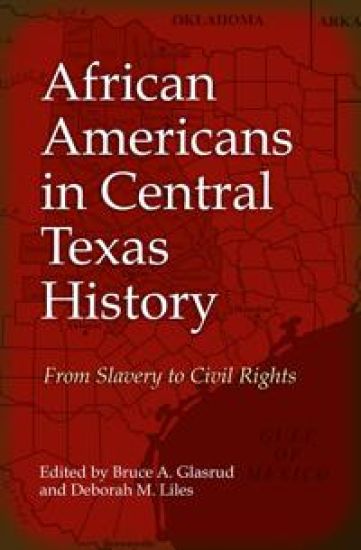
African Americans in Central Texas History

African Americans in Central Texas History

Bruce A. Glasrud; Deborah M. Liles

Texas A M University Press
2019
sidottu
Bruce A. Glasrud and Deborah M. Liles have gathered over thirty years of scholarship—articles, book excerpts, and new, original essays—to offer for the first time an overview of the history of African Americans in Central Texas. From slavery and agriculture in the nineteenth century to entrepreneurship and the struggle for civil rights in the twentieth century, African Americans in Central Texas History: From Slavery to Civil Rights fills in the critical missing pieces of an often-overlooked region in the state's history. African Americans first entered Central Texas with Spanish explorers, but few remained. White slave holders later brought black residents—as slaves—to this region. With the end of the Civil War, slavery may have ended but the brutalities of racial prejudice persisted. During Reconstruction, new attempts to ensure civil and political rights were resisted through terror, racial violence, and systemic denial of justice.Well into the twentieth century, segregation persisted, but years of individual and mobilized protest finally led to significant reform. Organizations such as the NAACP provided vital support. Before efforts to disenfranchise the black vote became successful, some politicians even courted black voters to further their own political agendas.African Americans in Central Texas History is a rare source that sheds light on the African American experience in the heart of the state.
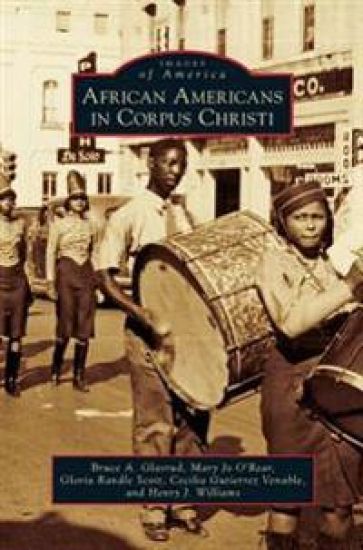
African Americans in Corpus Christi

African Americans in Corpus Christi

Bruce a. Glasrud; Mary Jo O'Rear; Gloria Randle Scott

Arcadia Publishing (SC)
2012
nidottu
From slavery to freedom, to education, to achievement: these words reflect the goals of African Americans who first came as slaves with the Spanish to this part of the Texas coast. Freed by the Civil War on Juneteenth (June 19, 1865), blacks soon established an active and viable community, a significant part of which was defined by the black churches. Prominent leaders emerged, including Solomon Melvin Coles, H. Boyd Hall, Rufus Avery, and Gloria Randle Scott. Using photographs from individual collections, as well as the Corpus Christi Public Library, Corpus Christi Museum of Science and History, and Texas A&M University Corpus Christi, African Americans in Corpus Christi reveals the history and people of Corpus Christi.
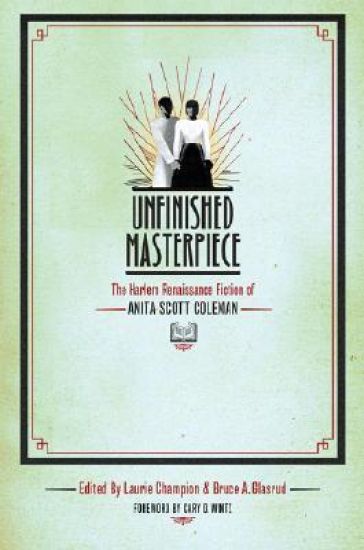
Unfinished Masterpiece

Unfinished Masterpiece

Bruce A. Glasrud; Cary D. Wintz

Texas Tech Press,U.S.
2008
nidottu
Though Anita Scott Coleman was born in Mexico and reared in New Mexico, her stories appeared frequently in ""The Crisis"" and other leading journals of the Harlem Renaissance. Reflecting and illuminating the movements major themes, her often award-winning stories, delicate and understated, offer subtle commentary on the status of black women, their role in black society, and the position of African Americans in an overwhelmingly white society. As a young woman in New Mexico, Anita Scott graduated from New Mexico Teachers College and enjoyed a brief teaching career until she married. Later she moved to California, where despite her distance from Harlem she wrote her last nine published stories, polished examples of the Renaissances finest short fiction, including Unfinished Masterpieces. As one by one the journals of the Harlem Renaissance ceased publication, Coleman's career itself remained regrettably unfinished. By 1960, when she died at age seventy, the literary legacy of this masterful southwestern storyteller was forgotten. What Champion and Glasrud have recovered in this collection is more than Coleman's complete collected short fiction. It is a road map of African American life in the Southwest and West during the movements glory days, etching not only indelible glimpses of character and culture but also the farthest reaching evidence of the Harlem Renaissances success in sharing ideals and goals across a nation.