Kirjojen hintavertailu. Mukana 12 595 353 kirjaa ja 12 kauppaa.

Kirjailija

Bruce Beasley

Kirjat ja teokset yhdessä paikassa: 7 kirjaa, julkaisuja vuosilta 2005-2023, suosituimpien joukossa The Corpse Flower. Vertaile teosten hintoja ja tarkista saatavuus suomalaisista kirjakaupoista.

7 kirjaa

Kirjojen julkaisuhaarukka 2005-2023.

Prayershreds

Prayershreds

Bruce Beasley

Orison Books
2023
nidottu
Suppose the shreds of our prayers and of our faiths could themselves become a radical new form of devotion. In Prayershreds, Bruce Beasley confronts the apocalyptic zeitgeist of our time (political turmoil, societal division and isolation, spiritual despair, environmental catastrophe) and the crisis of faith in the human future. These poems make of the vocabulary of doubt a strange kind of sermon, summoning into chorus Heraclitus, Zeno, the Buddha, Roget's Thesaurus, ancient prayers and hymns and scriptures, and an AI chatbot. In these fractured and ecstatic psalms, Beasley makes his ruptured way toward a faith that relies not on dogmas and creeds, but on a broken utterance for a torn and living faith.
Bruce Beasley

Bruce Beasley

Bruce Beasley; Tom Moran; Marlena Doktorczyk-Donohue; Lawrence Weschler

Scala Arts Heritage Publishers Ltd
2022
sidottu
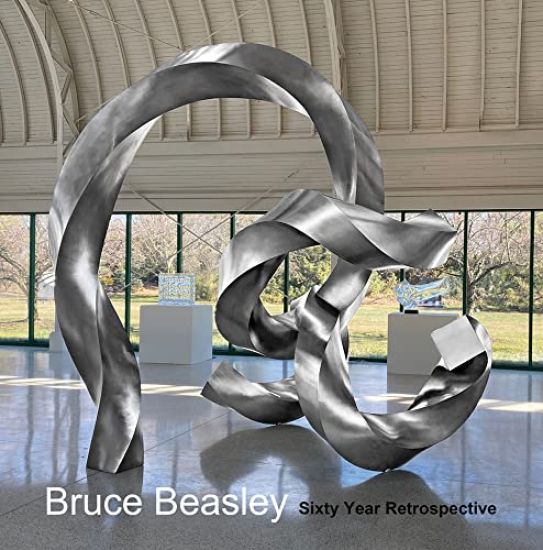
For six decades, sculptor Bruce Beasley has worked in a range of media to build complex, resonant sculptures that communicate the primacy of form and express the emotional language of shape. Bruce Beasley: Sixty Year Retrospective is an elegant survey of his illustrious career: from early experiments in scrap iron during the 1960s; aluminum works of the 1970s; cast acrylic sculptures of the 1970s and 80s; and stone, stainless steel and bronze works of the 1990s to the present day. The catalogue also features Beasley’s latest venture into two-dimensional media. This richly illustrated book includes Beasley’s reflections on his career. In a conversation, Beasley and Lawrence Weschler discuss art and activism. Essays discussing his processes and appraising his impact are written by curator Tom Moran and Marlena Doktorczyk-Donohue, Director of the Bruce Beasley Foundation and Professor of Art History at Otis College of Art and Design, Los Angeles.
All Soul Parts Returned

All Soul Parts Returned

Bruce Beasley

BOA Editions, Limited
2017
pokkari
When the Gnostic Gospels collide with new age spiritualism, the Oxford Happiness Test, and treatises on Buddhist practice, we know we're in the territory of a Bruce Beasley collection. Alternately devout and heretical, Beasley?known for his intense and continuing soul-quest through previous award-winning books?interrogates the absurdities, psychic violence, and spiritual condition of twenty-first century America with despair, philosophic intelligence, and piercing humor.Bruce Beasley is the author of eight collections of poetry, including Theophobia (BOA, 2012). The winner of numerous literary awards and fellowships, he lives in Bellingham, WA, where he is a professor of English at Western Washington University.
Theophobia

Theophobia

Bruce Beasley

BOA Editions, Limited
2012
pokkari
Theophobia is the latest volume in Bruce Beasley's ongoing spiritual meditation which forms a kind of postmodern devotional poetry in a reinvention of the tradition of John Donne, George Herbert, Emily Dickinson, Gerard Manley Hopkins, and T. S. Eliot. Theophobia is structured around a series of poems called "Pilgrim's Deviations" and forms a deviant and deviating pilgrimage through science, history, politics, and popular culture. Beasley seeks the Biblical Kingdom of God among Dolly the cloned sheep, the wonders and horrors of extremophilic creatures living in astonishing intensities of temperature, robotic phone operators, and Wikipedia's explanation of the mysteries of the Holy Spirit. Bruce Beasley is the author of six poetry collections, most recently The Corpse Flower: New and Selected Poems (University of Washington Press, 2007). He has won fellowships from the NEA and the Artist Trust of Washington and three Pushcart Prizes. Finalist for The Washington State Book Award One of Poetry Northwest's Notable Books of 2014
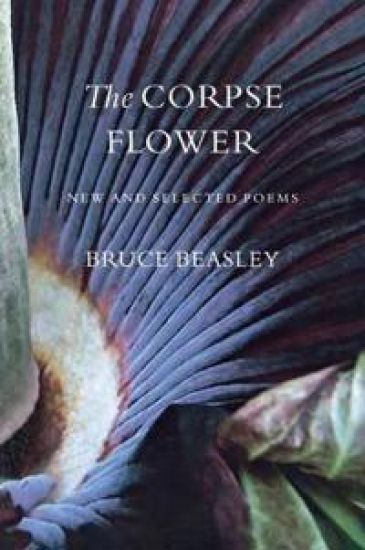
The Corpse Flower

The Corpse Flower

Bruce Beasley

University of Washington Press
2007
sidottu
The Corpse Flower brings works from Bruce Beasley's first four award-winning collections together with twenty-five new poems, organizing them around the metaphor that gives the book its title: an enormous tropical bloom that reeks like carrion, and around whose three-day florescence "dung beetles & flies & sweat bees swarm / . . . pollen gummed all over / their furred feet." The corpse flower serves as a figure for Beasley's coming to terms with birth and death, fecundity and decay, the illusion of death, and the flourishing of the rare and beautiful out of the materials of the decayed.The Corpse Flower traces a spiritual pilgrimage, weaving autobiography into a larger meditation on the materials of language and of the life of the spirit. Beasley's is a deeply physical spirituality - as he writes in one poem, "the soul's / impossible to tell / from the objects of its appetite." Throughout these poems, family mythology, as well as religious and mythic narrative and iconography, become occasions for extraordinary meditations on the physicality of birth and death, beginnings and endings. This substantial selection of Bruce Beasley's work, written over a twenty year period, offers the opportunity to experience, page by page, a poet's evolution, and to follow a unique, creative mind as it reaches, through interrogations of faith, science, and art, toward some form of resolution - a resolution increasingly represented by the beauties of language itself.On Summer Mystagogia"These brilliant poems, often both mythic and demotic, powerfully initiate the reader into a world at once marred and yet suffused by the signs and wonders of an 'irresistible grace.' . . . A wonderfully resilient and hard-won poetry of witness." -Boston Review
The Corpse Flower

The Corpse Flower

Bruce Beasley

University of Washington Press
2007
pokkari
The Corpse Flower brings works from Bruce Beasley's first four award-winning collections together with twenty-five new poems, organizing them around the metaphor that gives the book its title: an enormous tropical bloom that reeks like carrion, and around whose three-day florescence "dung beetles & flies & sweat bees swarm / . . . pollen gummed all over / their furred feet." The corpse flower serves as a figure for Beasley's coming to terms with birth and death, fecundity and decay, the illusion of death, and the flourishing of the rare and beautiful out of the materials of the decayed.The Corpse Flower traces a spiritual pilgrimage, weaving autobiography into a larger meditation on the materials of language and of the life of the spirit. Beasley's is a deeply physical spirituality - as he writes in one poem, "the soul's / impossible to tell / from the objects of its appetite." Throughout these poems, family mythology, as well as religious and mythic narrative and iconography, become occasions for extraordinary meditations on the physicality of birth and death, beginnings and endings. This substantial selection of Bruce Beasley's work, written over a twenty year period, offers the opportunity to experience, page by page, a poet's evolution, and to follow a unique, creative mind as it reaches, through interrogations of faith, science, and art, toward some form of resolution - a resolution increasingly represented by the beauties of language itself.On Summer Mystagogia"These brilliant poems, often both mythic and demotic, powerfully initiate the reader into a world at once marred and yet suffused by the signs and wonders of an 'irresistible grace.' . . . A wonderfully resilient and hard-won poetry of witness." -Boston Review
Lord Brain

Lord Brain

Bruce Beasley

University of Georgia Press
2005
pokkari
Lord Brain is an extended meditation on the psyche (in its double sense of mind and soul) in its relationship to that three-pound bundle in our skull. Bruce Beasley’s collection of thirty-one poems is named for Sir Walter Russell Brain, or Lord Brain (1895-1966), the eminent British neuroscientist and author of Brain’s Diseases of the Nervous System. Bringing into conversation the disparate fields of neuroscience, theology, linguistics, particle physics, and theology, these poems investigate in both lyrical and scientific terms the relationship of brain to mind and soul, and of brain to the cosmos and God.Whether discussing cosmology or astrophysics, neurobiology or insect physiology, Lord Brain connects the inner cosmos of our human anatomy with the external forces (material and divine) that brought the cosmos into being.