Kirjojen hintavertailu. Mukana 12 390 323 kirjaa ja 12 kauppaa.

Kirjailija

Bruce D. Chilton

Kirjat ja teokset yhdessä paikassa: 20 kirjaa, julkaisuja vuosilta 1996-2025, suosituimpien joukossa The Missing Jesus. Vertaile teosten hintoja ja tarkista saatavuus suomalaisista kirjakaupoista.

Mukana myös kirjoitusasut: Bruce D Chilton

20 kirjaa

Kirjojen julkaisuhaarukka 1996-2025.

Aramaic Jesus

Aramaic Jesus

Bruce D. Chilton

Baylor University Press
2025
sidottu
Aramaic, one of the great international languages of antiquity, left an indelible mark on the New Testament. Jesus and his first followers knew it because for centuries Aramaic had been a primary means of communication in the Middle East, and it remained current long after their time. Usage of Aramaic within Jesus' movement, initially with or without recourse to other languages, helped provide the fledgling community with a cultural as well as linguistic identity. Precise examples of the words of Jesus' teaching in Aramaic, reinforced by portrayals of him among Aramaic speakers, are explicit in the Gospels. Whatever other language choices he may have made, the Greek Gospels portray him as employing Aramaic as his medium of teaching. Bruce Chilton's Aramaic Jesus is a groundbreaking study in pursuit of this "Aramaic Jesus," a pursuit that requires awareness of the kind of Aramaic in play. In the past, sorting out dialects and types of Aramaic relied on sources composed well after the time of the New Testament; this work factors in analysis of the Dead Sea Scrolls and related materials to access forms of Aramaic current during the first century CE. Since the depiction of Jesus in the Gospels involves various intersections with Aramaic, tracing the impact of Aramaic in the depiction of Jesus within the New Testament entails several investigative categories: specific cases in which Aramaic is identifiably transliterated within the Greek Gospels; analysis that accounts for the cultural settings of Aramaic through the technique of retroversion (involving translation back into Aramaic); and assessment of noticeable overlaps between the New Testament and contemporaneous Aramaic literature, where thematic emphases emerge that relate Jesus' movement to Second Temple Judaism. The writings we call the Gospels involved transitions from the au/orality of Jesus and his movement to reliance upon writing, and from their language(s) to written Koine Greek. Those shifts involved an increasing resort to narrative and literary conventions. The extent to which Aramaic is a factor within this process is uncharted, and this volume clarifies the issues that are in play. Chilton's analysis illuminates the Aramaic Jesus and the people and processes that conveyed his memory.
Synoptikon: Streams of Tradition in Mark, Matthew, and Luke
This Synoptikon brings together the Synoptic Gospels, freshly translated, comparing them with materials selected from previous volumes in this series. The aim is to serve commentators who engage the Gospels critically and with the awareness that a consideration of their Judaic environments is crucial. Placing the texts within that setting evokes particular streams of tradition that interacted so as to produce the Gospels. These are set out in distinctive typefaces, so that readers may assess the depth of the Synoptic tradition as well as the breadth of its development.
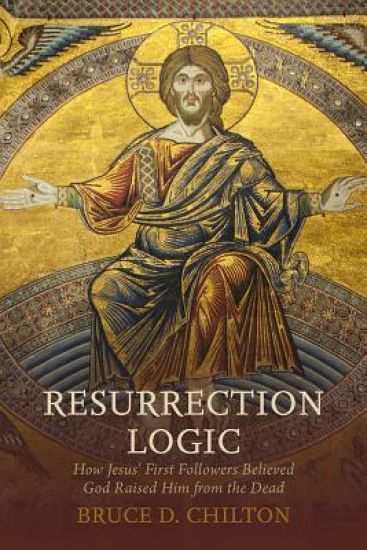
Resurrection Logic

Resurrection Logic

Bruce D. Chilton

Baylor University Press
2019
sidottu
Death does not speak the final word. Resurrection does. Christianity stands or falls with this central confession: God raised Jesus from the dead.Bruce Chilton investigates the Easter event of Jesus in Resurrection Logic. He undertakes his close reading of the New Testament texts without privileging the exact nature of the resurrection, but rather begins by situating his study of the resurrection in the context of Sumerian, Egyptian, Greek, and Syrian conceptions of the afterlife. He then identifies Jewish monotheistic affirmations of bodily resurrection in the Second Temple period as the most immediate context for early Christian claims. Chilton surveys first-generation accounts of Jesus' resurrection and finds a pluriform - and even at times seemingly contradictory - range of testimony from Jesus' first followers. This diversity, as Chilton demonstrates, prompted early Christianity to interpret the resurrection traditions by means of prophecy and coordinated narrative.In the end, Chilton points to how the differing conceptions of the ways that God governs the world produced distinct understandings - or ""sciences"" - of the Easter event. Each understanding contained its own internal logic, which contributed to the collective witness of the early church handed down through the canonical text. In doing so, Chilton reveals the full tapestry of perspectives held together by the common-thread confession of Jesus' ongoing life and victory over death.
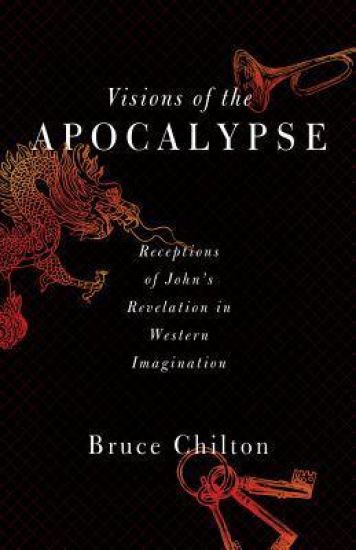
Visions of the Apocalypse

Visions of the Apocalypse

Bruce D. Chilton

Baylor University Press
2013
nidottu
John's Revelation has led to countless diverse and divergent interpretations. Readers' cryptic notions of violent end-time scenarios, strict prophetic truths, and encouragement for the faithful have undeniably colored the book's reception through the centuries. In Visions of the Apocalypse, Bruce Chilton maps the ways in which the text has been read through the centuries and introduces these main interpretations of Revelation, such as Papias' millenarian kingdom, Augustine's vertical ascent to heaven, Origen's transcendent message, and Dionysius' belief in Revelation's hidden message. Visions of the Apocalypse provides the ways in which Revelation has been read and suggests to today's readers the strategies for understanding John's Revelation in a contemporary context.
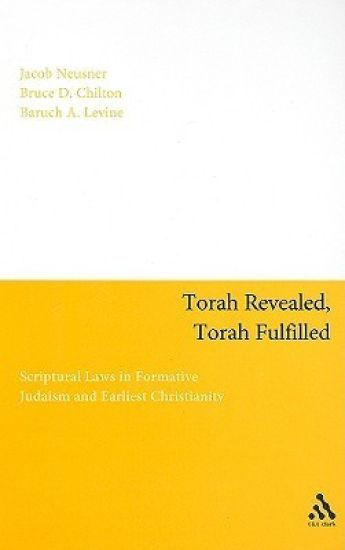
Torah Revealed, Torah Fulfilled

Torah Revealed, Torah Fulfilled

Jacob Neusner; Bruce D. Chilton; Baruch A. Levine

T. T.Clark Ltd
2011
nidottu
The authors seek to identify the recurrent tensions, the blatant points of emphasis, the recurring indications of conflict and polemic. Framing the issue of the disposition of the Scriptural heritage in broad terms, they describe what characterizes the Gospels and the Mishnah, the letters of Paul and the Tosefta. In other words, if they take whole and complete the writings of first and second century people claiming to form the contemporary embodiment of Scripture's Israel and ask what they all stress as a single point of insistence, the answer is self-evident. Nearly every Christianity and nearly all known Judaisms appeal for validation to the Scriptures of ancient Israel, their laws and narratives, their prophecies and visions. To Scripture all parties appeal GCo but not to the same verses of Scripture. In Scripture, all participants to the common Israelite culture propose to find validation GCo but not to a common theological program subject to diverse interpretation. From Scripture, every community of Judaism and Christianity takes away what it will, but not with the assent of all the others.
The Targums

The Targums

Paul V. M. Flesher; Bruce D. Chilton

Baylor University Press
2011
nidottu
The value and significance of the targums - translations of the Hebrew Bible into Aramaic, the language of Palestinian Jews for centuries following the Babylonian Exile - lie in their approach to translation: within a typically literal rendering of a text, they incorporate extensive exegetical material, additions, and paraphrases. These alterations reveal important information about Second Temple Judaism, its interpretation of its bible, and its beliefs.This remarkable survey introduces critical knowledge and insights that have emerged over the past forty years, including targum manuscripts discovered this century and targums known in Aramaic but only recently translated into English. Prolific scholars Flesher and Chilton guide readers in understanding the development of the targums, their relationship to the Hebrew Bible, their dates, their language, their place in the history of Christianity and Judaism, and their theologies and methods of interpretation.
Torah Revealed, Torah Fulfilled

Torah Revealed, Torah Fulfilled

Jacob Neusner; Bruce D. Chilton; Baruch A. Levine

T. T.Clark Ltd
2008
sidottu
The authors seek to identify the recurrent tensions, the blatant points of emphasis, the recurring indications of conflict and polemic. Framing the issue of the disposition of the Scriptural heritage in broad terms, they describe what characterizes the Gospels and the Mishnah, the letters of Paul and the Tosefta. In other words, if they take whole and complete the writings of first and second century people claiming to form the contemporary embodiment of Scripture's Israel and ask what they all stress as a single point of insistence, the answer is self-evident. Nearly every Christianity and nearly all known Judaisms appeal for validation to the Scriptures of ancient Israel, their laws and narratives, their prophecies and visions. To Scripture all parties appeal - but not to the same verses of Scripture. In Scripture, all participants to the common Israelite culture propose to find validation - but not to a common theological program subject to diverse interpretation. From Scripture, every community of Judaism and Christianity takes away what it will, but not with the assent of all the others.
Revelation

Revelation

Jacob Neusner; Bruce D Chilton

Wipf Stock Publishers
2004
pokkari
Here is a superb resource for all who wish to deepen their understanding of Judaism and Christianity and the relationship between these two great traditions. The authors compare and contrast the paramount theological categories of Judaism and Christianity, specifically Torah, God, and Israel for Judaism, and Bible, God, and church for Christianity. 'Revelation' is the first of three volumes in support of this effort. It consists of a conversation between the Torah and its authoritative representation in the Talmud of Babylonia (a complete and exhaustive statement of God's will for Judaism) and the Christian Bible (Hebrew Scriptures and New Testament), including the interpretation of scripture within the primitive church as the foundation of Christian authority. Within this conversation the authors do not sidestep profound disagreement in favor of proposing obscure theological difference. Each believes in his tradition and its affirmations, and each seeks to grasp the rationality of the views of the other.
God in the World

God in the World

Jacob Neusner; Bruce D Chilton

Wipf Stock Publishers
2004
pokkari
The authors address the issue of God in this world which, in the classical documents of formative Judaism, encompasses the diverse ways in which we meet God in the here and now. The counterpart in Christianity is meeting God in the incarnation of Jesus Christ. As heirs to the common scripture of ancient Israel, both Judaism and Christianity identify humanity as the worldly image of God. The two traditions concur that, since we are made in God's image, we see God in the face of one another. The conception of incarnation is therefore as Judaic as it is Christian. The point of difference between the two becomes clear when we ask how incarnation is realized. This book is the final volume in a trilogy. Previously published volumes include 'Revelation: The Torah and the Bible' and 'The Body of Faith: Israel and the Church'.
Trading Places Sourcebook

Trading Places Sourcebook

Bruce D. Chilton

Wipf Stock Publishers
2004
pokkari
An accompaniment to "Trading Places", this sourcebook contains critical passages from primary sources within each tradition, along with insightful commentaries by Professors Chilton and Neusner. Designed for classroom use.
The Missing Jesus

The Missing Jesus

Bruce D. Chilton; Craig A. Evans; Jacob Neusner

Brill
2003
nidottu
How can Jesus be said to be “missing”? What is “missing” is not by any means reference to Jesus: what is missing is rather an entire dimension of his identity. The “missing” Jesus is Jesus within Judaism. This publication has also been published in hardback please click here for details.
Comparing Spiritualities

Comparing Spiritualities

Bruce D. Chilton; Jacob Neusner

Continuum International Publishing Group - Trinity
2000
nidottu
In this book, Jacob Neusner and Bruce Chilton ask simply, "What are experiences both distinctive to the spiritual life of Torah and Christ, respectively, and also accessible to our common humanity?" They examine the experiences of "birth in the faith, death in the faith, and bearing witness to the faith." Each writer explores the ways in which classical statements of Torah and Christ represent critical moments in a person's life of faith, and offers a comparison of the spiritual piety that each religion teaches and nurtures.
Jesus' Baptism and Jesus' Healing

Jesus' Baptism and Jesus' Healing

Bruce D. Chilton

Continuum International Publishing Group - Trinity
1998
pokkari
Within the environment of the Judaism of his day, Jesus practiced a unique understanding of purity grounded in his eschatological vision of how God was acting to gather his people. But Jesus practice was not only a matter of getting people to see God in the same way as he did. He also acted directly to put his own view of purity into effect, declaring clean what earlier had been considered unclean. This was already a concern in the ministry of John the baptizer, and it is apparent now that Jesus too was moved by the prospect of the purification of all Israel.The politics of Herod Antipas within Imperial Rome had made John s program appear seditious, and Jesus needed to be aware of this. In addition, John had conceived of God as preparing a pure people by means of immersion, but Jesus saw the people of his Galilee already pure and ready for the disclosure of a kingdom they could already celebrate. This is what caused Jesus to stop baptizing people as he had once done as John s disciple and to begin a dedicated ministry of healing based on his awareness of the Spirit within him, an awareness that emerges as a major concern of this book. A final portion of the book studies how baptism within the earliest church emerged as a celebration of the Spirit of God."An innovative perception of how a rite of purity might be understood when set over against its manifold historical contexts: religious, sociological, historical, political, and anthropological." -- Scot McKnight, North Park UniversityBruce Chilton, New Testament and Judaic scholar, is Bernard Iddings Bell Professor of Religion at Bard College, Annandale-on-Hudson, NY.>
The Body of Faith

The Body of Faith

Jacob Neusner; Bruce D. Chilton

Continuum International Publishing Group - Trinity
1996
nidottu
Here is the second of three volumes (the first, Revelation: The Torah and the Bible, was published in 1995) whose purpose is to compare and contrast the paramount theological categories of Judaism and Christianity. The volumes provide the faithful of both Judaism and Christianity with informative, factual accounts of how Judaism and Christianity addressed the same issues and set forth their own distinctive program and set of propositions.While religions speak to individuals in the privacy of their hearts, they also define themselves through social entities such as church, holy people, nation of Islam, kingdom of God. In this book, Professors Neusner and Chilton bring reader to a consideration of Israel in Judaism and Christianity. When Jews call themselves Israel, their initial claim is that they constitute the Israel to whom God gave the Torah. All of those who inherit these Hebrew scriptures, specifically Christians, also claim to form an Israel because they receive these scriptures.Individual chapters in part one deal with Israel in the theology of Judaism, Israel as a kingdom of priests and holy nation, Israel as family, and Israel as (Christian) Rome. Part two examines Jesus and the absence of Israel; the Israel of James, the community of Q and Peter; and the church (ekklesia) in the Synoptic Gospels, Paul, Hebrews, and Revelation.The volumes in this series are excellent resources for all who wish to deepen their understanding of Judaism and Christianity and the relationship between these two great traditions.Jacob Neusner, leading scholar of the formative age and writings of Judaism, is Distinguished Research Professor of Religious Studies at the University of South Florida, Tampa.Bruce D. Chilton, New Testament and Judaic scholar, is Bernard Iddings Bell Professor of Religion at Bard College, Annandale-on-Hudson, NY.>