Kirjojen hintavertailu. Mukana 12 390 323 kirjaa ja 12 kauppaa.
Kirjailija
Bruce E. Johansen
Kirjat ja teokset yhdessä paikassa: 35 kirjaa, julkaisuja vuosilta 1996-2024, suosituimpien joukossa Environmental Racism in the United States and Canada. Vertaile teosten hintoja ja tarkista saatavuus suomalaisista kirjakaupoista.
Developing an original approach, this book examines how both nationalism and climate change threaten humankind with future catastrophes, arguing that humanity is on a fast track to a dystopian future unless significant changes are implemented. While the world warms, wars driven by nationalism may lead to worldwide devastation, with humankind being caught between two existential threats of its own creation. The author explains how both nationalism and climate change originate from human ingenuity and can only be answered by human cooperation. While, in a perfect world, such problems already would have been solved by the United Nations, this isn't the case in reality. The book discusses how humanity’s many peoples can cooperate to a degree necessary to retain mutual respect without war, in the interest of achieving long-term change which will use technology for mutual good, also “dodging the bullet” of climate change. Offering an outlook into a possible better world, the author also analyzes the massive changes required for everyone to face, discuss, and solve the problems at hand. The book will appeal to students, scholars, and researchers of political science, international relations, and environmental sciences, as well as practitioners and a general audience interested in the study of nationalism, diplomacy, wars, and climate change.
This textbook introduces readers to basic scientific principles of climate change. Based on extensive empirical evidence, it explains weather events that indicate climate change’s evolution and presents important topics connected to climate change, such as political controversies, climate policy, as well as Native American perspectives. Finally, it presents attempted solutions, including policy recommendations and technological proposals for necessary changes in our world.Providing a well-written and easy-to-follow overview of knowledge of science-based geophysical facts, including thermodynamics, the book puts a strong emphasis on why expeditious action on global warming is urgent. The book also explains why smart greenhouse-gas reduction strategies will ignite economic growth, generate new domestic jobs, protect public health, and strengthen energy security.Not assuming a scientific background on the part of the reader, Global Warming and the Climate Crisis: Science, Spirit, and Solutions offers an ideal supplemental reading in many types of courses in Earth sciences, climate policy, climate change sciences, as well as politics of climate change, from high school through undergraduate. General readers also will benefit from its treatment of this very important and timely issue.
This book focuses on the toxic legacy of Native North America, which is pervasive but largely invisible to most non-Native peoples. Many toxic sites are located in out-of-the-way rural areas largely forgotten by the majority of America, but which nonetheless have supplied its industries with the rudiments of manufacturing for the better part of a century before being closed and cast aside. Thousands of contaminated sites exist in the United States due to dumped, left out, or otherwise improperly managed hazardous waste. These sites include manufacturing facilities, processing plants, landfills, and mining sites. Based on the 1980 Comprehensive Environmental Response, Compensation and Liability Act (CERCLA), the US Environmental Protection Agency (EPA) cleans up these so-called Superfund sites, of which roughly 40 percent are located in Native country.The book links present-day Native American cultural and economic revival to a fundamental struggle to restore the health of both Native peoples and their homelands. It links past and present with a sense of Native Americans’ perceptions of nature and the sacred land. By doing so, it also provides the majority society with an example to emulate as we emerge, by necessity, from the age of fossil fuels into a sustainable energy paradigm. This makes the book a must-read for students, scholars, and researchers of Native American studies, US politics, environmental studies, public policy, as well as policy-makers interested in a better understanding of the environmental devastation of Native land and its consequences.
A vivid description of the people, events, and issues that forever changed the lives of Native Americans during the 1960s and 1970s—such as the occupation of Alcatraz, fishing-rights conflicts, and individuals such as Clyde Warrior. Rising out of more than a century of poverty and pervasive repression, stoked by the example of the movement against the Vietnam War and the upheaval among black and Chicano civil-rights activists, the American Indian Movement shifted the debate over "the Indian problem" to a new level. Many Native peoples also took a stand for fishing rights, land rights, and formed resistance to coal and uranium mining on tribal land. This work tells the story of that movement, and provides the first encyclopedic treatment of this subject. Providing a vital documentation of a controversial and often surprising period in American Indian history, Bruce E. Johansen, an accomplished scholar and authority on Native American history, provides more than descriptions of historic events and careful analysis; he also frames what occurred in the American Indian Movement personally and anecdotally, drawing from individual stories to illustrate larger trends—and to ensure that the material is appealing to high school students, university-level readers, and general readers alike.
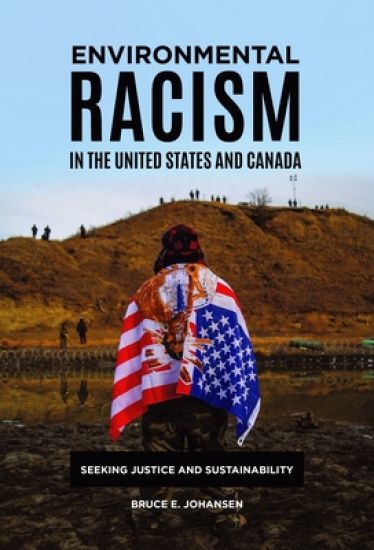
From Flint, Michigan, to Standing Rock, North Dakota, minorities have found themselves losing the battle for clean resources and a healthy environment. This book provides a modern history of such environmental injustices in the United States and Canada. From the 19th-century extermination of the buffalo in the American West to Alaska's Project Chariot (a Cold War initiative that planned to use atomic bombs to blast out a harbor on Eskimo land) to the struggle for recovery and justice in Puerto Rico following Hurricane Maria in 2017, this book provides readers with an enhanced understanding of how poor and minority people are affected by natural and manmade environmental crises. Written for students as well as the general reader with an interest in social justice and environmental issues, this book traces the relationship between environmental discrimination, race, and class through a comprehensive case history of environmental injustices. Environmental Racism in the United States and Canada: Seeking Justice and Sustainability includes 50 such case studies that range from local to national to international crises.
Developing an original approach, this book examines how both nationalism and climate change threaten humankind with future catastrophes, arguing that humanity is on a fast track to a dystopian future unless significant changes are implemented. While the world warms, wars driven by nationalism may lead to worldwide devastation, with humankind being caught between two existential threats of its own creation. The author explains how both nationalism and climate change originate from human ingenuity and can only be answered by human cooperation. While, in a perfect world, such problems already would have been solved by the United Nations, this isn't the case in reality. The book discusses how humanity’s many peoples can cooperate to a degree necessary to retain mutual respect without war, in the interest of achieving long-term change which will use technology for mutual good, also “dodging the bullet” of climate change. Offering an outlook into a possible better world, the author also analyzes the massive changes required for everyone to face, discuss, and solve the problems at hand. The book will appeal to students, scholars, and researchers of political science, international relations, and environmental sciences, as well as practitioners and a general audience interested in the study of nationalism, diplomacy, wars, and climate change.
This textbook introduces readers to basic scientific principles of climate change. Based on extensive empirical evidence, it explains weather events that indicate climate change’s evolution and presents important topics connected to climate change, such as political controversies, climate policy, as well as Native American perspectives. Finally, it presents attempted solutions, including policy recommendations and technological proposals for necessary changes in our world.Providing a well-written and easy-to-follow overview of knowledge of science-based geophysical facts, including thermodynamics, the book puts a strong emphasis on why expeditious action on global warming is urgent. The book also explains why smart greenhouse-gas reduction strategies will ignite economic growth, generate new domestic jobs, protect public health, and strengthen energy security.Not assuming a scientific background on the part of the reader, Global Warming and the Climate Crisis: Science, Spirit, and Solutions offers an ideal supplemental reading in many types of courses in Earth sciences, climate policy, climate change sciences, as well as politics of climate change, from high school through undergraduate. General readers also will benefit from its treatment of this very important and timely issue.
This book focuses on the toxic legacy of Native North America, which is pervasive but largely invisible to most non-Native peoples. Many toxic sites are located in out-of-the-way rural areas largely forgotten by the majority of America, but which nonetheless have supplied its industries with the rudiments of manufacturing for the better part of a century before being closed and cast aside. Thousands of contaminated sites exist in the United States due to dumped, left out, or otherwise improperly managed hazardous waste. These sites include manufacturing facilities, processing plants, landfills, and mining sites. Based on the 1980 Comprehensive Environmental Response, Compensation and Liability Act (CERCLA), the US Environmental Protection Agency (EPA) cleans up these so-called Superfund sites, of which roughly 40 percent are located in Native country.The book links present-day Native American cultural and economic revival to a fundamental struggle to restore the health of both Native peoples and their homelands. It links past and present with a sense of Native Americans’ perceptions of nature and the sacred land. By doing so, it also provides the majority society with an example to emulate as we emerge, by necessity, from the age of fossil fuels into a sustainable energy paradigm. This makes the book a must-read for students, scholars, and researchers of Native American studies, US politics, environmental studies, public policy, as well as policy-makers interested in a better understanding of the environmental devastation of Native land and its consequences.
Honoring the Circle: Ongoing Learning from American Indians on Politics and Society, Volume IV: What Would Be Good to Continue Learning from Indigenous Peoples about the Environment and Education opens showing the importance of making an Indigenous approach to the world's complex environmental crises. Narrowly focused Western science and culture have made great advances, enabling people to live longer and better. But failing to consider broad and long-term impacts of actions has brought the Earth to the threshold of environmental catastrophes. Human-influenced climate change is the most pressing, but pollution, overuse of resources and overpopulation are all involved.Indigenous decisionmakers would have avoided this crisis by noting that everything is part of an interrelated whole. Western culture and science, is moving in this direction, but needs to further integrate Native approaches, considering side effects of actions over time before acting. As situations change and the future is unpredictable, policy must be reviewed regularly. For example, new chemicals should not be approved for use before extensive investigation of their safety, with ongoing research on the effects of their use for updating their regulation.Western culture and science, have underestimated differences in locations and people, assuming that what works well for one will work for another. A farmer in Brazil, who purchased a harvester that functioned perfectly in Iowa almost lost his crop when it would not work on his Brazilian farm. Studies of the efficacy of a drug in one demographic segment often do not indicate its efficacy or side effects in another group. The Native notion of difference of place needs more attention.Understanding diversity also needs to be applied in education, adjusting for different learning styles and rates of individuals and cultures. U.S. education has often functioned poorly, but schools at all levels have done very well by taking an Indigenous approach, seeing education as providing guidance and protection in facilitating unique creative whole individuals' learning who they are, as responsible community members, through participating in a variety of positive experiences. The private coed Putney School, an example of Indian-influenced John Dewey's progressive education, is strong on academics, especially in the arts. It involves students in problem-solving and seeing all sides of issues in small classes with numerous individual projects. Students have many leadership opportunities, including serving with faculty and staff on the community council and school committees. They discuss community issues in assemblies and participate in running the school and its farm through work that may include tasks in community service organizations. With concern for the environment, Putney also offers experience in nature.East Harlem public schools, in one of the poorest communities in the U.S., went from the lowest to the highest educational achievement ratings for many years by moving to a variety of small programs for students with different needs. Cross-culturally, Nueva Escuela schools in rural Colombia, based on research on what works, with student team research and community involvement, outperformed urban schools. In higher education, students excelled when engaged with the subject matter in dialogue, simulation, guided imagination and community involvement.In conclusion, the four volumes of Honoring the Circle show the extensive ongoing learning of the West from Indians and the increasing advantage of living according to Indigenous values, as doing so comes more to the fore, as exemplified by the U.S. progressive movement, accompanied by an increase in Native voices, with a surge in Indians elected to office.
From its beginnings in Seattle nearly fifty years ago, El Centro de la Raza has been translated as “The Center for People of All Races.” In Seattle’s El Centro de la Raza: Dr. King’s Living Laboratory, Bruce E. Johansen, with valuable aid from Estela Ortega, executive director, and Miguel Maestas, Housing and Development director at El Centro, explores how the center has become part of a nationally significant work in progress on human rights and relations based on Dr. Martin Luther King Jr.’s concept of a “Beloved Community” that crosses all ethnic, racial, and other social boundaries. Johansen’s examination of the history of the center highlights its mission to consciously provide intercultural communication and cooperation as an interracial bridge, uniting people on both a small and a large scale, from neighborhood communities to international relations. Scholars of Latin American studies, race studies, international relations, sociology, and communication will find this book especially useful.
From Flint, Michigan, to Standing Rock, North Dakota, minorities have found themselves losing the battle for clean resources and a healthy environment. This book provides a modern history of such environmental injustices in the United States and Canada.From the 19th-century extermination of the buffalo in the American West to Alaska's Project Chariot (a Cold War initiative that planned to use atomic bombs to blast out a harbor on Eskimo land) to the struggle for recovery and justice in Puerto Rico following Hurricane Maria in 2017, this book provides readers with an enhanced understanding of how poor and minority people are affected by natural and manmade environmental crises.Written for students as well as the general reader with an interest in social justice and environmental issues, this book traces the relationship between environmental discrimination, race, and class through a comprehensive case history of environmental injustices. Environmental Racism in the United States and Canada: Seeking Justice and Sustainability includes 50 such case studies that range from local to national to international crises.
From its beginnings in Seattle nearly 50 years ago, El Centro de la Raza’s name has been translated as “the center for people of all races.” In Seattle’s El Centro de la Raza: Dr. King's Living Laboratory, Bruce E. Johansen explores how the center has become part of a nationally significant work in progress on human rights and relations based on Dr. Martin Luther King Jr.’s concept of a “Beloved Community” that crosses all ethnic, racial, and other social boundaries. Johansen’s examination of the history of the center highlights its mission to consciously provide intercultural communication and cooperation as an interracial bridge, uniting people on both a small and large scale, from neighborhood communities to international relations. Scholars of Latin American studies, race studies, international relations, sociology, and communication will find this book especially useful.
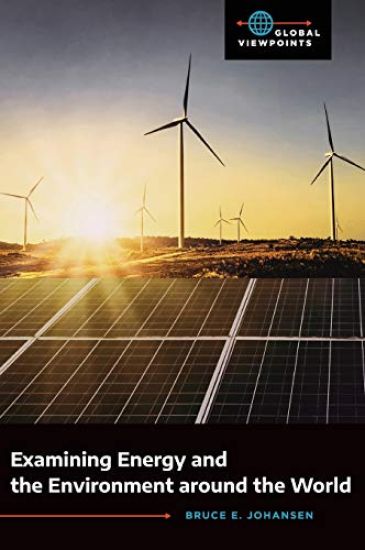
This volume addresses ten issues pertaining to energy and the environment, such as climate change, fossil fuels, endangered species, and renewable energy, and examines how these issues are affecting countries around the world.In the industrial age, first powered by coal and then more often by oil, environmental degradation nearly inevitably followed resource exploitation and energy production. This book examines environmental issues in specific countries around the world as well as solutions some of these countries have discovered in order to help save the environment.This volume includes 10 chapters, each addressing a specific issue relating to energy and the environment as it pertains to a variety of countries, including toxic chemicals, pollution, deforestation, and climate change. Each chapter begins with an introduction to the issue. Following the chapter introduction, each chapter highlights that issue in eight countries and provides historic perspective. This work provides an overview for high school students and college students at the undergraduate level on 10 important topics that address matters relating to energy and the environment in the 21st century.
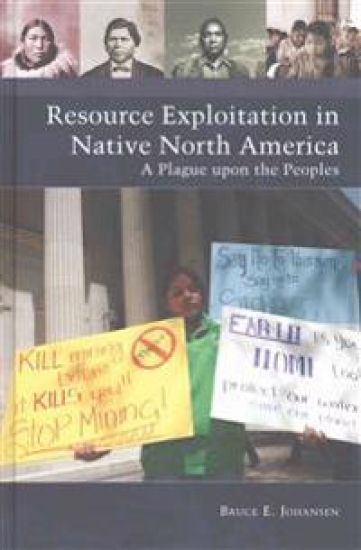
This wide-ranging survey of the environmental damage to Native American lands and peoples in North America—in recent times as well as previous decades—documents the continuing impact on the health, wellness, land, and communities of indigenous peoples.Beginning in the early 1950s, Native peoples were recruited to mine "yellow dust"—uranium—and then, over decades, died in large numbers of torturous cancers. Uranium-induced cancers have become the deadliest plague unleashed upon Native peoples of North America—one with grave consequences impacting generations of American Indian families. Today, resource-driven projects such as the Keystone XL pipeline continue to put the health and safety of American Indians at risk. Authored by an expert with 40 years of experience in the subject, this book documents the environmental provocations afflicting Native American peoples in the United States: from the toll of uranium mining on the Navajos to the devastation wrought by dioxin, PCBs, and other pollutants on the agricultural economy of the Akwesasne Mohawk reservation in northernmost New York. The detailed personal stories of human suffering will enable readers to grasp the seriousness of the injustices levied against Native peoples as a result of corporations' and governments' greed for natural resources.
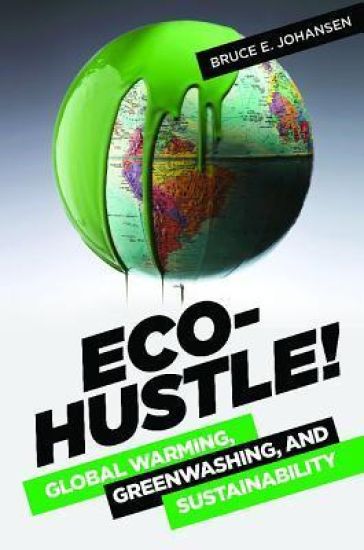
How many of our efforts to save the environment are effective? Learn how our system is simply masking the symptoms of global warming.Climate change is more than just a buzzword. It is a reality that society and industry have failed to deal with effectively. "Greenwashing," a term that author Bruce E. Johansen defines as the "environmental sleight of hand" performed by technology and advertising, has us convinced that certain "green" practices are sustainable. In his book, Johansen examines the sanctioned activities and practices commonly touted as environmentally responsible and points out their failings. He explains why the global climate change problem is more urgent than many people think, and provides real-world examples of companies that are taking measures with genuine benefits to the environment.Presenting information relevant to every inhabitant of earth and that environmentalists, climate scientists, and students and educators in environmental studies will find essential reading, this book brings questions about legislation and economics to the forefront and asks whether today's system can support a true effort at sustainable living. It presents honest—and what some readers may find surprising—answers to inquiries into what is really "good for the environment," such as why corn ethanol may be worse for the atmosphere than oil and why coal capture and sequestration may be the worst "green" idea yet.
A vivid description of the people, events, and issues that forever changed the lives of Native Americans during the 1960s and 1970s—such as the occupation of Alcatraz, fishing-rights conflicts, and individuals such as Clyde Warrior.Rising out of more than a century of poverty and pervasive repression, stoked by the example of the movement against the Vietnam War and the upheaval among black and Chicano civil-rights activists, the American Indian Movement shifted the debate over "the Indian problem" to a new level. Many Native peoples also took a stand for fishing rights, land rights, and formed resistance to coal and uranium mining on tribal land. This work tells the story of that movement, and provides the first encyclopedic treatment of this subject.Providing a vital documentation of a controversial and often surprising period in American Indian history, Bruce E. Johansen, an accomplished scholar and authority on Native American history, provides more than descriptions of historic events and careful analysis; he also frames what occurred in the American Indian Movement personally and anecdotally, drawing from individual stories to illustrate larger trends—and to ensure that the material is appealing to high school students, university-level readers, and general readers alike.
In this two-volume encyclopedia for general readers and students of all levels, Bruce E. Johansen marshals scientific work on global warming into 300 articles presented in clear and understandable language. Comprehensive in scope and accessible to all reader levels, The Encyclopedia of Global Warming Science and Technology covers a vast range of topics, concepts, issues, processes, and scientists sifted and melded from the many scientific and technological fields. These include atmospheric chemistry, paleoclimatology, biogeography, oceanography, geophysics, glaciology, soil science, and more. Bruce E. Johansen digests the explosion of scientific work on global warming that has been published since 1980 and presents it in a set that is sure to be the indispensable standard reference work on the topic. The information here is of importance to just about everyone on the planet—for the findings of global warming science and technology should dictate the choices we make today to secure our common future. This encyclopedia will prove useful for many different types of professionals, inasmuch as global warming science informs public policy debates, applied science, and technology in such fields as energy generation, architecture, engineering, and agriculture.
The Global Warming Combat Manual describes the practical measures that readers can take in their daily lives to reduce their carbon footprints, while showing how to link one's personal choices with the big-picture science and the big-scale campaigns to combat global warming on the political, legal, economic, and technological fronts. The emphasis throughout is on practical tips for ways in which people can help combat global warming in their everyday roles as citizens, consumers, homeowners, employees, commuters, tourists, sportsmen, business owners, or farmers. Johansen—assisted by climatologist James Hansen's foreword and appendix—gives general readers the tools they need to calculate and put into action the most rational and ethical green choices. Dovetailing the personal with the technological and public-policy dimensions, this book lays out the whole battery of existing, emerging, and speculative solutions for global warming. These range from the humdrum and easy (keeping your tires properly inflated), through the necessary and hard (retooling the ways you transport, house, and feed yourself for maximum energy efficiency and minimum carbon footprint). They also encompass the possible (switching over a large fraction of our carbon-based energy sector to alternative sectors based on biofuel, wind, solar, and geothermal power), the visionary (creating a bacterium that will consume CO2), and the improbable (deploying giant reflecting mirrors in space), as well as the weird and dangerous (pumping sulfur aerosols into the stratosphere).
The accelerating pace of global warming is provoking anxiety that the Earth is reaching an ominous threshold, a point of no return. Within a decade or two, various feedbacks may take greenhouse warming past any human ability to contain or reverse it. Carbon-dioxide levels in the atmosphere are rising rapidly, fed by increasing fossil-fuel use world-wide, melting permafrost, slash-and-burn agriculture in Indonesia and Brazil, increasing wildfires, as well as rapid industrialization using dirty coal in China and India. Global warming may well become the most urgent problem the world faces during the 21st Century . Natural variations are no longer the major contribution (or forcing) in Earth's climate. Human contributions became the major factor about 1950. This book has been prepared as a reference for high-school students, but it also will be useful for anyone who wants a compact, plain-spoken basic guide to the science of global warming. Global Warming 101 begins with an examination of basic issues, followed by important controversies in the field. The book then describes scientific issues related to melting ice, rising seas, and effects on plants and animals, as well as human health. Global Warming 101 concludes with consideration of possible solutions. Global Warming 101 combines a survey of the science of global warming with reporting from around the world, from sinking Pacific islands and thawing Arctic permafrost, which indicate that significant global warming already has begun.