

Kirjailija
Bruce Fink
Kirjat ja teokset yhdessä paikassa: 28 kirjaa, julkaisuja vuosilta 1935-2025, suosituimpien joukossa The Adventures of Inspector Canal. Vertaile teosten hintoja ja tarkista saatavuus suomalaisista kirjakaupoista.
28 kirjaa
Kirjojen julkaisuhaarukka 1935-2025.


A lucid guide through the labyrinth of Lacanian theoryThis book provides an illuminating account of the theory of subjectivity found in the work of Jacques Lacan. Guiding readers through many facets of Lacanian theory, Bruce Fink unpacks such central notions as the Other, object a, the unconscious as structured like a language, alienation and separation, the paternal metaphor, jouissance, and sexual difference. He demonstrates that, against the tide of post-structuralist thinkers who proclaim “the death of the subject,” Lacan explores what it means to come into being as a subject in its ethical and ontological dimensions. Presenting Lacan’s thought in the context of his clinical preoccupations, The Lacanian Subject offers one of the most balanced, sophisticated, and penetrating views of Lacanian psychoanalysis available.
Ohio Biological Survey, Bull. 10, Vol. 11, No. 6
Bruce Fink; Leafy Jane Corrington Hilker
Anson Street Press
2025
pokkari
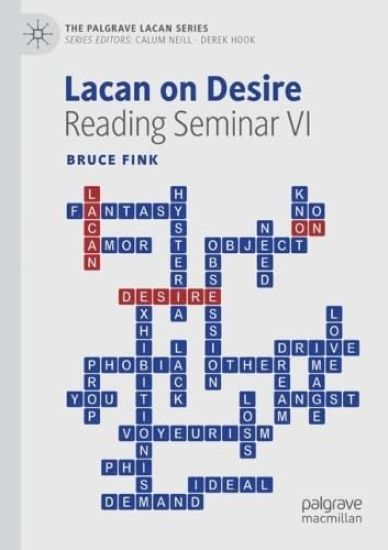
This companion to Lacan’s Seminar VI guides readers through an examination of desire, fantasy, dream interpretation, death, object a, and the signifier of the lack in the Other as they are elaborated by Lacan. Bruce Fink draws on his extensive experience as a practicing analyst and as a leading translator of Lacan’s work (including Seminar VI), in this highly accessible exploration which includes both close textual analysis and illustrative clinical vignettes. Seminar VI, Desire and Its Interpretation, and Fink’s discussion of it here constitute a timely intervention for clinicians, for whom an engagement with desire is pivotal to the direction of the treatment, and for students and scholars interested in philosophy, sociology, anthropology, comparative literature, art, film, and social and political theory, for whom desire, fantasy, and object a may be useful conceptual tools. Combining rigorous analysis and a clear writing style, this guide provides an invaluable new resource.
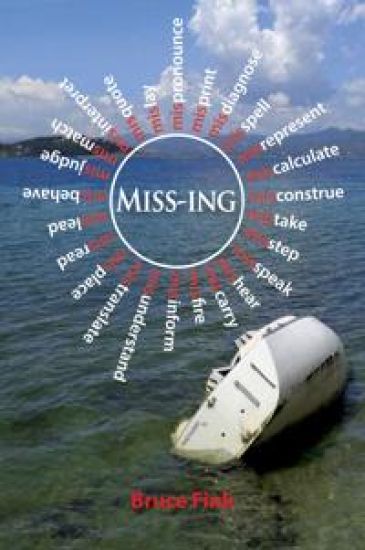
A collection of essays and pensées from a noted psychoanalyst and Lacanian thinker Inspired by Jacques Lacan's idea in his Seminar VI that "Human beings cannot help but consider themselves to be [. . .] missing something" this series of essays explores the idea of lack under multiple themes.

Enter into the world of Police Inspector Canal, whose fascination with wonderful wines and fabulous food draw him to the Loire River Valley, entangling him in intrigues involving wine, math, music, art, and even sports. Police Inspector Canal has a love for all things French - and particularly French women - which leads him to the Loire Valley. Here, outlandish crimes occur at an ever more frenzied pace in the world-famous castles along the royal river, from Chambord and Chenonceau, Amboise and Azay, to Saumur and Oiron. In order to crack them, Canal, with a psychological flare that has nothing Renaissance about it, has to solve architectural secrets as well as the many mysteries of wine tasting! Novelist and psychoanalyst, Bruce Fink is the author of numerous detective novels that span two continents, jumping from New York to Paris and on to all the great vineyards of France.

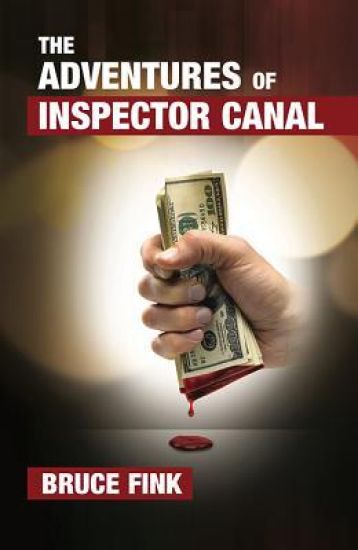
The first mystery novel in the Inspector Canal series. Psychoanalysts make the best detectives! When it comes to divining motives, deciphering ambiguous pronouncements, detecting delusions, and foiling the tricks memory plays, famed French analyst Jacques Lacan - turned self-proclaimed retired Inspector Quesjac Canal - is second to none (apologies to Conan Doyle's Sherlock Holmes, Agatha Christie's Hercule Poirot, Edgar Allen Poe's Dupin, and Umberto Eco's William of Baskerville). Reluctantly drawn into helping hapless New York City police detectives with crimes reported by luminaries like Rolland Saalem, music director of the New York Philharmonic Orchestra, and involving prominent personages like Tobias Trickler, Mayor of New York City, and Sandra Errand, Vice-President for North American sales at YVEH Distributors of Spirits, Canal solves cases that are anything but what they appear to be and mends tears of the heart and soul at the same time.
The Ascomycetes of Ohio, I. Preliminary Consideration of Classification, Volume 2, issue 5
Bruce Fink; C Audrey Richards
Palala Press
2018
pokkari
This work has been selected by scholars as being culturally important, and is part of the knowledge base of civilization as we know it. This work was reproduced from the original artifact, and remains as true to the original work as possible. Therefore, you will see the original copyright references, library stamps (as most of these works have been housed in our most important libraries around the world), and other notations in the work.This work is in the public domain in the United States of America, and possibly other nations. Within the United States, you may freely copy and distribute this work, as no entity (individual or corporate) has a copyright on the body of the work.As a reproduction of a historical artifact, this work may contain missing or blurred pages, poor pictures, errant marks, etc. Scholars believe, and we concur, that this work is important enough to be preserved, reproduced, and made generally available to the public. We appreciate your support of the preservation process, and thank you for being an important part of keeping this knowledge alive and relevant.
Having taught Freud to both undergraduate and graduate students for twenty years, Bruce Fink provides a highly readable introduction to Freud’s work that emphasises Freud’s enduring clinical relevance and usefulness to practitioners of many persuasions—not just to those who are psychoanalytically trained.

Quintessentially fascinating, love intrigues and perplexes us, and drives much of what we do in life. As wary as we may be of its illusions and disappointments, many of us fall blindly into its traps and become ensnared time and again. Deliriously mad excitement turns to disenchantment, if not deadening repetition, and we wonder how we shall ever break out of this vicious cycle.Can psychoanalysis – with ample assistance from philosophers, poets, novelists, and songwriters – give us a new perspective on the wellsprings and course of love? Can it help us fathom how and why we are often looking for love in all the wrong places, and are fundamentally confused about “what love really is”?In this lively and wide-ranging exploration of love throughout the ages, Fink argues that it can. Taking within his compass a vast array of traditions – from Antiquity to the courtly love poets, Christian love, and Romanticism – and providing an in-depth examination of Freud and Lacan on love and libido, Fink unpacks Lacan’s paradoxical claim that “love is giving what you don’t have.” He shows how the emptiness or lack we feel within ourselves gets covered over or entwined in love, and how it is possible and indeed vital to give something to another that we feel we ourselves don’t have.This first-ever commentary on Lacan’s Seminar VIII, Transference, provides readers with a clear and systematic introduction to Lacan’s views on love. It will be of great value to students and scholars of psychology and of the humanities generally, and to analysts of all persuasions.
Quintessentially fascinating, love intrigues and perplexes us, and drives much of what we do in life. As wary as we may be of its illusions and disappointments, many of us fall blindly into its traps and become ensnared time and again. Deliriously mad excitement turns to disenchantment, if not deadening repetition, and we wonder how we shall ever break out of this vicious cycle.Can psychoanalysis – with ample assistance from philosophers, poets, novelists, and songwriters – give us a new perspective on the wellsprings and course of love? Can it help us fathom how and why we are often looking for love in all the wrong places, and are fundamentally confused about “what love really is”?In this lively and wide-ranging exploration of love throughout the ages, Fink argues that it can. Taking within his compass a vast array of traditions – from Antiquity to the courtly love poets, Christian love, and Romanticism – and providing an in-depth examination of Freud and Lacan on love and libido, Fink unpacks Lacan’s paradoxical claim that “love is giving what you don’t have.” He shows how the emptiness or lack we feel within ourselves gets covered over or entwined in love, and how it is possible and indeed vital to give something to another that we feel we ourselves don’t have.This first-ever commentary on Lacan’s Seminar VIII, Transference, provides readers with a clear and systematic introduction to Lacan’s views on love. It will be of great value to students and scholars of psychology and of the humanities generally, and to analysts of all persuasions.



Against Understanding, Volume 2, casts a spotlight on the status of case studies in psychoanalysis, which are commonly used to illustrate clinicians’ expertise and mastery rather than patients’ actual itineraries. When a case is presented, the complex, unwieldy, and often self-contradictory material of a therapeutic trajectory is often vastly oversimplified in view of producing a linear narrative that seems perfectly to fit the parameters of a practitioner’s preferred theoretical framework. Bruce Fink attempts to eschew the appearance of "mastery" in assembling clinical material and in discussing his approach to practice and theory in the myriad case histories and vignettes included in both Volumes 1 & 2 of Against Understanding. To counterbalance the kind of paring down of material usually carried out to make cases conform to a particular paradigm, the case write-ups presented here include much of the "raw data" so often omitted: verbatim quotes from patients about their lives, backgrounds, dreams, and fantasies; and details about the many obscure, vacillating, and unruly phases of treatment. Fink hopes thereby to allow readers to form their own opinions about the well-foundedness or unsoundness of his formulations, interpretations, and interventions. This second part of a two-volume collection of papers, interviews, and case studies provides the reader with hundreds of illustrations of Lacanian theory in practice, and will be essential for psychoanalysts, psychotherapists, psychiatrists, psychologists, social workers and counselors.
Against Understanding, Volume 2, casts a spotlight on the status of case studies in psychoanalysis, which are commonly used to illustrate clinicians’ expertise and mastery rather than patients’ actual itineraries. When a case is presented, the complex, unwieldy, and often self-contradictory material of a therapeutic trajectory is often vastly oversimplified in view of producing a linear narrative that seems perfectly to fit the parameters of a practitioner’s preferred theoretical framework. Bruce Fink attempts to eschew the appearance of "mastery" in assembling clinical material and in discussing his approach to practice and theory in the myriad case histories and vignettes included in both Volumes 1 & 2 of Against Understanding. To counterbalance the kind of paring down of material usually carried out to make cases conform to a particular paradigm, the case write-ups presented here include much of the "raw data" so often omitted: verbatim quotes from patients about their lives, backgrounds, dreams, and fantasies; and details about the many obscure, vacillating, and unruly phases of treatment. Fink hopes thereby to allow readers to form their own opinions about the well-foundedness or unsoundness of his formulations, interpretations, and interventions. This second part of a two-volume collection of papers, interviews, and case studies provides the reader with hundreds of illustrations of Lacanian theory in practice, and will be essential for psychoanalysts, psychotherapists, psychiatrists, psychologists, social workers and counselors.
2014 American Board & Academy of Psychoanalysis Book Prize winner for Best AnthologyAgainst Understanding, Volume 1, explores how the process of understanding (which can be seen to be part and parcel of the Lacanian dimension of the imaginary) reduces the unfamiliar to the familiar, transforms the radically other into the same, and renders practitioners deaf to what is actually being said in the analytic setting. Running counter to the received view in virtually all of contemporary psychotherapy and psychoanalysis, Bruce Fink argues that the current obsession with understanding – on the patient’s part as well as on the clinician’s – is excessive insofar as the most essential aim of psychoanalytic treatment is change.Using numerous case studies and clinical vignettes, Fink illustrates that the ability of clinicians to detect the unconscious through slips of the tongue, slurred speech, mixed metaphors, and other instances of "misspeaking" is compromised by an emphasis on understanding the why and wherefore of patients’ symptoms and behavior patterns. He shows that the dogged search for conscious knowledge about those symptoms and patterns, by patients and practitioners alike, often thwart rather than foster change, which requires ongoing access to the unconscious and extensive work with it.In this first part of a two-volume collection of papers, many of which have never before appeared in print, Bruce Fink provides ample evidence of the curative powers of speech that operate without the need for any sort of explicit, articulated knowledge. Against Understanding, Volume 1 brings Lacanian theory alive in a way that is unique, demonstrating the therapeutic force of a technique that relies far more on the virtues of speech in the analytic setting than on a conscious realization about anything whatsoever on patients’ parts. This volume will be of interest to psychoanalysts, psychotherapists, psychiatrists, psychologists, social workers, and counselors.