Kirjojen hintavertailu. Mukana 12 595 353 kirjaa ja 12 kauppaa.

Kirjailija

Bruce Fleming

Kirjat ja teokset yhdessä paikassa: 24 kirjaa, julkaisuja vuosilta 2004-2025, suosituimpien joukossa Academia versus the World Outside. Vertaile teosten hintoja ja tarkista saatavuus suomalaisista kirjakaupoista.

24 kirjaa

Kirjojen julkaisuhaarukka 2004-2025.

The New Tractatus

The New Tractatus

Bruce Fleming

University Press of America
2007
nidottu
Ludwig Wittgenstein's Tractatus Logico-Philosophicus was informed by the belief that it was possible to get clarity once and for all on fundamental philosophical issues, and so to think our way to a silence where philosophy was no longer necessary. This is The New Tractatus: it sympathizes with Wittgenstein's impatience with the endless cycle of argument, but reacts to this impatience and takes it in different directions than Wittgenstein did. Wittgenstein was concerned with questions like these: What is the meaning of language? What is our relationship to the universe? What is the nature of philosophy? These questions are covered in The New Tractatus, along with many other topics, such as: Why is sex a controversial issue? Why are we so interested in celebrities? What is the nature of love? Why do liberals and conservatives argue about so many things? What is magic? Can miracles occur? Is science objective? Does art lie to us? How do we win arguments? What is the meaning of life? What The New Tractatus shares with the old is the fundamental perception that we can never transcend what is. The world is all that is the case: whatever comes to be is part of the world.

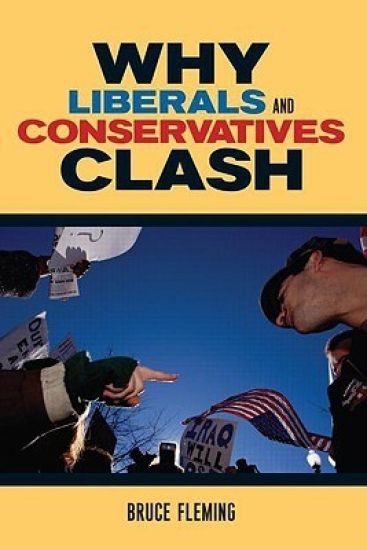
Why Liberals and Conservatives Clash
Why Liberals and Conservatives Clash offers an explanation for the extreme polarization between liberal and conservative that is the hallmark of the American political landscape today. It suggests that liberal thought is intrinsically different from conservative thought, and that each constitutes a self-subsistent world-view with its specific qualities and rules. The book offers a set of guidelines to predict a person's views based on other views s/he holds, given that each world-view is what it is for structural reasons, and is more than merely a sum of discrete positions. It explains, for example, why people who support gay marriage also typically support the woman's right to an early-term abortion, and why people who demand that citizens "support the military" understand this as meaning, support putting members of the military in harm's way. Because liberal thought and conservative thought each constitutes a closed world-view, neither side will ever convince the other in an argument. The most we can hope for is an acknowledgment by each side of the usefulness of the other, a goal Fleming proposes as the most reasonable one for our times. WhyLiberals and Conservatives Clash makes logical the most striking, and hitherto puzzling feature of the contemporary American political landscape: its acrimony, its air of being an argument between the deaf: neither side understands the other. Fleming suggests this is so because neither side accepts the bases underlying the other's particular positions. We can, however, understand that they are different, and that trying to force the other side into submission won't work. We need to go beyond liberals dismissing conservatives with horror and conservatives dismissing liberals with disgust. Conservatives aren't merely imperfect liberals, they're something else entirely. Liberals aren't merely potential conservatives, they actually think differently.
Why Liberals and Conservatives Clash
Why Liberals and Conservatives Clash offers an explanation for the extreme polarization between liberal and conservative that is the hallmark of the American political landscape today. It suggests that liberal thought is intrinsically different from conservative thought, and that each constitutes a self-subsistent world-view with its specific qualities and rules. The book offers a set of guidelines to predict a person's views based on other views s/he holds, given that each world-view is what it is for structural reasons, and is more than merely a sum of discrete positions. It explains, for example, why people who support gay marriage also typically support the woman's right to an early-term abortion, and why people who demand that citizens "support the military" understand this as meaning, support putting members of the military in harm's way. Because liberal thought and conservative thought each constitutes a closed world-view, neither side will ever convince the other in an argument. The most we can hope for is an acknowledgment by each side of the usefulness of the other, a goal Fleming proposes as the most reasonable one for our times. WhyLiberals and Conservatives Clash makes logical the most striking, and hitherto puzzling feature of the contemporary American political landscape: its acrimony, its air of being an argument between the deaf: neither side understands the other. Fleming suggests this is so because neither side accepts the bases underlying the other's particular positions. We can, however, understand that they are different, and that trying to force the other side into submission won't work. We need to go beyond liberals dismissing conservatives with horror and conservatives dismissing liberals with disgust. Conservatives aren't merely imperfect liberals, they're something else entirely. Liberals aren't merely potential conservatives, they actually think differently.
Sexual Ethics

Sexual Ethics

Bruce Fleming

University Press of America
2004
nidottu
Oftentimes, subjects related to sexuality such as abortion and homosexuality are flash points for political argument between liberals and conservatives. In recent years the debate on these topics has become shrill. Sexual Ethics considers the traditional Western views, as well as Freudian explanations, of sexuality. Author Bruce E. Fleming proposes that sex operates in an intrinsically undefined area, one stranded between the two realms that otherwise define our public and private lives. The most heated debate regarding sexual matters is between liberal and conservatives. Whether or not these two groups can continue to co-exist under the umbrella of American democracy depends on their willingness to adhere to the basic principals of democracy.