Kirjojen hintavertailu. Mukana 12 390 323 kirjaa ja 12 kauppaa.

Kirjailija

Bruce Haley

Kirjat ja teokset yhdessä paikassa: 2 kirjaa, julkaisuja vuosilta 1978-2002, suosituimpien joukossa Living Forms. Vertaile teosten hintoja ja tarkista saatavuus suomalaisista kirjakaupoista.

2 kirjaa

Kirjojen julkaisuhaarukka 1978-2002.

Living Forms

Living Forms

Bruce Haley

State University of New York Press
2002
pokkari
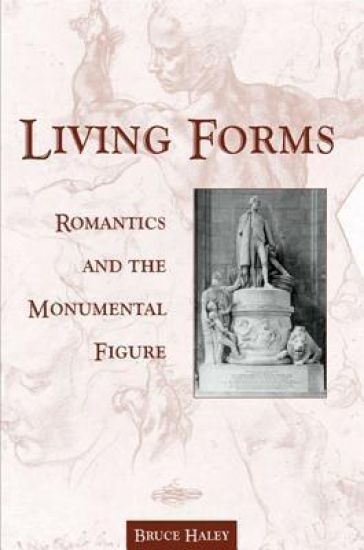
Examines Romantic poets' and essayists' fascination with the human form.Based on years of archival research in various British and American libraries, Living Forms examines the early nineteenth century's fascination with representations of the human form, particularly those from the past, which, having no adequate verbal explanatory text, are vulnerable to having their meanings erased by time. The author explores a variety of such representations and responses to them, including Coleridge's Shakespeare lectures, Hazlitt's essays on portraits, Keats's poems on mythic and sculpted figures, meditations by Byron's Childe Harold on the monuments of Italy, Felicia Hemans's verses on monuments to and by women, and Shelley's poems and letters on figures from Italy, Egypt, and other antique lands. Haley argues that in what has been called the "museum age," Romantics sought aesthetically to frame these figures as "living forms," mental images capable of realization in alternate modes or forms.
The Healthy Body and Victorian Culture

The Healthy Body and Victorian Culture

Bruce Haley

Harvard University Press
1978
sidottu
Health obsessed the Victorians. The quest for health guided Victorian living habits, shaped educational goals, and sanctioned a mania for athletic sports. As both metaphor and ideal, it influenced psychology, religion, moral philosophy; it affected the writing of history as well as the criticism of literature. Here is a wide-ranging and ably written exploration of this fascinating aspect of Victorian ideas. Bruce Haley looks at developments in personal and public health, and at theories about the relation between medical and psychological disorders. He examines influential conceptions of the healthy man: Carlyle's healthy hero, Spencer's biologically perfect man, Newman's gentleman-Christian, Kingsley's muscular Christian. He describes the development of sports and physical training in nineteenth-century England and their importance in schools and universities. He traces the concept of healthy body and healthy mind in boy's fiction (such as Torn Brown's School Days), self-help literature, and the widely read novels of George Eliot, Wilkie Collins, George Meredith, and Charles Kingsley. All these strands of social history, literature, and philosophy are woven together into a seamless whole.