Kirjojen hintavertailu. Mukana 12 595 353 kirjaa ja 12 kauppaa.

Kirjailija

Bruce J. Malina

Kirjat ja teokset yhdessä paikassa: 14 kirjaa, julkaisuja vuosilta 1993-2013, suosituimpien joukossa The Social World of Jesus and the Gospels. Vertaile teosten hintoja ja tarkista saatavuus suomalaisista kirjakaupoista.

14 kirjaa

Kirjojen julkaisuhaarukka 1993-2013.

Social-Science Commentary on the Deutero-Pauline Letters

Social-Science Commentary on the Deutero-Pauline Letters

Bruce J. Malina; John J. Pilch

Fortress Press,U.S.
2013
pokkari
The Social-Science Commentary series pioneers an alternative commentary genre, providing in this volume the text of the deutero-Pauline letters and cultural notes on them. The Social-Science Commentary on the Deutero-Pauline Letters provides essential "reading scenarios" on specific cultural phenomena in these letters, including forgery, normative conflict, paideia (training), and Household Codes. This volume highlights the transformation of the memory of Paul in early Christianity as reflecting the concerns and interest of communities after Paul's death.
Social-Science Commentary on the Book of Acts

Social-Science Commentary on the Book of Acts

Bruce J. Malina; John J. Pilch

Augsburg Fortress
2008
pokkari
Like earlier volumes in the Social Science Commentary series, this volume situates Acts squarely in the cultural matrix of the first century Mediterranean world, elaborating its codes of patron and client, mediatorship, honor and shame, healing and sickening, wizardry and witchcraft accusations, and the understanding of the Spirit of God as well as deities and demons as personal causes of significant events. Part 1: Jesus First Command to the Twelve - Their Activities Among Israelite Majority Populations (Acts 1:4-12:25) Part 2: Jesus Second Command to Saul/Paul - His Activities Among Israelite Minority Populations (Acts 12:25-25:31)
Social-Science Commentary on the Letters of Paul

Social-Science Commentary on the Letters of Paul

Bruce J. Malina; John J. Pilch

Augsburg Fortress
2006
pokkari
This latest addition to the "Fortress Social-Science Commentaries on New Testament Writings" illuminates the values, perceptions, and social codes of the Mediterranean culture that shaped Paul and his interactions - both harmonious and conflicted - with others. Malina and Pilch add new dimensions to our understanding of the apostle as a social change agent, his coworkers as innovators, and his Gospel as an assertion of the honor of the God of Israel.
Social-Science Commentary on the Synoptic Gospels

Social-Science Commentary on the Synoptic Gospels

Bruce J. Malina; Richard L. Rohrbaugh

Augsburg Fortress
2003
pokkari
The authors build on their earlier social-scientific works and enhance the highly successful commentary model they developed in their social-scientific commentaries. This volume is a thoroughly revised edition of this popular commentary. They include an introduction that lays the foundation for their interpretation, followed by an examination of each unit in the Synoptics, employing methodologies of cultural anthropology, macro-sociology, and social psychology.
The Social Setting of Jesus and the Gospels

The Social Setting of Jesus and the Gospels

Bruce J. Malina; Wolfgang Stegemann; Gerd Theissen

Augsburg Fortress
2002
pokkari
The context of Jesus, his followers, and the early movement What do the social sciences have to contribute to the study of Jesus and the Gospels? This is the fundamental question that these essays all address - from analyses of ancient economics to altered states of consciousness, politics, ritual, kinship, and labeling. Contributors: Bruce J. Malina, Wolfgang Stegemann, Richard L. Rohrbaugh, Ekkehard W. Stegemann, Gerd Theissen, T. Raymond Hobbs, Dennis C. Duling, K.C. Hanson, Philip F. Esler, S. Scott Bartchy, John J. Pilch, Christian Strecker, Richard DeMaris, Stuart L. Love, Jerome H. Neyrey, Douglas E. Oakman, Gary Stansell, Santiago Oporto Guijarro
The New Testament World, Third Edition, Revised and Expanded

The New Testament World, Third Edition, Revised and Expanded

Bruce J. Malina

Westminster/John Knox Press,U.S.
2001
nidottu
A classroom standard for two decades, The New Testament World: Insights from Cultural Anthropology has introduced students to both the New Testament and the social-scientific study of the New Testament. This revised and expanded third edition offers new chapters on envy and the Jesus movement, updates chapters from earlier editions, augments the bibliography, and offers student study questions.
The Social Gospel of Jesus

The Social Gospel of Jesus

Bruce J. Malina

Augsburg Fortress
2000
pokkari
Scholars are agreed that the central metaphor in Jesus' proclamation was the kingdom of God. But what did that phrase mean in the first-century Palestinian world of Jesus? Since it is a political metaphor, what did Jesus envision as the political import of his message? Since this is tied to the political economy, how was that structured in Jesus' day? How is the violence of Jesus' Mediterranean world addressed in the kingdom? And how does "self-denial" fit into Jesus' agenda?Malina tackles these questions in a very accessible way, providing a social-scientific analysis, meaning that he brings to bear explicit models and a comparative approach toward an exciting interpretation of what Jesus was up to, and how his first-century audience would have heard him.
The New Jerusalem in the Revelation of John

The New Jerusalem in the Revelation of John

Bruce J. Malina

Liturgical Press
2000
pokkari
There are two major entities at the close of the book of Revelation that explain the author's understanding of forthcoming life with God: the Celestial City (the heavenly Jerusalem) and the cosmic Lamb. The marriage of these two marks the concluding highpoint of John the Seer's work. What are the entities in question? How do they marry and what is the significance of that event for those who believe in Jesus as cosmic Lord? In The New Jerusalem in the Revelation of John, Bruce Malina offers insights into the concluding Vision of the book of Revelation to assist Bible readers to understand what the Visionary of Revelation said, and meant to say, to his first-century Mediterranean audience.The New Jerusalem and the Revelation of John sets out comparative models of what sorts of cities existed during the time of the New Testament and what it meant to live in an ancient Mediterranean city. It further explains the significance of the celestial marriage of the City and the Lamb. The result is a set of reading scenarios that describe and explain Revelation's closing Visions, which mediate the theology of John the Seer. The definition and comparative model of the city in The New Jerusalem and the Revelation of John is also useful for persons interested in understanding those first urban" members of Jesus groups addressed by other New Testament documents.Chapters are "Presuppositions about Language and Reading," "The Genre of the Book of Revelation," "The Holy City in the Sky," and "The Cosmic Lamb Marries." Includes relevant charts.Bruce J. Malina, STD, is professor of biblical studies at Creighton University. He is former president of the Catholic Biblical Association and author of articles on biblical interpretation."
Social-Science Commentary on the Gospel of John

Social-Science Commentary on the Gospel of John

Bruce J. Malina; Richard L. Rohrbaugh

Augsburg Fortress
1998
pokkari
Building on the unique format and success of their Social-Science Commentary on the Synoptic Gospels, Malina and Rohrbaugh extend their framework to the Fourth Gospel. Unlike the usual historical, exegetical, or theological commentaries, this rich and engrossing work catalogs the pertinent values, conflicts, and mores of ancient Mediterranean culture. Its Gospel outline, detailed textual notes, and reading scenarios bring life to the social circumstances the Gospel text relates about childhood, money, divorce, military service, farming, family life, cities, demons, patronage, and a host of other aspects of the ancient world. The Fourth Gospel, the authors disclose, addresses an alienated anti-society, fundamentally at odds with the predominant culture. With its format, charts and photos, this social-science commentary is the ideal companion for the study of the Fourth Gospel.
The Social World of Jesus and the Gospels
In order to interpret historical writings, the reader must not employ their modern understanding of the world, but must strive to grasp the mindset of the original audience. To assist the twentieth-century New Testament reader in understanding the literal meaning of the New Testament is the goal of this collection of essays. The Social World of Jesus and the Gospels provides the reader with a set of possible scenarios for reading the New Testament: How did first-century persons think about themselves and others? Did they think Jesus was a charismatic leader? Why did they call God 'father'? Were they concerned with their gender roles?The eight essays in this collection were previously published in books and journals generally not available to many readers. Carefully selected and edited, this collection will be both an introduction and an invaluable source of reference to Bruce Malina's thought.
The Social World of Jesus and the Gospels
In order to interpret historical writings, the reader must not employ their modern understanding of the world, but must strive to grasp the mindset of the original audience. To assist the twentieth-century New Testament reader in understanding the literal meaning of the New Testament is the goal of this collection of essays. The Social World of Jesus and the Gospels provides the reader with a set of possible scenarios for reading the New Testament: How did first-century persons think about themselves and others? Did they think Jesus was a charismatic leader? Why did they call God 'father'? Were they concerned with their gender roles?The eight essays in this collection were previously published in books and journals generally not available to many readers. Carefully selected and edited, this collection will be both an introduction and an invaluable source of reference to Bruce Malina's thought.
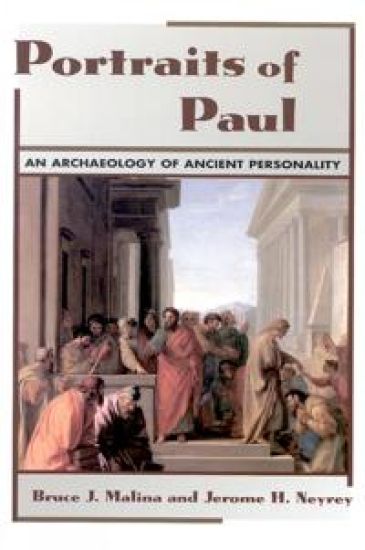
Portraits of Paul

Portraits of Paul

Bruce J. Malina; Jerome H. Neyrey

Westminster/John Knox Press,U.S.
1996
nidottu
How did ancient persons understand themselves, other people, and the world around them? Is there a marked contrast between their understandings of "self" and "other" and the way modern Westerners define the same? Bruce Malina and Jerome Neyrey focus on the figure of Paul to provide a comprehensive investigation of how one man was perceived in the ancient world. Drawing on primary sources from antiquity, as well a lessons from cultural anthropology, the authors help provide a fuller understanding of the person of Paul and his world. The result is a new, more balanced way to approach the New Testament.
Windows on the World of Jesus, Third Edition, Revised and Expanded

Windows on the World of Jesus, Third Edition, Revised and Expanded

Bruce J. Malina

Westminster/John Knox Press,U.S.
1993
nidottu
George Smith, a twentieth-century American, moved into a house with a large vineyard in the Eastern Mediterranean during the first century AD, going back in time and space. He needed help on his land and requested that individuals interested in work be at his place at 9 a.m. on August 8. No one showed up. Why not? This is just one of the sixty fun-to-read vignettes Bruce Malina cleverly presents in this book that explains the customs and culture of the world in which Jesus lived and taught. Each adventure depicts a twentieth-century North American encountering puzzling practices while visiting Judea during ancient times. These vignettes offer quick and easy access to the first-century Mediterranean world and relate to segments of the New Testament and other passages from the same cultural area.