Kirjojen hintavertailu. Mukana 12 216 336 kirjaa ja 12 kauppaa.

Kirjailija

Bruce Kuklick

Kirjat ja teokset yhdessä paikassa: 18 kirjaa, julkaisuja vuosilta 1979-2025, suosituimpien joukossa Death in the Congo. Vertaile teosten hintoja ja tarkista saatavuus suomalaisista kirjakaupoista.

18 kirjaa

Kirjojen julkaisuhaarukka 1979-2025.

Death in the Congo

Death in the Congo

Emmanuel Gerard; Bruce Kuklick

Harvard University Press
2015
sidottu
Death in the Congo is a gripping account of a murder that became one of the defining events in postcolonial African history. It is no less the story of the untimely death of a national dream, a hope-filled vision very different from what the war-ravaged Democratic Republic of the Congo became in the second half of the twentieth century.When Belgium relinquished colonial control in June 1960, a charismatic thirty-five-year-old African nationalist, Patrice Lumumba, became prime minister of the new republic. Yet stability immediately broke down. A mutinous Congolese Army spread havoc, while Katanga Province in southeast Congo seceded altogether. Belgium dispatched its military to protect its citizens, and the United Nations soon intervened with its own peacekeeping troops. Meanwhile, behind the scenes, both the Soviet Union and the United States maneuvered to turn the crisis to their Cold War advantage. A coup in September, secretly aided by the UN, toppled Lumumba’s government. In January 1961, armed men drove Lumumba to a secluded corner of the Katanga bush, stood him up beside a hastily dug grave, and shot him. His rule as Africa’s first democratically elected leader had lasted ten weeks.More than fifty years later, the murky circumstances and tragic symbolism of Lumumba’s assassination still trouble many people around the world. Emmanuel Gerard and Bruce Kuklick pursue events through a web of international politics, revealing a tangled history in which many people—black and white, well-meaning and ruthless, African, European, and American—bear responsibility for this crime.
Fascism Comes to America

Fascism Comes to America

Bruce Kuklick

THE UNIVERSITY OF CHICAGO PRESS
2025
nidottu
A deeply relevant look at what fascism means to Americans. From the time Mussolini took power in Italy in 1922, Americans have been obsessed with and brooded over the meaning of fascism and how it might migrate to the United States. Fascism Comes to America examines how we have viewed fascism overseas and its implications for our own country. Bruce Kuklick explores the rhetoric of politicians, who have used the language of fascism to smear opponents, and he looks at the discussions of pundits, the analyses of academics, and the displays of fascism in popular culture, including fiction, radio, TV, theater, and film. Kuklick argues that fascism has little informational meaning in the United States, but instead, it is used to denigrate or insult. For example, every political position has been besmirched as fascist. As a result, the term does not describe a phenomenon so much as it denounces what one does not like. Finally, in displaying fascism for most Americans, entertainment—and most importantly film—has been crucial in conveying to citizens what fascism is about. Fascism Comes to America has been enhanced by many illustrations that exhibit how fascism was absorbed into the US public consciousness.
A Political History of the USA

A Political History of the USA

Bruce Kuklick

BLOOMSBURY PUBLISHING PLC
2025
nidottu
Exploring the history of US politics from the first European contact with the ‘New World’ in 1492, up to the 2024 presidential elections, this book is an engaging account of America’s development from colony to world superpower. Using religion as a central theme to navigate through this vast topic, it moves beyond the realm of political parties, leaders and ideologies to understand how politics has intersected with the individual and societal hopes, fears and values which have underpinned US political culture and theology.Taking the reader from colonial times and the constitution through the civil war, the New Deal, the Cold War and into contemporary America, A Political History of the USA offers a compelling yet balanced account of US political, cultural and religious history, ideal for undergraduate students of US history and politics.New for this edition:- Updated discussion on the constitution to understand recent events such as the overturning of Roe v Wade - Three new chapters on 1972 to the 2024 election covering topics such as the COVID pandemic, the rise of China and the Ukraine War - Additional material on race and gender, through the eyes of African Americans and women- Expanded discussion on the rise of social media and politization of cable news - New timeline of major events
A Political History of the USA

A Political History of the USA

Bruce Kuklick

BLOOMSBURY PUBLISHING PLC
2025
sidottu
Exploring the history of US politics from the first European contact with the ‘New World’ in 1492, up to the 2024 presidential elections, this book is an engaging account of America’s development from colony to world superpower. Using religion as a central theme to navigate through this vast topic, it moves beyond the realm of political parties, leaders and ideologies to understand how politics has intersected with the individual and societal hopes, fears and values which have underpinned US political culture and theology.Taking the reader from colonial times and the constitution through the civil war, the New Deal, the Cold War and into contemporary America, A Political History of the USA offers a compelling yet balanced account of US political, cultural and religious history, ideal for undergraduate students of US history and politics.New for this edition:- Updated discussion on the constitution to understand recent events such as the overturning of Roe v Wade - Three new chapters on 1972 to the 2024 election covering topics such as the COVID pandemic, the rise of China and the Ukraine War - Additional material on race and gender, through the eyes of African Americans and women- Expanded discussion on the rise of social media and politization of cable news - New timeline of major events
Fascism Comes to America

Fascism Comes to America

Bruce Kuklick

THE UNIVERSITY OF CHICAGO PRESS
2022
sidottu
A deeply relevant look at what fascism means to Americans. From the time Mussolini took power in Italy in 1922, Americans have been obsessed with and brooded over the meaning of fascism and how it might migrate to the United States. Fascism Comes to America examines how we have viewed fascism overseas and its implications for our own country. Bruce Kuklick explores the rhetoric of politicians, who have used the language of fascism to smear opponents, and he looks at the discussions of pundits, the analyses of academics, and the displays of fascism in popular culture, including fiction, radio, TV, theater, and film. Kuklick argues that fascism has little informational meaning in the United States, but instead, it is used to denigrate or insult. For example, every political position has been besmirched as fascist. As a result, the term does not describe a phenomenon so much as it denounces what one does not like. Finally, in displaying fascism for most Americans, entertainment—and most importantly film—has been crucial in conveying to citizens what fascism is about. Fascism Comes to America has been enhanced by many illustrations that exhibit how fascism was absorbed into the US public consciousness.
A Political History of the USA

A Political History of the USA

Bruce Kuklick

Red Globe Press
2019
sidottu
This book is an engaging account of US history from the first European contact with the 'New World' to the election of Donald Trump in 2016. Bruce Kuklick's straightforward yet authoritative narrative takes students through the complexities of US history without oversimplifying of requiring prior knowledge. Placing politics in the context of religious culture and exploring America's assertive expansion throughout history, A Political History of the USA is supported by wide-ranging examples, vivid extracts from primary sources, maps and illustrations which illuminate the main text. The historical narrative it presents is concise, nuanced and sharply drawn. Offering a compelling yet balanced account of US political, cultural and religious history, this is essential reading for undergraduate students of History and American Studies. New to this Edition:- More emphasis on the religious dimensions of the American story, explaining the continuing relevance of evangelical Christians- A new chapter on the period since 2008- Incorporation of new research- Discussion of the paradox of modernism and religion in America- A revised bibliography, including more ‘classic’ works
A Political History of the USA

A Political History of the USA

Bruce Kuklick

Red Globe Press
2019
nidottu
This book is an engaging account of US history from the first European contact with the 'New World' to the election of Donald Trump in 2016. Bruce Kuklick's straightforward yet authoritative narrative takes students through the complexities of US history without oversimplifying of requiring prior knowledge. Placing politics in the context of religious culture and exploring America's assertive expansion throughout history, A Political History of the USA is supported by wide-ranging examples, vivid extracts from primary sources, maps and illustrations which illuminate the main text. The historical narrative it presents is concise, nuanced and sharply drawn. Offering a compelling yet balanced account of US political, cultural and religious history, this is essential reading for undergraduate students of History and American Studies. New to this Edition:- More emphasis on the religious dimensions of the American story, explaining the continuing relevance of evangelical Christians- A new chapter on the period since 2008- Incorporation of new research- Discussion of the paradox of modernism and religion in America- A revised bibliography, including more ‘classic’ works
Puritans in Babylon

Puritans in Babylon

Bruce Kuklick

PRINCETON UNIVERSITY PRESS
2018
sidottu
From the 1880s through the 1920s a motley collection of American scholars, soldiers of fortune, institutional bureaucrats, and financiers created the academic fields that give us our knowledge of the ancient Near East. Bruce Kuklick's new book begins with the story of the initial adventure of these determined investigators--a twelve-year dig near the Biblical Babylon, at Nippur, conducted at intervals from 1888 through 1900 and bankrolled by the Babylonian Exploration Fund. To unearth tens of thousands of cunneiform tablets, the leaders of this venture faced harsh living conditions in the desert and an academic war of each against all that was quickly begun at the site itself. As their knowledge increased, they risked their personal religious beliefs in the search for historical truth. Kuklick discusses their tribulations to illuminate two other contemporary developments: first, the maturation of the American university, particularly in contrast to its German counterpart; and second, the influence of religious-secular conflict on the ways in which Western scholarship appropriated or appreciated other cultures.The Nippur expedition spawned unseemly (and entertaining) fights among the University of Pennsylvania, Johns Hopkins, Yale, Harvard, and Chicago for leadership in the study of ancient Near East--not to mention disagreements with their own developing museums and an international scandal called the Hilprecht controversy. More significant than these quarrels was the concern for the meaning of history displayed in this period of Near Eastern scholarship. The field was linked to Biblical criticism and Judeo-Christian interests, and many of the orientalists originally possessed strong religious commitments--which some put aside as they struggled for objectivity. As recent critics have shown, "orientalism" was an example of the West's ability to appropriate the "other" for its own purposes. However, Kuklick's study demonstrates that the censure of orientalism hinges on modes of argumentation that scholars of the ancienet Near East helped to legitimate, and at no small cost to themselves.Bruce Kuklick is Killbrew Professor of History at the University of Pennsylvania. Among his books are To Every Thing a Season: Shibe Park and Urban Philadelphia, 1909-1976 (Princeton), Churchmen and Philosophers: Jonathan Edwards to John Dewey, and The Rise of American Philosophy: Cambridge Massachusetts, 1860-1930.Originally published in 1996.The Princeton Legacy Library uses the latest print-on-demand technology to again make available previously out-of-print books from the distinguished backlist of Princeton University Press. These editions preserve the original texts of these important books while presenting them in durable paperback and hardcover editions. The goal of the Princeton Legacy Library is to vastly increase access to the rich scholarly heritage found in the thousands of books published by Princeton University Press since its founding in 1905.
Puritans in Babylon

Puritans in Babylon

Bruce Kuklick

Princeton University Press
2018
pokkari
From the 1880s through the 1920s a motley collection of American scholars, soldiers of fortune, institutional bureaucrats, and financiers created the academic fields that give us our knowledge of the ancient Near East. Bruce Kuklick's new book begins with the story of the initial adventure of these determined investigators--a twelve-year dig near the Biblical Babylon, at Nippur, conducted at intervals from 1888 through 1900 and bankrolled by the Babylonian Exploration Fund. To unearth tens of thousands of cunneiform tablets, the leaders of this venture faced harsh living conditions in the desert and an academic war of each against all that was quickly begun at the site itself. As their knowledge increased, they risked their personal religious beliefs in the search for historical truth. Kuklick discusses their tribulations to illuminate two other contemporary developments: first, the maturation of the American university, particularly in contrast to its German counterpart; and second, the influence of religious-secular conflict on the ways in which Western scholarship appropriated or appreciated other cultures.The Nippur expedition spawned unseemly (and entertaining) fights among the University of Pennsylvania, Johns Hopkins, Yale, Harvard, and Chicago for leadership in the study of ancient Near East--not to mention disagreements with their own developing museums and an international scandal called the Hilprecht controversy. More significant than these quarrels was the concern for the meaning of history displayed in this period of Near Eastern scholarship. The field was linked to Biblical criticism and Judeo-Christian interests, and many of the orientalists originally possessed strong religious commitments--which some put aside as they struggled for objectivity. As recent critics have shown, "orientalism" was an example of the West's ability to appropriate the "other" for its own purposes. However, Kuklick's study demonstrates that the censure of orientalism hinges on modes of argumentation that scholars of the ancienet Near East helped to legitimate, and at no small cost to themselves.Bruce Kuklick is Killbrew Professor of History at the University of Pennsylvania. Among his books are To Every Thing a Season: Shibe Park and Urban Philadelphia, 1909-1976 (Princeton), Churchmen and Philosophers: Jonathan Edwards to John Dewey, and The Rise of American Philosophy: Cambridge Massachusetts, 1860-1930.Originally published in 1996.The Princeton Legacy Library uses the latest print-on-demand technology to again make available previously out-of-print books from the distinguished backlist of Princeton University Press. These editions preserve the original texts of these important books while presenting them in durable paperback and hardcover editions. The goal of the Princeton Legacy Library is to vastly increase access to the rich scholarly heritage found in the thousands of books published by Princeton University Press since its founding in 1905.
The Fighting Sullivans

The Fighting Sullivans

Bruce Kuklick

University Press of Kansas
2016
sidottu
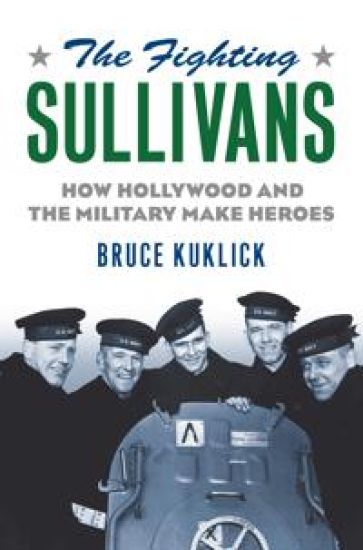
In November of 1942, the five Sullivan brothers from Waterloo, Iowa, were killed when a Japanese torpedo sank their ship during the most ferocious naval engagement fought in the South Pacific. The family's loss, the most extraordinary for the United States in its military history, was immortalized-and valorized-in the 1944 film The Fighting Sullivans. This book tells the story of how calamity, with the help of Hollywood and the wartime publicity machine, transformed a family of marginal and disreputable young men, intensely disliked in their hometown, into heroes. The Sullivan boys joined the armed forces after Pearl Harbor, and the US Navy accepted that they would all serve on one ship, the light cruiser USS Juneau. The five brothers gave the navy great publicity, but when the ship went down and survivors were not rescued, the service faced a serious problem. The Fighting Sullivans examines the campaign that followed, as the navy and its partners in Hollywood turned a tragedy of errors into a public relations victory. Bruce Kuklick shows how the myth of the Sullivan family was created using bits and pieces of real events, but with twists that turned the boys into superhumans and their beleaguered parents into self-sacrificing patriots. He explores the close relationship between Hollywood studios and the military, which aimed to boost morale and support for the war. A study in mythmaking, The Fighting Sullivans offers a behind-the-scenes look at the manufacture of heroes in twentieth-century wartime America.
A Political History of the USA

A Political History of the USA

Bruce Kuklick

Red Globe Press
2009
nidottu
A fresh and engaging account of America's history from the 15th century to the 21st that navigates complexities without oversimplifying or assuming prior knowledge. Kuklick focuses on politics, but places this in the context of religious culture and emphasizes the assertive expansion at the heart of the development of the U.S.
Black Philosopher, White Academy

Black Philosopher, White Academy

Bruce Kuklick

University of Pennsylvania Press
2008
sidottu
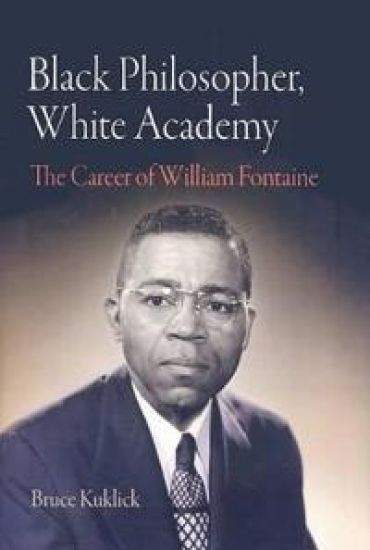
At a time when almost all African American college students attended black colleges, philosopher William Fontaine was the only black member of the University of Pennsylvania faculty-and quite possibly the only black member of any faculty in the Ivy League. Little is known about Fontaine, but his predicament was common to African American professionals and intellectuals at a critical time in the history of civil rights and race relations in the United States. Black Philosopher, White Academy is at once a biographical sketch of a man caught up in the issues and the dilemmas of race in the middle of the last century; a portrait of a salient aspect of academic life then; and an intellectual history of a period in African American life and letters, the discipline of philosophy, and the American academy. It is also a meditation on the sources available to a practicing historian and, frustratingly, the sources that are not. Bruce Kuklick stays close to the slim packet of evidence left on Fontaine's life and career but also strains against its limitations to extract the largest possible insights into the life of the elusive Fontaine.
Blind Oracles

Blind Oracles

Bruce Kuklick

Princeton University Press
2007
pokkari
In this trenchant analysis, historian Bruce Kuklick examines the role of intellectuals in foreign policymaking. He recounts the history of the development of ideas about strategy and foreign policy during a critical period in American history: the era of the nuclear standoff between the United States and the Soviet Union. The book looks at how the country's foremost thinkers advanced their ideas during this time of United States expansionism, a period that culminated in the Vietnam War and detente with the Soviets. Beginning with George Kennan after World War II, and concluding with Henry Kissinger and the Vietnam War, Kuklick examines the role of both institutional policymakers such as those at The Rand Corporation and Harvard's Kennedy School, and individual thinkers including Paul Nitze, McGeorge Bundy, and Walt Rostow. Kuklick contends that the figures having the most influence on American strategy--Kissinger, for example--clearly understood the way politics and the exercise of power affects policymaking. Other brilliant thinkers, on the other hand, often played a minor role, providing, at best, a rationale for policies adopted for political reasons. At a time when the role of the neoconservatives' influence over American foreign policy is a subject of intense debate, this book offers important insight into the function of intellectuals in foreign policymaking.
A History of Philosophy in America

A History of Philosophy in America

Bruce Kuklick

Clarendon Press
2002
sidottu
Here at last is an American counterpart to Bertrand Russell's History of Western Philosophy. The eminent historian Bruce Kuklick tells the fascinating story of the growth of philosophical thinking in the USA, in the context of the intellectual and social changes of the times. Kuklick sketches the genesis of these intellectual practices in New England Calvinism and the writing of Jonathan Edwards. He discusses theology in the eighteenth and nineteenth centuries and the origins of collegiate philosophy in the early part of the nineteenth century. We see the development of secular preconceptions and the emergence, after Darwin's writings of the mid-late nineteenth century, of forms of thought hostile to religion. Philosophy is situated in a variety of cultural contexts - the ministry, the growing system of higher learning, the conflict between philosophers and theologians and between amateur and professional thinkers, the suspicion of European ideas, and worries about the relevance of philosophy to public and political life. Kuklick's narrative portrays such great thinkers as Charles Peirce, William James, John Dewey, C. I. Lewis, Wilfrid Sellars, W. V. Quine, and Richard Rorty, and assesses their contributions to philosophy. He brings us right up to date with the first historical treatment of the period after pragmatism, and the fragmentation of philosophy in the second half of the twentieth century. Kuklick steers a controversial course between the divergent views that historians and philosophers take of the significance of philosophy in recent years. Anyone interested in American intellectual history, or in how philosophy got where it is today, will enjoy this book.
To Every Thing a Season

To Every Thing a Season

Bruce Kuklick

Princeton University Press
1993
pokkari
Shibe Park was demolished in 1976, and today its site is surrounded by the devastation of North Philadelphia. Kuklick, however, vividly evokes the feelings people had about the home of the Philadelphia Athletics and later the Phillies.
The Good Ruler

The Good Ruler

Bruce Kuklick

Rutgers University Press
1989
nidottu
Which American presidents have been good? Which have been bad? Experts on the presidency have never been able to agree on their assessments. Bruce Kuklick suggests that historians and political scientists have approached the problem of defining successful leadership without adequately considering the essential factor. Instead of trying to evaluate which presidents set consistent and worthy policies and brought them to fruition, Kuklick asks us to pay more attention to how the American people feel about their presidents. The citizenry and its emotional responses are sued as the measure of a successful president, rather than the ostensibly rational appraisals of scholars.Applying this measure to the presidents from the Depression to Watergate, Kuklick begins by tracing the way in which Franklin Roosevelt established the parameters of the inspirational presidency and how his success shaped the study of political history. He then explores the triumphs of Eisenhower and Kennedy and contrasts these triumphs too the failures of Hoover, Truman, Johnson, and Nixon. The ability of leaders to win the respect and admiration of the citizenry is, for Kuklick, the crucial touchstone by which the success of a president is judged.To highlight this position that is not useful for historians to justify the merits or failures of a president by pointing out what he would have done had he lived longer or in a different era, Kiklick includes and entertaining and enlightening fable, an imaginary view of historical events: Nixon is elected in 1960, giving a youthful tone to the White House until his assassination in 1967; Kennedy is elected in 1968 but resigns after he is accused of misconduct. The fable demonstrates that the specific events are less important than a president’s ability to evoke a positive emotional response from the citizenry. The Good Ruler analyzes our recent political history without partisan bias and examines the basic premises of American democratic politics.
The Rise of American Philosophy

The Rise of American Philosophy

Bruce Kuklick

Yale University Press
1979
pokkari
The seventy years between the Civil War and the Depression mark the most significant epoch of American philosophy. In this period American pragmatism emerged, and men such as Charles Peirce, William James, Josiah Royce, George Santayana, Alfred North Whitehead, and C. I. Lewis made their enduring contributions to Western thought. This book offers a reinterpretation of American intellectual history of the period, using the relation of philosophers to the primary academic institution – Harvard – as an organizing theme. Bruce Kuklick argues that Harvard established an intellectual community that helped to define the thought of these men, and that the changing character of American philosophy must be related to the emergence of the modern university. Beginning with what he calls the Cambridge amateurs, Harvard-trained philosophers who were unable to find university teaching positions, Kuklick goes on to examine the thought of the “Golden Age” of American philosophy. He shows how it centered on the dialogue between James and Royce and their peers and demonstrates how it contributed to its own transformation: the thinkers of this period were the first generation of professional philosophers. They were pivotal in establishing graduate training programs and the doctoral apprenticeship system. They created the very academic framework in which philosophy would narrow from its role as the integrator of human intellectual concerns to a technical, scholarly discipline of interest only to a small group of professors. This is intellectual history at its best, or what Kuklick calls “the history of difficult ideas.” The author, historian and philosopher, tells a fascinating story of the men, the ideas, and the institutions that formed American philosophy. He has made a successful attempt to bridge the gap between social history and the history of ideas.