Kirjojen hintavertailu. Mukana 12 152 606 kirjaa ja 12 kauppaa.

Kirjailija

Bruce Nauman

Kirjat ja teokset yhdessä paikassa: 5 kirjaa, julkaisuja vuosilta 2005-2024, suosituimpien joukossa The Studio Reader – On the Space of Artists. Vertaile teosten hintoja ja tarkista saatavuus suomalaisista kirjakaupoista.

5 kirjaa

Kirjojen julkaisuhaarukka 2005-2024.

The Studio Reader – On the Space of Artists

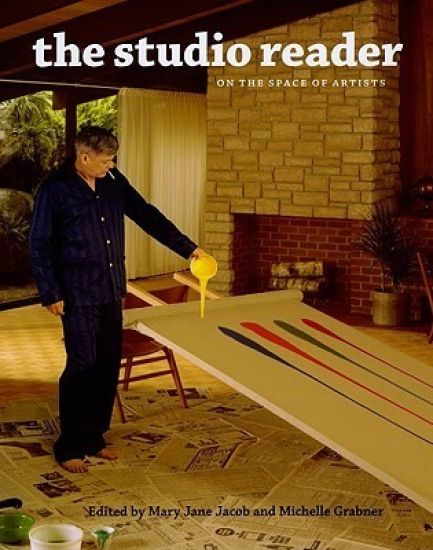
The Studio Reader – On the Space of Artists

Mary Jane Jacob; Glenn Adamson; Svetlana Alpers; John Badlessari; Alice Bellony–rewold; Mary Bergstein; Walead Beshty; Andrea Bowers; Daniel Buren; Rochelle Feinstein; David J Getsy; Michelle Grabner; Rodney Graham; Amy Granat; Karl Haendel; Rachel Harrison; Caroline A Jones; Suzanne Lacy; Thomas Lawson; Lynn Lester Hershman; Shana Lutker; Annika Marie; Courtney Martin; Carrie Moyer; Bruce Nauman; Michael Peppiatt; David Reed; Lane Relyea; David Robbins; Judith Rodenbeck; Joe Scanlan; Brenda Schmahmann; Carolee Schneemann

University of Chicago Press
2010
nidottu
The image of a tortured genius working in near isolation has long dominated our conceptions of the artist's studio. Examples are abound: think Jackson Pollock dripping resin on a cicada carcass in his shed in the Hamptons. But times have changed; ever since Andy Warhol declared his art space a 'factory', artists have begun to envision themselves as the leaders of production teams, and their sense of what it means to be in the studio has altered just as dramatically as their practices. "The Studio Reader" pulls back the curtain from the art world to reveal the real activities behind artistic production. What does it mean to be in the studio? What is the space of the studio in the artist's practice? How do studios help artists envision their agency and, beyond that, their own lives? This forward-thinking anthology features an all-star array of contributors, ranging from Svetlana Alpers, Bruce Nauman, and Robert Storr to Daniel Buren, Carolee Schneemann, and Buzz Spector, each of whom locates the studio both spatially and conceptually - at the center of an art world that careens across institutions, markets, and disciplines. A companion for anyone engaged with the spectacular sites of art at its making, "The Studio Reader" reconsiders this crucial space as an actual way of being that illuminates our understanding of both artists and the world they inhabit.
Bruce Nauman: Disappearing Acts

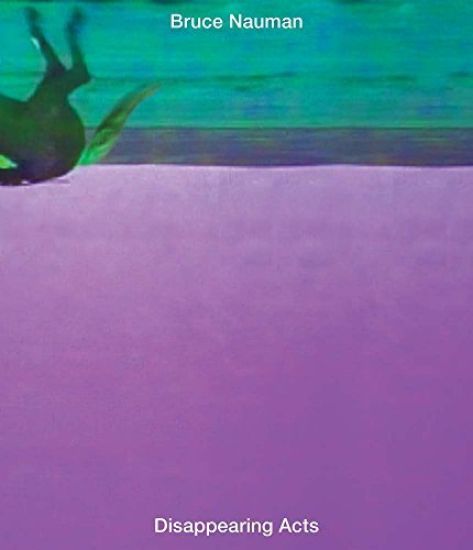
Bruce Nauman: Disappearing Acts

Bruce Nauman

Museum of Modern Art
2018
sidottu
With a magician's sleight of hand, Nauman's art makes disappearance visibleAt 76 years old, Bruce Nauman is widely acknowledged as a central figure in contemporary art whose stringent questioning of values such as good and bad remains urgent today. Throughout his 50-year career, he has explored how mutable experiences of time, space, sound, movement and language provide an insecure foundation for our understanding of our place in the world.This richly illustrated catalog offers a comprehensive view of Nauman's work in all mediums, spanning drawings across the decades; early fiberglass sculptures; sound environments; architecturally scaled, participatory constructions; rhythmically blinking neons; and the most recent 3D video that harks back to one of his earliest performances. A wide range of authors--curators, artists and historians of art, architecture and film--focus on topics that have been largely neglected, such as the architectural models that posit real or imaginary sites as models for ethical inquiry and mechanisms of control. An introductory essay explores Nauman's many acts of disappearance, withdrawal and deflection as central formal and intellectual concerns. The 18 other contributions discuss individual objects or themes that persist throughout the artist's career, including the first extensive essay on Nauman as a photographer and the first detailed treatment on the role of color in his work. A narrative exhibition history traces his reception, and features a number of rare or previously unpublished images.Bruce Nauman was born in Indiana in 1941 and raised near Milwaukee, Wisconsin. He studied math, music and physics at the University of Wisconsin-Madison before switching his major to visual art, and received an MA in sculpture from the University of California, Davis, in 1966. In 1979 he moved to New Mexico, where he continues to reside. Nauman's work has been the subject of two previous retrospectives, in 1972 and 1994. In 2009 he represented the United States at the Venice Biennale, where he won the Golden Lion.
Please Pay Attention Please: Bruce Nauman's Words
The most comprehensive collection to date of the artist Bruce Nauman's writings plus all of his major interviews from 1965 to 2001.Since the 1960s, the artist Bruce Nauman has developed a highly complex and pluralistic oeuvre ranging from discrete sculpture, performance, film, video, and text-based works to elaborate multipart installations incorporating sound, video recording and monitors, and architectural structures. Nauman's work is often interpreted in terms of movements and mediums, including performance, postminimalism, process, and conceptual art, thereby emphasizing its apparent eclecticism. But what is often overlooked is that underlying these seemingly disparate artistic tendencies are conceptual continuities, one of which is an investigation of the nature of language.Unlike many of his contemporaries, Nauman has refrained from participating in the critical discourse surrounding his own work. He has given relatively few interviews over the course of his career and has little to do with the art press or critical establishment. Indeed, he granted Janet Kraynak and The MIT Press almost complete autonomy in the preparation of this volume. In contrast to Nauman's reputation for silence, however, from the beginning of his career, the incorporation of language has been a central feature of his art. This collection takes as its starting point the seeming paradox of an artist of so few words who produces an art of so many words.Please Pay Attention Please contains all of Nauman's major interviews from 1965 to 2001, as well as a comprehensive body of his writings, including instructions and proposal texts, dialogues transcribed from audio-video works, and prose texts written specifically for installation sculptures. Where relevant, the texts are accompanied by illustrations of the artworks for which they were composed. In the critical essay that serves as the book's introduction, the editor investigates Nauman's art in relation to the linguistic turn in art practices of the 1960s-understanding language through the speech act-and its legacy in contemporary art.