

Kirjailija
Bruce Nelson
Kirjat ja teokset yhdessä paikassa: 12 kirjaa, julkaisuja vuosilta 1946-2023, suosituimpien joukossa Restaurant Management. Vertaile teosten hintoja ja tarkista saatavuus suomalaisista kirjakaupoista.
12 kirjaa
Kirjojen julkaisuhaarukka 1946-2023.


From the early time of slavery to today, the African American community has embraced the church as a symbol and site for inspiration, guidance and hope. The celebration of adorning oneself has deep roots dating back to the first African slaves in America. Hallelujah Hats is a celebration of the churches of Washington Park, the once thriving segregated African American community in Mesa, Arizona, through the jewelry, hats, and fashion worn by female churchgoers. The exhibition focuses around five churches: North Center Street Baptist, Bethel African Methodist Episcopal, Voice of Pentecost, Holy Temple Church of Christ, and Mt. Baptist Calvary Church. The book includes photos of vintage hats, purses, gloves, costume jewelry shoes, dresses, and fur-lined, collared wool coats typically worn by the church members. It also includes historic photographs of ceremonial baptisms in the local canal.

Most books about continuous and process improvement are written in a textbook format with straightforward information and plenty of graphs and charts to convey the points being made. Sometimes, even the best step-by-step instructions can escape even the most adamant of followers for an improvement method in determining exactly how to apply what they ve learned.Taking a different approach, Focus and Leverage is presented in an engaging business-novel format and is a sequel to the authors bestselling book, Epiphanized, Second Edition. The primary characters remain the same, but this time the storyline features two different industries: Maintenance, Repair, and Overhaul (MRO) and Healthcare (hospital) environments.This book expands and highlights the two improvement methods first introduced in the appendix section of Epiphanized: the Interference Diagram (ID)/Intermediate Objectives (IO) map (ID/IO Simplified Strategy) and Multiple-Drum-Buffer-Rope (M-DBR).Both of these innovative methods are the result of some much-focused thinking that allows for multiple improvement methods, and steps, to be combined into a single thinking process tool. This groundbreaking new method is designed to save time and money and allows faster and better results to be achieved.The two storylines move the reader through the necessary system analysis, problem identification, and solution implementation. The novel format aids in presenting several realistic situational discussions as well as a multitude of graphs and figures to explain the step-by-step process for success.The storyline of this book weaves some well-known and some not-so-well-known thinking tools into the problem-solving sphere to provide you with an understanding of how to first discover and then overcome issues not readily known or expected at the start of any project.
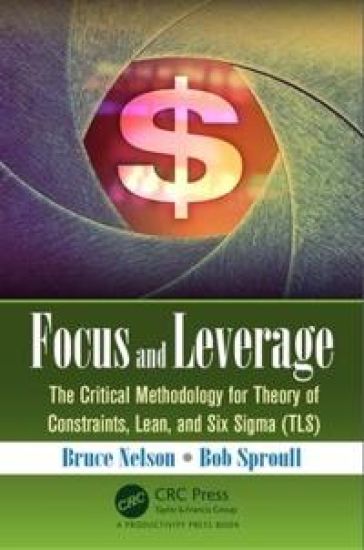
Most books about continuous and process improvement are written in a textbook format with straightforward information and plenty of graphs and charts to convey the points being made. Sometimes, even the best step-by-step instructions can escape even the most adamant of followers for an improvement method in determining exactly how to apply what they’ve learned.Taking a different approach, Focus and Leverage is presented in an engaging business-novel format and is a sequel to the authors’ bestselling book, Epiphanized, Second Edition. The primary characters remain the same, but this time the storyline features two different industries: Maintenance, Repair, and Overhaul (MRO) and Healthcare (hospital) environments.This book expands and highlights the two improvement methods first introduced in the appendix section of Epiphanized: the Interference Diagram (ID)/Intermediate Objectives (IO) map (ID/IO Simplified Strategy) and Multiple-Drum-Buffer-Rope (M-DBR).Both of these innovative methods are the result of some much-focused thinking that allows for multiple improvement methods, and steps, to be combined into a single thinking process tool. This groundbreaking new method is designed to save time and money and allows faster and better results to be achieved.The two storylines move the reader through the necessary system analysis, problem identification, and solution implementation. The novel format aids in presenting several realistic situational discussions as well as a multitude of graphs and figures to explain the step-by-step process for success.The storyline of this book weaves some well-known and some not-so-well-known thinking tools into the problem-solving sphere to provide you with an understanding of how to first discover and then overcome issues not readily known or expected at the start of any project.
Irish Nationalists and the Making of the Irish Race
Bruce Nelson
Princeton University Press
2013
pokkari
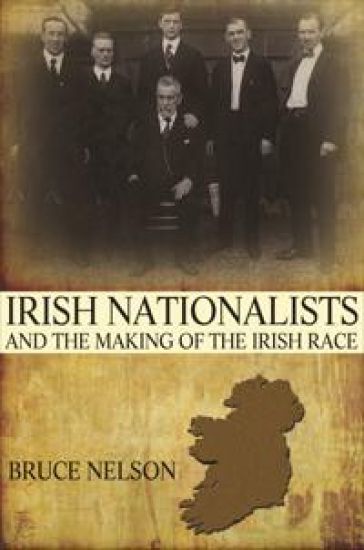
This is a book about Irish nationalism and how Irish nationalists developed their own conception of the Irish race. Bruce Nelson begins with an exploration of the discourse of race--from the nineteenth--century belief that "race is everything" to the more recent argument that there are no races. He focuses on how English observers constructed the "native" and Catholic Irish as uncivilized and savage, and on the racialization of the Irish in the nineteenth century, especially in Britain and the United States, where Irish immigrants were often portrayed in terms that had been applied mainly to enslaved Africans and their descendants. Most of the book focuses on how the Irish created their own identity--in the context of slavery and abolition, empire, and revolution. Since the Irish were a dispersed people, this process unfolded not only in Ireland, but in the United States, Britain, Australia, South Africa, and other countries. Many nationalists were determined to repudiate anything that could interfere with the goal of building a united movement aimed at achieving full independence for Ireland. But others, including men and women who are at the heart of this study, believed that the Irish struggle must create a more inclusive sense of Irish nationhood and stand for freedom everywhere. Nelson pays close attention to this argument within Irish nationalism, and to the ways it resonated with nationalists worldwide, from India to the Caribbean.
Oracle Big Data Handbook
Tom Plunkett; Brian Macdonald; Bruce Nelson; Mark Hornick; Helen Sun; Khader Mohiuddin; Debra Harding; Gokula Mishra; Robert Stackowiak; Keith Laker; David Segleau
McGraw-Hill Professional
2013
nidottu
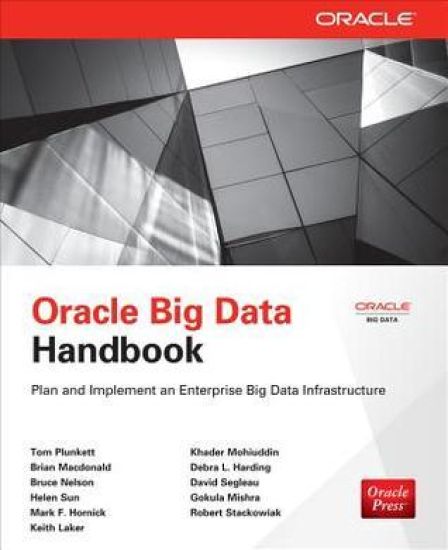
Publisher's Note: Products purchased from Third Party sellers are not guaranteed by the publisher for quality, authenticity, or access to any online entitlements included with the product.Transform Big Data into Insight"In this book, some of Oracle's best engineers and architects explain how you can make use of big data. They'll tell you how you can integrate your existing Oracle solutions with big data systems, using each where appropriate and moving data between them as needed." -- Doug Cutting, co-creator of Apache HadoopCowritten by members of Oracle's big data team, Oracle Big Data Handbook provides complete coverage of Oracle's comprehensive, integrated set of products for acquiring, organizing, analyzing, and leveraging unstructured data. The book discusses the strategies and technologies essential for a successful big data implementation, including Apache Hadoop, Oracle Big Data Appliance, Oracle Big Data Connectors, Oracle NoSQL Database, Oracle Endeca, Oracle Advanced Analytics, and Oracle's open source R offerings. Best practices formigrating from legacy systems and integrating existing data warehousing and analytics solutions into an enterprise big data infrastructure are also included inthis Oracle Press guide.Understand the value of a comprehensive big data strategyMaximize the distributed processing power of the Apache Hadoop platformDiscover the advantages of using Oracle Big Data Appliance as an engineered system for Hadoop andOracle NoSQL DatabaseConfigure, deploy, and monitor Hadoop and Oracle NoSQL Database using Oracle Big Data ApplianceIntegrate your existing data warehousing and analytics infrastructure into a big data architectureShare data among Hadoop and relational databases using Oracle Big Data ConnectorsUnderstand how Oracle NoSQL Database integrates into the Oracle Big Data architectureDeliver faster time to value using in-database analyticsAnalyze data with Oracle Advanced Analytics (Oracle R Enterprise and Oracle Data Mining), Oracle R Distribution, ROracle, and Oracle R Connector for HadoopAnalyze disparate data with Oracle Endeca Information DiscoveryPlan and implement a big data governance strategy and develop an architecture and roadmap
Irish Nationalists and the Making of the Irish Race
Bruce Nelson
Princeton University Press
2012
sidottu
This is a book about Irish nationalism and how Irish nationalists developed their own conception of the Irish race. Bruce Nelson begins with an exploration of the discourse of race--from the nineteenth--century belief that "race is everything" to the more recent argument that there are no races. He focuses on how English observers constructed the "native" and Catholic Irish as uncivilized and savage, and on the racialization of the Irish in the nineteenth century, especially in Britain and the United States, where Irish immigrants were often portrayed in terms that had been applied mainly to enslaved Africans and their descendants. Most of the book focuses on how the Irish created their own identity--in the context of slavery and abolition, empire, and revolution. Since the Irish were a dispersed people, this process unfolded not only in Ireland, but in the United States, Britain, Australia, South Africa, and other countries. Many nationalists were determined to repudiate anything that could interfere with the goal of building a united movement aimed at achieving full independence for Ireland. But others, including men and women who are at the heart of this study, believed that the Irish struggle must create a more inclusive sense of Irish nationhood and stand for freedom everywhere. Nelson pays close attention to this argument within Irish nationalism, and to the ways it resonated with nationalists worldwide, from India to the Caribbean.

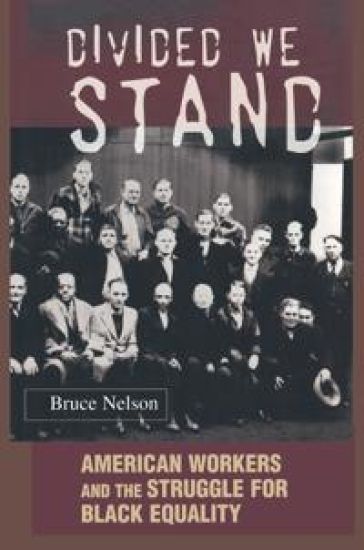
Divided We Stand is a study of how class and race have intersected in American society--above all, in the "making" and remaking of the American working class in the nineteenth and twentieth centuries. Focusing mainly on longshoremen in the ports of New York, New Orleans, and Los Angeles, and on steelworkers in many of the nation's steel towns, it examines how European immigrants became American and "white" in the crucible of the industrial workplace and the ethnic and working-class neighborhood. As workers organized on the job, especially during the overlapping CIO and civil rights eras in the middle third of the twentieth century, trade unions became a vital arena in which "old" and "new" immigrants and black migrants forged new alliances and identities and tested the limits not only of class solidarity but of American democracy. The most volatile force in this regard was the civil rights movement. As it crested in the 1950s and '60s, "the Movement" confronted unions anew with the question, "Which side are you on?" This book demonstrates the complex ways in which labor organizations answered that question and the complex relationships between union leaders and diverse rank-and-file constituencies in addressing it. Divided We Stand includes vivid examples of white working-class "agency" in the construction of racially discriminatory employment structures. But Nelson is less concerned with racism as such than with the concrete historical circumstances in which racialized class identities emerged and developed. This leads him to a detailed and often fascinating consideration of white, working-class ethnicity but also to a careful analysis of black workers--their conditions of work, their aspirations and identities, their struggles for equality. Making its case with passion and clarity, Divided We Stand will be a compelling and controversial book.
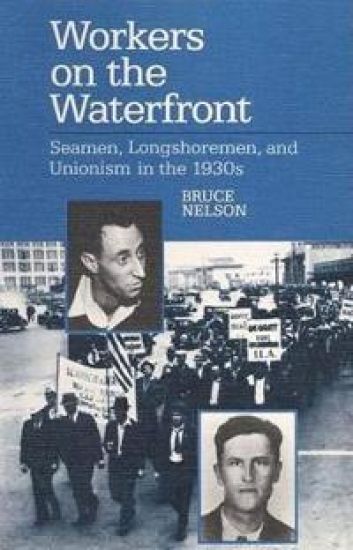
With working lives characterized by exploitation and rootlessness, merchant seamen were isolated from mainstream life. Yet their contacts with workers in port cities around the world imbued them with a sense of internationalism. These factors contributed to a subculture that encouraged militancy, spontaneous radicalism, and a syndicalist mood. Bruce Nelson's award-winning book examines the insurgent activity and consciousness of maritime workers during the 1930s. As he shows, merchant seamen and longshoremen on the Pacific Coast made major institutional gains, sustained a lengthy period of activity, and expanded their working-class consciousness. Nelson examines the two major strikes that convulsed the region and caused observers to state that day-to-day labor relations resembled guerilla warfare. He also looks at related activity, from increasing political activism to stoppages to defend laborers from penalties, refusals to load cargos for Mussolini's war in Ethiopia, and forced boardings of German vessels to tear down the swastika.

Land of the Dacotahs was first published in 1946. Minnesota Archive Editions uses digital technology to make long-unavailable books once again accessible, and are published unaltered from the original University of Minnesota Press editions.A new story about the American West, Land of the Dacotahs tells the dramatic history of the Upper Missouri Valley from the days of the early French explorers to today's plan for harnessing the Missouri, America's most willful river.Here is the land of the Sioux Indians, of Pte the buffalo, of the amazing Black Hills, of the great plains which became the tragic Dust Bowl. Here is this land's vast natural wealth, its violent extremes of weather, its man-wrought havoc and man-made fortunes – in stories of keelboatmen and Indian fighters, of cattle barons and rustlers, of Scandinavian immigrants and homesteaders, of the steamboats and the railroads, of the Nonpartisan League, and of the fights over the MVA.Bruce Nelson, a young North Dakota newspaperman, writes with a keen sense of historical pattern and a flair for the dramatic. He has made exciting use of little-known Indian lore and pioneer fold tales. Skillfully interwoven with the facts are diverting legends, with a sly bit of debunking besides, about such colorful figures as Hugh Glass, the exotic Marquis de Mores, Teddy Roosevelt, George Armstrong Custer, Sitting Bull, Wild Bill Hickok, Calamity Jane, and many others.The author was awarded a University of Minnesota Fellowship in Regional Writing to assist him in this work.