Kirjojen hintavertailu. Mukana 12 595 353 kirjaa ja 12 kauppaa.

Kirjailija

Bruce Newsome

Kirjat ja teokset yhdessä paikassa: 5 kirjaa, julkaisuja vuosilta 2006-2023, suosituimpien joukossa Breaching the Fortress Wall. Vertaile teosten hintoja ja tarkista saatavuus suomalaisista kirjakaupoista.

5 kirjaa

Kirjojen julkaisuhaarukka 2006-2023.

Breaching the Fortress Wall

Breaching the Fortress Wall

Brian A. Jackson; Peter Chalk; Kim Cragin; Bruce Newsome; John V. Parachini; William Rosenau; Erin M. Simpson; Melanie Sisson; Donald Temple

RAND
2006
pokkari
Technology systems play a key role within a larger, integrated strategy to target groups' efforts and protect the public from the threat of terrorist violence. This study draws on relevant data from the history of a variety of terrorist conflicts to understand terrorists' counter-technology efforts. Fully exploring adversaries' counter-technology behaviors can help make the best choices to protect the nation from the threat of terrorism.
Valentine Infantry Tank vs Panzer III

Valentine Infantry Tank vs Panzer III

Bruce Newsome

BLOOMSBURY PUBLISHING PLC
2023
nidottu
A unique comparison between the two most numerous British and German tank types from 1941 to 1943.Although much has been written about the Panzer III, little attention has been given to the equally prominent Valentine tank. This work compares the respective strengths and weaknesses of these iconic tanks, which frequently went head-to-head in brutal battles across Europe, Libya, Egypt, and Tunisia. It documents the upgrades made to each AFV type over three years, as up-gunned and up-armoured variants – ever more lethal, ever more survivable – arrived in North Africa.Dr Bruce Newsome explores the two tanks’ encounters, from the first Valentine vs Panzer III clashes in 1941, to the Axis drive into Egypt, and on to the Tunisian fighting of 1942–1943. Colour artworks include profile, weaponry and gunsight, and battlescene views of both tanks, while maps chart the campaigns in which they met. Each AVF’s performance is also covered, along with their technical details, design evolution, and crew histories.
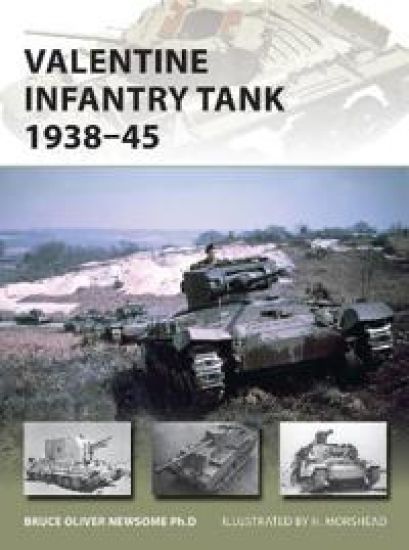
Valentine Infantry Tank 1938–45

Valentine Infantry Tank 1938–45

Bruce Newsome

Osprey Publishing
2016
nidottu
The Valentine was the most produced and most widely used British tank of the Second World War. The Valentine first saw combat during Operation Compass in November 1941 and remained one of the main medium tanks in British service into 1943. As the Churchill became more prevalent the Valentine was relegated to specialist and tank-destroyer variants, which would remain in service in the Far East to the end of the war.This book describes the evolution of the Valentine design and weighs up its impact on the battlefield. Although widely regarded today as one of the weaker tanks to be fielded during the war, it was exceptionally numerous, with more Valentines produced than any other British tank.
Developing Senior Navy Leaders

Developing Senior Navy Leaders

Lawrence M. Hanser; Louis W. Miller; Herbert J. Shukiar; Bruce Newsome

RAND
2008
pokkari
Could U.S. Navy officers be better prepared to become flag officers? This study examines the kinds of expertise required for successful performance in Navy flag billets, and whether recent pools of officers possess this experience. The authors also examine Navy trends over the past decade to identify the types of expertise likely to become more important for Navy leaders in the future.Identifies the expertise requirements of senior Navy leadership positions, as well as the types of experience likely to become more important in the future, to better understand how the Navy should develop its officers.
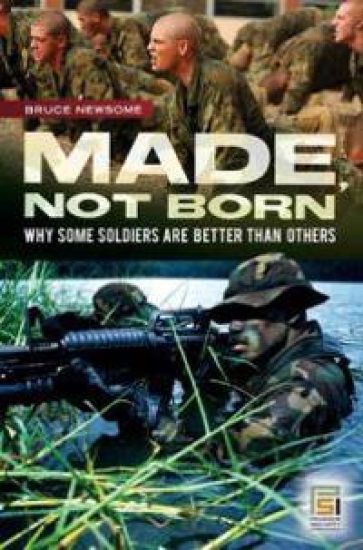
Made, Not Born

Made, Not Born

Bruce Newsome

Praeger Publishers Inc
2007
sidottu
Why do the combat capabilities of individual soldiers vary so much? This book seeks to provide an answer to this and other questions about variability in combat performance. Some soldiers flee quickly from the battlefield, while others endure all hardships until the bitter end. Some combat units can perform numerous types of missions, while others cannot keep themselves organized during peacetime. Some militaries armed with obsolete weapons have out fought enemies with the latest weapons, just as some massively outnumbered armies have beaten back much larger opponents. In this first social scientific study of the effectiveness of combat troops, Newsome evaluates competing explanations for the varying combat capabilities and performances.There are four main explanations, each emphasizing the influence of a single factor. The first focuses on material endowments. How well funded are the troops? Do they have the latest protective gear and the most advanced weaponry? Second, some analysts claim that democracies produce better commanders, superior strategies, more motivated personnel, or better-managed personnel; others, however, associated those characteristics with more authoritarian forms of government. Third is the idea that giving more power to the troops on the ground in individual combat units empowers them with decision-making capability and adaptability to fast-changing situations and circumstances. Newsome presents evidence that decentralized personnel management does correlate with superior combat performance. Fourth, soldier capabilities and performance often are assumed to reflect intrinsic attributes, such as prior civilian values. Newsome argues that the capabilities of combat soldiers are acquired through military training and other forms of conditioning, but he does not entirely discount the role of a soldier's individual character. In the age-old nature vs. nurture argument, he finds that intrinsic qualities do count, but that extrinsic factors, such as training and environment, matter even more.