
Kirjailija
Bruce Oliver Newsome
Kirjat ja teokset yhdessä paikassa: 19 kirjaa, julkaisuja vuosilta 2007-2025, suosituimpien joukossa Tiger 131. Vertaile teosten hintoja ja tarkista saatavuus suomalaisista kirjakaupoista.
19 kirjaa
Kirjojen julkaisuhaarukka 2007-2025.
The proposed mechanical solutions to the stalemate of the Great War (1914-1918) included big-wheel landships, wheeled bridge-pushers, trench-straddling personnel carriers, self-propelled artillery, and machine-gun carriers. The preferred acquisition was named "tank," but even the tank remained contested, between different weights, armaments, types of mobility, and protection levels. The doctrine too remained contested. Indeed, many of the same questions are asked today. Should tanks surprise the enemy or be preceded by bombardment? Should tanks assault by day or night? Should they be concentrated or distributed? Should they be combined with all arms, some arms, or no other arm? Should they lead or follow other arms? Should they sustain a penetration or hit and run? Should they hold objectives or rally to the rear? Should they aim at enemy fortifications, or infantry, or artillery, or supplies, or headquarters? Going back to the archives and the battlefields, this book reviews the doctrines and battles of the Great War, and rediscovers the enduring principles of mechanized warfare. 254 pages, 23 maps, 23 tables of data, 26 photographs
The first unofficial biography of Sir Basil Liddell Hart (1895-1970). Nobody had more influence on Anglophone military thought over the last 100 years. He was born in the reign of Victoria, came of age in the year before the Great War, and wrote doctrine from the year after. In 1925 (when he was still 29 years of age), the rising Chief of the Imperial General Staff (CIGS), desperate for good press, encouraged The Daily Telegraph to hire him as military correspondent. From that year, he published journalistic reports every few days, magazine articles every few months, and about one book per year, for a total of at least 35 books. He claimed to have been published in 42 countries and 31 languages. He was yet more prolific as a letter-writer. His own archive contains almost 1,000 correspondents. He garnered inside information, which raised the value of his journalism and thence the books based on his journalism. By the 1930s, he directly advised ministers and flag officers. Most of his policies, prescriptions, and predictions seemed discredited by the Second World War. However, during the 1950s, he popularized himself as prodigy, family man, intellectual, war hero, exposer of hard truths about the Great War, rigorous historian, author of British doctrine, strategist, fearless journalist, Army insider and outside critic, political sage, opponent of appeasement, secret guru to Britain's government during the Second World War, misunderstood proponent of negotiated peace, maligned proponent of a low-cost war, inventor of Blitzkrieg, America's adopted hero, Israel's inspiration, academic, writer, and mentor to a new generation of historians. In 1965, his memoirs cemented the narrative. In 1966, he was knighted by the Queen and photographed for the National Portrait Gallery.Previous memorialists and biographers relied on what Liddell Hart said or wrote late in life - about what he had said or written early in life. Since then, new archives of correspondence have been opened. My biography is the first to cite those archives. It gives a fresh and objective insight into Liddell Hart's life, thought, and legacy.
Sir Basil Liddell Hart (1895-1970) is the strongest influence on Anglophone military thought. From the 1920s, he influenced doctrine, force structure, and acquisitions. By the 1950s, he was the official historian of Britain's tank arm, and the self-declared inventor of Blitzkrieg. He died in 1970, a knight of the realm, feted as the greatest expert on tanks in the world.Liddell Hart's thinking about tanks is more interesting and varied than he or his disciples portrayed. During the Great War, he advocated for pedestrian infantry as the decisive arm. In the 1920s, he embraced JFC Fuller's call for fully-mechanized combined arms. He even advocated for a small, all-tracked army, on the promise that it could end wars in days. Yet he soon embraced one-man tankettes and fancied that all arms could be amalgamated around them. He campaigned for a ban on tanks weighing more than 5 tons. During the 1930s, he prioritized fast, light tanks, each accommodating only one machine-gun and two men. He promised that they could race around the enemy's front, infiltrate the enemy's rear, raid industry and infrastructure, and return days later, without a battle. During the Second World War, he realized some of his mistakes, but still complained about heavier tanks, bigger guns, and thicker armor, and reimagined a light tank force for hit-and-run raids. The first three chapters of this book review Liddell Hart's early preference for pedestrians over tanks, his switch to tanks over pedestrians after contacting JFC Fuller (then the tank arm's most senior officer), and his confused and selective engagement with tank technologies. Chapters 4 to 10 explain his interwar views on, respectively, current heavy tanks, tankettes and carriers, light tanks, medium tanks, infantry tanks, cruiser tanks, and finally (of all things) motorcycles.Chapter 11 reviews his post-war thoughts on the future of tanks, and reveals previously overlooked restatements of his interwar views. Chapter 12 reveals his slow, contentious rebound as official historian of the tank arm. Publicly, he leveraged the work to cement his reinvention as the neglected prophet of the sorts of technologies and doctrines normalized during the Second World War. Privately, as I reveal here for the first time, he was inattentive to the work, and played the principals against each other, except where convenient to his reinvention. Thus, his lessons are hit and miss.Liddell Hart always prioritized speed and stealthiness, which still deserve our attention. Yet we also need to beware of reductionism to speed and stealthiness, at the expense of other aspects of mobility, survivability, and lethality. Liddell Hart offers insights into the speed of Blitzkrieg, and the stealthiness of raids. However, his opus continues to encourage Western regression to fast charging, light footprint, portability, ready deployability, cost savings, and raiding. These ideals are worthy, but need to be balanced. Against inferior adversaries, in easy terrain, they can be spectacular. Against peer competitors or in difficult conditions, they become costly and indecisive. This book helps us to implement his ideals realistically.

A Practical Introduction to Security and Risk Management
Bruce Oliver Newsome
Perseublishing
2022
pokkari
A Practical Introduction to Security and Risk Management is the first textbook to combine both security management and risk management. Its concepts and skills can be applied in all domains: business, public administration, public safety, criminology, computing, sports, tourism, agriculture, healthcare, education, intelligence, policing, and international relations. This second edition adds the latest issues from pandemics, lockdowns, wars, crimes, and cyber risks, NEW "Expert Perspectives," NEW "Think about it" boxes, UPDATED "Official Standards," NEW "End-of-Chapter debates," NEW chapter summaries, questions, and exercises, and a glossary of definitions and abbreviations. Consultant and professor Bruce Oliver Newsome Ph.D. helps readers to understand, analyze, assess, and manage security and risks. Organized into 12 brief, accessible chapters, this book shows readers why security and risk management is becoming more important (Chapter 1), how to conceptualize, analyze, and assess security (Chapter 2), capacity (Chapter 3), risk (Chapter 4), hazards, threats, and contributors (Chapter 5), target exposure and vulnerability (Chapter 6), uncertainty and probability (Chapter 7), and events and returns (Chapter 8), how to develop more secure cultures, structures, and processes (Chapter 9), how to establish risk tolerability and sensitivity (Chapter 10), how to strategize and control intolerable risks (Chapter 11), and how to record, communicate, monitor, and audit security and risk management (Chapter 12).
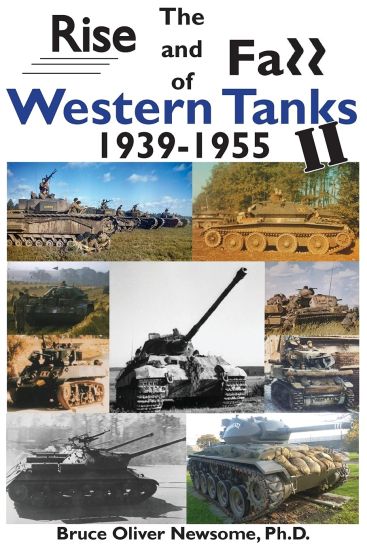
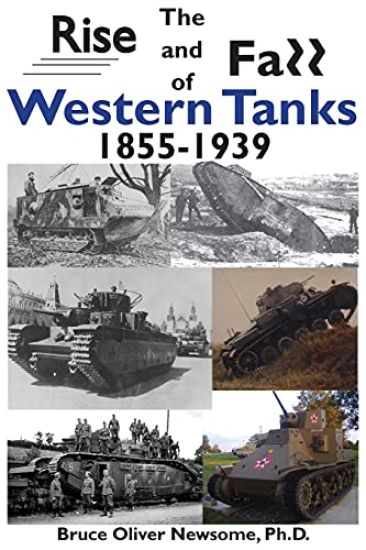
THE RISE AND FALL OF WESTERN TANKS tells the story of how the wealthiest, most industrialized, and most democratic states led the world in tanks from the Great War through the 1920s, but lost their lead in the 1930s. The Soviet Union and Germany (incorporating Czechoslovakia) built the largest tank forces, reverse-engineered Western tanks, and innovated for themselves. AS THIS BOOK SHOWS, Western soldiers and officials complained at the time, while propagandists pretended otherwise. Western governments deferred official inquiry until peacetime, then they forgot their promises. Politicians spun the story to avoid blame or monopolize credit. Official historians ignored the record. Private historians nationalistically and lazily followed suit. IN THIS BOOK, you can read what the developers and users said at the time, illustrated with more than 200 photographs and 14 graphs and tables, based on a dataset with more than 500 tank types, across 9 countries - from gun size to cost, from Canada to Japan, from the First World War to the Second.THE RISE AND FALL OF WESTERN TANKS combines history and science to resolve a controversy that has endured for almost a century.
How should we analyze and assess new terrorist behaviors? What are the particular risks and challenges from new terrorism? Should we negotiate with terrorists, and, if so, how? When should we use force against terrorists? Countering New(est) Terrorism: Hostage-Taking, Kidnapping, and Active Violence—Assessing, Negotiating, and Assaulting improves our knowledge of new terrorist behaviors, and our skills in responding to such attacks.The term "new terrorism" has been in circulation since the late 90’s. This book analyzes the "newest terrorism" that has emerged in recent years—characterized by increased hostage-taking, kidnapping, and active violence—and develops best practices for countering these emerging threats. Along the way, it challenges fashionable wishful thinking that all terrorists are open to rational negotiation or de-radicalization, that military responses always reflect badly on the official side, and that terrorists are not constrained by their own doctrines.The new terrorists are dramatically more ideological, murderous, and suicidal. They are generally less reconcilable, less trusting of official negotiators, less likely to release detainees, and more likely to kill detainees. They are less likely to demand ransoms yet more likely to release hostages in cases in which they do demand ransom. They are more informed about the official side’s policies, tactics, techniques, and procedures. They are more likely to use new information and communication technologies against responding agencies and officials. They are more capable fighters—they kill more people despite deploying fewer fighters per hostage. Most disturbing is the fact that they take advantage of free-er societies to access easier targets. Features:Includes evidence-based definitions and descriptions of political, religious, Jihadi, and new terrorismPresents the first large-n comparison of old and new terrorism, using an original extension of the Global Terrorism Database (GTD), with added codes for each of 10,735 hostage crises and more than 500,000 data points from 1970 through 2016Details a further extension of the GTD covering all terrorist events from 2004 through 2016, roughly 5 million data points.Offers prescriptive advice and visual decision trees on how to negotiate crises, assess the risk of terrorism, and how and when to assault terroristsReviews official practices, interviews with experienced officials, and real-world simulations of recent terrorist events and attacks Countering New(est) Terrorism will be of interest to researchers, students enrolled in terrorism and Homeland Security programs, crisis negotiators, and police, security, intelligence, and military authorities tasked with counterterrorism and anti-terrorism efforts.

Would you dumb down to fit in? Simon escapes the ridiculous Riverside University of London by exchanging with its American partner - the University of Sunshine Bayside, only to wake up to the wokest of woke colleges. Virtues are punished as vices, conformity trumps originality, and minds are melded - one falsehood at a time. Being good at his job is his first mistake. In election year, politicians, terrorists, spies, publicists, journalists, and bluffers compete to make an example of him in their fight for a new global society. The professor is about to be taken to school...

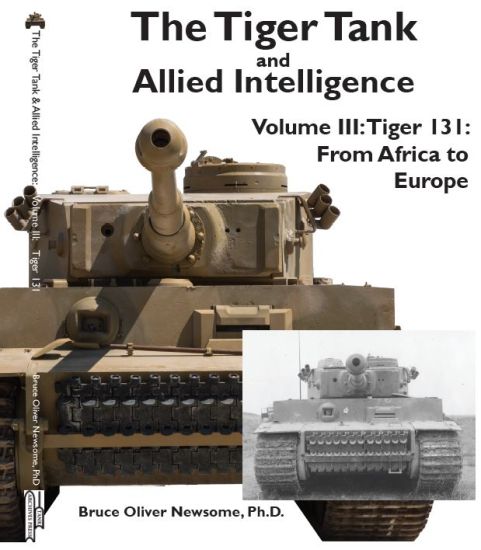
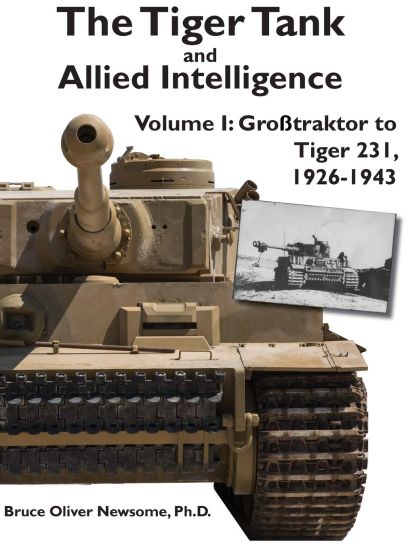
THE TIGER TANK was dramatically more powerful than any other tank when deployed in 1942. How did the Germans preserve its secrets? Why were the Allies taken by surprise? What did they discover? After 20 years of research on three continents, across 25 battle maps, 31 tables of data, more than 500 photographs and drawings, and previously unidentified first-hand accounts, these volumes reveal what Allied technicians discovered and what the propagandists covered up and distorted. Thus, we can learn more about the Tiger as it really was, rather than the hearsay that history books perpetuate. THIS THIRD VOLUME focuses on Tiger 131 of the 504th: the first running Tiger to be exploited in the West, the first Tiger sent to Britain, the most studied Tiger, and the only running Tiger in the world today. This volume reveals the untold story of how Tiger 131 was captured on Gueriat el Atach in almost perfect condition, after fighting for two days, against parts of four battalions of tanks and six battalions of infantry. No less remarkable is its recovery and exploitation in Tunisia, how it got to Britain, its tardy and incomplete trials, the missing reports, the tank's relegation in disabled condition - during a politicized dispute about the relative merits of Allied tanks, and the falsification of its provenance to suggest that it was captured at Djebel Djaffa, three days earlier, by different units.THIS THIRD VOLUME also describes: the campaigns in Sicily in 1943, mainland Italy from 1943 to 1945, France in 1944, and Germany in 1945; the Tigers captured in those campaigns; the widening gaps between the intelligence at home, what the users heard, and what their commanders, politicians, propagandists, and historians said; the first battles between the latest Allied tanks and the last Tigers; and the post-war fates of the surviving Tigers.
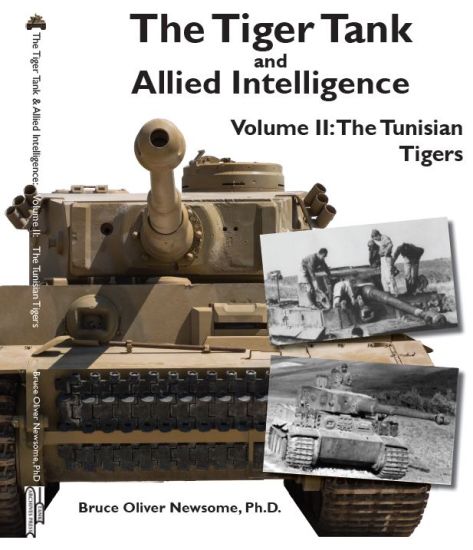
THE TIGER TANK was dramatically more powerful than any other tank when deployed in 1942. How did the Germans preserve its secrets? Why were the Allies taken by surprise? What did they discover? After 20 years of research on three continents, across 25 battle maps, 31 tables of data, more than 500 photographs and drawings, and previously unidentified first-hand accounts, these volumes reveal what Allied technicians discovered and what the propagandists covered up and distorted. Thus, we can learn more about the Tiger as it really was, rather than the hearsay that history books perpetuate. THIS SECOND VOLUME tells the story of Tigers on the Western front from February to April 1943: the Tigers leading the greatest Axis counter-offensive of the Tunisian campaign, through Faid, Sidi Bou Zid, and Sbeitla, on the way to American abandonment of Kasserine Pass; the counter-offensive against the British from Sidi Nsir to Hunts Gap; the "Tiger graveyard," where seven Tigers were demolished; the American claims to knock out Tigers at El Guettar Pass, where Tigers never fought; how Tigers saved Maknassy Pass, but went unobserved by the Americans; the American claim to knock out a Tiger in between these passes, and the match with Tiger 213; the reasons why Tiger 213 was never reported higher than company echelon; the daring German spoiling attack near Medjez; the failed British counter-attacks against a Tiger at Djebel Djaffa; the strange abandonment of this Tiger without demolition; the British failure to exploit this Tiger; and American acquisition of Tiger 712, its restoration, enshipment to America, and subsequent neglect; the huge British and French offensive across Goubellat Plain, and how Tigers contributed to its defeat; and Tiger 731's final battles, its demise, its capture without demolition, and the reasons why its capture went unrecorded.

A Practical Introduction to Homeland Security
Bruce Oliver Newsome; Jack A. Jarmon
Rowman Littlefield
2020
nidottu
This text provides students with a practical introduction to the concepts, structure, politics, law, hazards, threats, and practices of homeland security everywhere, focusing on US “homeland security,” Canadian “public safety,” and European “domestic security.” It is a conceptual and practical textbook, not a theoretical work. It is focused on the knowledge and skills that will allow the reader to understand how homeland security is and should be practiced. Globalization, population growth, migration, technology, aging infrastructure, and the simple trend to higher expectations are making homeland security more challenging. Yes, homeland security really is a global problem. The hyperconnectivity of today’s world has reduced the capacity of the United States to act unilaterally or to solve homeland risks from within the borders alone. Newsome and Jarmon explain the relevant concepts, the structural authorities and responsibilities that policymakers struggle with and within which practitioners must work, the processes that practitioners and professionals choose between or are obliged to use, the actual activities, and the end-states and outputs of these activities. Moreover, this book presents the concept of homeland security as an evolving experience rather than an artifact of life since 2001. It is a profession that requires some forming from the ground up as well as the top down.
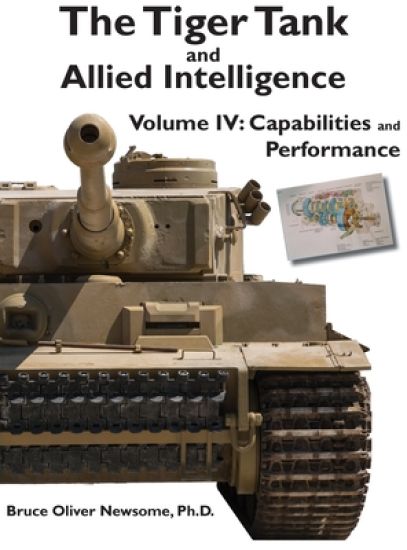
The German Tiger was dramatically more powerful than any other tank when deployed in 1942. Why were the Allies taken by surprise? How did the Germans employ Tigers while preserving their secrets? How did the Allies react? Was the Tiger a monstrous folly or ahead of its time? "The Tiger Tank and Allied Intelligence" compares German designs and operations with Allied intercepts, interrogations, captures, estimates, and adaptations. After 20 years of research in three countries, across 20 battle maps, 31 tables of data, 500 photographs and drawings, and previously unidentified first-hand accounts, these volumes reveal not just what the Allies knew but what the Allies missed, covered up, and distorted. Thus, we can learn more about the Tiger as it really was, rather than the hearsay that history books perpetuate. This fourth and final volume in the series analyses Tiger's technologies, capabilities, and performance, in both German and Allied understanding. The chapters cover the trade-offs, productivity, cost-effectiveness, reliability, maintainability, life cycle, strategic mobility, tactical mobility, lethality, and survivability.
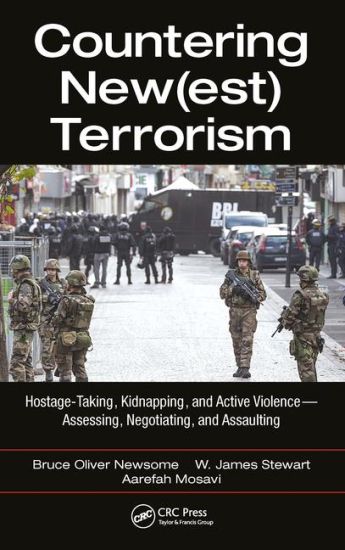
How should we analyze and assess new terrorist behaviors? What are the particular risks and challenges from new terrorism? Should we negotiate with terrorists, and, if so, how? When should we use force against terrorists? Countering New(est) Terrorism: Hostage-Taking, Kidnapping, and Active Violence—Assessing, Negotiating, and Assaulting improves our knowledge of new terrorist behaviors, and our skills in responding to such attacks.The term "new terrorism" has been in circulation since the late 90’s. This book analyzes the "newest terrorism" that has emerged in recent years—characterized by increased hostage-taking, kidnapping, and active violence—and develops best practices for countering these emerging threats. Along the way, it challenges fashionable wishful thinking that all terrorists are open to rational negotiation or de-radicalization, that military responses always reflect badly on the official side, and that terrorists are not constrained by their own doctrines.The new terrorists are dramatically more ideological, murderous, and suicidal. They are generally less reconcilable, less trusting of official negotiators, less likely to release detainees, and more likely to kill detainees. They are less likely to demand ransoms yet more likely to release hostages in cases in which they do demand ransom. They are more informed about the official side’s policies, tactics, techniques, and procedures. They are more likely to use new information and communication technologies against responding agencies and officials. They are more capable fighters—they kill more people despite deploying fewer fighters per hostage. Most disturbing is the fact that they take advantage of free-er societies to access easier targets. Features:Includes evidence-based definitions and descriptions of political, religious, Jihadi, and new terrorismPresents the first large-n comparison of old and new terrorism, using an original extension of the Global Terrorism Database (GTD), with added codes for each of 10,735 hostage crises and more than 500,000 data points from 1970 through 2016Details a further extension of the GTD covering all terrorist events from 2004 through 2016, roughly 5 million data points.Offers prescriptive advice and visual decision trees on how to negotiate crises, assess the risk of terrorism, and how and when to assault terroristsReviews official practices, interviews with experienced officials, and real-world simulations of recent terrorist events and attacksCountering New(est) Terrorism will be of interest to researchers, students enrolled in terrorism and Homeland Security programs, crisis negotiators, and police, security, intelligence, and military authorities tasked with counterterrorism and anti-terrorism efforts.
An Introduction to Research, Analysis, and Writing
Bruce Oliver Newsome
SAGE Publications Inc
2015
nidottu
This accessible guide walks readers through the process of completing a social science research project. Written specifically to meet the needs of undergraduate research classes, it introduces students to a complete skill set, including: planning, design, analysis, argumentation, criticizing theories, building theories, modeling theories, choosing methods, gathering data, presenting evidence, and writing the final product. Students can use this text as a practical resource to navigate through each stage of the process, including choices between more advanced research techniques.
Commonality in Military Equipment
Thomas Held; Bruce Oliver Newsome; Matthew W Lewis
RAND
2009
pokkari
To inform the U.S. Army's decisionmaking process surrounding commonality in military equipment, RAND was asked to assess the advantages and disadvantages of commonality and how to best manage their trade-offs. This report presents analyses of the effects of commonality on costs, capabilities, and training and offers a decisionmaking aid that designers, developers, and procurers could use to inform their decisions about commonality.
Speaking with a Commonality Language
Bruce Oliver Newsome; Matthew W Lewis; Thomas Held
RAND
2007
pokkari
As the U.S. Army becomes increasingly interested in "commonality"--the sharing of common parts across different entities--there is a need for a clearer definition of the concept. Motivated by the reported costs arising from a lack of clear definitions during recent Army acquisition processes and by cases in which unclear definitions have led to significant problems, this report offers a new, more rigorous lexicon and illustrative examples.