Kirjojen hintavertailu. Mukana 12 319 942 kirjaa ja 12 kauppaa.

Kirjailija

Bruce T. Draine

Kirjat ja teokset yhdessä paikassa: 3 kirjaa, julkaisuja vuosilta 2003-2011, suosituimpien joukossa The Cold Universe. Vertaile teosten hintoja ja tarkista saatavuus suomalaisista kirjakaupoista.

3 kirjaa

Kirjojen julkaisuhaarukka 2003-2011.

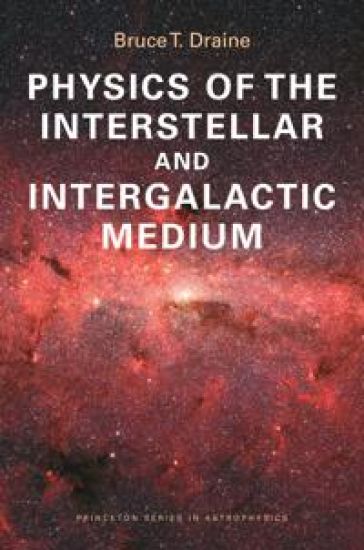
Physics of the Interstellar and Intergalactic Medium

Physics of the Interstellar and Intergalactic Medium

Bruce T. Draine

Princeton University Press
2011
pokkari
This is a comprehensive and richly illustrated textbook on the astrophysics of the interstellar and intergalactic medium--the gas and dust, as well as the electromagnetic radiation, cosmic rays, and magnetic and gravitational fields, present between the stars in a galaxy and also between galaxies themselves. Topics include radiative processes across the electromagnetic spectrum; radiative transfer; ionization; heating and cooling; astrochemistry; interstellar dust; fluid dynamics, including ionization fronts and shock waves; cosmic rays; distribution and evolution of the interstellar medium; and star formation. While it is assumed that the reader has a background in undergraduate-level physics, including some prior exposure to atomic and molecular physics, statistical mechanics, and electromagnetism, the first six chapters of the book include a review of the basic physics that is used in later chapters. This graduate-level textbook includes references for further reading, and serves as an invaluable resource for working astrophysicists. * Essential textbook on the physics of the interstellar and intergalactic medium * Based on a course taught by the author for more than twenty years at Princeton University * Covers radiative processes, fluid dynamics, cosmic rays, astrochemistry, interstellar dust, and more * Discusses the physical state and distribution of the ionized, atomic, and molecular phases of the interstellar medium * Reviews diagnostics using emission and absorption lines * Features color illustrations and detailed reference materials in appendices * Instructor's manual with problems and solutions (available only to teachers)
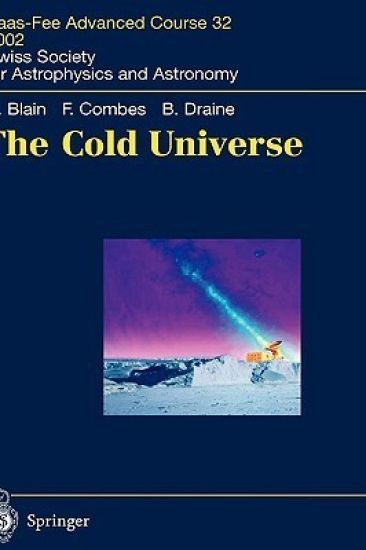
The Cold Universe

The Cold Universe

Andrew W. Blain; Francoise Combes; Bruce T. Draine

Springer-Verlag Berlin and Heidelberg GmbH Co. K
2010
nidottu
Modern astronomy has stretched its domains of exploration tremendously. Not only objects at very large distances and very old states of the Universe can be examined, but also all kinds of radiations and phenomena are now accessible. Astronomers constantly move from considerations about very - luted to very dense systems. Hot and energetic systems, being the easiest to observe, have attracted a lot of attention. However the cold and low energetic states have been so- what neglected, either because being harder to observe they appear unexc- ing, or because being less well known they tend to be ignored. However the Universe background radiation has now been determined as the most perfect known case of a black-body spectrum, a substantial fraction of matter spends some time close to the temperature of this universal thermal bath, before - ingtransformedintostarsorplanets. Someobjects,suchasrapidlyexpanding gas shells in planetary nebulae, may even succeed in reaching a temperature well below the background radiation temperature through the mere action of adiabatic expansion. In view of the highly dynamical and turbulent state of the interstellar medium, hot and cold temperature ?uctuations must be expected, while the clear observational bias is to observe the hot rather than the cold ?uctuations. Fortunately with the accessibility of far-infrared and sub-millimetric instruments such as SCUBA, WMAP, Planck or ALMA, we can expect in the coming years continuous advances in our understanding of these harder to observe cold stages of matter.
The Cold Universe

The Cold Universe

Andrew W. Blain; Francoise Combes; Bruce T. Draine

Springer-Verlag Berlin and Heidelberg GmbH Co. K
2003
sidottu
Modern astronomy has stretched its domains of exploration tremendously. Not only objects at very large distances and very old states of the Universe can be examined, but also all kinds of radiations and phenomena are now accessible. Astronomers constantly move from considerations about very - luted to very dense systems. Hot and energetic systems, being the easiest to observe, have attracted a lot of attention. However the cold and low energetic states have been so- what neglected, either because being harder to observe they appear unexc- ing, or because being less well known they tend to be ignored. However the Universe background radiation has now been determined as the most perfect known case of a black-body spectrum, a substantial fraction of matter spends some time close to the temperature of this universal thermal bath, before - ingtransformedintostarsorplanets. Someobjects,suchasrapidlyexpanding gas shells in planetary nebulae, may even succeed in reaching a temperature well below the background radiation temperature through the mere action of adiabatic expansion. In view of the highly dynamical and turbulent state of the interstellar medium, hot and cold temperature ?uctuations must be expected, while the clear observational bias is to observe the hot rather than the cold ?uctuations. Fortunately with the accessibility of far-infrared and sub-millimetric instruments such as SCUBA, WMAP, Planck or ALMA, we can expect in the coming years continuous advances in our understanding of these harder to observe cold stages of matter.