Kirjojen hintavertailu. Mukana 12 595 353 kirjaa ja 12 kauppaa.

Kirjailija

Bruno David

Kirjat ja teokset yhdessä paikassa: 12 kirjaa, julkaisuja vuosilta 1994-2025, suosituimpien joukossa Pundawar Manbur. Vertaile teosten hintoja ja tarkista saatavuus suomalaisista kirjakaupoista.

12 kirjaa

Kirjojen julkaisuhaarukka 1994-2025.

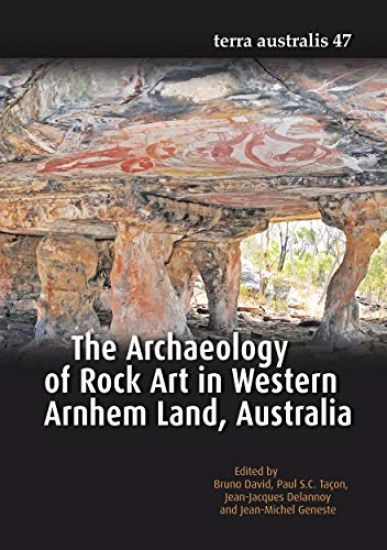
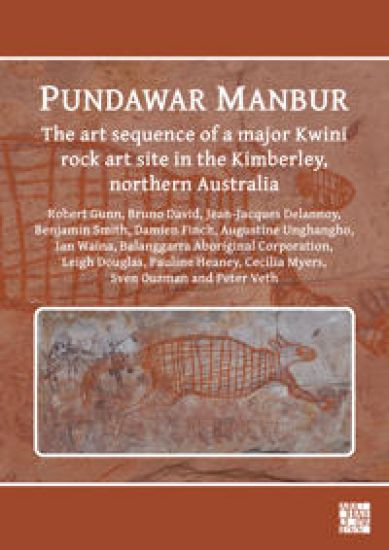
Pundawar Manbur

Pundawar Manbur

Robert G. Gunn; Bruno David; Jean-Jacques Delannoy; Benjamin Smith; Damien Finch; Augustine Unghangho; Ian Waina; Leigh Douglas; Pauline Heaney; Cecilia Myers; Sven Ouzman; Peter Veth

Archaeopress
2025
nidottu
Pundawar Manbur is one of the largest painted rock shelters in the Drysdale River valley of the Kimberley, Western Australia. It contains more than 600 rock paintings, engravings and rock markings with a complex series of overlapping styles of rock art. It is a cultural jewel of Kwini Country, within the lands of the Balanggarra Native Title determination. This monograph presents the first detailed recording and analysis of the site and its art. There are many figures in superposition, and many also in carefully targeted patterns of superimposition, making for a rich story of sequential engagements going back many thousands of years. There is much figurative art, including images from the earliest purported phase of Kimberley art, the Irregular Infill Animal Period, but there are also stencils and other markings. There is evidence of additive reuse – some of the figures have been repainted. There is also fascinating evidence of subtractive reuse, some of the images showing signs of having been ‘battered’ and/or scratched, that is, directly engaged with subsequent to their painting. This monograph is unusual in Australian archaeology as it does not focus on an excavated site; it focuses solely on the rock art of Pundawar Manbur and gives it the attention it deserves.
Cultural Burning

Cultural Burning

Bruno David; Michael-Shawn Fletcher; Simon Connor; Virginia Ruth Pullin; Jessie Birkett-Rees; Jean-Jacques Delannoy; Michela Mariani; Anthony Romano; S. Yoshi Maezumi

Cambridge University Press
2024
pokkari
This Element addresses a burning question – how can archaeologists best identify and interpret cultural burning, the controlled use of fire by people to shape and curate their physical and social landscapes? This Element describes what cultural burning is and presents current methods by which it can be identified in historical and archaeological records, applying internationally relevant methods to Australian landscapes. It clarifies how the transdisciplinary study of cultural burning by Quaternary scientists, historians, archaeologists and Indigenous community members is informing interpretations of cultural practices, ecological change, land use and the making of place. This title is also available as Open Access on Cambridge Core.
Cultural Burning

Cultural Burning

Bruno David; Michael-Shawn Fletcher; Simon Connor; Virginia Ruth Pullin; Jessie Birkett-Rees; Jean-Jacques Delannoy; Michela Mariani; Anthony Romano; S. Yoshi Maezumi

Cambridge University Press
2024
sidottu
This Element addresses a burning question – how can archaeologists best identify and interpret cultural burning, the controlled use of fire by people to shape and curate their physical and social landscapes? This Element describes what cultural burning is and presents current methods by which it can be identified in historical and archaeological records, applying internationally relevant methods to Australian landscapes. It clarifies how the transdisciplinary study of cultural burning by Quaternary scientists, historians, archaeologists and Indigenous community members is informing interpretations of cultural practices, ecological change, land use and the making of place. This title is also available as Open Access on Cambridge Core.
Mobile Landscapes and Their Enduring Places

Mobile Landscapes and Their Enduring Places

Bruno David; Jean-Jacques Delannoy; Jessie Birkett-Rees

Cambridge University Press
2024
pokkari
This Element presents emerging concepts and analytical tools in landscape archaeology. In three major sections bookended by an Introduction and Conclusion, the Element discusses current and emerging ideas and methods by which to explore how people in the past engaged with each other and their physical settings across the landscape, creating their lived environments in the process. The Element reviews the scales and temporalities that inform the study of human movements in and between places. Learning about how people engaged with each other at individual sites and across the landscape deep in the past is best achieved through transdisciplinary approaches, in which archaeologists integrate their methods with those of other specialists. The Element introduces these ideas through new research and multiple case studies from around the world, culminating in how to 'archaeomorphologically' map anthropic constructions in caves and their contemporary environments.
Mobile Landscapes and Their Enduring Places

Mobile Landscapes and Their Enduring Places

Bruno David; Jean-Jacques Delannoy; Jessie Birkett-Rees

Cambridge University Press
2024
sidottu
This Element presents emerging concepts and analytical tools in landscape archaeology. In three major sections bookended by an Introduction and Conclusion, the Element discusses current and emerging ideas and methods by which to explore how people in the past engaged with each other and their physical settings across the landscape, creating their lived environments in the process. The Element reviews the scales and temporalities that inform the study of human movements in and between places. Learning about how people engaged with each other at individual sites and across the landscape deep in the past is best achieved through transdisciplinary approaches, in which archaeologists integrate their methods with those of other specialists. The Element introduces these ideas through new research and multiple case studies from around the world, culminating in how to 'archaeomorphologically' map anthropic constructions in caves and their contemporary environments.
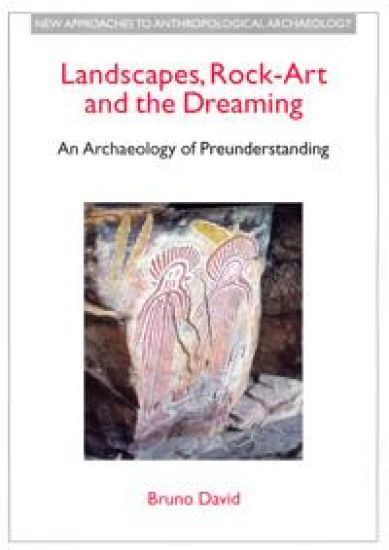
Landscapes, Rock-Art and the Dreaming

Landscapes, Rock-Art and the Dreaming

Bruno David

BLOOMSBURY PUBLISHING PLC
2023
nidottu
The apparent timelessness of the Dreaming of Aboriginal Australia has long mystified European observers, conjuring images of an ancient people in harmony with their surroundings. It may come as a surprise, therefore, that the Dreaming's historical antiquity had never been explored by archaeologists prior to this study. In this seminal text in rock-art research, now reissued with a new preface, Bruno David examines the archaeological evidence for Dreaming-mediated places, rituals and symbolism. What emerges is not a static culture, but a mode of conceiving the world that emerged in its recognizable form only about 1,000 years ago. This is a world of what the philosopher Hans-Georg Gadamer has called pre-understanding, a condition of knowledge that shapes one's experience of the world. By tracing through time the archaeological visibility of one well known mode of pre-understanding - the Dreaming of Aboriginal Australia - the author argues that it is possible to scientifically explore an archaeology of pre-understanding; of body and mind, identity and Being-in-the-world.
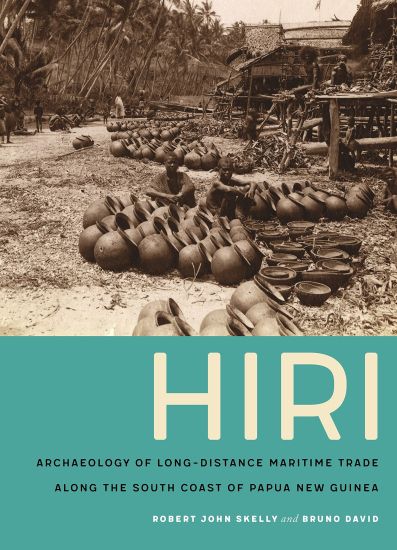
Hiri

Hiri

Robert John Skelly; Bruno David

University of Hawai'i Press
2017
sidottu
In the late 1800s, missionaries and government officials stationed along the south coast of Papua New Guinea began to observe large fleets of indigenous Motu sailing ships coming and going out of present-day Port Moresby. Each year the women of nearby villages manufactured tens of thousands of clay pots to be loaded onto the ships that men built, then sailed with their cargos westward some 400 kilometers. Upon arrival at prearranged destination-villages in distant lands to the west—lands populated by peoples speaking foreign languages—the pots together with the shell valuables were exchanged for hundreds of tons of sago flour. While in those villages, the men dismantled their ships and built them anew, literally from the bottom up, because trees of sufficient size to make large sailing ships did not grow in the landscapes of their home villages. Both the Motu of the Port Moresby region and sago producers of the Gulf of Papua to the west knew of these ventures as hiri.Through first-hand archaeological research at recipient villages, archaeologists Robert Skelly and Bruno David investigate the origins of this indigenous maritime trade system, from ancient roots in the famed Lapita culture of three thousand years ago up to the present. They offer details from archaeological digs that led them from the first ceramics of the south coast of Papua New Guinea to pottery with unmistakable signs of the ethnographic hiri. Along the south coast of Papua New Guinea, the maritime endeavor that is the hiri is revealed in historical perspective, including stories of its colonial past.
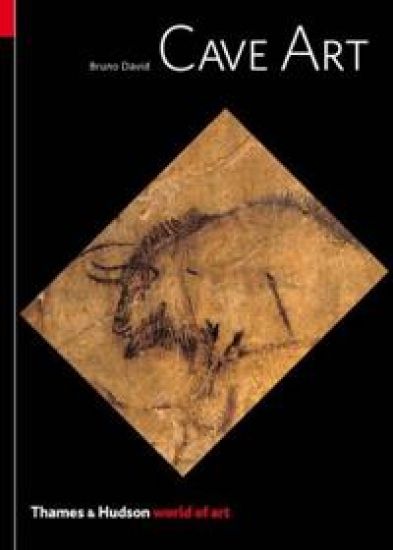
Cave Art

Cave Art

Bruno David

Thames Hudson Ltd
2017
nidottu
Deep underground, hidden from view, some of humanity’s earliest artistic endeavours have lain buried for thousands of years. The most ancient artworks were portable objects, left on cave floors. Shell beads signal that 100,000 years ago humans had developed a sense of self and a desire to beautify the body; ostrich eggshells incised with curious geometric patterns hint at how communities used art, through the power of symbols, to communicate ways of doing things and bind people together. In time, people came to adorn cave walls with symbols, some abstract, others vivid arrangements of animals and humans. Often undisturbed for tens of thousands of years, these were among the first visual symbols that humans shared with each other. However, as archaeologist Bruno David reveals, we have ways of unlocking their secrets. Sometimes these lie in the art itself, sometimes lying on the ground, or buried beneath where people have left traces of what they did, footprints of the ancestors. In pictures and words, David tells the story of this mysterious world of decorated caves, from the oldest known ‘painting kits’, found virtually intact after their use 100,000 years ago in South Africa, to the magnificent murals of the European Ice Age that are so famous today. Showcasing the most astounding discoveries made in the past 150 years of archaeological exploration, Cave Art explores these creative achievements, from our remotest ancestors to recent times, and what they tell us about the human past and ourselves today.
Biodiversity of the Southern Ocean

Biodiversity of the Southern Ocean

Bruno David; Thomas Saucède

ISTE Press Ltd - Elsevier Inc
2015
sidottu
The Southern Ocean surrounding the Antarctic continent is vast, in particular, its history, its isolation, and climate, making it a unique "laboratory case" for experimental evolution, adaptation and ecology. Its evolutionary history of adaptation provide a wealth of information on the functioning of the biosphere and its potential. The Southern Ocean is the result of a history of nearly 40 million years marked by the opening of the Straits south of Australia and South America and intense cooling. The violence of its weather, its very low temperatures, the formation of huge ice-covered areas, as its isolation makes the Southern Ocean a world apart. This book discusses the consequences for the evolution, ecology and biodiversity of the region, including endemism, slowed metabolism, longevity, gigantism, and its larval stages; features which make this vast ocean a "natural laboratory" for exploring the ecological adaptive processes, scalable to work in extreme environmental conditions. Today, biodiversity of the Southern Ocean is facing global change, particularly in regional warming and acidification of water bodies. Unable to migrate further south, how will she cope, if any, to visitors from the North?
Echinoderm Research 2001

Echinoderm Research 2001

Jean-Pierre Feral; Bruno David

A A Balkema Publishers
2003
sidottu
The Echinodermata is a phylum of marine invertebrates with a fossil record reaching back to the Precambrian. Major elements of the benthic macrofauna, they play a significant role in the dynamics of the ecosystems and are choice biological models in the life sciences, from ecology to genomics. This title offers 50 papers presented at the sixth European Conferences on Echinoderms (ECE), covering population biology, biodiversity, anatomy and functional morphology, physiology and behavior, biological cycles, and resource potential. This book reflects the great diversity of its contributors, offering an opportunity to cover a broad range of important questions in a single, authoritative reference.
Echinoderms Through Time

Echinoderms Through Time

Bruno David; Alain Guille; Jean-Pierre Feral

A A Balkema Publishers
1994
sidottu
Echinoderms are now considered as a biological and geological model that underlies researches of primary importance. The extent of the contributions made by the International Echinoderm Conferences to various fields of research is attested by the scope covered by presentation at the international conferences. These proceedings contain the complete papers or abstracts of all the presentations and posters presented at the eighth International Echinoderm Conference, held in Dijon, France in September, 1994. Coverage includes: general; extinct classes; crinoids; asteroids; ophiuroids; holothuroids; and echinoids.