Kirjojen hintavertailu. Mukana 12 390 323 kirjaa ja 12 kauppaa.

Kirjailija

Bryan C. Pijanowski

Kirjat ja teokset yhdessä paikassa: 4 kirjaa, julkaisuja vuosilta 2024-2026, suosituimpien joukossa Applied Spatial Ecology and GIScience. Vertaile teosten hintoja ja tarkista saatavuus suomalaisista kirjakaupoista.

4 kirjaa

Kirjojen julkaisuhaarukka 2024-2026.

Applied Spatial Ecology and GIScience

Applied Spatial Ecology and GIScience

Bryan C. Pijanowski

Purdue Scholarly Publishing Services
2026
sidottu
Applied Spatial Ecology and GIScience: Foundations, Methods, Case Studies, and Lab Exercises bridges ecological knowledge with GIScience principles that make modern spatial analysis possible. Written for students and practitioners in ecology, natural resources, geography, conservation science, and environmental science, this book moves from core concepts—scale, spatial data models, coordinate systems, uncertainty, cartography, and spatial reasoning—to the analytical workflows used to understand principles of conservation and natural resource management at scales that matter. Each methods chapter is paired with hands-on, step-by-step exercises and case studies that translate theory into practice using widely available geospatial data and contemporary GIS tools with descriptions of ArcGIS Pro workflows. Readers will build skills through applied problems related to everything from land change analysis, landscape pattern metrics (including Fragstats), and hydrologic terrain processing to neutral landscape modeling, spatial interpolation of animal population abundances, and mapping of species distributions. Other concepts covered include 3D visualization, climate-zone shift mapping, the assessment of ecosystem productivity and ecoregions, biodiversity mapping, quantifying species–area relationships, and hotspot analysis. Applied Spatial Ecology and GIScience serves as a classroom-ready guide grounded in GIScience, is transparent in its methodological approaches, and focuses on natural resource management and conservation planning.
Listening to Place

Listening to Place

Bryan C. Pijanowski

Purdue Scholarly Publishing Services
2025
nidottu
Urban planning often focuses on the visual world, thus missing key elements necessary to create healthy communities. Listening to Place delves into the sonic world to reveal how sound serves as an essential element when engaging in community planning. This book provides easy-to-use tools that explore sounds from a positive viewpoint, such as identifying and preserving distinct cultural sounds of place, to those that are harmful, particularly loud noise. It also supplies planners with step-by-step processes as well as an explanation of key terms that are important for soundscape planning. A comprehensive rubric of sound sources and how communities might better value them are included, along with a unique ear-appeal assessment exercise that can be conducted by members of all communities. Finally, Listening to Place suggests new strategies for soundscape planning, and offers references to several national ordinances and other resources that describe soundscapes and the environment.
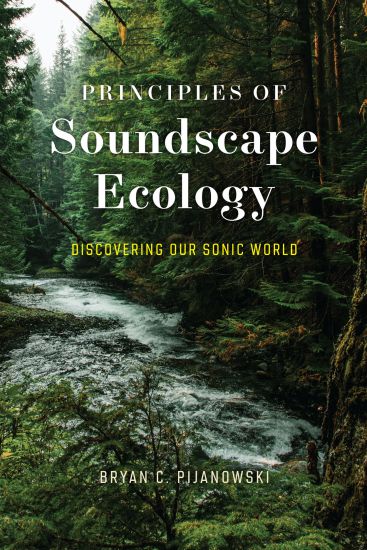
Principles of Soundscape Ecology

Principles of Soundscape Ecology

Bryan C. Pijanowski

THE UNIVERSITY OF CHICAGO PRESS
2024
nidottu
From a founding figure in the field, the definitive introduction to an exciting new science. What do the sounds of a chorus of tropical birds and frogs, a clap of thunder, and a cacophony of urban traffic have in common? They are all components of a soundscape, acoustic environments that have been identified by scientists as a combination of the biophony, geophony, and anthrophony, respectively, of all of Earth’s sound sources. As sound is a ubiquitous occurrence in nature, it is actively sensed by most animals and is an important way for them to understand how their environment is changing. For humans, environmental sound is a major factor in creating a psychological sense of place, and many forms of sonic expression by people embed knowledge and culture. In this book, soundscape ecology pioneer Bryan C. Pijanowski presents the definitive text for both students and practitioners who are seeking to engage with this thrilling new field. Principles of Soundscape Ecology clearly outlines soundscape ecology’s critical foundations, key concepts, methods, and applications. Fundamentals include concise and valuable descriptions of the physics of sound as well as a thorough elucidation of all sounds that occur on Earth. Pijanowski also presents a rich overview of the ecological, sociocultural, and technical theories that support this new science, illustrating the breadth of this amazingly transdisciplinary field. In methods, he describes the principles of data mining, signal processing, and mixed methods approaches used to study soundscapes in ecological, social, or socio-ecological contexts. The final section focuses on terrestrial, aquatic, urban, and music applications, demonstrating soundscape ecology’s utility in nearly all spaces.
Principles of Soundscape Ecology

Principles of Soundscape Ecology

Bryan C. Pijanowski

THE UNIVERSITY OF CHICAGO PRESS
2024
sidottu
From a founding figure in the field, the definitive introduction to an exciting new science. What do the sounds of a chorus of tropical birds and frogs, a clap of thunder, and a cacophony of urban traffic have in common? They are all components of a soundscape, acoustic environments that have been identified by scientists as a combination of the biophony, geophony, and anthrophony, respectively, of all of Earth’s sound sources. As sound is a ubiquitous occurrence in nature, it is actively sensed by most animals and is an important way for them to understand how their environment is changing. For humans, environmental sound is a major factor in creating a psychological sense of place, and many forms of sonic expression by people embed knowledge and culture. In this book, soundscape ecology pioneer Bryan C. Pijanowski presents the definitive text for both students and practitioners who are seeking to engage with this thrilling new field. Principles of Soundscape Ecology clearly outlines soundscape ecology’s critical foundations, key concepts, methods, and applications. Fundamentals include concise and valuable descriptions of the physics of sound as well as a thorough elucidation of all sounds that occur on Earth. Pijanowski also presents a rich overview of the ecological, sociocultural, and technical theories that support this new science, illustrating the breadth of this amazingly transdisciplinary field. In methods, he describes the principles of data mining, signal processing, and mixed methods approaches used to study soundscapes in ecological, social, or socio-ecological contexts. The final section focuses on terrestrial, aquatic, urban, and music applications, demonstrating soundscape ecology’s utility in nearly all spaces.