Kirjojen hintavertailu. Mukana 12 115 314 kirjaa ja 12 kauppaa.

Kirjailija

Bryan D. Lowe

Kirjat ja teokset yhdessä paikassa: 3 kirjaa, julkaisuja vuosilta 2017-2026, suosituimpien joukossa How Buddhism Spread in Japan, 650–850. Vertaile teosten hintoja ja tarkista saatavuus suomalaisista kirjakaupoista.

3 kirjaa

Kirjojen julkaisuhaarukka 2017-2026.

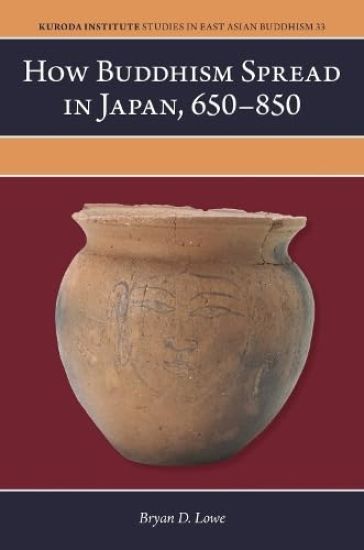
How Buddhism Spread in Japan, 650–850

How Buddhism Spread in Japan, 650–850

Bryan D. Lowe

UNIVERSITY OF HAWAI'I PRESS
2026
sidottu
Between the late seventh and early ninth centuries, Japan changed from a land largely without Buddhism to a country where Buddhist ideas, images, and practices were everywhere. The introduction of Buddhism transformed the social and intellectual life of the provinces. Regions that once lacked temples suddenly had so many that virtually every village had a place of worship nearby. People began to understand their world in new ways, imagining previously inconceivable possibilities for themselves in this life and the next. This was arguably the most dramatic religious transformation in the history of Japan. How Buddhism Spread in Japan is the first book to tell the story of this religious revolution in the Japanese provinces. Bryan D. Lowe, a leading expert on Japanese religions, argues against the standard view that Buddhism first reached ordinary people in the provinces in the twelfth and thirteenth centuries. This bold study offers a new narrative for the history of Japanese religions, one that dates Buddhism’s spread centuries earlier than standard accounts. Lowe highlights the agency of provincial patrons, mobile monks, female preachers, and rural villagers, who worked together to bring Buddhism to the Japanese countryside. How Buddhism Spread in Japan also introduces new methods for reading archaeological and textual materials in tandem. Drawing upon an archive of hundreds of thousands of pieces of inscribed pottery, roof tiles, and wooden slips, it uses material culture to uncover the religious lives of villagers on the geographic and social margins of Japan. Lowe reads this corpus alongside Buddhist tales and previously untranslated preaching notes to reconstruct the worldview and practices of provincial villagers. He combines archaeological and preaching materials to access this otherwise invisible world. Written in accessible and engaging prose, How Buddhism Spread in Japan undermines long-cherished narratives in the field of Japanese Buddhism and makes a methodological intervention of interest to scholars of classical and medieval studies more broadly.
Ritualized Writing

Ritualized Writing

Bryan D. Lowe

UNIVERSITY OF HAWAI'I PRESS
2022
nidottu
Ritualized Writing takes readers into the fascinating world of Japanese Buddhist manuscript cultures. Using archival sources that have received scant attention in English, primarily documents from an eighth-century Japanese scriptorium and colophons from sutra manuscripts, Bryan D. Lowe uncovers the ways in which the transcription of Buddhist scripture was a highly ritualized endeavor. He takes a ground-level approach by emphasizing the activities and beliefs of a wide range of individuals, including scribes, provincial patrons, and royals, to reassess the meaning of scripture and reevaluate scholarly narratives of Japanese Buddhist history.Copying scripture is a central Buddhist practice and one that thrived in East Asia. Despite this, there are no other books dedicated to the topic. This work demonstrates that patrons and scribes treated sutras differently from other modes of writing. Scribes purified their bodies prior to transcription. Patrons held dedicatory ceremonies on days of abstinence, when prayers were pronounced and sutras were recited. Transcribing sutras helped scribes and patrons alike realize this- and other-worldly ambitions and cultivate themselves in accord with Buddhist norms. Sutra copying thus functioned as a form of ritualized writing, a strategic practice that set apart scripture as uniquely efficacious and venerable. Lowe employs this notion of ritualized writing to challenge historical narratives about ancient Japan (late seventh through early ninth centuries), a period when sutra copying flourished. He contends that Buddhist practice fulfilled a variety of social, political, and spiritual roles beyond ideological justification. Moreover, he demonstrates the inadequacy of state-folk dichotomies for understanding the social groups, institutions, and individual beliefs and practices of ancient Japanese Buddhism, highlighting instead common organizations across social class and using models that reveal shared concerns among believers from diverse social backgrounds.Ritualized Writing makes broader contributions to the study of ritual and scripture by introducing the notion of scriptural cultures, an analytic tool that denotes a series of dynamic relationships and practices involving texts that have been strategically set apart or ritualized. Scripture, Lowe concludes, is at once a category created by humans and a body of texts that transforms individuals and social organizations who come into contact with it.
Ritualized Writing

Ritualized Writing

Bryan D. Lowe

University of Hawai'i Press
2017
sidottu
Ritualized Writing takes readers into the fascinating world of Japanese Buddhist manuscript cultures. Using archival sources that have received scant attention in English, primarily documents from an eighth-century Japanese scriptorium and colophons from sutra manuscripts, Bryan D. Lowe uncovers the ways in which the transcription of Buddhist scripture was a highly ritualized endeavor. He takes a ground-level approach by emphasizing the activities and beliefs of a wide range of individuals, including scribes, provincial patrons, and royals, to reassess the meaning of scripture and reevaluate scholarly narratives of Japanese Buddhist history.Copying scripture is a central Buddhist practice and one that thrived in East Asia. Despite this, there are no other books dedicated to the topic. This work demonstrates that patrons and scribes treated sutras differently from other modes of writing. Scribes purified their bodies prior to transcription. Patrons held dedicatory ceremonies on days of abstinence, when prayers were pronounced and sutras were recited. Transcribing sutras helped scribes and patrons alike realize this- and other-worldly ambitions and cultivate themselves in accord with Buddhist norms. Sutra copying thus functioned as a form of ritualized writing, a strategic practice that set apart scripture as uniquely efficacious and venerable. Lowe employs this notion of ritualized writing to challenge historical narratives about ancient Japan (late seventh through early ninth centuries), a period when sutra copying flourished. He contends that Buddhist practice fulfilled a variety of social, political, and spiritual roles beyond ideological justification. Moreover, he demonstrates the inadequacy of state-folk dichotomies for understanding the social groups, institutions, and individual beliefs and practices of ancient Japanese Buddhism, highlighting instead common organizations across social class and using models that reveal shared concerns among believers from diverse social backgrounds.Ritualized Writing makes broader contributions to the study of ritual and scripture by introducing the notion of scriptural cultures, an analytic tool that denotes a series of dynamic relationships and practices involving texts that have been strategically set apart or ritualized. Scripture, Lowe concludes, is at once a category created by humans and a body of texts that transforms individuals and social organizations who come into contact with it.