Kirjojen hintavertailu. Mukana 12 152 606 kirjaa ja 12 kauppaa.

Kirjailija

Bryan D. Palmer

Kirjat ja teokset yhdessä paikassa: 9 kirjaa, julkaisuja vuosilta 1994-2026, suosituimpien joukossa Mike Davis and the Writing of Political Opposition. Vertaile teosten hintoja ja tarkista saatavuus suomalaisista kirjakaupoista.

Mukana myös kirjoitusasut: Bryan D Palmer

9 kirjaa

Kirjojen julkaisuhaarukka 1994-2026.

Mike Davis and the Writing of Political Opposition
A celebration of the life of one of the most celebrated writers of the Left across the world. Mike Davis and the Writing of Political Opposition will serve both as a crucial introduction to new readers of Mike Davis and a key text to help those already familiar with his life and work deepen their understanding of his political and intellectual life. Taking readers from his time in California organizing with the Teamsters Union as a trucker, his solidarity activities with the Black Panthers to working as an editor at the New Left Review in London, this book brings Mike's incredible story to life. Weaving stories of Mike's political formation seamlessly with his intellectual development, the book provides close examinations of his key texts, as well as his editorial legacy with Verso's Haymarket series.
James P. Cannon and the Emergence of Trotskyism in the United States, 1928-38
Bryan D. Palmer reinterprets the history of labour and the left in the United States during the 1930s through a discussion of the emergence of Trotskyism in the most advanced capitalist country in the world. Focussing on James P. Cannon, the founder of American Trotskyism, Palmer builds on his previously published and award-winning book, James P. Cannon and the Origins of the American Revolutionary Left, 1890-1928, with a deeply-researched and elegantly-written study of Cannon and the Trotskyist movement in the United States from 1928-38. Situating this dissident communist movement within the history of class struggle, both national and international, Palmer examines how Cannon and others fought to revive a combative trade unionism, thwart fascism and the drift to war, refuse Stalinism's many degenerations, and build a new Party and a new International—both of which would be dedicated to reviving and realizing the possibilities of revolutionary socialism. The result is a peerless study that provides a definitive account of the largest and most influential Trotskyist movement in the world in the 1930s, an effort whose results recasts established understandings of the more extensively-studied experience of United States working-class militancy and the place of the Comintern-affiliated Communist Party within it.
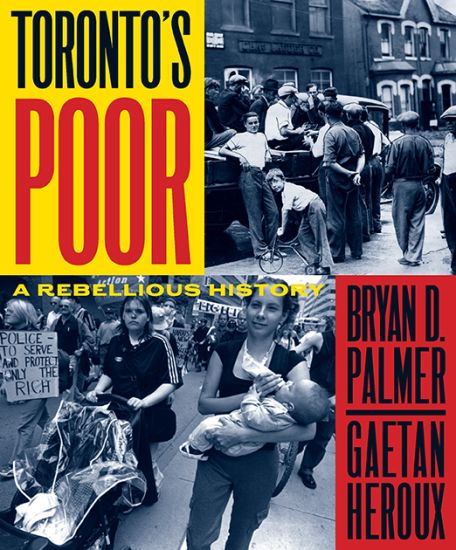
Toronto's Poor

Toronto's Poor

Bryan D. Palmer; Gaetan Heroux

Between the Lines
2016
nidottu
Toronto's Poor reveals the long and too often forgotten history of poor people's resistance. This is a rebellious book that links past and present in an almost two-hundred year story of struggle and resistance. It is about men, women, and children relegated to lives of desperation by an uncaring system, and how they have refused to be defeated.
Revolutionary Teamsters

Revolutionary Teamsters

Bryan D. Palmer

BRILL
2013
sidottu
Minneapolis in the early 1930s was anything but a union stronghold. An employers' association known as the Citizens' Alliance kept labour organisations in check, at the same time as it cultivated opposition to radicalism in all forms. This all changed in 1934. The year saw three strikes, violent picket-line confrontations, and tens of thousands of workers protesting in the streets. Bryan D. Palmer tells the riveting story of how a handful of revolutionary Trotskyists, working in the largely non-union trucking sector, led the drive to organise the unorganised, to build one large industrial union. What emerges is a compelling narrative of class struggle, a reminder of what can be accomplished, even in the worst of circumstances, with a principled and far-seeing leadership.
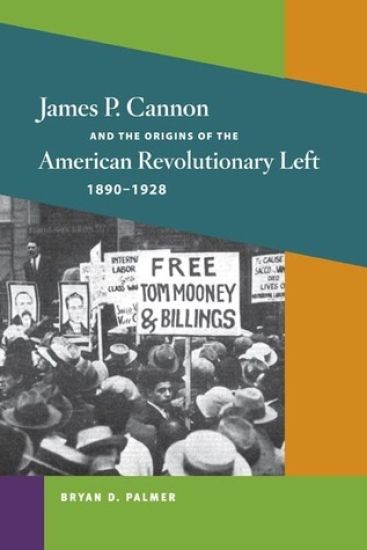
James P. Cannon and the Origins of the American Revolutionary Left, 1890-1928
Bryan D. Palmer's award-winning study of James P. Cannon's early years (1890-1928) details how the life of a Wobbly hobo agitator gave way to leadership in the emerging communist underground of the 1919 era. This historical drama unfolds alongside the life experiences of a native son of United States radicalism, the narrative moving from Rosedale, Kansas to Chicago, New York, and Moscow. Written with panache, Palmer's richly detailed book situates American communism's formative decade of the 1920s in the dynamics of a specific political and economic context. Our understanding of the indigenous currents of the American revolutionary left is widened, just as appreciation of the complex nature of its interaction with international forces is deepened.
James P. Cannon and the Origins of the American Revolutionary Left, 1890-1928
Bryan D. Palmer's award-winning study of James P. Cannon's early years (1890-1928) details how the life of a Wobbly hobo agitator gave way to leadership in the emerging communist underground of the 1919 era. This historical drama unfolds alongside the life experiences of a native son of United States radicalism, the narrative moving from Rosedale, Kansas to Chicago, New York, and Moscow. Written with panache, Palmer's richly detailed book situates American communism's formative decade of the 1920s in the dynamics of a specific political and economic context. Our understanding of the indigenous currents of the American revolutionary left is widened, just as appreciation of the complex nature of its interaction with international forces is deepened.
Dreaming of What Might Be

Dreaming of What Might Be

Gregory S. Kealey; Bryan D. Palmer

Cambridge University Press
2004
pokkari
As Canada's most industrialised province, Ontario served as the regional centre of the Noble and Holy Order of the Knights of Labor, an organisation which embodied a late nineteenth-century working-class vision of an alternative to the developing industrial-capitalist society. The Order opposed the exploitation of labor, and cultivated working-class unity by providing an institutional and cultural rallying point for North American workers. By 1886 thousands of industrial workers had enrolled within the ranks of Ontario's local and district assemblies. This book examines the rise and fall of the Order, providing case studies of its experience in Toronto and Hamilton and chronicling its impact across the province.
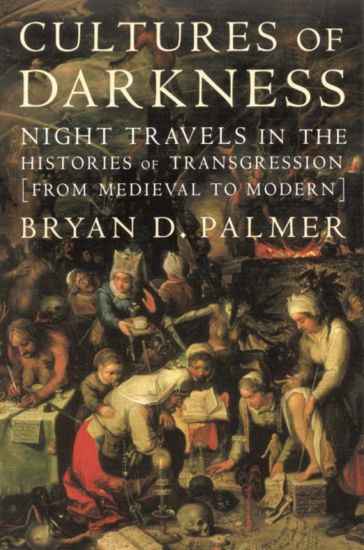
Cultures of Darkness

Cultures of Darkness

Bryan D. Palmer

Monthly Review Press,U.S.
2000
pokkari
Peasants, religious heretics, witches, pirates, runaway slaves, prostitutes and pornographers, frequenters of taverns and fraternal society lodge rooms, revolutionaries, blues and jazz musicians, beats, and contemporary youth gangs--those who defied authority, choosing to live outside the defining cultural dominions of early insurgent and, later, dominant capitalism are what Bryan D. Palmer calls people of the night. These lives of opposition, or otherness, were seen by the powerful as deviant, rejecting authority, and consequently threatening to the established order. Constructing a rich historical tapestry of example and experience spanning eight centuries, Palmer details lives of exclusion and challenge, as the "night travels" of the transgressors clash repeatedly with the powerful conventions of their times. Nights of liberation and exhilarating desire--sexual and social--are at the heart of this study. But so too are the dangers of darkness, as marginality is coerced into corners of pressured confinement, or the night is used as a cover for brutalizing terror, as was the case in Nazi Germany or the lynching of African Americans. Making extensive use of the interdisciplinary literature of marginality found in scholarly work in history, sociology, cultural studies, literature, anthropology, and politics, Palmer takes an unflinching look at the rise and transformation of capitalism as it was lived by the dispossessed and those stamped with the mark of otherness.
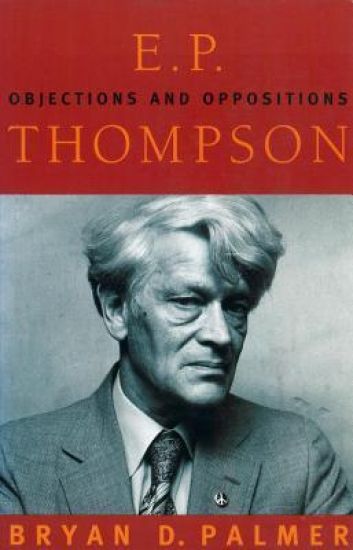
E. P. Thompson

E. P. Thompson

Bryan D Palmer

Verso Books
1994
nidottu
Edward Thompson, perhaps the greatest post-war historian in the English-speaking world, died in 1993. In this readable and unabashedly appreciative survey of Thompson's histories and politics, Byran D. Palmer reviews include a passionate biographical account of the late-nineteenth-century Romantic William Morris, the hugely acclaimed The Making of the English Working Class, and a series of eighteenth-century studies that reach from customary culture to the antinomian poetics of William Blake.In reviewing the politics which gave shape to his historical work, Palmer assesses the role of Thompson's family background in India, his youth in the Communist Party, his decisive break with Stalinism in 1956, and his subsequent work campaigning for the causes of the left and nuclear disarmament. Thompson was never comfortable in an academic milieu, and eventually left formal teaching in the 1970s to devote his time to research and writing. His pen was always ready to bend against the powers of the state, and against a left he too often saw as abandoning the cause of social transformation.For readers who know Thompson's work, Palmer's discussion of hitherto unstudied aspects of his life will be novel and illuminating; those less familiar with his prodigious achievement will find these pages a useful introduction.