

Kirjailija
Bryan Mills
Kirjat ja teokset yhdessä paikassa: 8 kirjaa, julkaisuja vuosilta 2017-2025, suosituimpien joukossa The Big Show. Vertaile teosten hintoja ja tarkista saatavuus suomalaisista kirjakaupoista.
8 kirjaa
Kirjojen julkaisuhaarukka 2017-2025.

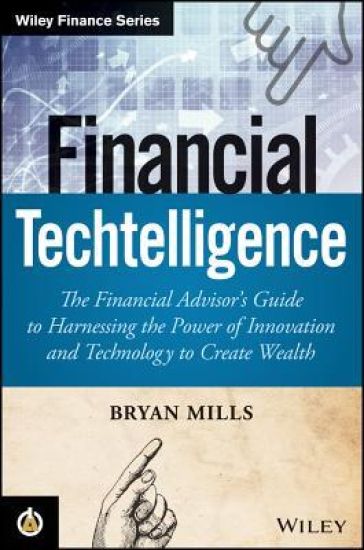
Raise the bar for meaningful customer connections, time efficiency, and exceptional performance accuracy with effective use of technology Financial Techtelligence is the financial advisor's guide to practice enhancement through the strategic use of technology. With over 20 years of experience as a financial consultant to private investors, author Bryan Mills has steered his expertise toward helping other financial professionals develop a general understanding of how technology will create a more personal experience with useful time-saving and practice-improving strategies. In this book, he demonstrates how technology can help your practice thrive and offers a clear blueprint for effective implementation. You'll delve into the four benchmarks of a successful technology strategy Audience, Budget, Due Diligence, and Expectations and learn how to appropriately define each step to best suit your specific practice. Technology continues to help stockbrokers, financial advisors, insurance agents, and other financial services professionals raise the bar for performance, and it's time for you to claim these advantages for your own practice. Rapid technological innovation has brought about game-changing tools that harness the power of cost-effective trends in marketing and practice management. This book shows you how to choose the tools that are best for your practice, and leverage their capabilities to improve the customer experience. * Identify and target your customer base * Develop a budget for reaching your goals * Understand your strategy's risks and rewards * Set realistic expectations without aiming too low Every financial services professional is constantly on the lookout for that one great idea that will rocket their practice to the top. Better practice management, more streamlined operations, higher levels of client service, and of course, optimal outcomes are the cornerstones of exceptional financial service firms. Financial Techtelligence shows you how technology can get you there, and how to implement a strategy customized for your practice.

A book for children aged 3 to 6 about a little girl's love for visiting her granny, her garden and riding horses.

This book really doesn't know what it is. I'm not famous so it's not really an autobiography; I have no inspirational story to tell so it's not really in that genre; I don't have any special knowledge of exercise or nutrition so it's not really a fitness guide. Maybe if it wasn't for copyright it would be called Zen and the Art of Running. What it is, and why I wrote it, is a retelling of decades of struggling with exercise leaving a mix of tips, memories, experiences and half-baked advice.
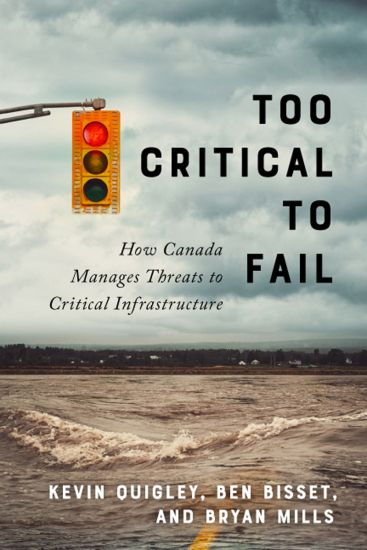
Too Critical to Fail
Kevin Quigley; Ben Bisset; Bryan Mills
McGill-Queen's University Press
2017
sidottu
In the summer of 2013, just as a small town in Quebec was decimated due to a train derailment, heavy rainfall prompted thirty Alberta communities to declare a state of emergency. Whereas a SWAT team surrounded train conductor Thomas Harding and brought him to court where he was charged with the deaths of forty-seven in Quebec, Calgary mayor Naheed Nenshi emerged from the Alberta crisis as a folk hero. As the Lac-Megantic train derailment and the flood in Alberta demonstrate, political, economic, legal, and cultural climates influence the way disasters are received and managed. In Too Critical to Fail, Kevin Quigley, Ben Bisset, and Bryan Mills identify the social context that shapes the Canadian government's ability to prepare for and respond to emergencies. Using original research on natural disasters, pandemics, industrial failures, cyber-attacks, and terrorist threats, the authors evaluate the risk regulation regimes that monitor, interpret, and respond to failures in Canada's critical infrastructure to limit their possibilities and consequences. More broadly, this book identifies key vulnerabilities and regulatory challenges for both the government and the private sector in mitigating threats to safety and security. Too Critical to Fail applies an investigative lens to the multiple and competing risks that the government balances to secure assets that enable modern civilization. Raising questions about Canadians' ability to protect critical infrastructure and respond to threats, this book challenges the biases that determine who is held to account when the system fails.
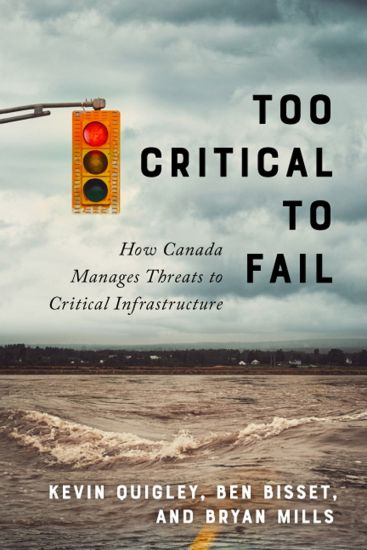
Too Critical to Fail
Kevin Quigley; Ben Bisset; Bryan Mills
McGill-Queen's University Press
2017
nidottu
In the summer of 2013, just as a small town in Quebec was decimated due to a train derailment, heavy rainfall prompted thirty Alberta communities to declare a state of emergency. Whereas a SWAT team surrounded train conductor Thomas Harding and brought him to court where he was charged with the deaths of forty-seven in Quebec, Calgary mayor Naheed Nenshi emerged from the Alberta crisis as a folk hero. As the Lac-Megantic train derailment and the flood in Alberta demonstrate, political, economic, legal, and cultural climates influence the way disasters are received and managed. In Too Critical to Fail, Kevin Quigley, Ben Bisset, and Bryan Mills identify the social context that shapes the Canadian government's ability to prepare for and respond to emergencies. Using original research on natural disasters, pandemics, industrial failures, cyber-attacks, and terrorist threats, the authors evaluate the risk regulation regimes that monitor, interpret, and respond to failures in Canada's critical infrastructure to limit their possibilities and consequences. More broadly, this book identifies key vulnerabilities and regulatory challenges for both the government and the private sector in mitigating threats to safety and security. Too Critical to Fail applies an investigative lens to the multiple and competing risks that the government balances to secure assets that enable modern civilization. Raising questions about Canadians' ability to protect critical infrastructure and respond to threats, this book challenges the biases that determine who is held to account when the system fails.
