Kirjailija
Bryan S. Turner
Kirjat ja teokset yhdessä paikassa: 48 kirjaa, julkaisuja vuosilta 1991-2027, suosituimpien joukossa Telling Lies. Vertaile teosten hintoja ja tarkista saatavuus suomalaisista kirjakaupoista.
Mukana myös kirjoitusasut: Bryan S Turner
48 kirjaa
Kirjojen julkaisuhaarukka 1991-2027.
While the relationships between ethics and religion, and violence and politics, are of enduring interest, the interface between religion and violence is one of the most problematic features of the contemporary world. Following in the tradition of Max Weber's historical and comparative study of religions, this book explores the many ways in which religion and politics are both combined and separated across different world religions and societies. Through a variety of case studies including the monarchy, marriage, law and conversion, Bryan S. Turner explores different manifestations of secularization, and how the separation of church and state is either compromised or abandoned. He considers how different states manage religion in culturally and religiously diverse societies and concludes with a discussion of the contemporary problems facing the liberal theory of freedom of religion. The underlying theoretical issue is the conditions for legitimacy of rule in modern societies experiencing global changes.

‘Society' is one of the most frequently used words in public life; it is also a foundational term in the social sciences. In our own time, however, the idea has never been so much in dispute and so little understood. For some critics, society is simply too consensual for a world of intensive discord. For others, the idea of ‘society' is oppressive - the very notion, so some argue, is dismissive of the infinite social differences that shape global realities. In this erudite and original book, two of the world's leading social theorists focus on unravelling the different meanings of society as a way of introducing the reader to contemporary debates in social theory. The authors argue provocatively that all ideas of society can be assigned to one of three analytical categories, or some combination of these - structure, solidarity or creation - and develop a fresh characterization of the nature of the social as a means of understanding global transformations. By integrating abstract problems of social theory with empirical examples and political analysis, On Society provides lucid interpretations of classical and contemporary social theory. The book also critiques recent social theories that simply equate the demise of society with globalization, the communications revolution or multiculturalism, and in so doing provides an original insight into today's world.
Bryan Turner is generally acknowledged to have been the key figure in opening up the sociological debate about the body. In this coruscating and fascinating book he shows how his thinking on the subject has developed and why sociologists must take the body seriously.
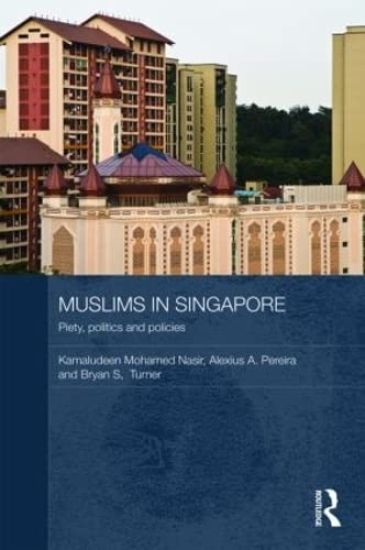
Muslims in Singapore
Kamaludeen Mohamed Nasir; Alexius Pereira; Bryan S. Turner
Routledge
2011
nidottu
This book examines Muslims in Singapore, analysing their habits, practices and dispositions towards everyday life, and also their role within the broader framework of the secularist Singapore state and the cultural dominance of its Chinese elite, who are predominantly Buddhist and Christian. Singapore has a highly unusual approach to issues of religious diversity and multiculturalism, adopting a policy of deliberately ‘managing religions’ - including Islam - in an attempt to achieve orderly and harmonious relations between different racial and religious groups. This has encompassed implicit and explicit policies of containment and ‘enclavement’ of Muslims, and also the more positive policy of ‘upgrading’ Muslims through paternalist strategies of education, training and improvement, including the modernisation of madrassah education in both content and orientation. This book examines how this system has operated in practice, and evaluates its successes and failures. In particular, it explores the attitudes and reactions of Muslims themselves across all spheres of everyday life, including dining and maintaining halal-vigilance; education and dress code; and practices of courtship, sex and marriage. It also considers the impact of wider international developments, including 9/11, fear of terrorism and the associated stigmatization of Muslims; and developments within Southeast Asia such as the Jemaah Islamiah terrorist attacks and the Islamization of Malaysia and Indonesia. This study has more general implications for political strategies and public policies in multicultural societies that are deeply divided along ethno-religious lines.
Religion is now high on the public agenda, with recent events focusing the world's attention on Islam in particular. This book provides a unique historical and comparative analysis of the place of religion in the emergence of modern secular society. Bryan S. Turner considers the problems of multicultural, multi-faith societies and legal pluralism in terms of citizenship and the state, with special emphasis on the problems of defining religion and the sacred in the secularisation debate. He explores a range of issues central to current debates: the secularisation thesis itself, the communications revolution, the rise of youth spirituality, feminism, piety and religious revival. Religion and Modern Society contributes to political and ethical controversies through discussions of cosmopolitanism, religion and globalisation. It concludes with a pessimistic analysis of the erosion of the social in modern society and the inability of new religions to provide 'social repair'.
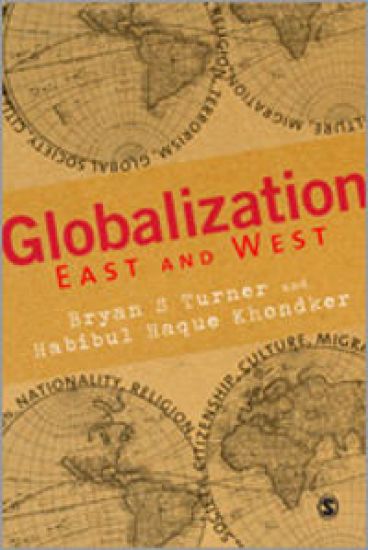
Globalization East and West
Bryan S Turner; Habibul Haque Khondker
SAGE Publications Inc
2010
sidottu
A wide-ranging, significant contribution. - Göran Therborn, Cambridge University "A lively, well-informed, and accessible guide through the dynamics and complexities of globalization." - Robert Holton, Trinity College, Dublin "This is an excellent text on globalisation. It is theoretically sophisticated, critically engaging, and empirically comprehensive... perfect for courses on globalisation within sociology programmes in particular." - Andrew Kirton, Liverpool University Do we confuse globalization for Americanization? What are the distinctive elements in the interplay of the local and the global? This book examines globalization from the perspective of both the West and the East. It considers globalization as a general social and economic process, and the challenges it presents for Western social science. The meaning of a global perspective is explored through various concrete examples: religion, migration, medicine, terrorism, global disasters, citizenship, multiculturalism, media and popular culture. Introduced with a forword from Roland Robertson, the book is brimming with novel interpretations and fresh insights that will contribute to illuminating the practical realities of globalization.
Globalization East and West
Bryan S Turner; Habibul Haque Khondker
SAGE Publications Inc
2010
nidottu
A wide-ranging, significant contribution. - Göran Therborn, Cambridge University "A lively, well-informed, and accessible guide through the dynamics and complexities of globalization." - Robert Holton, Trinity College, Dublin "This is an excellent text on globalisation. It is theoretically sophisticated, critically engaging, and empirically comprehensive... perfect for courses on globalisation within sociology programmes in particular." - Andrew Kirton, Liverpool University Do we confuse globalization for Americanization? What are the distinctive elements in the interplay of the local and the global? This book examines globalization from the perspective of both the West and the East. It considers globalization as a general social and economic process, and the challenges it presents for Western social science. The meaning of a global perspective is explored through various concrete examples: religion, migration, medicine, terrorism, global disasters, citizenship, multiculturalism, media and popular culture. Introduced with a forword from Roland Robertson, the book is brimming with novel interpretations and fresh insights that will contribute to illuminating the practical realities of globalization.
Muslims in Singapore
Kamaludeen Mohamed Nasir; Alexius Pereira; Bryan S. Turner
Routledge
2009
sidottu
This book examines Muslims in Singapore, analysing their habits, practices and dispositions towards everyday life, and also their role within the broader framework of the secularist Singapore state and the cultural dominance of its Chinese elite, who are predominantly Buddhist and Christian. Singapore has a highly unusual approach to issues of religious diversity and multiculturalism, adopting a policy of deliberately ‘managing religions’ - including Islam - in an attempt to achieve orderly and harmonious relations between different racial and religious groups. This has encompassed implicit and explicit policies of containment and ‘enclavement’ of Muslims, and also the more positive policy of ‘upgrading’ Muslims through paternalist strategies of education, training and improvement, including the modernisation of madrassah education in both content and orientation. This book examines how this system has operated in practice, and evaluates its successes and failures. In particular, it explores the attitudes and reactions of Muslims themselves across all spheres of everyday life, including dining and maintaining halal-vigilance; education and dress code; and practices of courtship, sex and marriage. It also considers the impact of wider international developments, including 9/11, fear of terrorism and the associated stigmatization of Muslims; and developments within Southeast Asia such as the Jemaah Islamiah terrorist attacks and the Islamization of Malaysia and Indonesia. This study has more general implications for political strategies and public policies in multicultural societies that are deeply divided along ethno-religious lines.
‘Can We Live Forever?’ addresses the modern debate about the Life Extension Project, the by-product of revolutionary developments (actual and predicted) in bio-medicine, transplantation, cosmetic surgery, genetic counselling, stem cell research, cryonics, cloning and so forth, which cumulatively promise to deliver eternal life—or at least 'prolongevity'.
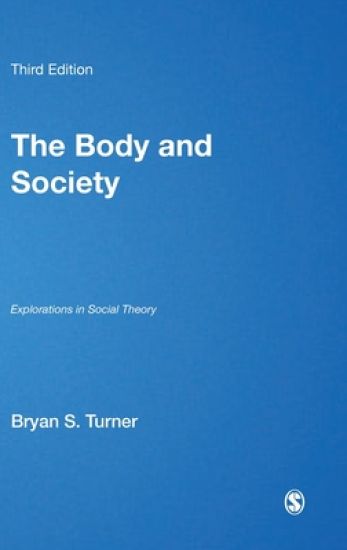
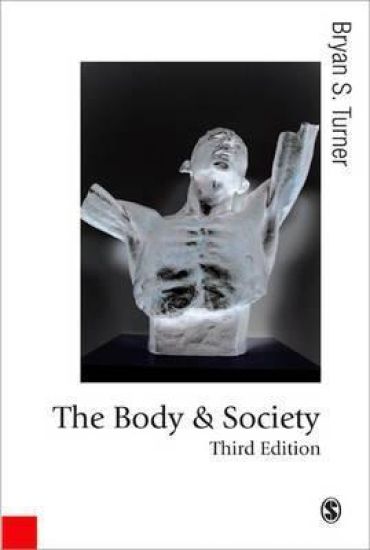
"This truly deserves to be considered a classic and I strongly encourage my students to read it from cover to cover. Turner's work on the body needs to be considered in its own right within courses on the sociology of the body." - Dr Robert Meadows, Surrey University "Remains the foundational text for courses in the sociology of the body, replete with insights and a depth of analysis that has largely inspired an entire new area of studies across the social sciences." - Dr Michael Drake, Hull University "This is THE contemporary text for both academics and students exploring the sociology of the body." - Jessica Clark, University Campus Suffolk This is a fully revised edition of a book that may fairly claim to have re-opened the sociology of the body as a legitimate area of enquiry. Providing an unparalleled guide to all aspects of the subject, each chapter has been revised and updated while the book contains new material that reflects both recent changes in the field and Turner's developing position on the centrality of vulnerability. Assured and innovative, this book provides the most authoritative statement of work on the sociology of the body by one of the leading writers in the field.
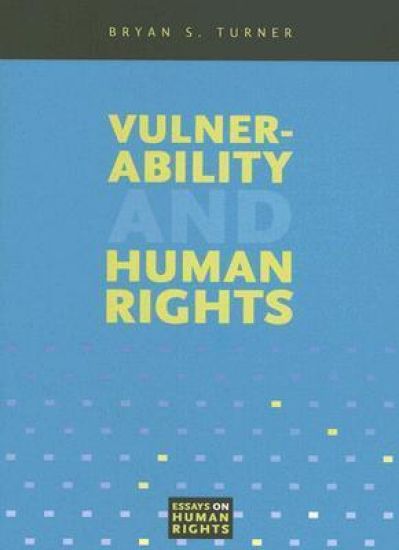
The mass violence of the twentieth century’s two world wars—followed more recently by decentralized and privatized warfare, manifested in terrorism, ethnic cleansing, and other localized forms of killing—has led to a heightened awareness of human beings’ vulnerability and the precarious nature of the institutions they create to protect themselves from violence and exploitation. This vulnerability, something humans share amid the diversity of cultural beliefs and values that mark their differences, provides solid ground on which to construct a framework of human rights.Bryan Turner undertakes this task here, developing a sociology of rights from a sociology of the human body. His blending of empirical research with normative analysis constitutes an important step forward for the discipline of sociology. Like anthropology, sociology has traditionally eschewed the study of justice as beyond the limits of a discipline that pays homage to cultural relativism and the “value neutrality” of positivistic science. Turner’s expanded approach accordingly involves a truly interdisciplinary dialogue with the literature of economics, law, medicine, philosophy, political science, and religion.
The author, Bryan Turner, examines how macro processes like globalization, risk, economic deregulation, and technological change shape personal experiences of health and illness. Addressing key topics in contemporary sociology such as the body, power, and knowledge, Turner sets out to rethink medical sociology as an exciting perspective on the principal transformations of modern society. In this broad historical and sociological work, Turner asks and answers how economic changes of recent decades have undermined both social cohesion and the conditions that promote good health. He explores the macro-level importance of social capital (people’s involvement or investments in society), inequality, and citizenship rights in his explanation of health and illness in modern societies, and examines at the micro level embodiment (our relationship to our own bodies) in narratives of illness. The New Medical Sociology is part of the Contemporary Societies series.
Society and Culture reclaims the classical heritage, provides a clear-eyed assessment of the promise of sociology in the 21st century and asks whether the `cultural turn' has made the study of society redundant. Sociologists have objected to the rise of cultural studies on the grounds that it produces cultural relativism and lacks a stable research agenda. This book looks at these criticisms and illustrates the relevance of a sociological perspective in the analysis of human practice. The book argues that the classical tradition must be treated as a living tradition, rather than a period piece. It analyzes the fundamental principles of belonging and conflict in society and provides a detailed critical survey of the principal social theories that offer solutions to the challenges of modernism.
In this book, one of the foremost sociologists of the present day, turns his gaze upon the key figures and seminal institutions in the rise of sociology. Turner examines the work of Karl Marx, Max Weber, Karl Mannheim, Georg Simmel, Emile Durkheim and Talcott Parsons to produce a rich and authoritative perspective on the classical tradition. He argues that classical sociology has developed on many fronts, including debates on the family, religion, the city, social stratification, generations and citizenship. The book defends classical perspectives as a living tradition for understanding contemporary social life and demonstrates how the classical tradition produces an agenda for contemporary sociology.