

Kirjailija
Bryan W. Van Norden
Kirjat ja teokset yhdessä paikassa: 7 kirjaa, julkaisuja vuosilta 2002-2019, suosituimpien joukossa Confucius and the Analects. Vertaile teosten hintoja ja tarkista saatavuus suomalaisista kirjakaupoista.
7 kirjaa
Kirjojen julkaisuhaarukka 2002-2019.


Are American colleges and universities failing their students by refusing to teach the philosophical traditions of China, India, Africa, and other non-Western cultures? This biting and provocative critique of American higher education says yes. Even though we live in an increasingly multicultural world, most philosophy departments stubbornly insist that only Western philosophy is real philosophy and denigrate everything outside the European canon. In Taking Back Philosophy, Bryan W. Van Norden lambastes academic philosophy for its Eurocentrism, insularity, and complicity with nationalism and issues a ringing call to make our educational institutions live up to their cosmopolitan ideals. In a cheeky, agenda-setting, and controversial style, Van Norden, an expert in Chinese philosophy, proposes an inclusive, multicultural approach to philosophical inquiry. He showcases several accessible examples of how Western and Asian thinkers can be brought into productive dialogue, demonstrating that philosophy only becomes deeper as it becomes increasingly diverse and pluralistic. Taking Back Philosophy is at once a manifesto for multicultural education, an accessible introduction to Confucian and Buddhist philosophy, a critique of the ethnocentrism and anti-intellectualism characteristic of much contemporary American politics, a defense of the value of philosophy and a liberal arts education, and a call to return to the search for the good life that defined philosophy for Confucius, Socrates, and the Buddha. Building on a popular New York Times opinion piece that suggested any philosophy department that fails to teach non-Western philosophy should be renamed a "Department of European and American Philosophy," this book will challenge any student or scholar of philosophy to reconsider what constitutes the love of wisdom.

Are American colleges and universities failing their students by refusing to teach the philosophical traditions of China, India, Africa, and other non-Western cultures? This biting and provocative critique of American higher education says yes. Even though we live in an increasingly multicultural world, most philosophy departments stubbornly insist that only Western philosophy is real philosophy and denigrate everything outside the European canon. In Taking Back Philosophy, Bryan W. Van Norden lambastes academic philosophy for its Eurocentrism, insularity, and complicity with nationalism and issues a ringing call to make our educational institutions live up to their cosmopolitan ideals. In a cheeky, agenda-setting, and controversial style, Van Norden, an expert in Chinese philosophy, proposes an inclusive, multicultural approach to philosophical inquiry. He showcases several accessible examples of how Western and Asian thinkers can be brought into productive dialogue, demonstrating that philosophy only becomes deeper as it becomes increasingly diverse and pluralistic. Taking Back Philosophy is at once a manifesto for multicultural education, an accessible introduction to Confucian and Buddhist philosophy, a critique of the ethnocentrism and anti-intellectualism characteristic of much contemporary American politics, a defense of the value of philosophy and a liberal arts education, and a call to return to the search for the good life that defined philosophy for Confucius, Socrates, and the Buddha. Building on a popular New York Times opinion piece that suggested any philosophy department that fails to teach non-Western philosophy should be renamed a "Department of European and American Philosophy," this book will challenge any student or scholar of philosophy to reconsider what constitutes the love of wisdom.
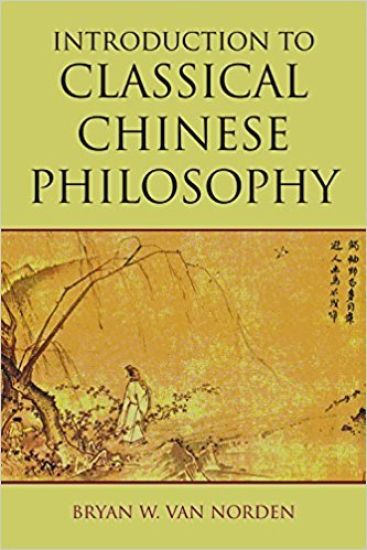
Introduction to Classical Chinese Philosophy
Bryan W. Van Norden
Hackett Publishing Co, Inc
2011
pokkari
This book is an introduction in the very best sense of the word. It provides the beginner with an accurate, sophisticated, yet accessible account, and offers new insights and challenging perspectives to those who have more specialized knowledge. Focusing on the period in Chinese philosophy that is surely most easily approachable and perhaps is most important, it ranges over of rich set of competing options. It also, with admirable self-consciousness, presents a number of daring attempts to relate those options to philosophical figures and movements from the West. I recommend it very highly.--Lee H. Yearley, Walter Y. Evans-Wentz Professor, Religious Studies, Stanford University

Introduction to Classical Chinese Philosophy
Bryan W. Van Norden
Hackett Publishing Co, Inc
2011
sidottu
This book is an introduction in the very best sense of the word. It provides the beginner with an accurate, sophisticated, yet accessible account, and offers new insights and challenging perspectives to those who have more specialized knowledge. Focusing on the period in Chinese philosophy that is surely most easily approachable and perhaps is most important, it ranges over of rich set of competing options. It also, with admirable self-consciousness, presents a number of daring attempts to relate those options to philosophical figures and movements from the West. I recommend it very highly.--Lee H. Yearley, Walter Y. Evans-Wentz Professor, Religious Studies, Stanford University

Confucius is one of the most influential figures--as historical individual and as symbol--in world history; and the Analects, the sayings attributed to Confucius and his disciples, is a classic of world literature. Nonetheless, how to understand both figure and text is constantly under dispute. Surprisingly, this volume is the first and only anthology on these topics in English. Here, contributors apply a variety of different methodologies (including philosophical, philological, and religious) and address a number of important topics, from Confucius and Western "virtue ethics" to Confucius' attitude toward women to the historical composition of the text of the Analects. Scholars will appreciate the rigor of these essays, while students and beginners will find them accessible and engaging.