Kirjojen hintavertailu. Mukana 12 516 709 kirjaa ja 12 kauppaa.

Kirjailija

Burton V. Barnes

Kirjat ja teokset yhdessä paikassa: 5 kirjaa, julkaisuja vuosilta 2004-2023, suosituimpien joukossa Forest Ecology. Vertaile teosten hintoja ja tarkista saatavuus suomalaisista kirjakaupoista.

5 kirjaa

Kirjojen julkaisuhaarukka 2004-2023.

Forest Ecology

Forest Ecology

Daniel M. Kashian; Donald R. Zak; Burton V. Barnes; Stephen H. Spurr

John Wiley Sons Inc
2023
nidottu
FOREST ECOLOGY Authoritative resource covering traditional plant ecology topics and contemporary components such as climate change, invasive species, ecosystem services, and more Forest Ecology provides comprehensive coverage of the field, focusing on traditional plant ecology topics of tree structure and growth, regeneration, effects of light and temperature on tree physiology, forest communities, succession, and diversity. The work also reviews abiotic factors of light, temperature, physiography (landforms and topography), soil, and disturbance (especially fire), and provides coverage of ecosystem-level topics including carbon storage and balance, nutrient cycling, and forest ecosystem productivity. The 5th edition of Forest Ecology retains the readability and accessibility of the previous editions and includes important additional topical material that has surfaced in the field. All topics are approached with a landscape ecosystem or geo-ecological view, which places biota (organisms and communities) in context as integral parts of whole ecosystems that also include air (atmosphere and climate), topography, soil, and water. As such, the book fills a niche utilized by no other forest ecology text on the market, helping students and researchers consider whole ecosystems at multiple scales. Sample topics covered in Forest Ecology include: Contemporary components of forest ecology, including climate change, invasive species, diversity, ecological forestry, landscape ecology, and ecosystem services.Characteristics of physiography important for forest ecosystems, including its effects on microclimate, disturbance, soil, and vegetation.Genetic diversity of woody plants and genecological differentiation of tree species, including the importance of hybridization, polyploidy, and epigenetics.Site quality estimation using tree height and ground flora, and multiple-factor approaches to forest site and ecosystem classification and mapping. Forest Ecology is a highly accessible text for students, but it also serves as an excellent reference for academics. In addition, practitioners of forest ecology can also harness the information within to gain better insight into the field for practical application of concepts.
Michigan Shrubs and Vines

Michigan Shrubs and Vines

Burton V. Barnes; Christopher E. Dick; Melanie W. Gunn

The University of Michigan Press
2016
nidottu
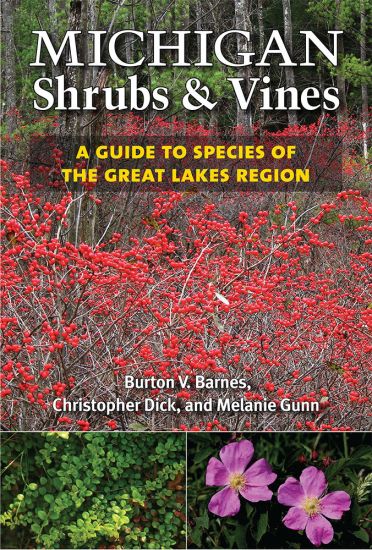
Shrubs and vines are some of the most diverse and widespread plants in the Great Lakes Region. Michigan Shrubs and Vines is the must-have book for anyone who wishes to identify and learn about these fascinating plants. Presented in the same attractive, easy-to-use format as the classic Michigan Trees, the book gives detailed descriptions of 132 species, providing concise information on key characters, habitat, distribution, and growth pattern. Precise line drawings accompany each species description and illustrate arrangement and characteristics of leaves, flowers, and fruits in addition to stem structure to assist with reliable year-round identification. A thorough introduction covers the features and forms of shrubs and vines as well as their natural history, their role in landscape ecosystems, and their occurrence in regional ecosystems of North America and plant communities of the Great Lakes. This long awaited companion to Michigan Trees will appeal to botanists, ecologists, students, and amateur naturalists alike.
Michigan Shrubs and Vines

Michigan Shrubs and Vines

Burton V. Barnes; Christopher E. Dick; Melanie W. Gunn

The University of Michigan Press
2016
sidottu
Shrubs and vines are some of the most diverse and widespread plants in the Great Lakes Region. Michigan Shrubs and Vines is the must-have book for anyone who wishes to identify and learn about these fascinating plants. Presented in the same attractive, easy-to-use format as the classic Michigan Trees, the book gives detailed descriptions of 132 species, providing concise information on key characters, habitat, distribution, and growth pattern. Precise line drawings accompany each species description and illustrate arrangement and characteristics of leaves, flowers, and fruits in addition to stem structure to assist with reliable year-round identification. A thorough introduction covers the features and forms of shrubs and vines as well as their natural history, their role in landscape ecosystems, and their occurrence in regional ecosystems of North America and plant communities of the Great Lakes. This long awaited companion to Michigan Trees will appeal to botanists, ecologists, students, and amateur naturalists alike.
Michigan Trees

Michigan Trees

Burton V. Barnes; Warren H. Wagner

The University of Michigan Press
2004
sidottu
Now in its tenth decade of publication, Michigan Trees has been, since it was first introduced in 1913, the must-have reference book for anyone who wants to know about the trees of this unique North American region.In this new and updated edition, several new species have been added to the lineup, as well as sections on tree ecology and fall color. Written and illustrated in a style that appeals at once to academic botanists and armchair arborphiles alike, Michigan Trees gives readers everything they need to know for identifying trees in the Great Lakes state. Included with each description are fascinating notes and asides (for example, this tidbit on the jack pine: Parklike or savanna stands in north-central Michigan are prime habitat for the rare Kirtland's warbler that breeds nowhere else in the world.). Also includes a tree key and identification section illustrated with elegantly simple line drawings that reveal the tiny, signature details that make each tree unique.Burton V. Barnes is Professor of Forestry at the University of Michigan. Formerly a research forester, he is best known for his research and publications in forest ecology and forest genetics.Warren H. Wagner, Jr. was a world authority on ferns. He had been Professor Emeritus of Botany and Natural Resources at the University of Michigan before his death at the age of 80 in 2000.
Michigan Trees, Revised and Updated

Michigan Trees, Revised and Updated

Burton V. Barnes; Warren H. Wagner

The University of Michigan Press
2004
nidottu
Now in its tenth decade of publication, Michigan Trees has been, since it was first introduced in 1913, the must-have reference book for anyone who wants to know about the trees of this unique North American region.In this new and updated edition, several new species have been added to the lineup, as well as sections on tree ecology and fall color. Written and illustrated in a style that appeals at once to academic botanists and armchair arborphiles alike, Michigan Trees gives readers everything they need to know for identifying trees in the Great Lakes state. Included with each description are fascinating notes and asides (for example, this tidbit on the jack pine: "Parklike or savanna stands in north-central Michigan are prime habitat for the rare Kirtland's warbler that breeds nowhere else in the world."). Also includes a tree key and identification section illustrated with elegantly simple line drawings that reveal the tiny, signature details that make each tree unique.Burton V. Barnes is Professor of Forestry at the University of Michigan. Formerly a research forester, he is best known for his research and publications in forest ecology and forest genetics.Warren H. Wagner, Jr. was a world authority on ferns. He had been Professor Emeritus of Botany and Natural Resources at the University of Michigan before his death at the age of 80 in 2000.