

Kirjailija
Byron Johnson
Kirjat ja teokset yhdessä paikassa: 8 kirjaa, julkaisuja vuosilta 2011-2025, suosituimpien joukossa Very Far West Indeed. Vertaile teosten hintoja ja tarkista saatavuus suomalaisista kirjakaupoista.
8 kirjaa
Kirjojen julkaisuhaarukka 2011-2025.

Reprint of the original, first published in 1872. The publishing house Anatiposi publishes historical books as reprints. Due to their age, these books may have missing pages or inferior quality. Our aim is to preserve these books and make them available to the public so that they do not get lost.

Reprint of the original, first published in 1872. The publishing house Anatiposi publishes historical books as reprints. Due to their age, these books may have missing pages or inferior quality. Our aim is to preserve these books and make them available to the public so that they do not get lost.
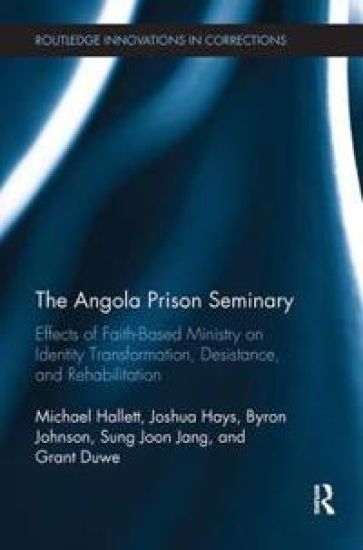
The Angola Prison Seminary
Michael Hallett; Joshua Hays; Byron Johnson; Sung Jang; Grant Duwe
CRC Press Inc
2018
nidottu
Corrections officials faced with rising populations and shrinking budgets have increasingly welcomed "faith-based" providers offering services at no cost to help meet the needs of inmates. Drawing from three years of on-site research, this book utilizes survey analysis along with life-history interviews of inmates and staff to explore the history, purpose, and functioning of the Inmate Minister program at Louisiana State Penitentiary (aka "Angola"), America’s largest maximum-security prison. This book takes seriously attributions from inmates that faith is helpful for "surviving prison" and explores the implications of religious programming for an American corrections system in crisis, featuring high recidivism, dehumanizing violence, and often draconian punishments. A first-of-its-kind prototype in a quickly expanding policy arena, Angola’s unique Inmate Minister program deploys trained graduates of the New Orleans Baptist Theological Seminary in bi-vocational pastoral service roles throughout the prison. Inmates lead their own congregations and serve in lay-ministry capacities in hospice, cell block visitation, delivery of familial death notifications to fellow inmates, "sidewalk counseling" and tier ministry, officiating inmate funerals, and delivering "care packages" to indigent prisoners. Life-history interviews uncover deep-level change in self-identity corresponding with a growing body of research on identity change and religiously motivated desistance. The concluding chapter addresses concerns regarding the First Amendment, the dysfunctional state of U.S. corrections, and directions for future research.
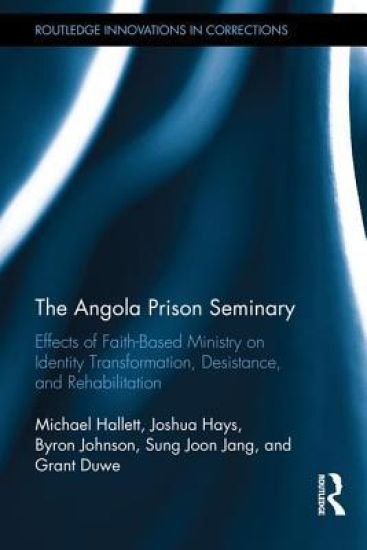
The Angola Prison Seminary
Michael Hallett; Joshua Hays; Byron Johnson; Sung Jang; Grant Duwe
Routledge
2016
sidottu
Corrections officials faced with rising populations and shrinking budgets have increasingly welcomed "faith-based" providers offering services at no cost to help meet the needs of inmates. Drawing from three years of on-site research, this book utilizes survey analysis along with life-history interviews of inmates and staff to explore the history, purpose, and functioning of the Inmate Minister program at Louisiana State Penitentiary (aka "Angola"), America’s largest maximum-security prison. This book takes seriously attributions from inmates that faith is helpful for "surviving prison" and explores the implications of religious programming for an American corrections system in crisis, featuring high recidivism, dehumanizing violence, and often draconian punishments. A first-of-its-kind prototype in a quickly expanding policy arena, Angola’s unique Inmate Minister program deploys trained graduates of the New Orleans Baptist Theological Seminary in bi-vocational pastoral service roles throughout the prison. Inmates lead their own congregations and serve in lay-ministry capacities in hospice, cell block visitation, delivery of familial death notifications to fellow inmates, "sidewalk counseling" and tier ministry, officiating inmate funerals, and delivering "care packages" to indigent prisoners. Life-history interviews uncover deep-level change in self-identity corresponding with a growing body of research on identity change and religiously motivated desistance. The concluding chapter addresses concerns regarding the First Amendment, the dysfunctional state of U.S. corrections, and directions for future research.
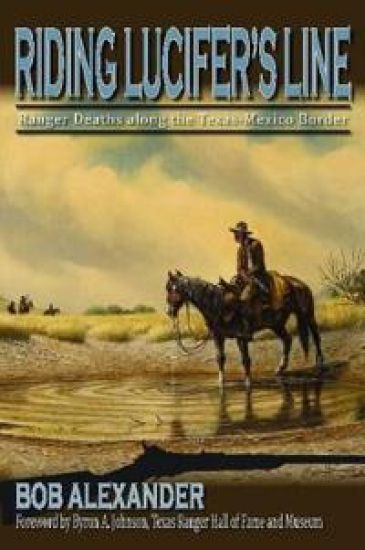
Riding Lucifer's Line
Bob Alexander; Byron Johnson
University of North Texas Press,U.S.
2013
sidottu
The Texas-Mexico border is trouble. Haphazardly splashing across the meandering Rio Grande into Mexico is—or at least can be—risky business, hazardous to one’s health and well-being. Kirby W. Dendy, the Chief of Texas Rangers, corroborates the sobering reality: “As their predecessors for over one hundred forty years before them did, today’s Texas Rangers continue to battle violence and transnational criminals along the Texas-Mexico border.”In Riding Lucifer’s Line, Bob Alexander, in his characteristic storytelling style, surveys the personal tragedies of twenty-five Texas Rangers who made the ultimate sacrifice as they scouted and enforced laws throughout borderland counties adjacent to the Rio Grande. The timeframe commences in 1874 with formation of the Frontier Battalion, which is when the Texas Rangers were actually institutionalised as a law enforcing entity, and concludes with the last known Texas Ranger death along the border in 1921. Alexander also discusses the transition of the Rangers in two introductory sections: “The Frontier Battalion Era, 1874–1901” and “The Ranger Force Era, 1901–1935,” wherein he follows Texas Rangers moving from an epochal narrative of the Old West to more modern, technological times.Written absent a preprogrammed agenda, Riding Lucifer’s Line is legitimate history. Adhering to facts, the author is not hesitant to challenge and shatter stale Texas Ranger mythology. Likewise, Alexander confronts head-on many of those critical Texas Ranger histories relying on innuendo and gossip and anecdotal accounts, at the expense of sustainable evidence—writings often plagued with a deficiency of rational thinking and common sense.Riding Lucifer’s Line is illustrated with sixty remarkable old-time photographs. Relying heavily on archived Texas Ranger documents, the lively text is authenticated with more than one thousand comprehensive endnotes.
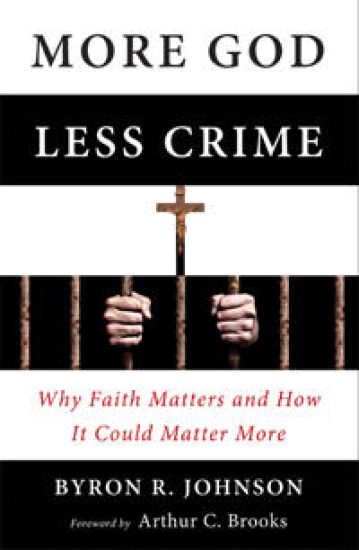
In More God, Less Crime renowned criminologist Byron R. Johnson proves that religion can be a powerful antidote to crime. The book describes how faith communities, congregations, and faith-based organizations are essential in forming partnerships necessary to provide the human and spiritual capital to effectively address crime, offender rehabilitation, and the substantial aftercare problems facing former prisoners. There is scattered research literature on religion and crime but until now, there has never been one publication that systematically and rigorously analyzes what we know from this largely overlooked body of research in a lay-friendly format. The data shows that when compared to current strategies, faith-based approaches to crime prevention bring added value in targeting those factors known to cause crime: poverty, lack of education, and unemployment. In an age of limited fiscal resources, Americans can’t afford a criminal justice system that turns its nose up at volunteer efforts that could not only work better than the abysmal status quo, but also save billions of dollars at the same time. This book provides readers with practical insights and recommendations for a faith-based response that could do just that.
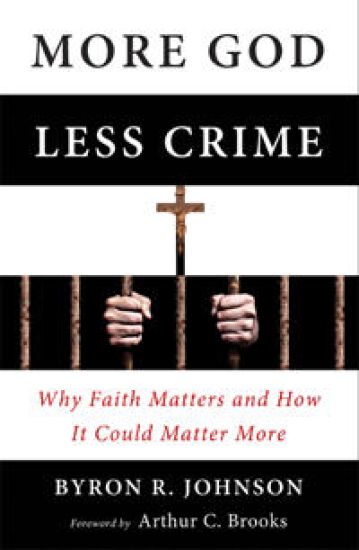
In More God, Less Crime renowned criminologist Byron R. Johnson proves that religion can be a powerful antidote to crime. The book describes how faith communities, congregations, and faith-based organizations are essential in forming partnerships necessary to provide the human and spiritual capital to effectively address crime, offender rehabilitation, and the substantial aftercare problems facing former prisoners. There is scattered research literature on religion and crime but until now, there has never been one publication that systematically and rigorously analyzes what we know from this largely overlooked body of research in a lay-friendly format. The data shows that when compared to current strategies, faith-based approaches to crime prevention bring added value in targeting those factors known to cause crime: poverty, lack of education, and unemployment. In an age of limited fiscal resources, Americans can’t afford a criminal justice system that turns its nose up at volunteer efforts that could not only work better than the abysmal status quo, but also save billions of dollars at the same time. This book provides readers with practical insights and recommendations for a faith-based response that could do just that.