Kirjojen hintavertailu. Mukana 12 290 406 kirjaa ja 12 kauppaa.

Kirjailija

C. Christine Fair

Kirjat ja teokset yhdessä paikassa: 8 kirjaa, julkaisuja vuosilta 2009-2023, suosituimpien joukossa The Literature of Lashkar-e-Tayyaba. Vertaile teosten hintoja ja tarkista saatavuus suomalaisista kirjakaupoista.

8 kirjaa

Kirjojen julkaisuhaarukka 2009-2023.

The Literature of Lashkar-e-Tayyaba

The Literature of Lashkar-e-Tayyaba

C. Christine Fair; Safina Ustaad

Oxford University Press
2023
sidottu
Since its inception in Afghanistan in the late 1980s, the Lashkar-e-Tayyaba (LeT), also known as the Jamaat-ul-Dawa (JuD), has arguably been the most threatening and disruptive terrorist organization in South Asia and beyond. While there is considerable scholarship on its history and operations, few scholars have exploited the organization's vast publications. This volume is the first scholarly effort to curate a sample of LeT's Urdu-language publications and then translate them into English for the scholarly community studying this group and related organizations. While the original texts were written and published by Dar al Andalus, which exclusively publishes LeT's books, pamphlets, posters, speeches, and other materials with the explicit intention of diffusing the group's ideology, raising funds, and cultivating volunteers for the organization, the authors hope that by rendering the group's materials more accessible, this book can contribute to the myriad efforts to combat such groups and the violence they perpetrate.
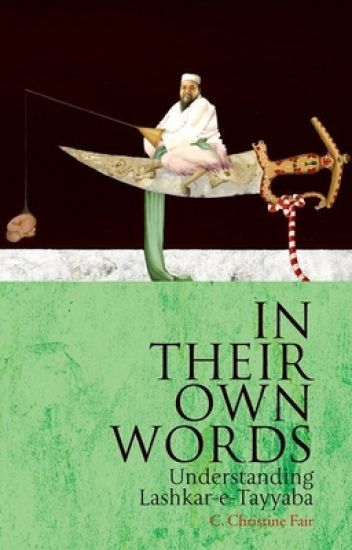
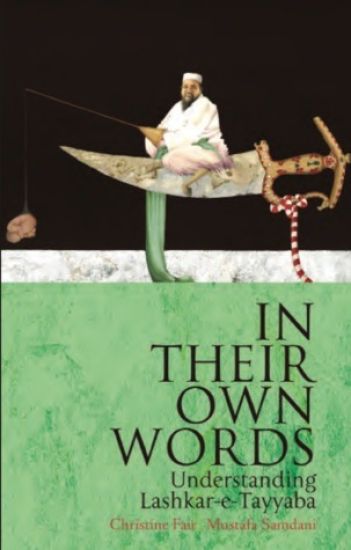
In Their Own Words: Understanding Lashkar-E-Tayyaba

In Their Own Words: Understanding Lashkar-E-Tayyaba

C. Christine Fair

Oxford University Press, USA
2019
sidottu
This path-breaking volume reveals a little-known aspect of how Lashkar-e-Tayyaba, a jihadist terrorist group, functions in Pakistan and beyond by translating and commenting upon a range of publications produced and disseminated by Dar-ul-Andlus, the publishing wing of LeT.Only a fraction of LeT's cadres ever see battle: most of them are despatched on nation-wide "prozelytising" (dawa) missions to convert Pakistanis to their particular interpretation of Islam, in support of which LeT has developed a sophisticated propagandist literature. This canon of Islamist texts is the most popular and potent weapon in LeT's arsenal, and its scrutiny affords insights into how and who the group recruits; LeT's justification for jihad; its vision of itself in global and regional politics; the enemies LeT identifies and the allies it cultivates; and how and where it conducts its operations. Particular attention is paid to the role that LeT assigns to women by examining those writings which heap extravagant praise upon the mothers of aspirant jihadis, who bless their operations and martyrdom. It is only by understanding LeT's domestic functions as set out in these texts that one can begin to appreciate why Pakistan so fiercely supports it, despite mounting international pressure to disband the group.
In Their Own Words

In Their Own Words

C. Christine Fair

C Hurst Co Publishers Ltd
2018
sidottu
This path-breaking volume reveals a little-known aspect of how Lashkar-e-Tayyaba, a jihadist terrorist group, functions in Pakistan and beyond by translating and commenting upon a range of publications produced and disseminated by Dar-ul-Andlus, the publishing wing of LeT. Only a fraction of LeT's cadres ever see battle: most of them are despatched on nation-wide 'proselytising' (dawa) missions to convert Pakistanis to their particular interpretation of Islam, in support of which LeT has developed a sophisticated propagandist literature. This canon of Islamist texts is the most popular and potent weapon in LeT's arsenal, and its scrutiny affords insights into how and who the group recruits; LeT's justification for jihad; its vision of itself in global and regional politics; the enemies LeT identifies and the allies it cultivates; and how and where it conducts its operations. Particular attention is paid to the role that LeT assigns to women by examining those writings which heap extravagant praise upon the mothers of aspirant jihadis, who bless their operations and martyrdom.It is only by understanding LeT's domestic functions as set out in these texts that one can begin to appreciate why Pakistan so fiercely supports it, despite mounting international pressure to disband the group.
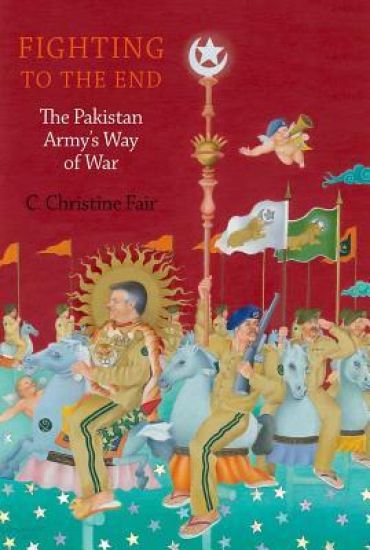
Fighting to the End

Fighting to the End

C. Christine Fair

Oxford University Press Inc
2018
nidottu
Since Pakistan was founded in 1947, its army has dominated the state. The military establishment has locked the country in an enduring rivalry with India, with the primary aim of wresting Kashmir from it. To that end, Pakistan initiated three wars over Kashmir-in 1947, 1965, and 1999-and failed to win any of them. Today, the army continues to prosecute this dangerous policy by employing non-state actors under the security of its ever-expanding nuclear umbrella. It has sustained a proxy war in Kashmir since 1989 using Islamist militants, as well as supporting non-Islamist insurgencies throughout India and a country-wide Islamist terror campaign that have brought the two countries to the brink of war on several occasions. In addition to these territorial revisionist goals, the Pakistani army has committed itself to resisting India's slow but inevitable rise on the global stage. Despite Pakistan's efforts to coerce India, it has achieved only modest successes at best. Even though India vivisected Pakistan in 1971, Pakistan continues to see itself as India's equal and demands the world do the same. The dangerous methods that the army uses to enforce this self-perception have brought international opprobrium upon Pakistan and its army. And in recent years, their erstwhile proxies have turned their guns on the Pakistani state itself. Why does the army persist in pursuing these revisionist policies that have come to imperil the very viability of the state itself, from which the army feeds? In Fighting to the End, C. Christine Fair argues that the answer lies, at least partially, in the strategic culture of the army. Through an unprecedented analysis of decades' worth of the army's own defense publications, she concludes that from the army's distorted view of history, it is victorious as long as it can resist India's purported drive for regional hegemony as well as the territorial status quo. Simply put, acquiescence means defeat. Fighting to the End convincingly shows that because the army is unlikely to abandon these preferences, Pakistan will remain a destabilizing force in world politics for the foreseeable future.
Fighting to the End

Fighting to the End

C. Christine Fair

Oxford University Press Inc
2014
sidottu
Pakistan's army has dominated the state for most of its 66 years. It has locked the country in an enduring rivalry with India to revise the maps in Kashmir and to resist India's slow but inevitable rise. To prosecute these dangerous policies, the army employs non-state actors under the security of its ever-expanding nuclear umbrella. The Pakistan army started three wars with India over Kashmir in 1947, 1965, and 1999 and failed to win any of them. It has sustained a proxy war in Kashmir since 1989 using Islamist militants, some of whom have now turned their guns against the Pakistani state. The Pakistan army has supported non-Islamist insurgencies throughout India as well as a country-wide Islamist terror campaign that have brought the two countries to the brink of war on several occasions. Despite Pakistan's efforts to coerce India, it has only achieved modest successes. Even though India vivisected Pakistan in 1971, Pakistan continues to see itself as India's equal and demands the world do the same. The tools that the army prefers to use, non-state actors under a nuclear umbrella, has brought international opprobrium upon the country and the army. In recent years, erstwhile proxies have turned their gun on the Pakistani state itself and its peoples. Why does the army persist in pursuing these revisionist policies that have come to imperil the very viability of the state itself, from which the army feeds? This volume argues that the answer lies, at least partially, in the strategic culture of the army. From the army's distorted view of history, the army is victorious as long as can resist India's purported hegemony and the territorial status quo. To acquiesce is defeat. Because the army is unlikely to abandon these preferences, the world must prepare for an ever more dangerous future Pakistan.
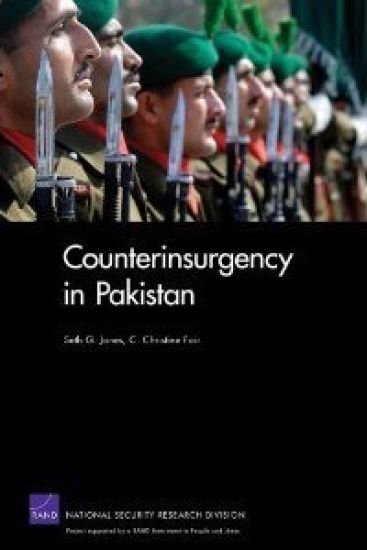
Counterinsurgency in Pakistan

Counterinsurgency in Pakistan

Seth G. Jones; C. Christine Fair

RAND
2010
pokkari
Since 2001, Pakistan has undertaken a number of operations against militant groups, including al Qa'ida, that directly affect U.S. national security. Despite some successes, militant groups continue to present a significant threat to Pakistan, the United States, and a range of other countries. Pakistan will not be able to deal with the militant threat over the long run unless it does a more effective job of addressing the root causes of the crisis and makes security of the civilian population, rather than destroying the enemy, its top counter insurgency priority. In addition, Pakistan needs to abandon militancy as a tool of its foreign and domestic policy; it sends a confusing message internally and has a large potential to backfire.
Pakistan

Pakistan

C. Christine Fair; Keith Crane; Christopher S. Chivvis; Samir Puri; Michael Spirtas

RAND
2009
pokkari
Describing Pakistan's likely future course, this volume seeks to inform U.S. efforts to achieve an effective foreign policy strategy toward the country. Drawing on interviews of elites, polling data, and statistical data on Pakistan's armed forces, the book presents a political and political-military analysis. The authors exposit likely developments in Pakistan's internal and external security environment over the coming decade, assess Pakistan's national will and capacity to solve its problems, and suggest policies for the U.S. government to pursue in order to secure its interests.