Kirjojen hintavertailu. Mukana 12 595 353 kirjaa ja 12 kauppaa.

Kirjailija

C. Christopher Smith

Kirjat ja teokset yhdessä paikassa: 7 kirjaa, julkaisuja vuosilta 2014-2025, suosituimpien joukossa Plough Quarterly No. 1. Vertaile teosten hintoja ja tarkista saatavuus suomalaisista kirjakaupoista.

Mukana myös kirjoitusasut: C Christopher Smith

7 kirjaa

Kirjojen julkaisuhaarukka 2014-2025.

Plough Quarterly No. 1

Plough Quarterly No. 1

Russell D. Moore; Cardinal Donald Wuerl; Jrgen Moltmann; Johann Christoph Arnold; C. Christopher Smith; Patrizia Cavalli; Duane Stoltzfus; Eberhard Arnold; Manfred Kyber; Kthe Kollwitz; Henri J. M. Nouwen; Sren Kierkegaard; Dorothy Day

Plough Publishing House
2014
pokkari
How close do we dare to get to Jesus’ Sermon on the Mount? It’s widely considered the key to understanding who Jesus was and what mission he strove to fulfill. For two millennia, countless people have wrestled to apply it, from Augustine to Luther to Tolstoy to Gandhi. Alongside much wisdom, there has been much evasion, prompting Jewish theologian Pinchas Lapide’s tart comment: “The history of the impact of the Sermon on the Mount can largely be described in terms of an attempt to domesticate everything in it that is shocking, demanding, and uncompromising, and render it harmless.” There’s good reason for this: Jesus’ teaching is deeply disruptive. It demands a top-to-bottom reordering of life, work, and social relations, starting with radical economic sharing, nonresistance and love of enemies, lifelong marriage, and unconditional forgiveness. This issue of Plough Quarterly focuses on people willing to get their hands dirty living out the Sermon on the Mount. Their ranks include Dorothy Day, Dietrich Bonhoeffer, John Wesley, Henri Nouwen, Mother Teresa, and others you’ll meet in these pages. Their insights are not to be consumed passively. Rather, they should inspire and equip each of us to roll up our sleeves and get to work. Bold, hope-filled, and down-to-earth, Plough Quarterly features thought-provoking articles, commentary, interviews, short fiction, book reviews, poetry and artwork to inspire everyday faith and action. Each issue brings together essential voices from many traditions to give you fresh insights on a core theme such as peacemaking, biblical justice, children and family, building community, man and woman, nature and the environment, nonviolence, or simple living. Starting from the conviction that the teachings and example of Jesus can transform and renew our world, it aims to apply them to all aspects of life, seeking common ground with all people of goodwill regardless of creed.
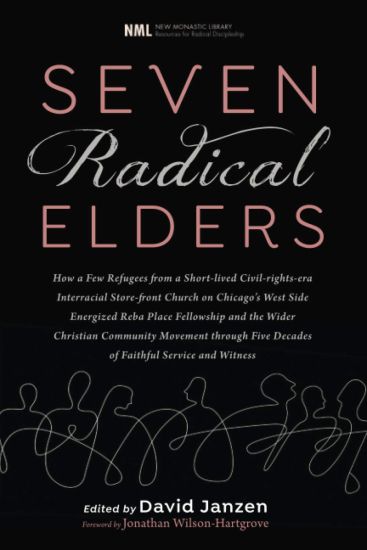
Seven Radical Elders

Seven Radical Elders

David Janzen; C Christopher Smith

Cascade Books
2020
pokkari
Many young idealists, after a few failures, burn out and return to status quo lives. Not so with the seven radicals in this book, who met in an interracial house church and intentional community on Chicago's West Side during the civil rights era. Here you will make the acquaintance of a Church of the Brethren pastoral couple who tried to bring communal life to the black ghetto; a fashionable socialite who trashed her curlers and joined the simple life; an elite Stanford graduate who cast his lot with a bus full of black teens on an epic ride to Washington, DC, to hear MLK's "I Have a Dream" speech; two ethnic-Mennonite women who became community leaders and elders during a male-dominated era; and a painfully shy "geek" awakened to the traumas of racism by five days in the Albany, Georgia, jail. Now, in their seventies, eighties, and nineties, these veterans of community witness to the possibility of radical life conversions, engagement with the hard, slow work of racial reconciliation that learns from mistakes and does not quit. This book concludes with the invitation to the joyful path of becoming who God made us to be-saints.
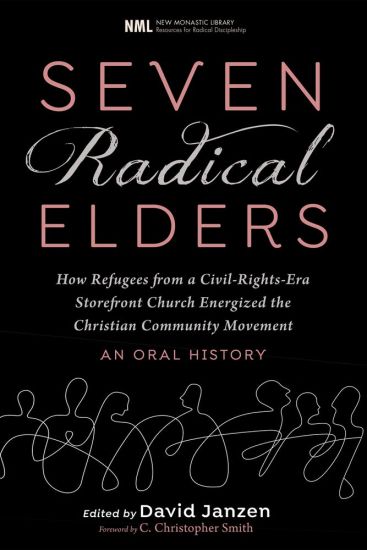
Seven Radical Elders

Seven Radical Elders

David Janzen; C Christopher Smith

Cascade Books
2020
sidottu
Many young idealists, after a few failures, burn out and return to status quo lives. Not so with the seven radicals in this book, who met in an interracial house church and intentional community on Chicago's West Side during the civil rights era. Here you will make the acquaintance of a Church of the Brethren pastoral couple who tried to bring communal life to the black ghetto; a fashionable socialite who trashed her curlers and joined the simple life; an elite Stanford graduate who cast his lot with a bus full of black teens on an epic ride to Washington, DC, to hear MLK's "I Have a Dream" speech; two ethnic-Mennonite women who became community leaders and elders during a male-dominated era; and a painfully shy "geek" awakened to the traumas of racism by five days in the Albany, Georgia, jail. Now, in their seventies, eighties, and nineties, these veterans of community witness to the possibility of radical life conversions, engagement with the hard, slow work of racial reconciliation that learns from mistakes and does not quit. This book concludes with the invitation to the joyful path of becoming who God made us to be--saints.
Reading for the Common Good – How Books Help Our Churches and Neighborhoods Flourish

Reading for the Common Good – How Books Help Our Churches and Neighborhoods Flourish

C. Christopher Smith; Scot McKnight

Inter-Varsity Press,US
2016
nidottu
We have been created to live and work in community. But all too often we see ourselves primarily as individuals and run the risk of working at cross-purposes with the organizations we serve. Living faithfully in a neighborhood involves two interwoven threads: learning and action. In this book C. Christopher Smith, coauthor of Slow Church, looks at the local church as an organization in which both learning and action lie at the heart of its identity. He explores the practice of reading and, in his words, "how we can read together in ways that drive us deeper into action." Smith continues, "Church can no longer simply be an experience to be passively consumed; rather, we are called into the participatory life of a community. Reading is a vital practice for helping our churches navigate this shift." Discover how books can help your churches and neighborhoods bring flourishing to the world.
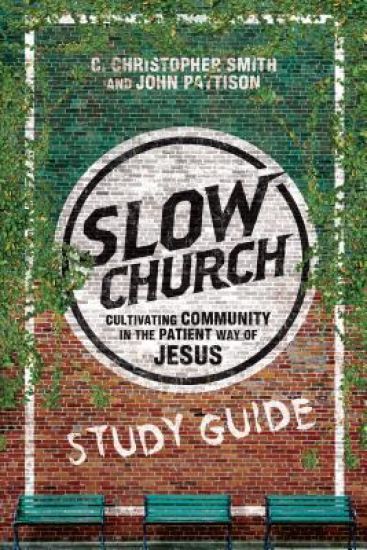
Slow Church Study Guide

Slow Church Study Guide

C. Christopher Smith; John Pattison

Inter-Varsity Press,US
2016
nidottu
High-speed internet. Rapid rewards. Quick thinking. Fast food. Fast . . . church? Slow Church by Chris Smith and John Pattison has been eagerly received by a people who are ready to be invited out of franchise faith and back into the kingdom of God. This eleven-session study guide provides an opportunity to reflect on the message of this groundbreaking book both individually and in community. Each session features A guide to lectio divina Suggested videos that can be watched onlineA series of in-depth questions expanded from what is currently in the bookA quote for reflection Here is an opportunity to begin to develop a deeper and richer community where people know each other well and love one another as Christ loved the church.
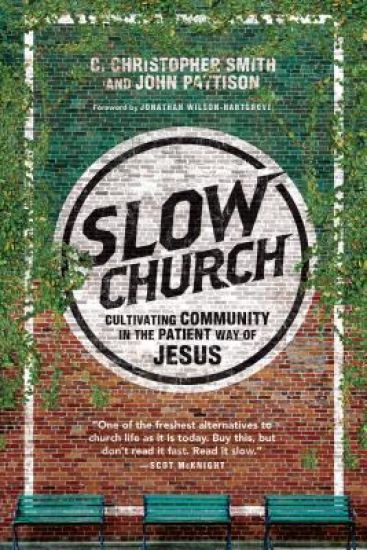
Slow Church – Cultivating Community in the Patient Way of Jesus

Slow Church – Cultivating Community in the Patient Way of Jesus

C. Christopher Smith; John Pattison; Jonathan Wilson–hartgrov

Inter-Varsity Press,US
2014
nidottu
Readers' Choice Award Winner Best Books About the Church from Byron Borger, Hearts and Minds Bookstore Fast food. Fast cars. Fast and furious. Fast forward. Fast . . . church? The church is often idealized (or demonized) as the last bastion of a bygone era, dragging our feet as we're pulled into new moralities and new spiritualities. We guard our doctrine and our piety with great vigilance. But we often fail to notice how quickly we're capitulating, in the structures and practices of our churches, to a culture of unreflective speed, dehumanizing efficiency and dis-integrating isolationism. In the beginning, the church ate together, traveled together and shared in all facets of life. Centered as they were on Jesus, these seemingly mundane activities took on their own significance in the mission of God. In Slow Church, Chris Smith and John Pattison invite us to leave franchise faith behind and enter into the ecology, economy and ethics of the kingdom of God, where people know each other well and love one another as Christ loved the church.