Kirjojen hintavertailu. Mukana 12 595 353 kirjaa ja 12 kauppaa.

Kirjailija

C.L. Crouch

Kirjat ja teokset yhdessä paikassa: 11 kirjaa, julkaisuja vuosilta 2009-2022, suosituimpien joukossa The Making of Israel. Vertaile teosten hintoja ja tarkista saatavuus suomalaisista kirjakaupoista.

Mukana myös kirjoitusasut: C. L. Crouch, C L Crouch

11 kirjaa

Kirjojen julkaisuhaarukka 2009-2022.

Isaiah: An Introduction and Study Guide

Isaiah: An Introduction and Study Guide

C.L. Crouch; Christopher B. Hays

BLOOMSBURY PUBLISHING PLC
2022
sidottu
C. L. Crouch and Christopher B. Hays introduce the Book of Isaiah in its diverse historical contexts, tracing its origins and development over several centuries: beginning with the career of the prophet Isaiah ben Amoz in eighth century Jerusalem, continuing with a late seventh century edition and the further revisions made in the late sixth century, and concluding with final shaping during the Persian Period. At each stage Crouch and Hays pay close attention to the historical, cultural, and theological conversations that influenced the book's aims and interests. Crouch and Hays discuss the theological and literary continuities among the book's contributors, as well as where language and concerns differed from generation to generation. They also consider the reception history of Isaiah and what the text has meant to people through history. With suggestions of further reading at the end of each chapter, this guide will be an essential accompaniment to study of the Book of Isaiah.
Isaiah: An Introduction and Study Guide

Isaiah: An Introduction and Study Guide

C.L. Crouch; Christopher B. Hays

BLOOMSBURY PUBLISHING PLC
2022
nidottu
C. L. Crouch and Christopher B. Hays introduce the Book of Isaiah in its diverse historical contexts, tracing its origins and development over several centuries: beginning with the career of the prophet Isaiah ben Amoz in eighth century Jerusalem, continuing with a late seventh century edition and the further revisions made in the late sixth century, and concluding with final shaping during the Persian Period. At each stage Crouch and Hays pay close attention to the historical, cultural, and theological conversations that influenced the book's aims and interests. Crouch and Hays discuss the theological and literary continuities among the book's contributors, as well as where language and concerns differed from generation to generation. They also consider the reception history of Isaiah and what the text has meant to people through history. With suggestions of further reading at the end of each chapter, this guide will be an essential accompaniment to study of the Book of Isaiah.
Israel and Judah Redefined

Israel and Judah Redefined

C. L. Crouch

Cambridge University Press
2021
sidottu
In Israel and Judah Redefined, C. L. Crouch uses trauma studies, postcolonial theory, and social-scientific research on migration to analyse the impact of mass displacements and imperial power on Israelite and Judahite identity in the sixth century BCE. Crouch argues that the trauma of deportation affected Israelite identity differently depending on resettlement context. Deportees resettled in rural Babylonia took an isolationist approach to Israelite identity, whereas deportees resettled in urban contexts took a more integrationist approach. Crouch also emphasises the impact of mass displacement on identity concerns in the homeland, demonstrating that displacement and the experience of Babylonian imperial rule together facilitated major developments in Judahite identity. The diverse experiences of this period produced bitter conflict between Israelites and Judahites, as well as diverse attempts to resolve this conflict. Inspired by studies of forced migration and by postcolonial analyses of imperial domination, Crouch's book highlights the crucial contribution of this era to the story of Israel and Judah.
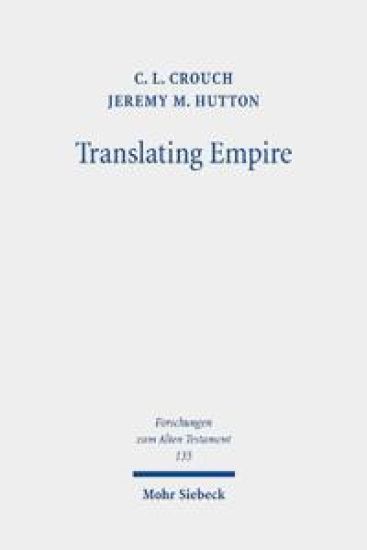
Translating Empire

Translating Empire

C. L. Crouch; Jeremy M. Hutton

Mohr Siebeck
2019
sidottu
In this volume, C. L. Crouch and Jeremy M. Hutton offer a data-driven approach to translation practice in the Iron Age. The authors build on and reinforce Crouch's conclusions in her former work about Deuteronomy and the Akkadian treaty tradition, employing Hutton's "Optimal Translation" theory to analyze the Akkadian-Aramaic bilingual inscription from Tell Fekheriyeh. The authors argue that the inscription exhibits an isomorphic style of translation and only the occasional use of dynamic replacement sets. They apply these findings to other proposed instances of Iron Age translation from Akkadian into dialects of Northwest Semitic, including the relationship between Deuteronomy and the Succession Treaty of Esarhaddon and the relationship between the treaty of Aššur-nerari V with Mati?ilu and the Sefire treaties. The authors then argue that the lexical and syntactic changes in these cases diverge so significantly from the model established by Tell Fekheriyeh as to exclude the possibility that these treaties constitute translational relationships.
An Introduction to the Study of Jeremiah
C. L. Crouch provides a clear and concise introduction to the complex text of Jeremiah. Readers are introduced to the diverse approaches to the book, with attention paid to the way that these approaches differ from but also relate to one another. After a brief introduction, Crouch addresses the formation of the book, especially in relation to its Hebrew and Greek versions; the theological interests of the book and the challenges posed by attempts to link these to an actual man 'Jeremiah'; and the relationship of Jeremiah to other biblical prophets. Crouch focuses clearly on method and on approaches to the text, as is the mark of this series. This makes the book especially useful for students in the quest to navigate the diverse body of scholarly literature that surrounds this troublesome biblical book.
An Introduction to the Study of Jeremiah
C. L. Crouch provides a clear and concise introduction to the complex text of Jeremiah. Readers are introduced to the diverse approaches to the book, with attention paid to the way that these approaches differ from but also relate to one another. After a brief introduction, Crouch addresses the formation of the book, especially in relation to its Hebrew and Greek versions; the theological interests of the book and the challenges posed by attempts to link these to an actual man 'Jeremiah'; and the relationship of Jeremiah to other biblical prophets. Crouch focuses clearly on method and on approaches to the text, as is the mark of this series. This makes the book especially useful for students in the quest to navigate the diverse body of scholarly literature that surrounds this troublesome biblical book.
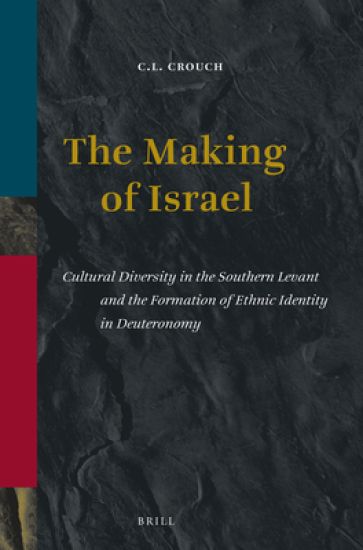
The Making of Israel

The Making of Israel

C.L. Crouch

BRILL
2016
nidottu
In The Making of Israel C.L. Crouch presents the southern Levant during the seventh century BCE as a major period for the formation of Israelite ethnic identity, challenging scholarship which dates biblical texts with identity concerns to the exilic and post-exilic periods as well as scholarship which limits pre-exilic identity concerns to Josianic nationalism. The argument analyses the archaeological material from the southern Levant during Iron Age II, then draws on anthropological research to argue for an ethnic response to the economic, political and cultural change of this period. The volume concludes with an investigation into identity issues in Deuteronomy, highlighting centralisation and exclusive Yahwism as part of the deuteronomic formulation of Israelite ethnic identity.
War and Ethics in the Ancient Near East

War and Ethics in the Ancient Near East

C. L. Crouch

De Gruyter
2016
isokokoinen pokkari
The monograph considers the relationships of ethical systems in the ancient Near East through a study of warfare in Judah, Israel and Assyria in the eighth and seventh centuries BCE. It argues that a common cosmological and ideological outlook generated similarities in ethical thinking. In all three societies, the mythological traditions surrounding creation reflect a strong connection between war, kingship and the establishment of order. Human kings’ military activities are legitimated through their identification with this cosmic struggle against chaos, begun by the divine king at creation. Military violence is thereby cast not only as morally tolerable but as morally imperative. Deviations from this point of view reflect two phenomena: the preservation of variable social perspectives and the impact of historical changes on ethical thinking.The research begins the discussion of ancient Near Eastern ethics outside of Israel and Judah and fills a scholarly void by placing Israelite and Judahite ethics within this context, as well as contributing methodologically to future research in historical and comparative ethics.
War and Ethics in the Ancient Near East
The monograph considers the relationships of ethical systems in the ancient Near East through a study of warfare in Judah, Israel and Assyria in the eighth and seventh centuries BCE. It argues that a common cosmological and ideological outlook generated similarities in ethical thinking. In all three societies, the mythological traditions surrounding creation reflect a strong connection between war, kingship and the establishment of order. Human kings’ military activities are legitimated through their identification with this cosmic struggle against chaos, begun by the divine king at creation. Military violence is thereby cast not only as morally tolerable but as morally imperative. Deviations from this point of view reflect two phenomena: the preservation of variable social perspectives and the impact of historical changes on ethical thinking.The research begins the discussion of ancient Near Eastern ethics outside of Israel and Judah and fills a scholarly void by placing Israelite and Judahite ethics within this context, as well as contributing methodologically to future research in historical and comparative ethics.