
Kirjailija
C. L. Sonnichsen
Kirjat ja teokset yhdessä paikassa: 11 kirjaa, julkaisuja vuosilta 1950-2016, suosituimpien joukossa Alias Billy the Kid. Vertaile teosten hintoja ja tarkista saatavuus suomalaisista kirjakaupoista.
Mukana myös kirjoitusasut: C L Sonnichsen
11 kirjaa
Kirjojen julkaisuhaarukka 1950-2016.
Winner of the National Cowboy Hall of Fame's Western Heritage Wrangler Award for Outstanding Western Biography Winner of the Western Writers of America's Spur Award for Best Western Non-Fiction Book "A solid account of a southwestern 'character' who has flitted in and out of frontier and economic history." American Historical Review "A creditable work on a fascinating individual. In delightful writing style [Sonnichsen] has reconstructed Greene's life, explaining the ambitions as well as the frailties of this extraordinary entrepreneur." History "A rewarding study of the later days of mining." Arizona and the West"
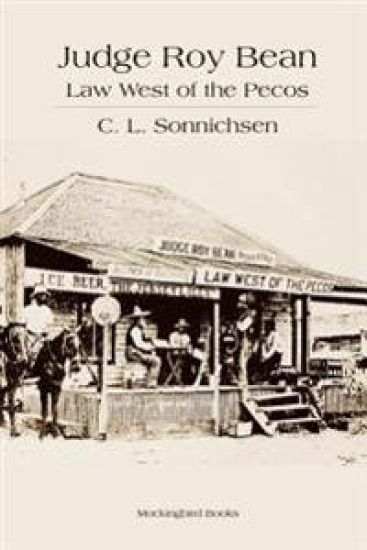
Roy Bean was one of the most colorful characters to inhabit the state of Texas, and he chose one of the state's most Godforsaken places as his personal dominion-the empty, dusty plains west of the Pecos River's junction with the Rio Grande, out near... well, not really near anyplace to speak of. Sandwiched between the banks of the Rio Grande and the Sunset Route of the Southern Pacific Railroad, Bean's corner of the world began as a rough railroad camp and went downhill from there. Bean named his town Langtry, after the famous and beautiful English entertainer Miss Lily Langtry. Adopting her popular nickname, he dubbed his notorious saloon and pool hall the Jersey Lilly (spelling was not Bean's greatest strength). The tales of his escapades are countless; Sonnichsen surely had to choose only the best to include in his book. Whether Bean was chaining a drunk to a half-tamed bear or claiming that the Jersey Lilly had a policy against making change (what you proffered, he kept), Roy Bean cut a wide swath through Texas folklore.It was his status as judge-or justice of the peace, to be more precise-that brought the greatest glory to Roy Bean. Should a bar patron complain of the no-change policy, Judge Roy Bean would announce himself the Law West of the Pecos and would fine the complainer, said fine being in the exact amount of the change claimed. And that was only the beginning. The stories go on and on; the reader will find dozens in the pages of this classic book.
Roy Bean: Law West Of The Pecos is a book written by C. L. Sonnichsen that tells the story of one of the most infamous figures in the history of the American West, Judge Roy Bean. Bean was a self-appointed judge and lawman who operated in the lawless frontier town of Langtry, Texas, during the late 19th century. The book explores the life and times of Bean, including his often outrageous and eccentric behavior, as well as his dealings with outlaws, lawmen, and other colorful characters of the era. Sonnichsen provides a detailed account of Bean's rise to power and his eventual downfall, as well as the impact that he had on the development of the American West. The book is a fascinating and entertaining read for anyone interested in the history of the Old West, and provides a unique perspective on one of its most enigmatic figures.This is a new release of the original 1943 edition.This scarce antiquarian book is a facsimile reprint of the old original and may contain some imperfections such as library marks and notations. Because we believe this work is culturally important, we have made it available as part of our commitment for protecting, preserving, and promoting the world's literature in affordable, high quality, modern editions, that are true to their original work.
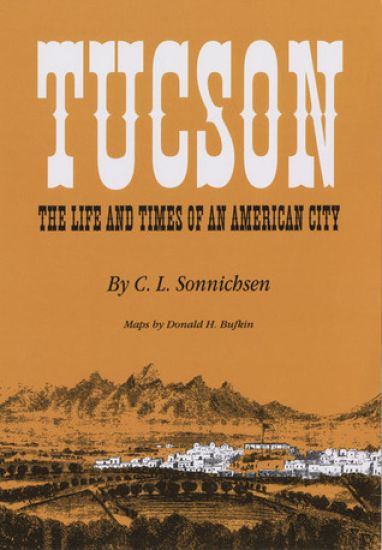
Dedicated to all those living elsewhere who would rather be in TucsonTucson is the first comprehensive history of a unique corner of America, a city with its roots in Indian and Spanish colonial history; its skies broken by the towers of a Sunbelt metropolis.In these pages C. L. Sonnichsen, dean of southwestern historians-and a Tucsonan by adoption - chronicles with humor and affection the growth over two centuries of one of the region's most colorful communities.Today's metropolitan Tucson is a city of half a million people. Set along the Santa Cruz River in the Lower Sonoran Desert in a great basin surrounded by soaring mountain ranges, it is different in many ways from any other city in the United States. Like all other Sunbelt centers, however, it is growing by great leaps and bounds. A popular winter resort, it attracts fugitives from the frozen North. The site of the University of Arizona, it draws many with an intellectual bent. For artists the attractions of the ""Old Pueblo"" are all but endless. The city booms with new people, industries, shopping centers, and subdivisions.Newcomers tend to bring along their ideas, life-styles, and landscapes, including Bermuda grass and mulberry trees, and have moved Tucson closer to the familiar patterns of urban America. But tradition and geography limit their efforts, for Tucson has always been the center of a separate world, with a history, population, and character of its own. It was an oasis far from other Indian cultural centers a thousand years ago.It was a remote outpost in 1776, when the Spaniards founded a presidio there. It was not far from the edge of the world when Anglos began settling along the Santa Cruz not long before the Civil War. Even with the coming of the railroad, the airplane, and television, Tucson has remained insulated from the rest of the country by distance and by special habits of mind. Much of Tucson's charm derives from this insulation.Beyond the separateness, says the author, is a fact too often overlooked: Deserts Were Not Made for People. Technological skills make survival possible for most of the population; only the long-resident Papago Indians are truly at home there. In such a difficult environment early-day white settlers had to make do with little, undergo much, and be prepared for the worst.Today their successors live in what is essentially an artificial environment, using their natural resources as if they were inexhaustible - for water Tucson depends entirely on underground sources-and continue to enjoy the genial, if sometimes superheated, climate, the casual life-style and western friendliness of the population, the Indian-Spanish-Mexican cultural and historical ambience, and the artistic and intellectual life. The problems of other great American cities are Tucson's also. Perhaps it is those very problems and the uncertainty of the future that add a special urgency to the savoring of life in this special corner of America.
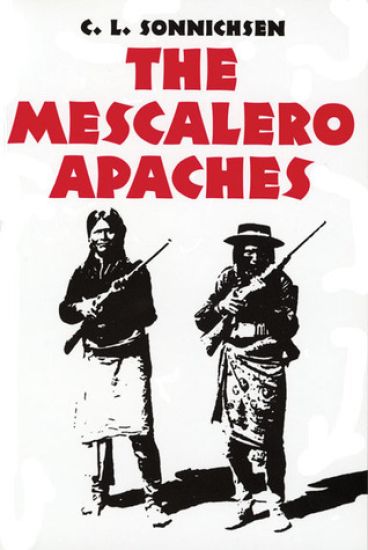
Frederick Webb Hodge remarked that the Eastern Apache tribe called the Mescaleros were ""never regarded as so warlike"" as the Apaches of Arizona. But the Mescaleros' history is one of hardship and oppression alternating with wars of revenge. They were friendly to the Spaniards until victimized, and friendly to Americans until they were betrayed again. For three hundred years Mescaleros fought the Spaniards and Mexicans. They fought Americans for forty more, before subsiding into lethargy and discouragement. Only since 1930 have the Mescaleros been able to make tribal progress. C. L. Sonnichsen tells the story of the Mescalero Apaches from the earliest records to the modern day, from the Indian's point of view. In early days the Mescaleros moved about freely. Their principal range was between the Río Grande and the Pecos in New Mexico, but they hunted into the Staked Plains and southward into Mexico. They owned nothing and everything. Today the Mescaleros are American citizens and own their reservation in the Tularosa country of New Mexico. While the Mescalero Apaches still struggle to retain their traditions and bridge the gap between their old life and the new, their people have made amazing progress.
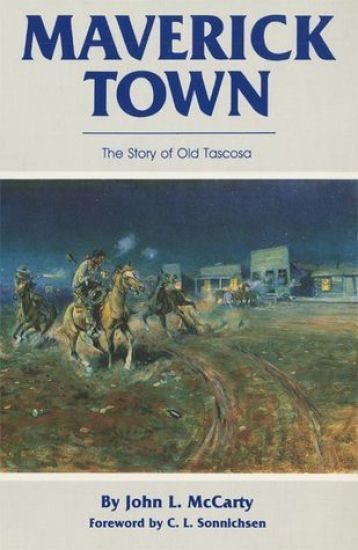
Once the rival of Dodge City and Cheyenne, for years Tascosa, Texas, lay a ghost town of crumbling adobes. Today almost all traces of frontier Tascosa are gone, replaced by the ultramodern stone buildings which make up a self-contained city of boys and administrative staff - Cal Farley's famed Boys Ranch.Maverick Town tells the story of the rise and decline of Old Tascosa, which epitomized the romance and danger of the early West. Tascosa's heyday was brief, yet it compressed into a few years the history of an era - that of the open range - which will never return.
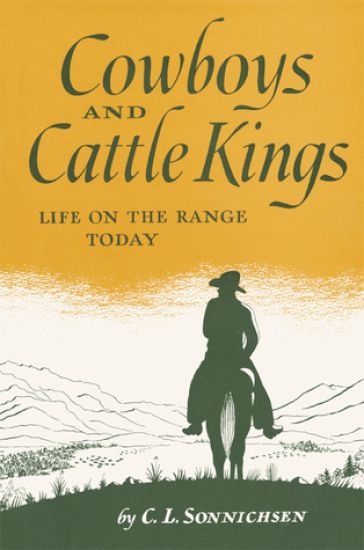
The cattleman didn't vanish with the fencing of the open range. He is very much with us today - this two-fisted, hard-driving citizen of the pastures from El Paso to Butte. He is a very special kind of American, not solely because of the romantic history of his kind, but because of the way he looks at things.C. L. Sonnichsen, who talks the language of cow country folk, has written an absorbing account of the modern cattleman - full of anecdotes and the good, profane dialogue that gives warmth and vigor to western conversation. Above all, it has the quality of wit and humor.Cowboys and Cattle Kings evaluates the cattle raiser of the High Plains and Rocky Mountain areas since the fencing of the open range - how he lives, what he thinks, and how he conducts his business. Sonnichsen considers the roots and background of the present-day cowman and describes modern ranch children, ranch women, cowboys, managers, and others in the business. He clarifies the cowman's position in recent controversies concerning grazing and lease rights and control of the range.From the enormous ""ranch empires"" to the small enterprises, from the strongholds of the old-time ranchman to the popular dude ranches for tourists, Sonnichsen touches every segment of the industry. Most important, perhaps, is his sympathetic account of the troubles of modern ranching - blizzards, droughts, rustlers, financial burdens - and the counterbalancing advantages of ranching as a way of life.