Kirjailija
C Matthew McMahon
Kirjat ja teokset yhdessä paikassa: 136 kirjaa, julkaisuja vuosilta 2007-2026, suosituimpien joukossa The Works of Henry Greenwood. Vertaile teosten hintoja ja tarkista saatavuus suomalaisista kirjakaupoista.
Mukana myös kirjoitusasut: C. Matthew McMahon
136 kirjaa
Kirjojen julkaisuhaarukka 2007-2026.
Explore the timeless and biblical wisdom of Henry Greenwood's original works compiled into a single volume. There are nine pieces in this volume, all that comprise what is available by Greenwood today. From the urgency of repentance in "The Great and General Day of Judgment" (Matthew 24:36) to the significance of running the race of godliness in "The Celestial Race" (1 Corinthians 9:24), to his description of hell in "Tormenting Tophet", Greenwood's writings offer weighty insights anchored in scripture. In "The Jailor's Jail-Delivery" (Acts 16:30-31), he emphasizes the significance of faith in Jesus Christ for salvation. "The Most Blessed Birth that Ever Was" (Isaiah 9:6) explores the transformative impact of Christ's birth. "A Treatise of Things Necessary and Unnecessary in the Kingdom of God" underscores heavenly qualities required as part of the Christian walk (Romans 14:17), while "A True and Comfortable Exposition of the Lord's Prayer" (Matthew 6:9-13) highlights the importance of biblical, fervent prayer. In "Christ's Baptism" (Matthew 3:16-17), Greenwood explores the theological implications of Christ's baptism. Finally, "The Prisoner's Prayers" reflects deep spirituality and scriptural foundations, offering 51 prayers for various subjects and needs. These Christ-glorifying and spiritually enriching works reveal the heart of Henry Greenwood, a reformed minister of the Gospel. Study along with him in these solemn and important writings for a wealth of biblical insights and Christian sanctification by the Spirit.
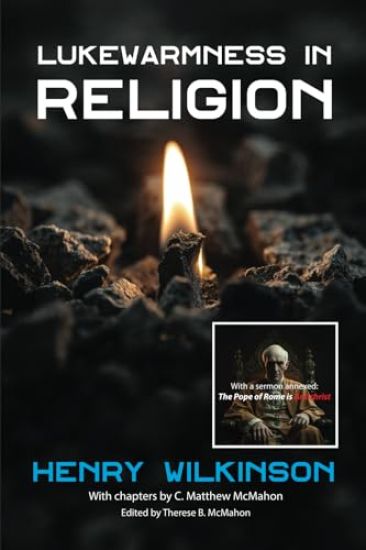
"So then because thou art lukewarm, and neither cold nor hot, I will spue thee out of my mouth." (Revelation 3:16) Few warnings in Scripture ring with such dreadful weight as this: Christ himself rejecting those who bear his name yet lack the fire of true devotion. In *Lukewarmness in Religion*, Henry Wilkinson, a scholar of the highest order and a preacher of piercing conviction, unfolds this solemn truth with unmatched precision. He lays bare the tragedy of spiritual indifference, showing how a half-hearted faith is more offensive to God than outright unbelief. With careful exegesis, Wilkinson traces the warnings of Christ to the church of Laodicea, pressing upon the reader the urgent necessity of true zeal, sincerity, and unwavering obedience. But this work is not merely a warning-it is a call to the life Christ has called his own to live. With the full weight of Scripture, Wilkinson exhorts believers to cast off complacency, to shake free of dead formalism, and to lay hold of Christ with the earnestness of those who see eternity at the door. He does not merely expose the danger; he shows the path to a faith that is burning, steadfast, and pleasing to the Lord. Included in this edition is Wilkinson's masterful sermon on the Antichrist, added as a a powerful appendix in which he unpacks Paul's warning in 2 Thessalonians 2:3-10, revealing the rise, reign, and ruin of that Wicked One. With clarity and force, he lays out the marks of the Man of Sin, exposing the deception and judgment that follows those who receive not the love of the truth. Here is a work that cuts through all pretense, calling men and women to true and living faith. May the warning be heeded, and may Christ be glorified.
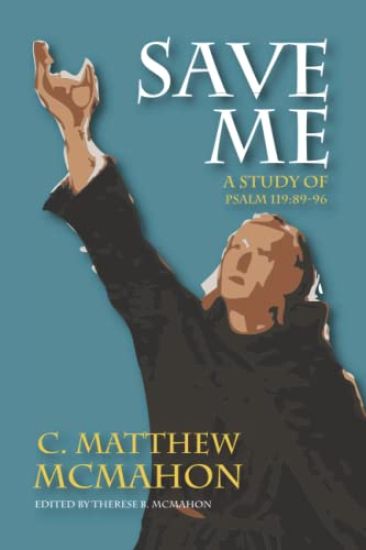
If you have ever doubted your salvation as a Christian, this psalm is for you. Collectively, the psalms are like a little bible in and of themselves. Independently, Psalm 119 is like a little bible in and of itself. It contains in it a thesis that God's word is to be preeminent in the believer's life, and it houses in it everything that a growing Christian would need to draw closer to Jesus Christ if they would but take time to consider it, to meditate on it, even in the midst of the worst afflictions. I have chosen the section of verses 89-96 because they house the verse, "I am thine, save me; for I have sought thy precepts." (Psa. 119:94). This little phrase, "save me," was the springboard in which this study began; to understand how being saved occurs, and what the psalmist meant by it. This psalm was pivotal in the great reformer's life, Martin Luther, where he relied heavily on this little phrase "save me" during his initial ministry. As with Luther, so with us, my hope is that you will be encouraged to pray along the same lines as the psalmist did, in desiring God to save you. You may think, "I'm already saved. I'm a blood bought believer in Jesus Christ " That's excellent But know, Scripture provides saved and transformed believers with the biblical truth that 1) they were saved, that 2) they are being saved, and that 3) one day they will be saved. "Savedness" has a past connotation, a present reality, and a future hope, which all work together for the good of the believer; and all this on account of the work and merit of Jesus Christ. In this, there is great comfort to be mined out of these verses for the believer to understand how God accomplishes this "saving" through Jesus Christ, and in light of this section and teaching of Psalm 119. It houses in it comfort, hope, help, and importantly, the need to have a true assurance in one's eternal position before God.
The Reasonableness of the Christian Religion
C Matthew McMahon; Jonathan Dickinson
Puritan Publications
2022
pokkari
Dickinson's work before you is one of fundamentals. He has chosen four areas of the fundamentals of the faith (basic Christian theology) to bring to you its reasonableness. It is both a Scriptural and rational endeavor to understand the basics of the Christian faith and jettison you into the larger branches of basic Christian truth. He makes Christians think, and while thinking, shows them the nature of fundamental Christianity, i.e. that it is reasonable (because God is reasonable) and it directly distills truth about the perfections and character of the most high God (which is the very reason Jesus came, John 1:18, to declare the Father). Not only does it encapsulate the fundamentals of the faith, but it is rational. The Christian Gospel is rational and can be shown to be rational. Because God is rational. Dickinson, in this cause of showing forth the rational and reasonable aspects of the fundamentals of the faith will cover, in four sermons, the being and attributes of God, the rational evidence of man's fall in the garden, the mediation of the man Christ Jesus, the evidence of Christ's work and merit from Old Testament prophecy, and the New Testament argument from miracles performed by Jesus Christ. Or, as Foxcroft says in the introductory chapter, Dickinson links together, "a numerous train of arguments drawn together in a comprehensive manner that deserve very attentive consideration." With such attentive consideration, by the end of the work, you will come away with the fundamentals of the faith, and the reasonableness of the Christian religion.
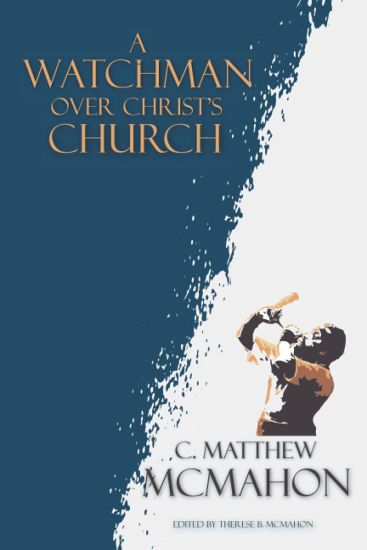
The watchman's life is a life of consecration; a life on the wall dividing the world and church, to watch and take heed, to sound the alarm, and bring God's message to his people boldly, faithfully and plainly. The watchman acts in the name of another, that is, of God, who has called him to the task of watching which includes praying (power) and preaching (guidance and direction). He is commissioned by God with supernatural gifts (given by the effectual work of the Spirit on behalf of Christ) which allows him to discern, speak and work in the ministry by the word God has given him to preach. He officiates in that office as one commissioned of God on behalf of God's people. He is not sent of his own accord, but sent of God to minister the words of Christ to his beloved church. In this work on the watchman of Ezekiel 33, McMahon explains the nature of the watchman, the work of the watchman, the watched of the watchman and the faithful exercise of his duty on behalf of Jesus Christ, who has commissioned him to serve his sheep as a faithful steward of the glory of Gospel.
This volume is a spiritual journey through five important Scriptures: Jeremiah 3:1, Mark 5:25-34, Luke 16:4, 1 Samuel 17:34-35, and Ezekiel 36:9. It demonstrates the cultivation of true assurance that Christians can sincerely have as believing Christians, if they trust in the work of Jesus Christ. In these pages, the Christian will find a spiritual feast in God's love to the soul (that God is for you if you are a believer), and the soul reciprocates this to him, in service before Christ, to love him back, even into eternity. This coming of Christ to be near to his redeemed people is, in its highest and transcendent nature, seen in the incarnation of the Son of God. In this drawing near to them, he shows, by action, that he is God with us. And, he testifies that he is God for us, as Ezekiel, 36:9 says, "For, behold, I am for you, and I will turn unto you, and ye shall be tilled and sown." God draws near to his people in Christ, to turn to them, to be for them, to till them and sow into them the glorious Kingdom of God. "What shall we say then to these things?" In the Father's ordination of the work of redemption through Christ, even from before the foundation of the world, we find that the saint's infirmities cannot wholly remove Christ's love for them in their present weaknesses and fallen state, if they are truly redeemed. He does this as the great Shepherd of the sheep, the Shepherd of his people, whom he loved before the foundation of the world. Christ is the Spiritual David who was planned before the beginning of time to work and merit salvation in rescuing his lambs from the mouth of the lion and the paw of the bear. Sinners find that drawing near is to believe in him by faith, to draw great virtue from him in the Spirit. They come to understand that the way to receive the virtue of Jesus Christ is by touching him in faith, and in this they are resolved to follow Christ the King without reservation casting themselves on his infinite mercy in everything.
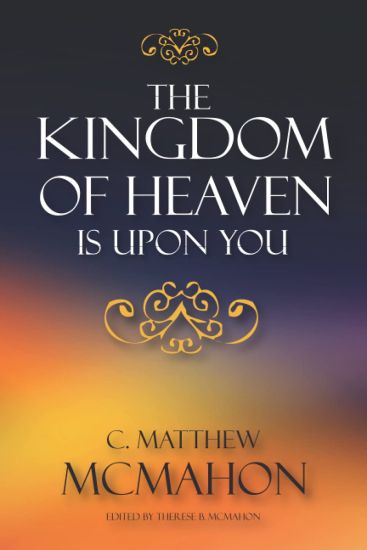
Jesus preached, "Repent: for the kingdom of heaven is at hand," (Matthew 4:17). This is the Gospel. But what did Jesus mean by preaching in this way? Is Christ's gospel the gospel we know and love as Paul preached, and many ministers preach today, "For I determined not to know any thing among you, save Jesus Christ, and him crucified," (1 Cor. 2:2)? Is this what Jesus preached or even meant in his heralding of the good news or the kingdom of heaven? What did Jesus consider the good news, and is it the same as what Paul considered good news? Is the message of the gospel different for the Apostles than it was of Jesus?This work will cover ideas such as what does it mean that the kingdom is upon you, or for that matter, that you must repent in light of it? What did Jesus expect his listeners to do in hearing him preach this way? How is this kingdom important in light of who Christ is, and what he commissioned his ministers and preachers to preach about him? What didn't Jesus tell his disciples to preach about him going to the cross, or rising from the dead, or ascending into heaven in his exaltation? Or did he? McMahon unfolds Christ's kingdom proclamation, and how it relates to who he is as King, what he does as King, what his kingdom is like, what he considered "God's kingdom" from the Old Testament, what he taught about the kingdom in the Gospels, and what the response should be to his kingdom as a result of his preaching. Christ spoke extensively in both didactic teaching and preaching, as well as illustratively in his parables about the "kingdom of heaven" and "kingdom of God." This is not a peripheral topic of study. Christ specifically and emphatically required people to repent in light of the coming of the kingdom. Much, if not most, of his teaching in the Gospels surround kingdom proclamation. To King Jesus, the kingdom is a very important topic. It should be an important topic to all believers. Christians ought to know whether the kingdom is "within them" or not, whether they have repented in light of it, and what it means that there is such a kingdom at all.
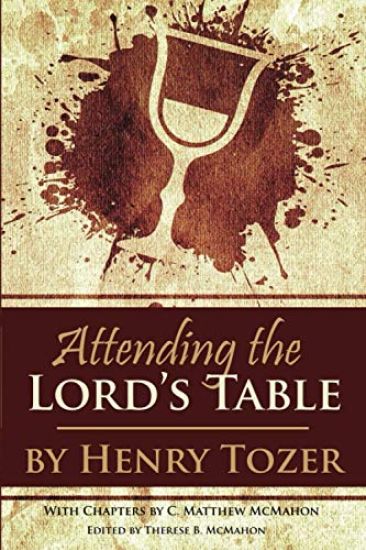
When Christians participate in the Lord's Supper, which is no ordinary supper, they are partaking of the means of grace. When they take of the bread, they ought to remember and believe that the body of the Lord Jesus Christ was given for a complete remission of all their sins. When they take of the cup, they are to remember and believe that the precious blood of the Lord Jesus Christ was shed for a complete remission of all their sins. And then, they must never believe that they have done their duty when they have merely received the Lord's Supper. It would signify but little, if after preparing for the supper, examining themselves in light of the supper, receiving the supper, and going their way after the supper, that they do not cast away all sin. To cast off sin, is both a preparative for the Lord's Supper, and must be its consequence, as Tozer faithfully shows. Tozer guides the reader in understanding the meaning of the supper as a sacrament, how to prepare for the supper, what examination looks like in light of the supper, what to examine before taking the supper (our knowledge, repentance, faith, and love), what to consider about Christ during the supper, and how to practice and live before the face of Christ after we have partaken of the supper. The subject of this work is not a matter of human learning, but of God's service. Though grace once conferred cannot be lost, yet our assurance often lacks strengthening by reason of our manifold temptations. Against these we are comforted by the remembrance of Christ's death and passion. His supper teaches us that we stand daily in need of food and strengthening, and so we often receive the supper of the Lord, that our souls may be nourished to life everlasting.
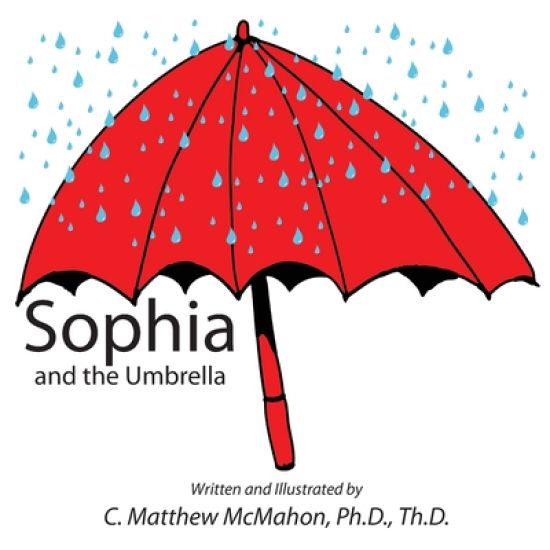
This full color children's book completely in rhyme, appropriate for children from 5-10 years old, is about Sophia - a little girl that is constantly soaking wet. She lives in the city of Drown where the rain never stops falling. There is nothing in the town that can stop the rain, and there is no place she can go to get dry. No matter what she tries, she is always soaking wet. Then one day she meets a man standing on the street corner on a wooden box with a special gift just for her. He shows her why the rain keeps falling from the sky, and how to get out of the rain to get dry. This book is a lesson to help children understand the bible's teaching of justification, and the work that Jesus Christ accomplished on behalf of his people. It also has listed at the end of the story a study aid to help parents teach their children the major themes found in the book. C. Matthew McMahon, Ph.D., Th.D., is an American Reformed theologian, founder of A Puritan's Mind and Puritan Publications.
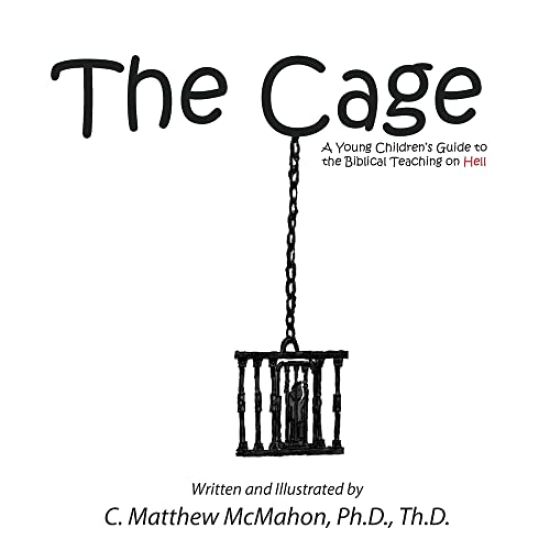
Little children ought to learn all of Christ's teachings. 1/6th of everything Jesus taught about was on judgment and hell. That is a huge amount of teaching on the subject But how do we teach our children such a hard biblical idea appropriately? In this tastefully illustrated work that is completely in rhyme, the Bible's teaching about hell is outlined in a very easy to understand manner. It concerns a young boy who we find is trapped in a cage called "Big Sin" and can't escape on his own. The cage is suspended by a chain that is rusting and could break at any moment. What will our young friend do? He sees others in cages as well, some who don't escape, and some who jump to safety as their prisons doors are opened by a mysterious key. Will our young friend get out? How will he escape THE CAGE? C. Matthew McMahon, Ph.D., Th.D., is an American Calvinist Reformed theologian, founder of A Puritan's Mind, and Puritan Publications which publishes rare Reformed and Puritan works from the 17th century.
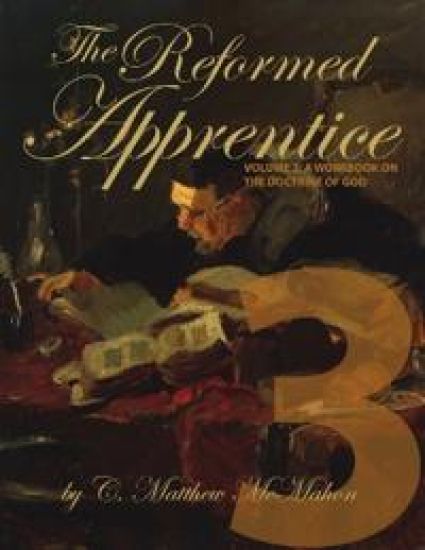
This is the 3rd volume in the Reformed Apprentice workbook series, teaching Reformed Theology in a simple but interactive manner. It covers the Doctrine of God and the biblical teaching of the Trinity. Its main purpose is to come into a deeper relationship with the Lord Jesus Christ as he has revealed himself to the church in his Word and by his Spirit through the centuries in Reformed Theology. The workbook extensively quotes the early church fathers, the Reformers, the Puritans, and Reformed theologians from various ages in order to aid the Reformed Apprentice in understanding how the Bible teaches us about who God is and what God has done. It covers God's divine attributes, the Trinity, the divinity of the Son, the divinity of the Holy Spirit and the decrees of God. There is nothing like this series of interactive workbooks anywhere in the Reformed community. A workbook of this kind was created to engage the student of Scripture to be apprenticed under the historical teachers of Reformed Theology.
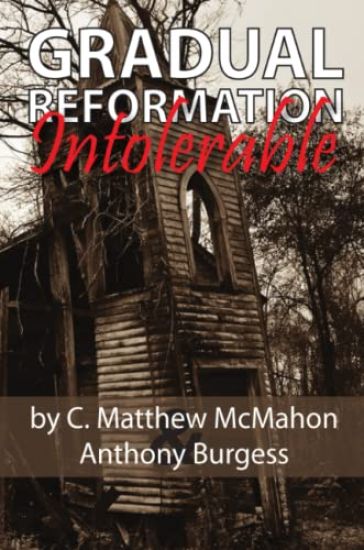
Gradual Reformation Intolerable
C Matthew McMahon; Anthony Burgess
Puritan Publications
2014
pokkari
How hard is it to encourage the people of God toward biblical Reformation and actually see it occur? Is there room for a new Reformation today? What should Christians think concerning revival today and reforming in the power of the Gospel? Could there actually be a present day "biblical reformation"? In the first part of the work, beginning with Leviticus 26:23-24, McMahon demonstrates that Reformation ought not to be gradual, but immediate. Gospel truth dictates spiritual action and God requires his church to be reformed by him through the power of the transforming word of God. In the second part, Anthony Burgess teaches from Mark 1:2-3, "As it is written in the Prophets, Behold I send my messenger before thy face, which shall prepare thy way before thee. The voice of one crying in the wilderness, Prepare ye the way of the Lord, make thy paths straight." He shows that there are many difficulties to hurdle, but there are encouragements to performing biblical Reformation for the glory of God.
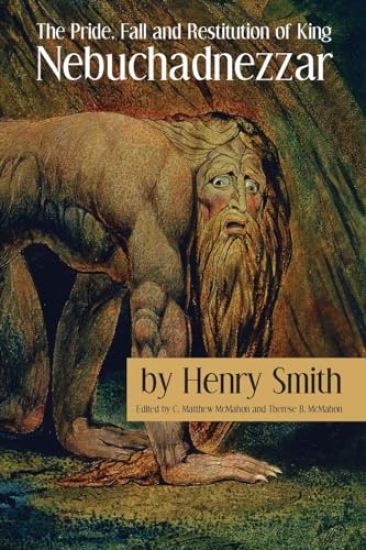
The Pride, Fall and Restitution of King Nebuchadnezzar
Henry Smith; C Matthew McMahon
Puritan Publications
2013
pokkari
In this work Henry Smith explains Daniel 4:29-34 concerning the life and actions of king Nebuchadnezzar. Though this work is insightful into the manner of kings and magistrates, it is also extremely helpful on the sin of pride, which every Christian struggles to overcome. Nebuchadnezzar boasts, and demonstrates his pride over the "city he built" and then is brought low like a beast until God graciously delivers him. His deliverance is marked with looking up to heaven while spending time in the wilderness among the animals as a beast, and acknowledges that God is the one true Most high above all men. This is a classic work that will humble the Christian. This is not a scan or facsimile, and contains an active table of contents for electronic versions.
The Calling, Rebellion and Punishment of Jonah, and Other Sermons
Henry Smith; C Matthew McMahon
Puritan Publications
2012
sidottu
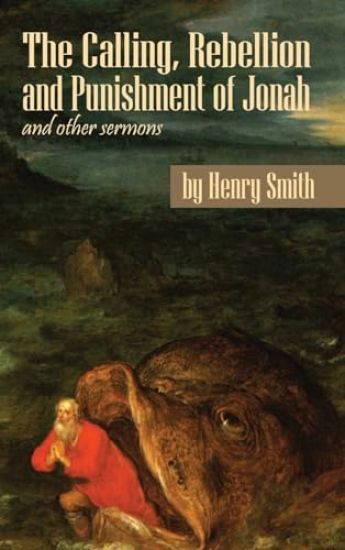
This volume entitled, "The Calling, Rebellion and Punishment of Jonah, and Other Sermons," demonstrates Smith's keen intellect and practical observations in four sermons on the Prophet Jonah, as well as twenty-six other sermons on various subjects such as contentment, temptation, pride, righteousness and the way to heaven. Also is included a number of morning and evening prayers, and other short works that demonstrate the truths of Jesus Christ contained in the Holy Scriptures. All of these works have been updated to reflect modern language without losing Smith's eloquence or power in preaching. This work is a must read for lovers of Puritanism, practical preaching and biblical doctrine. This is not a scan or facsimile.
This book follows the historical context of Josiah and his reformation in Israel to aid the Christian in examining the kind of heart that they have. What kind of heart do you have? The Bible requires a Christian's heart to beat after God's Word and God's will. It is not a book solely about "Reformed Theology", but rather, it teaches what it means to be a "reforming, covenanted Christian amidst God's people and world." It asks the question "What is true, biblical reformation?" And it answers it in dealing with each compartment of the Christian life - church, home, work and the like. Personal Reformation is the beginning of church Reformation and then consequently, world Reformation ushering in the Kingdom of Christ. C. Matthew McMahon. Ph.D., Th.D., is an American Calvinist Reformed theologian and adjunct professor at Whitefield Theological Seminary. He is the founder and chairman of A Puritan's Mind and the founder of Puritan Publications which publishes Reformed and Puritan works from the 17th century.