Kirjojen hintavertailu. Mukana 12 390 323 kirjaa ja 12 kauppaa.
Kirjailija
C. P. Cavafy
Kirjat ja teokset yhdessä paikassa: 19 kirjaa, julkaisuja vuosilta 1976-2024, suosituimpien joukossa Complete Plus - The Poems of C.P. Cavafy in English. Vertaile teosten hintoja ja tarkista saatavuus suomalaisista kirjakaupoista.
Mukana myös kirjoitusasut: C P Cavafy, C.P. Cavafy
The acclaimed translation of the most important modern Greek poetC. P. Cavafy (1863–1933) is the most important figure in twentieth-century Greek poetry, and his poems are considered among the most powerful in modern European literature. Edmund Keeley and Philip Sherrard’s celebrated English translation of Cavafy’s collected poems captures the poet’s mixture of formal and idiomatic language, the immediacy of his frank treatment of homoeroticism, his brilliant re-creation of history, and his astute political ironies. This English-only volume is a classic of modern poetry.
This book contains 162 poems: the 154 canonical Collected Poems, presented by year and within each year's order of composition and/or first printing, plus seven of the Uncollected Poems interspersed chronologically among them. Only one of his rejected, early poems has been included, 'Ode and Elegy of the Street,' used here as a kind of overture to the collection.
A Times Literary Supplement Book of the Year 2020. A Review 31 Book of the Year 2020. With The Barbarians Arrive Today, Evan Jones has produced the classic English Cavafy for our age. Expertly translated from Modern Greek, this edition presents Cavafy's finest poems, short creative prose and autobiographical writings, offering unique insights into his life's work. Born in Alexandria, Egypt, Constantine Petrou Cavafy (1863-1933) was a minor civil servant who self-published and distributed his poems among friends; he is now regarded as one of the most significant poets of the late nineteenth and early twentieth centuries, an influence on writers across generations and languages. The broad, rich world of the Mediterranean and its complex history are his domain, its days and nights of desire and melancholy, ambition and failure - with art always at the centre of life.
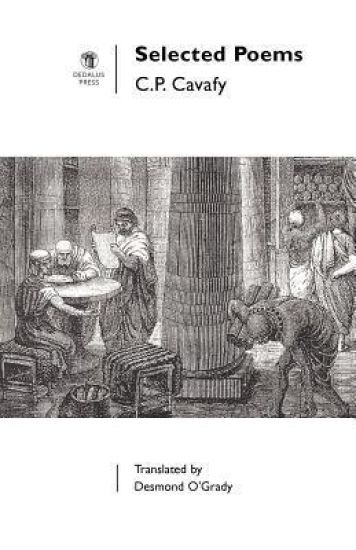
C.P. Cavafy (1863-1933) is now considered by many to be the most original and influential Greek poet of this century. The qualities of his poetry that were unfashionable during his lifetime are the very ones that make his work endure: his sparing use of metaphor; his evocation of spoken rhythms and colloquialisms; his use of epigrammatic and dramatic modes; his aesthetic perfectionism; his frank treatment of homosexual themes; his brilliantly alive sense of history; and his commitment to Hellenism, coupled with an astute cynicism about politics. The translations in Selected Poems are completely new. Realizing that Cavafy's language is closer to the spoken idiom than that of other leading Greek poets of his time, and that earlier translations have failed to capture the immediate, colloquial qualities of Cavafy's voice, Edmund Keeley and Philip Sherrard have rendered his most significant and characteristic poems in a style and rhythm as natural and apt in English as the poet's is in Greek. Originally published in 1972. The Princeton Legacy Library uses the latest print-on-demand technology to again make available previously out-of-print books from the distinguished backlist of Princeton University Press. These editions preserve the original texts of these important books while presenting them in durable paperback and hardcover editions. The goal of the Princeton Legacy Library is to vastly increase access to the rich scholarly heritage found in the thousands of books published by Princeton University Press since its founding in 1905.
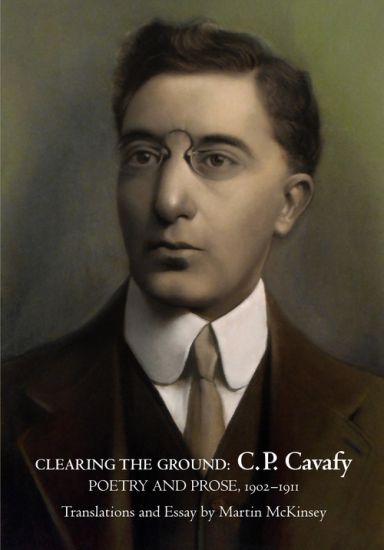
This book illuminates a crucial decade of Cavafy's artistic development, marked at one end by a period of personal crisis and near creative stasis, at the other by the poetic force of the celebrated "Ithaca". The years in between are held together by the "Unpublished Notes on Poetics and Ethics". Part private confession, part public pronouncement, part journal entry, and philosophical penseé, these notes were recorded between 1902 and 1911. In some of them, Cavafy attempted to formulate "thoughts and feelings never before uttered" in his own language -- in certain cases, in any language. The full body of the notes is correlated in this volume with the poetry Cavafy was writing contemporaneously -- in particular the startling "hidden poems" begun in 1904. What emerges is a striking narrative of artistic and personal becoming. This is a revelatory work for students and lovers of Cavafy -- one of the great outsider poets of the twentieth century.
Partly an addendum to George Economou's versions of the canonical Cavafy poems, published by Shearsman in 2013, this volume also includes a number of Economou's own uncollected poems and translations, giving us a picture of both poet and translator, as well as a shadowy image of Cavafy himself, in the form of versions of the master's uncompleted poems.
C.P. Cavafy (1863-1933) is now considered by many to be the most original and influential Greek poet of this century. The qualities of his poetry that were unfashionable during his lifetime are the very ones that make his work endure: his sparing use of metaphor; his evocation of spoken rhythms and colloquialisms; his use of epigrammatic and dramatic modes; his aesthetic perfectionism; his frank treatment of homosexual themes; his brilliantly alive sense of history; and his commitment to Hellenism, coupled with an astute cynicism about politics. The translations in Selected Poems are completely new. Realizing that Cavafy's language is closer to the spoken idiom than that of other leading Greek poets of his time, and that earlier translations have failed to capture the immediate, colloquial qualities of Cavafy's voice, Edmund Keeley and Philip Sherrard have rendered his most significant and characteristic poems in a style and rhythm as natural and apt in English as the poet's is in Greek. Originally published in 1972. The Princeton Legacy Library uses the latest print-on-demand technology to again make available previously out-of-print books from the distinguished backlist of Princeton University Press. These editions preserve the original texts of these important books while presenting them in durable paperback and hardcover editions. The goal of the Princeton Legacy Library is to vastly increase access to the rich scholarly heritage found in the thousands of books published by Princeton University Press since its founding in 1905.
'All those excessive, useless regrets...'A collection of nostalgic, erotic poetry from one of the greatest Greek poets to have ever lived.Introducing Little Black Classics: 80 books for Penguin's 80th birthday. Little Black Classics celebrate the huge range and diversity of Penguin Classics, with books from around the world and across many centuries. They take us from a balloon ride over Victorian London to a garden of blossom in Japan, from Tierra del Fuego to 16th-century California and the Russian steppe. Here are stories lyrical and savage; poems epic and intimate; essays satirical and inspirational; and ideas that have shaped the lives of millions.C.P. Cavafy (1863-1933). The Selected Poems of Cavafy is available in Penguin Classics.
An extraordinary literary event: Daniel Mendelsohn's acclaimed two-volume translation of the complete poems of C. P. Cavafy--including the first English translation of the poet's final Unfinished Poems--now published in one handsome edition and featuring the fullest literary commentaries available in English, by the renowned critic, scholar, and international best-selling author of The Lost. No modern poet so vividly brought to life the history and culture of Mediterranean antiquity; no writer dared break, with such taut energy, the early-twentieth-century taboos surrounding homoerotic desire; no poet before or since has so gracefully melded elegy and irony as the Alexandrian Greek poet Constantine Cavafy (1863-1933). Whether advising Odysseus on his return to Ithaca or confronting the poet with the ghosts of his youth, these verses brilliantly make the historical personal--and vice versa. To his profound exploration of longing and loneliness, fate and loss, memory and identity, Cavafy brings the historian's assessing eye along with the poet's compassionate heart. After more than a decade of work and study, Mendelsohn--a classicist who alone among Cavafy's translators shares the poet's deep intimacy with the ancient world--gives readers full access to the genius of Cavafy's verse: the sensuous rhymes, rich assonances, and strong rhythms of the original Greek that have eluded previous translators. Complete with the Unfinished Poems that Cavafy left in drafts when he died--a remarkable, hitherto unknown discovery that remained in the Cavafy Archive in Athens for decades--and with an in-depth introduction and a helpful commentary that situates each work in a rich historical, literary, and biographical context, this revelatory translation is a cause for celebration: the definitive presentation of Cavafy in English.
C. P. Cavafy (Konstantinos Petrou Kavafis) is one of the most important Greek poets since antiquity. He was born, lived, and died in Alexandria (1863–1933), with brief periods spent in England, Constantinople, and Athens. Cavafy set in motion the most powerful modernism in early twentieth-century European poetry, exhibiting simple truths about eroticism, history, and philosophy—an inscrutable triumvirate that informs the Greek language and culture in all their diachrony. The Cavafy Canon plays with the complexities of ironic Socratic thought, suffused with the honesty of unadorned iambic verse.Based on a fifty-year continuous scholarly and literary interaction with Cavafy’s poetry and its Greek and western European intertexts, John Chioles has produced an authoritative and exceptionally nuanced translation of the complex linguistic registers of Cavafy’s Canon into English.
C. P. Cavafy (1863-1933) lived in relative obscurity in Alexandria, and a collected edition of his poems was not published until after his death. Now, however, he is regarded as the most important figure in twentieth-century Greek poetry, and his poems are considered among the most powerful in modern European literature. This revised bilingual edition of Collected Poems offers the reader the original Greek texts facing what are now recognized as the standard English translations of Cavafy's poetry. It is this translation that best captures the poet's mixture of formal and idiomatic language and that preserves the immediacy of his increasingly frank treatment of homosexual eroticism, his brilliant re-creation of history, and his astute political ironies. This new bilingual edition also features the notes of editor George Savidis and a new foreword by Robert Pinsky.
A remarkable discovery, an extraordinary literary event: the never-before translated Unfinished Poems of the great Alexandrian Greek poet Constantine Cavafy, published for the first time in English alongside a revelatory new rendering of the Collected Poems--translated and annotated by the renowned critic, classicist, and award-winning author of The Lost. When he died in 1933 at the age of seventy, C. P. Cavafy left the drafts of thirty poems among his papers--some of them masterly, nearly completed verses, others less finished texts, all accompanied by notes and variants that offer tantalizing glimpses of the poet's sometimes years-long method of rewriting and revision. These remarkable poems, each meticulously filed in its own dossier by the poet, remained in the Cavafy Archive in Athens for decades before being published in a definitive scholarly edition in Greek in 1994. Now, with the cooperation and support of the Archive, Daniel Mendelsohn brings this hitherto unknown creative outpouring to English readers for the first time. Beautiful works in their own right--from a six-line verse on the "birth of a poem" to a longer work that brilliantly paints the autumn of Byzantium in unexpectedly erotic colors--these unfinished poemsprovide a thrilling window into Cavafy's writing process during the last decade of his life, the years of his greatest production. They brilliantly explore, often in new ways, the poet's well-established themes: identity and time, the agonies of desire and the ironies of history, cultural decline and reappropriation of the past. And, like the Collected Poems, the Unfinished Poems offers a substantial introduction and notes that provide helpful historical, textual, and literary background for each poem. This splendid translation, together with the Collected Poems, is a cause for celebration--the definitive presentation of Cavafy in English.
'a Greek gentleman in a straw hat, standing absolutely motionless at a slight angle to the universe' E. M. Forster E. M. Forster's description of C. P. Cavafy (1863-1933) perfectly encapsulates the unique perspective Cavafy brought to bear on history and geography, sexuality and language in his poems. Cavafy writes about people on the periphery, whose religious, ethnic and cultural identities are blurred, and he was one of the pioneers in expressing a specifically homosexual sensibility. His poems present brief and vivid evocations of historical scenes and sensual moments, often infused with his distinctive sense of irony. They have established him as one of the most important poets of the twentieth century. This volume presents the most authentic Greek text of the 154 authorized poems ever published, together with a new English translation that conveys the accent and rhythm of Cavafy's individual tone of voice. ABOUT THE SERIES: For over 100 years Oxford World's Classics has made available the widest range of literature from around the globe. Each affordable volume reflects Oxford's commitment to scholarship, providing the most accurate text plus a wealth of other valuable features, including expert introductions by leading authorities, helpful notes to clarify the text, up-to-date bibliographies for further study, and much more.
C. P. Cavafy is one of the most singular and poignant voices of twentieth-century European poetry, conjuring a magical interior world through lyrical evocations of remembered passions, imagined monologues and dramatic retellings of his native Alexandria's ancient past. Figures from antiquity speak with telling interruptions from the author in such poems as 'Anna Comnena' and 'You did not understand', while precise moments of history are seen with a sense of foreboding, as in 'Ides of March', 'The God Abandoning Antony' and 'Nero's Deadline'. And in poems that draw on his own life and surroundings, Cavafy recalls illicit trysts or glimpses of beautiful young men in 'One Night', 'I have gazed so much' and 'The Café Entrance', and creates exquisite miniatures of everyday life in 'An Old Man' and 'Of the Shop'.Winner of the prestigious Harold Morton Landon Translation Award 2009
This volume of 154 poems by Constantine Cavafy is the entire body of work by the artist widely considered a master of modern Greek poetry. Published only privately during his lifetime, Cavafy's poems achieved international acclaim when writers such as E. M. Forster, Laurence Durrell, T. S. Eliot, and W. H. Auden brought his work to a worldwide audience. Cavafy was a poet of Alexandria, the city of his birth and his home throughout his adult life. At the confluence of many histories—Greek, Egyptian, Byzantine, modern European—and many religions, the city provided endless inspiration for his brief, intimate portraits of individuals, historic and contemporary, real and imagined. Homoerotic desire, artistic longing, and a nostalgic fatalism suffuse the subjects he examined and laid bare, without metaphor or simile, in free iambic verse. Published here in the original Greek, with a new English translation by the noted poet Stratis Haviaris on each facing page, and with a foreword by Seamus Heaney, The Canon is Cavafy, familiar and fresh, seen through new eyes, yet instantly recognized: "the Greek gentleman in a straw hat," as Forster called him, "standing absolutely motionless at a slight angle to the universe."
C. P. Cavafy (1863-1933) has written some of the most powerful poems in history. His work uncannily translates history, the record of the many, into an individual personal document. Though Cavafy is wickedly satirical, many of his poems are located in a landscape of intimacy. Drawing on the spectrum of ancient Greek poetic tradition, his poetry is still internal, whether his speaker is a spoiled rich boy who plans to enter politics or a poor, ostracized, pure and beautiful young man destroyed by poverty and priggish social mores. In these glimmering and lyrical translations, with an introduction and scholarly endnotes cowritten with Willis Barnstone, Aliki Barnstone has been faithful to the original Greek, capturing both Cavafy's song and his vernacular in ways neglected in previous translations. Paying close attention to tone and diction, she has employed her well-tuned poet's ear, making Cavafy's verse breathe new music in English.
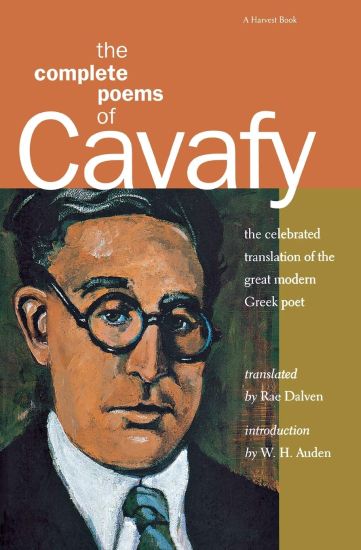
Cavafy, the foremost modern Greek poet, is a master at presenting a scene, an intense feeling, or an idea in direct, unornamented verse. Many of the poems are openly homosexual. Sixty-three newly translated poems have been added to the widely praised edition which includes the classic poem "Ithaca." Introduction by W. H. Auden. Translated by Rae Dalven.