

Kirjailija
C. P. Snow
Kirjat ja teokset yhdessä paikassa: 14 kirjaa, julkaisuja vuosilta 1998-2026, suosituimpien joukossa Fremde und Brüder / Das Gewissen der Reichen. Vertaile teosten hintoja ja tarkista saatavuus suomalaisista kirjakaupoista.
Mukana myös kirjoitusasut: C P Snow, C.P. Snow
14 kirjaa
Kirjojen julkaisuhaarukka 1998-2026.



This is the publication of the influential Rede Lecture by British scientist and novelist C. P. Snow. Its thesis was that "the intellectual life of the whole of western society" was split into the titular two cultures - namely the sciences and the humanities - and that this was a major hindrance to solving the world's problems. Published in book form, Snow's lecture was widely read and discussed on both sides of the Atlantic, leading him to write a follow-up, "The Two Cultures: And a Second Look: An Expanded Version of The Two Cultures and the Scientific Revolution."
Lewis Eliot, the diffident protagonist of the Strangers and Brothers sequence, retreats to the background in this absorbing study of his mentor, George Passant, a charismatic solicitor’s clerk. In the years of economic depression between the wars, George – an idealistic radical bursting with notions of creating the world anew – gathers about him a group of young people who, restive and ambitious, trust him to emancipate them from the constraints of their provincial lives. But when his lofty aspirations become muddied with a need for money and desire for sexual freedom, his power over the group becomes a danger to them all.Politics, people and the rapidly changing social landscape of inter-war Britain are narrated with Snow’s trademark subtlety and precision in this fascinating analysis of a god with feet of clay. A meticulous study of the public issues and private problems of post-war Britain, C. P. Snow’s Strangers and Brothers sequence is a towering achievement that stands alongside Anthony Powell’s A Dance to the Music of Time as one of the great romans-fleuves of the twentieth century.
Winner of 1954 James Tait Black Memorial Prize for Fiction.Widely regarded as C. P. Snow’s masterpiece, this lucid and compelling story of the contest for the Mastership of a Cambridge college is the fifth novel in C. P. Snow’s magnificent Strangers and Brothers sequence.As the old Master slowly dies of cancer, his colleagues and peers jostle for power. Two candidates come to the foreground; Paul Jago – warm and sympathetic, but given to extravagant moods and hindered by an unsuitable wife – and Crawford, a shrewd, cautious and reliable man who lacks any of Jago’s human gifts. For Lewis Eliot, through whose eyes the narrative unfurls, the choice is clear, but politics and egos soon cloud the debate and the College is torn in two. Depicting power in a confined setting with clarity and humanity, The Masters remains unsurpassed in its quiet, authoritative insight into the politics of academia.A meticulous study of the public issues and private problems of post-war Britain, C. P. Snow’s Strangers and Brothers sequence is a towering achievement that stands alongside Anthony Powell’s A Dance to the Music of Time as one of the great romans-fleuves of the twentieth century.
The life of Lewis Eliot – documented across eleven novels with C. P. Snow’s distinctive blend of precision and compassion – begins in Time of Hope.The novel opens in the summer of 1914 when nine-year-old Lewis hears the news of his father’s bankruptcy, and closes in 1933, when, although hindered in his promising career as a lawyer by the neuroses of his wife, he realises that he cannot bear to leave her. In the course of this ambitious but ultimately unremarkable man’s early life rage the great questions of the age – questions of class, of gender, of ideology and of war – asked and answered with wisdom and tolerance. A meticulous study of the public issues and private problems of post-war Britain, C. P. Snow’s Strangers and Brothers sequence is a towering achievement that stands alongside Anthony Powell’s A Dance to the Music of Time as one of the great romans-fleuves of the twentieth century.

The notion that our society, its education system and its intellectual life, is characterised by a split between two cultures – the arts or humanities on one hand and the sciences on the other – has a long history. But it was C. P. Snow's Rede lecture of 1959 that brought it to prominence and began a public debate that is still raging in the media today. This fiftieth anniversary printing of The Two Cultures and its successor piece, A Second Look (in which Snow responded to the controversy four years later) features an introduction by Stefan Collini, charting the history and context of the debate, its implications and its afterlife. The importance of science and technology in policy run largely by non-scientists, the future for education and research, and the problem of fragmentation threatening hopes for a common culture are just some of the subjects discussed.
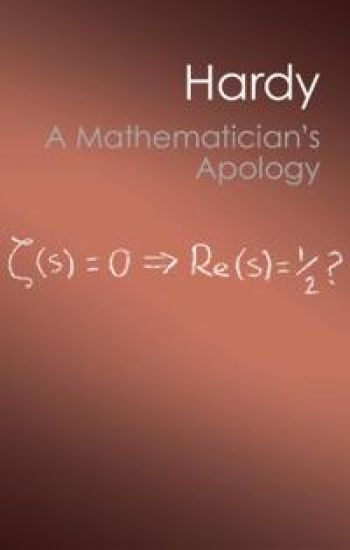
G. H. Hardy was one of this century's finest mathematical thinkers, renowned among his contemporaries as a 'real mathematician … the purest of the pure'. He was also, as C. P. Snow recounts in his Foreword, 'unorthodox, eccentric, radical, ready to talk about anything'. This 'apology', written in 1940, offers a brilliant and engaging account of mathematics as very much more than a science; when it was first published, Graham Greene hailed it alongside Henry James's notebooks as 'the best account of what it was like to be a creative artist'. C. P. Snow's Foreword gives sympathetic and witty insights into Hardy's life, with its rich store of anecdotes concerning his collaboration with the brilliant Indian mathematician Ramanujan, his idiosyncrasies and his passion for cricket. This is a unique account of the fascination of mathematics and of one of its most compelling exponents in modern times.
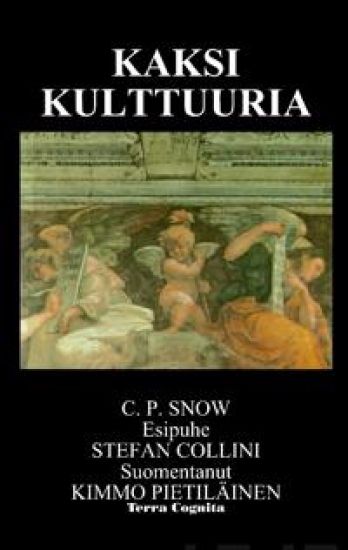
Ilmestymisensä jälkeen Kaksi kulttuuria on tuottanut pienen kirjallisuuden haaran, mutta suomeksi se saadaan vasta nyt. Snow jakaa kulttuurin ”kirjallisuusintellektuelleihin” ja luonnontieteeseen, eikä niiden välillä ole yhteyttä.