Kirjojen hintavertailu. Mukana 12 595 353 kirjaa ja 12 kauppaa.

Kirjailija

C. R. Kitchin

Kirjat ja teokset yhdessä paikassa: 20 kirjaa, julkaisuja vuosilta 1990-2026, suosituimpien joukossa Habitable Exoplanets for Extra-Terrestrials. Vertaile teosten hintoja ja tarkista saatavuus suomalaisista kirjakaupoista.

Mukana myös kirjoitusasut: C.R. Kitchin

20 kirjaa

Kirjojen julkaisuhaarukka 1990-2026.

Habitable Exoplanets for Extra-Terrestrials

Habitable Exoplanets for Extra-Terrestrials

C.R. Kitchin

TAYLOR FRANCIS LTD
2026
nidottu
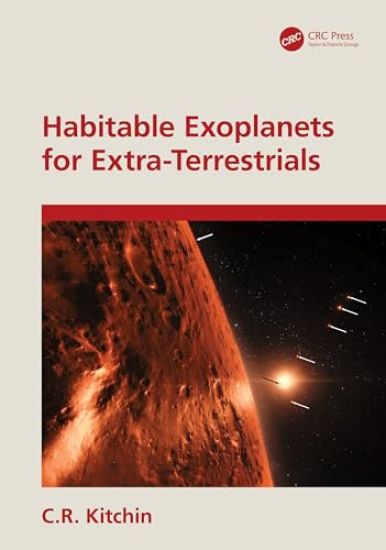
This book explores the questions of What, Why, When, How and Where we might find Extra-Terrestrials (a.k.a. Aliens) and their habitats throughout the Universe – and Who might they be? Starting from ourselves and the Earth and eventually speculating about life-forms that might span multiple Universes, it provides an accessible introduction to extra-terrestrial life, the search for extra-terrestrial intelligence and exoplanets. It will enable readers to appreciate, follow and sometimes answer questions on life and planets outside Earth. It details these exciting topics by pondering what comprises an alien life form and what suitable habitats might exist for them inside and out of our solar system. The book also looks ahead to the future and the realities of finding alien life and the possibilities of mankind leaving Earth and living on another planet. This guide is accessible to those without a formal scientific or mathematical background. It will also be of interest to students of astrobiology, astronomy, astrophysics, planets throughout the Universe, the origin and evolution of life-forms beyond the Earth and (perhaps) of the ultimate limits attainable by life in the Universe, who are looking to learn more about those same topics, but which are outside their own specialisms. Key Features: Combines the exciting topics of extra-terrestrial life, the search for life outside Earth and exoplanets into one accessible guide Contains no complex mathematical formulae or content Authored by a professional educator and a professional and amateur astronomer, with a life-long interest in getting everyone and anyone as fascinated by astronomy and its related subjects as he himself has been, since discovering the subject in early secondary school
Habitable Exoplanets for Extra-Terrestrials

Habitable Exoplanets for Extra-Terrestrials

C.R. Kitchin

TAYLOR FRANCIS LTD
2024
sidottu
This book explores the questions of What, Why, When, How and Where we might find Extra-Terrestrials (a.k.a. Aliens) and their habitats throughout the Universe – and Who might they be? Starting from ourselves and the Earth and eventually speculating about life-forms that might span multiple Universes, it provides an accessible introduction to extra-terrestrial life, the search for extra-terrestrial intelligence and exoplanets. It will enable readers to appreciate, follow and sometimes answer questions on life and planets outside Earth. It details these exciting topics by pondering what comprises an alien life form and what suitable habitats might exist for them inside and out of our solar system. The book also looks ahead to the future and the realities of finding alien life and the possibilities of mankind leaving Earth and living on another planet.This guide is accessible to those without a formal scientific or mathematical background. It will also be of interest to students of astrobiology, astronomy, astrophysics, planets throughout the Universe, the origin and evolution of life-forms beyond the Earth and (perhaps) of the ultimate limits attainable by life in the Universe, who are looking to learn more about those same topics, but which are outside their own specialisms.Key Features:Combines the exciting topics of extra-terrestrial life, the search for life outside Earth and exoplanets into one accessible guideContains no complex mathematical formulae or contentAuthored by a professional educator and a professional and amateur astronomer, with a life-long interest in getting everyone and anyone as fascinated by astronomy and its related subjects as he himself has been, since discovering the subject in early secondary school
Understanding Gravitational Waves

Understanding Gravitational Waves

C. R. Kitchin

Springer Nature Switzerland AG
2021
nidottu
The birth of a completely new branch of observational astronomy is a rare and exciting occurrence. For a long time, our theories about gravitational waves—proposed by Albert Einstein and others more than a hundred years ago—could never be fully proven, since we lacked the proper technology to do it. That all changed when, on September 14, 2015, instruments at the LIGO Observatory detected gravitational waves for the first time. This book explores the nature of gravitational waves—what they are, where they come from, why they are so significant and why nobody could prove they existed before now. Written in plain language and interspersed with additional explanatory tutorials, it will appeal to lay readers, science enthusiasts, physical science students, amateur astronomers and to professional scientists and astronomers.
Astrophysical Techniques

Astrophysical Techniques

C.R. Kitchin

CRC Press
2020
sidottu
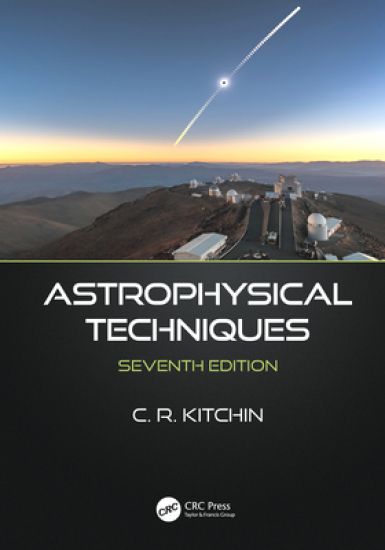
Long used in undergraduate and introductory graduate courses, Astrophysical Techniques, Seventh Edition provides an accessible yet comprehensive account of the innovate instruments, detectors, and techniques employed in astronomy and astrophysics. Emphasizing the underlying unity of all astronomical observations, this popular textbook provides a coherent state-of-the-art account of the instruments and techniques used in current astronomy and astrophysics.Fully updated throughout, this seventh edition builds upon the sixth edition, covering improved techniques and cutting-edge methods in the field, as well as other exciting new developments in gravitational waves, dark matter and energy, the use of photonics, and astronomy education and outreach, in addition to further detailed discussions on the latest scientific instruments and individual detectors. The book is written in a very accessible manner, and most of the mathematics is accessible to those who have attended a mathematics course in their final years at school. Nevertheless, the treatment of the topics in general is at a sufficiently high level to be of use to those professionals seeking technical information in areas of astronomy with which they might not be completely familiar.Key Features: Details the instrumentation and theory of astronomical observations, including radio waves, gamma rays, cosmic rays, neutrinos, gravitational waves and dark matter and energy and more Presents the background theory and operating practice of state-of-the-art detectors and instruments Fully updated to contain the latest technology and research developments
Astrophysical Techniques

Astrophysical Techniques

C.R. Kitchin

CRC Press
2020
nidottu
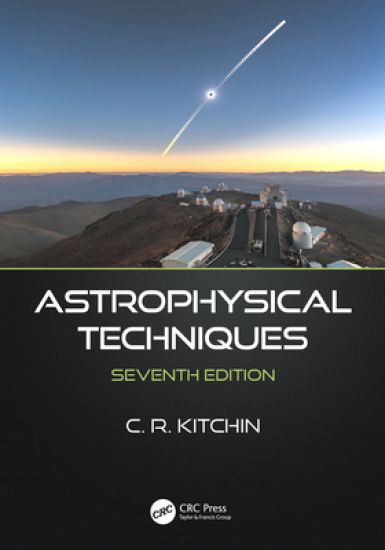
Long used in undergraduate and introductory graduate courses, Astrophysical Techniques, Seventh Edition provides an accessible yet comprehensive account of the innovate instruments, detectors, and techniques employed in astronomy and astrophysics. Emphasizing the underlying unity of all astronomical observations, this popular textbook provides a coherent state-of-the-art account of the instruments and techniques used in current astronomy and astrophysics.Fully updated throughout, this seventh edition builds upon the sixth edition, covering improved techniques and cutting-edge methods in the field, as well as other exciting new developments in gravitational waves, dark matter and energy, the use of photonics, and astronomy education and outreach, in addition to further detailed discussions on the latest scientific instruments and individual detectors. The book is written in a very accessible manner, and most of the mathematics is accessible to those who have attended a mathematics course in their final years at school. Nevertheless, the treatment of the topics in general is at a sufficiently high level to be of use to those professionals seeking technical information in areas of astronomy with which they might not be completely familiar.Key Features: Details the instrumentation and theory of astronomical observations, including radio waves, gamma rays, cosmic rays, neutrinos, gravitational waves and dark matter and energy and more Presents the background theory and operating practice of state-of-the-art detectors and instruments Fully updated to contain the latest technology and research developments
Remote and Robotic Investigations of the Solar System
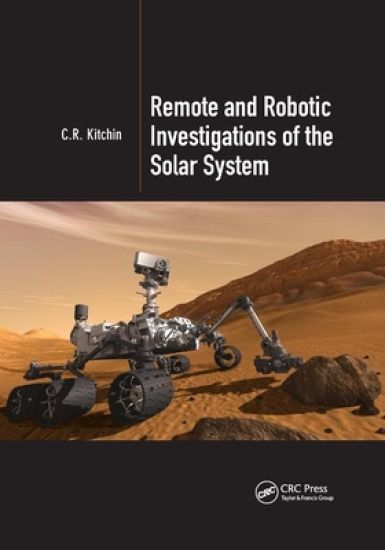
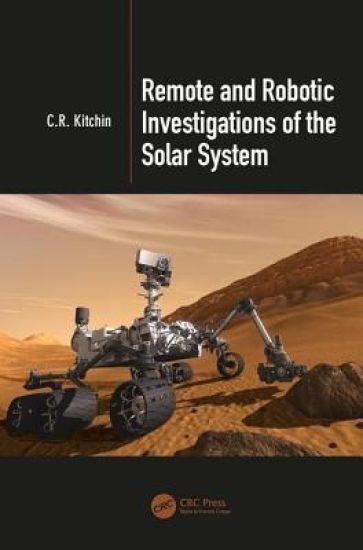
Interest in and knowledge of the techniques utilised to investigate our solar system has been growing rapidly for decades and has now reached a stage of maturity. Therefore, the time has now arrived for a book that provides a cohesive and coherent account of how we have obtained our present knowledge of solar system objects, not including the Sun.Remote and Robotic Investigations of the Solar System covers all aspects of solar system observations: the instruments, their theory, and their practical use both on Earth and in space. It explores the state-of-the-art telescopes, cameras, spacecraft and instruments used to analyse the interiors, surfaces, atmospheres and radiation belts of solar system objects, in addition to radio waves, gamma rays, cosmic rays and neutrinos. This book would be ideal for university students undertaking physical science subjects and professionals working in the field, in addition to amateur astronomers and anyone interested in learning more about our local astronomical neighbours.
Journeys to the Ends of the Universe
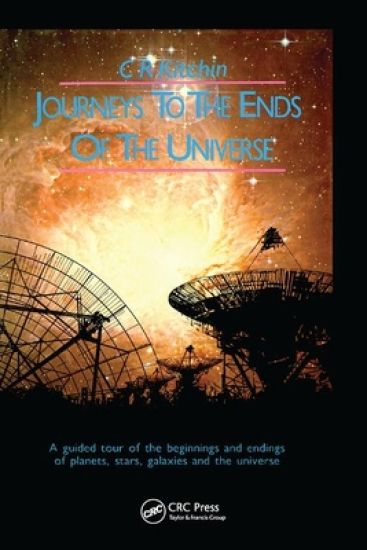
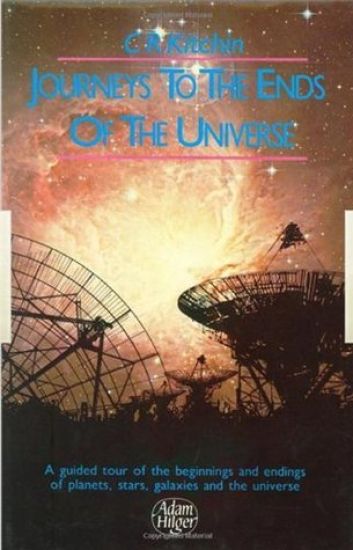
Journeys to the Ends of the Universe presents a tour through the universe from the big bang onward. The book explores the limits of knowledge where scientific fact overtakes and merges with the wilder speculations of science fiction. The beginnings of galaxies, stars, planets, and even life itself are related back to the raveled turmoil of the first few seconds and years of life in the cosmos. The journey continues past the ultimate fate of the solar system to probe the nature of supernovae. The future of galaxies, clusters of galaxies, super-clusters of clusters of galaxies, and so on leads toward the finale, where the author provides some bizarre musings of physicists and astronomers, suggesting possible destinies for the universe stretching its present age billions of times into the future.
Remote and Robotic Investigations of the Solar System
Interest in and knowledge of the techniques utilised to investigate our solar system has been growing rapidly for decades and has now reached a stage of maturity. Therefore, the time has now arrived for a book that provides a cohesive and coherent account of how we have obtained our present knowledge of solar system objects, not including the Sun.Remote and Robotic Investigations of the Solar System covers all aspects of solar system observations: the instruments, their theory, and their practical use both on Earth and in space. It explores the state-of-the-art telescopes, cameras, spacecraft and instruments used to analyse the interiors, surfaces, atmospheres and radiation belts of solar system objects, in addition to radio waves, gamma rays, cosmic rays and neutrinos. This book would be ideal for university students undertaking physical science subjects and professionals working in the field, in addition to amateur astronomers and anyone interested in learning more about our local astronomical neighbours.
Optical Astronomical Spectroscopy
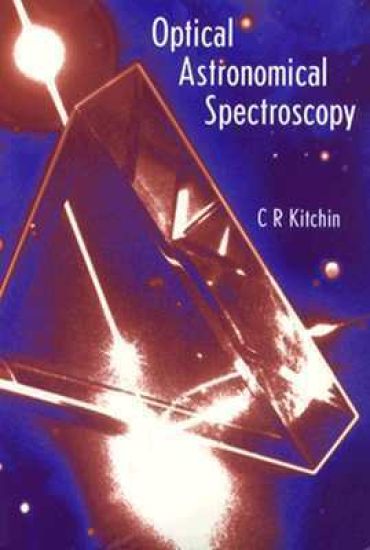
A concise introduction, Optical Astronomical Spectroscopy appeals to the newcomer of astronomical spectroscopy and assumes no previous specialist knowledge. Beginning from the physical background of spectroscopy with a clear explanation of energy levels and spectroscopic notation, the book proceeds to introduce the main techniques of optical spectroscopy and the range of instrumentation that is available. With clarity and directness, it then describes the applications of spectroscopy in modern astronomy, such as the solar system, stars, nebulae, the interstellar medium, and galaxies, giving an immediate appeal to beginners.
Galaxies in Turmoil

Galaxies in Turmoil

C. R. Kitchin

Springer London Ltd
2014
nidottu
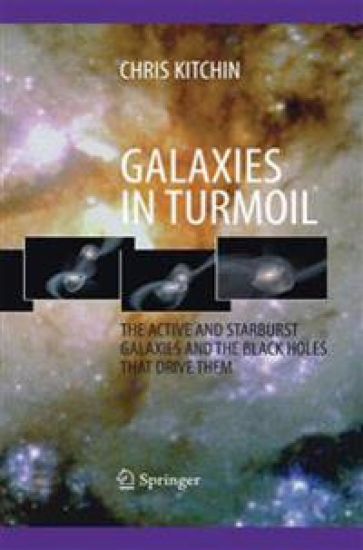
Astronomers' Universe Series is a new series, aimed at the same people as the Practical Astronomy Series - in general, active amateur astronomers. However, it is also appropriate to a wider audience of astronomically-informed readers. The aim of this book is to provide an up-to-date account of active galaxies that is appropriate to the background knowledge of amateur astronomers, but might also be picked-up and read for interest by any reader with a scientific bent. Active galaxies (including Quasars, QSOs, Radio galaxies, BL Lacs, Blazars, LINERS, ULIRGS, Seyfert galaxies, Starburst galaxies, N galaxies, etc.) are a major field of current astronomical research. Up to a fifth of all research astronomers are working on active galaxies. Huge amounts of time on major telescopes are devoted to their study. In almost all cases the galaxies are thought to be powered by 100 million solar mass black holes at their centres. Some of the objects are bright enough to be seen in small telescopes, and an amateur astronomer with a 20 cm telescope and a CCD detector could obtain images of many more. Lists of such objects, and their visual and imaged appearance in commercially available telescopes are an important component of this book. This detailed but accessible work will be the only coherent and complete source of information for non-technical readers on an area of astronomy that fascinates many people and whose spectacular images from the Hubble space telescope, Gemini, VLT and other major telescopes frequently make the pages of the quality newspapers and occasionally appear on TV. It also has the potential to be chosen as a set text or background reading for university courses on the subject, although the writing style is such that it will appeal to all readers.
Telescopes and Techniques

Telescopes and Techniques

C. R. Kitchin

Springer-Verlag New York Inc.
2012
nidottu
“Telescopes and Techniques” has proved itself in its first edition, having become probably one of the most widely used astronomy texts, both for numerate amateur astronomers and for astronomy and astrophysics undergraduates. The first and second editions of the book were widely used as set texts for introductory practical astronomy courses in many universities. This book guides the reader through the mathematics, physics and practical techniques needed to use telescopes (from small amateur models to the larger instruments installed in many colleges) and to observe objects in the sky. Mathematics to around Advanced Placement standard (US) or A level (UK) is assumed, although High School Diploma (US) or GCSE-level (UK) mathematics plus some basic trigonometry will suffice most of the time. Most of the physics and engineering involved is described fully and requires no prior knowledge or experience. This is a ‘how to’ book that provides the knowledge and background required to understand how and why telescopes work. Equipped with the techniques discussed in this book, the observer will be able to operate with confidence his or her telescope and to optimize its performance for a particular purpose. In principle the observer could calculate his or her own predictions of planetary positions (ephemerides), but more realistically the observer will be able to understand the published data lists properly instead of just treating them as ‘recipes.’ When the observer has obtained measurements, he/she will be able to analyze them in a scientific manner and to understand the significance and meaning of the results. “Telescopes and Techniques, 3rd Edition” fills a niche at the start of an undergraduate astronomer’s university studies, as shown by it having been widely adopted as a set textbook. This third edition is now needed to update its material with the many new observing developments and study areas that have comeinto prominence since it was published. The book concentrates on the knowledge needed to understand how small(ish) optical telescopes function, their main designs and how to set them up, plus introducing the reader to the many ways in which objects in the sky change their positions and how they may be observed. Both visual and electronic imaging techniques are covered, together with an introduction to how data (measurements) should be processed and analyzed. A simple introduction to radio telescopes is also included. Brief coverage of the most advanced topics of photometry and spectroscopy are included, but mainly to enable the reader to see some of the developments possible from the basic observing techniques covered in the main parts of the book.
Seeing Stars

Seeing Stars

C. R. Kitchin; Robert W. Forrest

Springer London Ltd
2012
nidottu
Seeing Stars is written for astronomers, regardless of the depth of their theoretical knowledge, who are taking their first steps in observational astronomy. Chris Kitchin and Bob Forrest - both professional astronomers - take a conducted tour of the night sky and suggest suitable observing programmes for everyone from beginners to experts. How is this book different? We are all familiar with the beautiful images of planets and galaxies obtained by spacecraft and giant telescopes - but what can you really see with a small telescope? What should you expect from a small refractor or reflector? And what is the effect of observing from a site near a city? The answers are all here, with many photographs that will illustrate exactly what can be seen with different instruments (everything from the naked eye to a 300mm telescope) - and from different locations.
Exoplanets

Exoplanets

C. R. Kitchin

Springer-Verlag New York Inc.
2011
nidottu
Exoplanets: Finding, Exploring, and Understanding Alien Worlds probes the basis for possible answers to the fundamentals questions asked about these planets orbiting stars other than our Sun. This book examines what such planets might be like, where they are, and how we find them.Until around ten years ago, the only planets that we knew about were within the Solar System. The first genuine planet beyond the confines of the Solar System was discovered only 1988. Since then another 350 or so exoplanets have been detected by various methods, and most of these haven been found in the last ten years. Although many more exoplanets discoveries may be expected to occur even as this book is being read, a large enough data set is now available to form the basis for an informed general account of exoplanets.The topic hence is an extremely "hot" one - all the more so because the recently launched Kepler spacecraft should soon start uncovering many more exoplanets, some perhaps comparable with the Earth (and therefore possibly alternative homes for mankind, if we could ever reach them). Exoplanets: Finding, Exploring, and Understanding Alien Life gives a comprehensive, balances, and above all accurate account of exoplanets.
Galaxies in Turmoil

Galaxies in Turmoil

C. R. Kitchin

Springer London Ltd
2007
sidottu
Astronomers' Universe Series is a new series, aimed at the same people as the Practical Astronomy Series - in general, active amateur astronomers. However, it is also appropriate to a wider audience of astronomically-informed readers. The aim of this book is to provide an up-to-date account of active galaxies that is appropriate to the background knowledge of amateur astronomers, but might also be picked-up and read for interest by any reader with a scientific bent. Active galaxies (including Quasars, QSOs, Radio galaxies, BL Lacs, Blazars, LINERS, ULIRGS, Seyfert galaxies, Starburst galaxies, N galaxies, etc.) are a major field of current astronomical research. Up to a fifth of all research astronomers are working on active galaxies. Huge amounts of time on major telescopes are devoted to their study. In almost all cases the galaxies are thought to be powered by 100 million solar mass black holes at their centres. Some of the objects are bright enough to be seen in small telescopes, and an amateur astronomer with a 20 cm telescope and a CCD detector could obtain images of many more. Lists of such objects, and their visual and imaged appearance in commercially available telescopes are an important component of this book. This detailed but accessible work will be the only coherent and complete source of information for non-technical readers on an area of astronomy that fascinates many people and whose spectacular images from the Hubble space telescope, Gemini, VLT and other major telescopes frequently make the pages of the quality newspapers and occasionally appear on TV. It also has the potential to be chosen as a set text or background reading for university courses on the subject, although the writing style is such that it will appeal to all readers.
Illustrated Dictionary of Practical Astronomy

Illustrated Dictionary of Practical Astronomy

C. R. Kitchin

Springer London Ltd
2002
nidottu
The purpose of this book is two-fold. Firstly to provide a handy quick source of ref­ erence of the terms, techniques, instruments, formulas, processes, etc. , for practising observers, whether it is their first look through someone else's small telescope, or whether they have spent decades building their own instruments, observing with them and are regularly producing results to rival those of the professionals. It is not principally aimed at professional observers, but in order to be sufficiently compre­ hensive for its intended audience, many entries have been included which will be relevant at that level. In particular though, the more esoteric parts of spectroscopy have not been included. References to specific observatories are included if their instrumentation includes optical telescopes over 1 m in diameter or radio dishes over 20 m. Individual entries for telescopes of 4 m or over are included, and for the larger radio instruments, plus other telescopes that may be of interest for historical or other reasons (for example the 1m Yerkes refractor). Spacecraft have generally not been included (apart from the Hubble space telescope) because their short working lives mean that most current spacecraft will no longer be operating by the time that this book is published. Also the names of spacecraft are frequently changed after launch making it difficult to identify which mission is which. References to commercial organisations, and to some widely available commercial products have been includ­ ed, but an intending purchaser should always obtain up-to-date information.
Solar Observing Techniques

Solar Observing Techniques

C. R. Kitchin

Springer London Ltd
2001
nidottu
The purpose of this book is to introduce the reader to the numerous safe methods of observing the Sun and solar eclipses, and to suggest objects and features to observe and observing programmes to follow. So much energy comes from the Sun that by failing to observe safe working practices it is possible to damage your eyes or equipment. The care that is needed is emphasised throughout the book. Always make sure that you have read the whole of a section or chapter before starting any observational work. However in warning when care is needed in observing, there is a danger of scaring people off observing the Sun altogether. Let me emphasise therefore that observing the Sun can be done in complete safely, providing that the precautions discussed in the book are followed. The Sun then provides one of the most interesting objects in the sky for an astronomer to study at all times, and during a total solar eclipse becomes uniquely fascinat­ ing to both astronomers and the general public alike. So take heed of the warnings given here but do not let them stop you trying out the safe observing methods. I wish you clear sunny skies and many hours of fun. Chris Kitchin Hertford, 2001 Acknowledgements I would like to thank Dr Ralph Chou for his help in supplying details of filters and of sources of further information on them.
Seeing Stars

Seeing Stars

C. R. Kitchin; Robert W. Forrest

Springer-Verlag Berlin and Heidelberg GmbH Co. K
1997
sidottu
Seeing Stars is written for astronomers, regardless of the depth of their theoretical knowledge, who are taking their first steps in observational astronomy. Chris Kitchin and Bob Forrest - both professional astronomers - take a conducted tour of the night sky and suggest suitable observing programmes for everyone from beginners to experts. How is this book different? We are all familiar with the beautiful images of planets and galaxies obtained by spacecraft and giant telescopes - but what can you really see with a small telescope? What should you expect from a small refractor or reflector? And what is the effect of observing from a site near a city? The answers are all here, with many photographs that will illustrate exactly what can be seen with different instruments (everything from the naked eye to a 300mm telescope) - and from different locations.
Photo-guide to the Constellations

Photo-guide to the Constellations

C. R. Kitchin

Springer-Verlag Berlin and Heidelberg GmbH Co. K
1997
nidottu
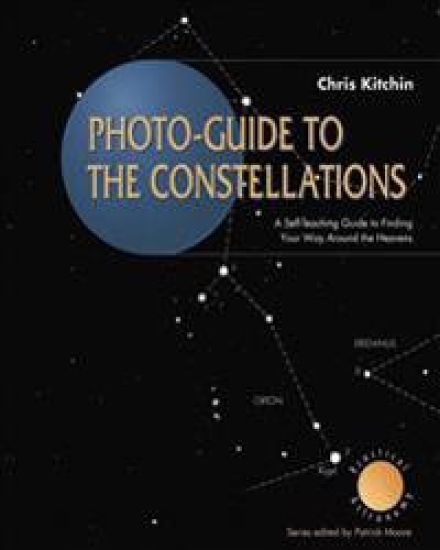
"l hope that people all around the world never forget what a wonderful thing it is to lie on your back and look up at the stars" Pete Seeger What is the fascination that constellations hold for people? There are probably as many different answers to that question as there are people. For many, though, the constella­ tions are the stepping-off point into the fabulous, mind-bending discoveries and concepts of modern astronomy. For others it is their long and intriguing history that beckons. For some people the constellations provide the means for navigation and orientation over the surface of the Earth, and of course there are the millions who place some faith in horo­ scopes. But for most people the patterns in the sky are a beautiful part of their environ­ ment to be treasured alongside the forests, fields and rivers that make life worth living. However just as we are losing our green environment to pollution, so we are losing our sky. The glow from cities across the world swamps the stars in the night sky. Astronomers have had to retreat to remote mountain tops to escape that light pollution. The rest of us must make do with what is available. From the centre of a city, or any other brightly lit area, probably no stars at all will be visible even on the clearest of nights. From the suburbs, the brighter stars should normally be seen.
Optical Astronomical Spectroscopy

Optical Astronomical Spectroscopy

C.R. Kitchin

Institute of Physics Publishing
1995
nidottu
A concise introduction, Optical Astronomical Spectroscopy appeals to the newcomer of astronomical spectroscopy and assumes no previous specialist knowledge. Beginning from the physical background of spectroscopy with a clear explanation of energy levels and spectroscopic notation, the book proceeds to introduce the main techniques of optical spectroscopy and the range of instrumentation that is available. With clarity and directness, it then describes the applications of spectroscopy in modern astronomy, such as the solar system, stars, nebulae, the interstellar medium, and galaxies, giving an immediate appeal to beginners.
Journeys to the Ends of the Universe

Journeys to the Ends of the Universe

C.R. Kitchin

Institute of Physics Publishing
1990
sidottu
Journeys to the Ends of the Universe presents a tour through the universe from the big bang onward. The book explores the limits of knowledge where scientific fact overtakes and merges with the wilder speculations of science fiction. The beginnings of galaxies, stars, planets, and even life itself are related back to the raveled turmoil of the first few seconds and years of life in the cosmos. The journey continues past the ultimate fate of the solar system to probe the nature of supernovae. The future of galaxies, clusters of galaxies, super-clusters of clusters of galaxies, and so on leads toward the finale, where the author provides some bizarre musings of physicists and astronomers, suggesting possible destinies for the universe stretching its present age billions of times into the future.