Kirjojen hintavertailu. Mukana 12 595 353 kirjaa ja 12 kauppaa.

Kirjailija

Calvin Goldscheider

Kirjat ja teokset yhdessä paikassa: 24 kirjaa, julkaisuja vuosilta 1999-2024, suosituimpien joukossa Population, Ethnicity, And Nation-building. Vertaile teosten hintoja ja tarkista saatavuus suomalaisista kirjakaupoista.

24 kirjaa

Kirjojen julkaisuhaarukka 1999-2024.

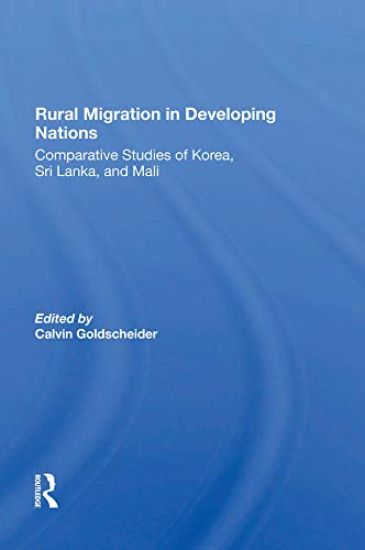
Rural Migration In Developing Nations

Rural Migration In Developing Nations

Calvin Goldscheider

TAYLOR FRANCIS LTD
2024
nidottu
What is the relationship between migration and rural social structure? How does the selective movement out of rural areas affect the economic and social conditions of migrants, their families, and their places of origin? Addressing these and other questions, the contributors to this book consider rural migration patterns in the context of social change and economic development in three less developed nations: Korea, Sri Lanka, and Mali. Through comparative analysis the authors reveal both the diversity and the cross-national similarities of rural migration, offering theoretical bases for its interpretation and pointing to policy implications for developing areas.
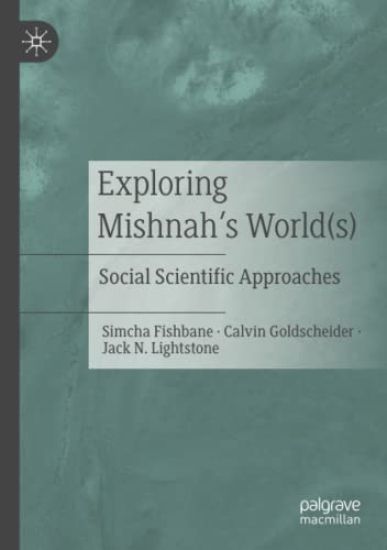
Exploring Mishnah's World(s)

Exploring Mishnah's World(s)

Simcha Fishbane; Calvin Goldscheider; Jack N. Lightstone

Springer Nature Switzerland AG
2021
nidottu
This book provides a new conceptual and methodological framework the social scientific study of Mishnah, as well as a series of case studies that apply social science perspectives to the analysis of Mishnah's evidence. The framework is one that takes full account of the historical and literary-historical issues that impinge upon the use of Mishnah for any scholarly purposes beyond philological study, including social scientific approaches to the materials. Based on the framework, each chapter undertakes, with appropriate methodological caveats, an avenue of inquiry open to the social scientist that brings to bear social scientific questions and modes of inquiry to Mishnaic evidence.
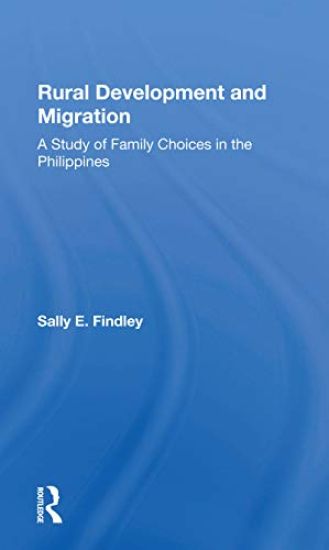
Rural Development And Migration

Rural Development And Migration

Sally E. Findley; Calvin Goldscheider

Routledge
2021
nidottu
Perhaps because I grew up on a farm in Ohio, I have long been interested in rural development. Although I fll'St became a migrant at the age of 17 when I left the farm to continue my studies in a city college, I was not aware of the relation between rural development and migration until many years later when I began studying patterns of urban and rural poverty. This research has grown out of my continuing investigation of the ways that migration .has been seen as both a response to chronic conditions of rural poverty and a factor potentially exacerbating urban poverty conditions. If governments wanted to deal with urban poverty, they would want to restrict urban in-migration, yet if they reduced urban in-migration, this would remove one of the important means available to persons seeking to raise themselves out of rural impoverishment. This would clearly be a no-win situation for the rural poor; the only way to deal fairly with both urban and rural poverty would be to foster socio-economic development of rural areas. Thus, I became interested in studying the patterns of rural development which actually have had an effect on the migration decisions of rural families.
Population, Ethnicity, And Nationbuilding

Population, Ethnicity, And Nationbuilding

Calvin Goldscheider

Routledge
2021
nidottu
This volume focuses on the linkages between ethnicity and population processes in the context of nation-building. Using historical and contemporary illustrations in a variety of countries, parts of this complex puzzle are scrutinized through the prisms of sociology, history, political science, anthropology, and demography Themes of ethnic group formation and transformation, persistence and assimilation, demographic transitions and convergences, and the processes of political mobilization and economic development are described and compared. Case studies from Southeast Asia, China, Africa, Brazil, Israel, the former Soviet Union, Canada, Europe, and the United States are presented by leading scholars. The examples illustrate the diversity of contexts that connect population, ethnicity, and nation-building, raising new questions and comparative problems. The importance of ethnic conflict for issues of inequality and group disadvantage in the emerging societies of Asia, Africa, and the Middle East; in the politics of race and immigration in western societies; and in European and American history emerges from the research. The multidisciplinary emphasis addresses core themes of ethnicity and nation-building in comparative perspectives.
Exploring Mishnah's World(s)

Exploring Mishnah's World(s)

Simcha Fishbane; Calvin Goldscheider; Jack N. Lightstone

Springer Nature Switzerland AG
2020
sidottu
This book provides a new conceptual and methodological framework the social scientific study of Mishnah, as well as a series of case studies that apply social science perspectives to the analysis of Mishnah's evidence. The framework is one that takes full account of the historical and literary-historical issues that impinge upon the use of Mishnah for any scholarly purposes beyond philological study, including social scientific approaches to the materials. Based on the framework, each chapter undertakes, with appropriate methodological caveats, an avenue of inquiry open to the social scientist that brings to bear social scientific questions and modes of inquiry to Mishnaic evidence.
Israel's Changing Society

Israel's Changing Society

Calvin Goldscheider

Routledge
2020
nidottu
This book provides the most up-to-date assessment of Israel's society today, portraying the country's ethnic diversity, its economy, and demographic changes. Revealing linkages between demographic transformation and socioeconomic change, Goldscheider shows how ethnic group formation emerged in Israel to create the present mix of Jewish and Arab pop
Urban Migrants In Developing Nations

Urban Migrants In Developing Nations

Calvin Goldscheider

Routledge
2020
nidottu
What are the effects of migration and the change to city life on migrants and their families in developing countries? How is the quality of life influenced by the influx of migrants into a region? This book addresses these and related questions by focusing on four case studies in Korea (Seoul), Indonesia (Surabaya), Colombia (Bogota), and Iran (Teh
Rural Migration In Developing Nations

Rural Migration In Developing Nations

Calvin Goldscheider

Routledge
2020
sidottu
What is the relationship between migration and rural social structure? How does the selective movement out of rural areas affect the economic and social conditions of migrants, their families, and their places of origin? Addressing these and other questions, the contributors to this book consider rural migration patterns in the context of social change and economic development in three less developed nations: Korea, Sri Lanka, and Mali. Through comparative analysis the authors reveal both the diversity and the cross-national similarities of rural migration, offering theoretical bases for its interpretation and pointing to policy implications for developing areas.
Population, Ethnicity, And Nation-building

Population, Ethnicity, And Nation-building

Calvin Goldscheider

Routledge
2019
sidottu
This volume focuses on the linkages between ethnicity and population processes in the context of nation-building. Using historical and contemporary illustrations in a variety of countries, parts of this complex puzzle are scrutinized through the prisms of sociology, history, political science, anthropology, and demography Themes of ethnic group formation and transformation, persistence and assimilation, demographic transitions and convergences, and the processes of political mobilization and economic development are described and compared. Case studies from Southeast Asia, China, Africa, Brazil, Israel, the former Soviet Union, Canada, Europe, and the United States are presented by leading scholars. The examples illustrate the diversity of contexts that connect population, ethnicity, and nation-building, raising new questions and comparative problems. The importance of ethnic conflict for issues of inequality and group disadvantage in the emerging societies of Asia, Africa, and the Middle East; in the politics of race and immigration in western societies; and in European and American history emerges from the research. The multidisciplinary emphasis addresses core themes of ethnicity and nation-building in comparative perspectives.
Rural Development And Migration

Rural Development And Migration

Sally E. Findley; Calvin Goldscheider

Routledge
2019
sidottu
Perhaps because I grew up on a farm in Ohio, I have long been interested in rural development. Although I fll'St became a migrant at the age of 17 when I left the farm to continue my studies in a city college, I was not aware of the relation between rural development and migration until many years later when I began studying patterns of urban and rural poverty. This research has grown out of my continuing investigation of the ways that migration .has been seen as both a response to chronic conditions of rural poverty and a factor potentially exacerbating urban poverty conditions. If governments wanted to deal with urban poverty, they would want to restrict urban in-migration, yet if they reduced urban in-migration, this would remove one of the important means available to persons seeking to raise themselves out of rural impoverishment. This would clearly be a no-win situation for the rural poor; the only way to deal fairly with both urban and rural poverty would be to foster socio-economic development of rural areas. Thus, I became interested in studying the patterns of rural development which actually have had an effect on the migration decisions of rural families.
Urban Migrants In Developing Nations

Urban Migrants In Developing Nations

Calvin Goldscheider

Routledge
2019
sidottu
What are the effects of migration and the change to city life on migrants and their families in developing countries? How is the quality of life influenced by the influx of migrants into a region? This book addresses these and related questions by focusing on four case studies in Korea (Seoul), Indonesia (Surabaya), Colombia (Bogota), and Iran (Teh
Israel's Changing Society

Israel's Changing Society

Calvin Goldscheider

Routledge
2018
sidottu
This book provides the most up-to-date assessment of Israel's society today, portraying the country's ethnic diversity, its economy, and demographic changes. Revealing linkages between demographic transformation and socioeconomic change, Goldscheider shows how ethnic group formation emerged in Israel to create the present mix of Jewish and Arab populations. He also reviews the policies of Palestinian and Israeli governments concerning immigration, describing the ways in which socioeconomic development within Israel, urbanization, and industrialization have evolved through the use of outside capital and increasing dependency. The book reveals two unique sets of processes about Israel today. The first concerns important changes in marriage, family and intermarriage, educational attainment and occupational achievement, ethnic politics, religion, and the changing role of women. A second but related concern pertains to the social and economic contexts of community life. Here Goldscheider investigates rapid change among Israel's major urban centers, towns, and agricultural centers, including the Kibbutz as well as Arab communities. In concluding chapters, the author discusses the role of government in shaping population policy, including health, fertility, and contraceptive and abortion issues. He also describes the influence of Jewish communities outside of Israel and the impact of the Middle East conflict with Arab states on Israel's domestic policy as well as the conflict with populations in territories administered by Israel since 1967. Likely to be a standard reference for years to come, the book is essential reading for political scientists, sociologists, anthropologists, and historians concerned with Israel's politics and society.
Studying the Jewish Future

Studying the Jewish Future

Calvin Goldscheider

University of Washington Press
2015
sidottu
Studying the Jewish Future explores the power of Jewish culture and assesses the perceived threats to the coherence and size of Jewish communities in the United States, Europe, and Israel. In an unconventional and provocative argument, Calvin Goldscheider departs from the limiting vision of the demographic projections that have shaped predictions about the health and future of Jewish communities and asserts that "the quality of Jewish life has become the key to the future of Jewish communities."Through the lens of individual biographies, Goldscheider shows how context shapes Jewish senses of the future and how conceptions of the future are shaped and altered by life experiences. Goldscheider's distinctive comparative approach includes a critical review of population issues, a consideration of biographies as a basis for understanding Jewish values, and an analysis of biblical texts for studying contemporary values. He combines demographic and sociological analyses in historical and comparative perspectives to dispel the notion that quantitative issues are at the heart of the challenge of Jewish continuity in the future.Numbers are clearly the building blocks of community. But the interpretations of these demographic issues are often confusing and biased by ideological preconceptions. As a basis for studying the core themes of the Jewish future, "hard facts" are less "hard" and less "factual" than interpreters have made them out to be. Population projections are limited by the vision of those who prepare them.Goldscheider concludes that the futures of Jewish communities--in America, Europe, and Israel--are much more secure than has been presented in most scholarly and popular publications, and discussions about the Jewish future should shift to other patterns of distinctiveness.This book will appeal to the general Jewish reader as well as to social scientists and modern Jewish historians. It is appropriate for Jewish studies courses, particularly, but not exclusively, those focusing on Jews in the United States, the American Jewish community, and modern Jewish society, and in courses on ethnicity, multiculturalism, cultural diversity, and ethnic relations.
Israeli Society in the Twenty-First Century

Israeli Society in the Twenty-First Century

Calvin Goldscheider

Brandeis University Press
2015
nidottu
This volume illuminates changes in Israeli society over the past generation. Goldscheider identifies three key social changes that have led to the transformation of Israeli society in the twenty-first century: the massive immigration of Jews from the former Soviet Union, the economic shift to a high-tech economy, and the growth of socioeconomic inequalities inside Israel. To deepen his analysis of these developments, Goldscheider focuses on ethnicity, religion, and gender, including the growth of ethnic pluralism in Israel, the strengthening of the Ultra-Orthodox community, the changing nature of religious Zionism and secularism, shifts in family patterns, and new issues and challenges between Palestinians and Arab Israelis given the stalemate in the peace process and the expansions of Jewish settlements. Combining demography and social structural analysis, the author draws on the most recent data available from the Israeli Central Bureau of Statistics and other sources to offer scholars and students an innovative guide to thinking about the Israel of the future. This book will be of interest to scholars and students of contemporary Israel, the Middle East, sociology, demography and economic development, as well as policy specialists in these fields. It will serve as a textbook for courses in Israeli history and in the modern Middle East.
A Typical Extraordinary Jew

A Typical Extraordinary Jew

Calvin Goldscheider; Jeffrey M. Green

Hamilton Books
2011
nidottu
This book tells the life story of an extremely engaging and charming Polish Jew, Shmuel Braw (1906-1992), who lived through the traumatic historical events that shaped Jewish experiences in the twentieth century. The story is told largely in Shmuel's own Yiddish- inflected Australian English to two avid listeners: Calvin Goldscheider, a social scientist, and Jeffrey M. Green, a writer and translator. Both the Holocaust and Shmuel's harrowing experience as a prisoner in a Soviet labor camp in Siberia figure prominently in this book, but Shmuel also describes his community of Tarnow, a town in southeastern Poland, in rich detail. After World War II, Shmuel settled in Melbourne, Australia before eventually immigrating to Israel. Shmuel was lively, colorful, entertaining, deeply concerned about other people, and a devoted and kind family man. The book is true to Shmuel's spirit and shares the life of a man whom everyone fondly remembers as a typical extraordinary Jew.