Kirjojen hintavertailu. Mukana 12 595 353 kirjaa ja 12 kauppaa.

Kirjailija

Calvin Trillin

Kirjat ja teokset yhdessä paikassa: 18 kirjaa, julkaisuja vuosilta 1992-2025, suosituimpien joukossa Feeding a Yen: Savoring Local Specialties, from Kansas City to Cuzco. Vertaile teosten hintoja ja tarkista saatavuus suomalaisista kirjakaupoista.

18 kirjaa

Kirjojen julkaisuhaarukka 1992-2025.

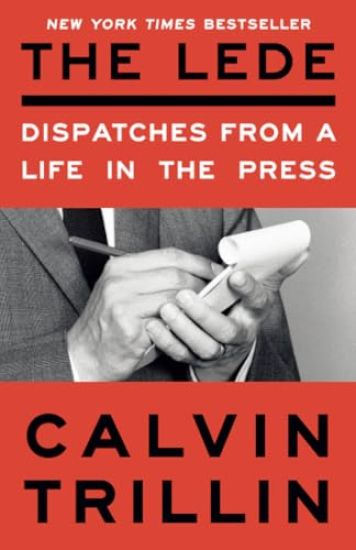
The Lede: Dispatches from a Life in the Press

The Lede: Dispatches from a Life in the Press

Calvin Trillin

Random House Trade
2025
nidottu
NEW YORK TIMES BESTSELLER - A fascinating portrait of journalism and the people who make it, told through pieces collected from the incomparable six-decade career of bestselling author and longtime New Yorker writer Calvin Trillin "The Lede contains profiles . . . that are acknowledged classics of the form and will be studied until A.I. makes hash out of all of us."--Dwight Garner, The New York Times LONGLISTED FOR THE PEN/DIAMONSTEIN-SPIELVOGEL AWARD I've been writing about the press almost as long as I've been in the game. At some point, it occurred to me that disparate pieces from various places in various styles amounted to a picture from multiple angles of what the press has been like over the years since I became a practitioner and an observer. Calvin Trillin has reported serious pieces across America for The New Yorker, covered the civil rights movement in the South for Time, and written comic verse for The Nation. But one of his favorite subjects over the years--a superb fit for his unique combination of reportage and humor--has been his own professional environment: the American press. In The Lede, Trillin gathers his incisive, often hilarious writing on reporting, reporters, and the media world that is their orbit. He writes about a legendary crime reporter in Miami, a swashbuckling New York Times reporter, and an erudite film critic in Dallas who once a week transformed himself from an appreciator of the French nouvelle vague into a crude connoisseur of movies like Mother Riley Meets the Vampire. There are pieces on the House of Lords aspirations of a North American press baron, the paucity of gossip columns in Russia, the embroilment of a weekly newspaper in a missing person case, and the founding of a publication called Beautiful Spot: A Magazine of Parking. Uniting all of this is Trillin's signature combination of empathy, humor, and graceful prose. The Lede is an unparalleled portrait of one of our fundamental American institutions from a master journalist.
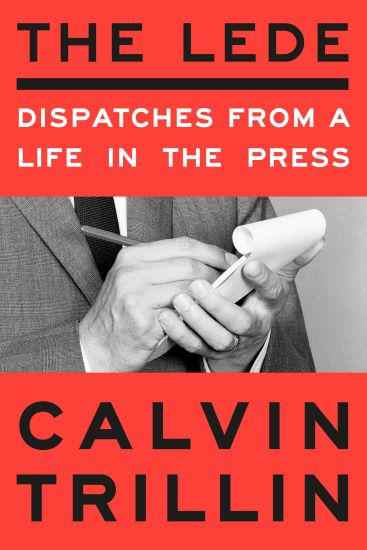
The Lede: Dispatches from a Life in the Press
NEW YORK TIMES BESTSELLER - A fascinating portrait of journalism and the people who make it, told through pieces collected from the incomparable six-decade career of bestselling author and longtime New Yorker writer Calvin Trillin "The Lede contains profiles . . . that are acknowledged classics of the form and will be studied until A.I. makes hash out of all of us."--Dwight Garner, The New York Times LONGLISTED FOR THE PEN/DIAMONSTEIN-SPIELVOGEL AWARD I've been writing about the press almost as long as I've been in the game. At some point, it occurred to me that disparate pieces from various places in various styles amounted to a picture from multiple angles of what the press has been like over the years since I became a practitioner and an observer. Calvin Trillin has reported serious pieces across America for The New Yorker, covered the civil rights movement in the South for Time, and written comic verse for The Nation. But one of his favorite subjects over the years--a superb fit for his unique combination of reportage and humor--has been his own professional environment: the American press. In The Lede, Trillin gathers his incisive, often hilarious writing on reporting, reporters, and the media world that is their orbit. He writes about a legendary crime reporter in Miami, a swashbuckling New York Times reporter, and an erudite film critic in Dallas who once a week transformed himself from an appreciator of the French nouvelle vague into a crude connoisseur of movies like Mother Riley Meets the Vampire. There are pieces on the House of Lords aspirations of a North American press baron, the paucity of gossip columns in Russia, the embroilment of a weekly newspaper in a missing person case, and the founding of a publication called Beautiful Spot: A Magazine of Parking. Uniting all of this is Trillin's signature combination of empathy, humor, and graceful prose. The Lede is an unparalleled portrait of one of our fundamental American institutions from a master journalist.
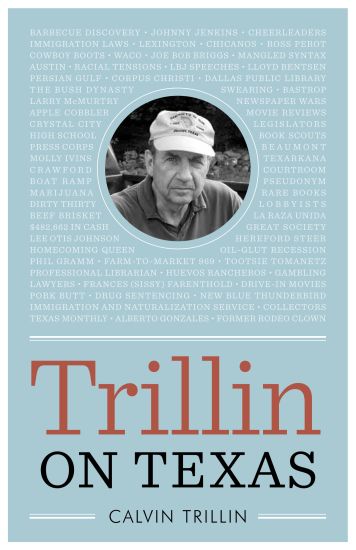
Trillin on Texas

Trillin on Texas

Calvin Trillin

UNIVERSITY OF TEXAS PRESS
2023
nidottu
A remarkably perceptive portrait of the Lone Star State, this collection of pieces from the New Yorker, the Nation, and other publications presents highlights of bestselling author Calvin Trillin’s classic writing on Texas subjects. "Yes, I do have a Texas connection, but, as we say in the Midwest, where I grew up, not so's you'd know it." So Calvin Trillin introduces this collection of articles and poems about a place that turns up surprisingly often when he's ostensibly writing about something else. Whether reporting on the American scene for the New Yorker, penning comic verse and political commentary for the Nation, or writing his memoirs, Trillin has bumped into Texas again and again. He insists that "this has not been by design . . . there has simply been a lot going on in Texas." Astute readers will note, however, that Trillin's family immigrated to the United States through the port of Galveston, and, after reading this book, many will believe that the Lone Star State has somehow imprinted itself in the family's imagination. Trillin on Texas gathers some of Trillin's best writing on subjects near to his heart-politics, true crime, food, and rare books, among them-which also have a Texas connection. Indulging his penchant for making "snide and underhanded jokes about respectable public officials," he offers his signature sardonic take on the Bush dynasty and their tendency toward fractured syntax; a faux, but quite believable, LBJ speech; and wry portraits of assorted Texas county judges, small town sheriffs, and Houston immigration lawyers. Trillin takes us on a mouthwatering pilgrimage to the barbecue joint that Texas Monthly proclaimed the best in Texas and describes scouting for books with Larry McMurtry-who rejects all of his "sleepers." He tells the stories of two teenagers who dug up half a million dollars in an ice chest on a South Texas ranch and of rare book dealer Johnny Jenkins, who was found floating in the Colorado River with a bullet wound in the back of his head. And he recounts how redneck movie reviewer "Joe Bob Briggs" fueled a war between Dallas's daily newspapers and pays tribute to two courageous Texas women who spoke truth to power-Molly Ivins and Sissy Farenthold. Sure to entertain Texans and other folks alike, Trillin on Texas proves once again that Calvin Trillin is one of America's shrewdest observers and wittiest writers.
Killings

Killings

Calvin Trillin

Random House Trade
2018
nidottu
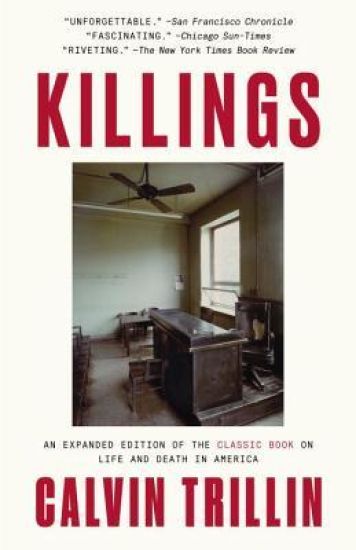
True stories of sudden death in the classic collection by a master of American journalism "Reporters love murders," Calvin Trillin writes in the introduction to Killings. "In a pinch, what the lawyers call 'wrongful death' will do, particularly if it's sudden." Killings, first published in 1984 and expanded for this edition, shows Trillin to be such a reporter, drawn time after time to tales of sudden death. But Trillin is attracted less by violence or police procedure than by the way the fabric of people's lives is suddenly exposed when someone comes to an untimely end. As Trillin says, Killings is "more about how Americans live than about how some of them die." These stories, which originally appeared in The New Yorker between 1969 and 2010, are vivid portraits of lives cut short. An upstanding farmer in Iowa finds himself drastically changed by a woman he meets in a cocktail lounge. An eccentric old man in Eastern Kentucky is enraged by the presence of a documentary filmmaker. Two women move to a bucolic Virginia county to find peace, only to end up at war over a shared road. Mexican American families in California hand down a feud from generation to generation. A high-living criminal-defense lawyer in Miami acquires any number of enemies capable of killing him. Stark and compassionate, deeply observed and beautifully written, Killings is "that rarity, reportage as art" (William Geist, The New York Times Book Review). Praise for Killings "Riveting tales of murder and mayhem. . . . Calvin] Trillin is a superb writer, with a magical ability to turn even the most mundane detail into spellbinding wonder. Armed with this wealth of material, he utterly shines. Every piece here is a gem."--The Seattle Times "What Mr. Trillin does so well, what makes Killings literature, is the way he pictures the lives that were interrupted by the murders. Even the most ordinary life makes a terrible noise . . . when it's broken off."--Anatole Broyard, The New York Times "Fascinating, troubling . . . In each of these stories is the basis of a Dostoevskian novel."--Edward Abbey, Chicago Sun-Times "The stories . . . are unforgettable. They leave us, finally, with the awareness of the unknowable opacity of the human heart."--Bruce Colman, San Francisco Chronicle " Trillin] writes brilliantly. . . . These stories still hold up, as classics."--The Buffalo News "In his artful ability to conjure up a whole life and a whole world, Trillin comes as close to achieving the power of a Chekhov short story as can anyone whose material is so implacably tied to fact."--Frederick Iseman, Harper's Bazaar "I have a book for you true-crime addicts if you're caught up on the podcast Serial, the cascade on TV of 48 Hours and Dateline NBC episodes. . . . It's time to pick up Calvin Trillin's Killings."--The New York Times Book Review"Well-crafted and thoughtfully composed, lacking judgment and admonishment, these are a true piece of quality journalism, which clearly continues to captivate audiences."--Library Journal"With telling detail and shrewd insights, Calvin Trillin] masterfully evokes the places and personalities that hatched these grim episodes."--Publishers Weekly
Russ & Daughters

Russ & Daughters

Mark Russ Federman; Calvin Trillin

Schocken Books
2013
sidottu
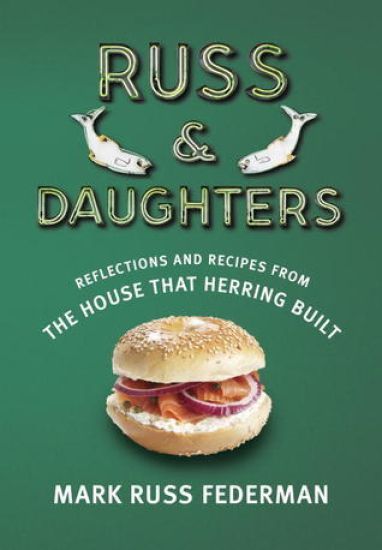
WITH 8 PAGES OF FULL-COLOR PHOTOGRAPHS AND BLACK-AND-WHITE IMAGES THROUGHOUT The former owner/proprietor of the beloved appetizing store on Manhattan's Lower East Side tells the delightful, mouthwatering story of an immigrant family's journey from a pushcart in 1907 to "New York's most hallowed shrine to the miracle of caviar, smoked salmon, ethereal herring, and silken chopped liver" (Jason Epstein, "The New York Times Magazine"). When Joel Russ started peddling herring from a barrel shortly after his arrival in America from Poland, he could not have imagined that he was witnessing the birth of a gastronomic legend. Here is the story of this "Louvre of lox" ("The Sunday Times," London) from its humble beginnings through the Great Depression, the food rationing of World War II, the passing of the torch to the next generation just as the flight from the Lower East Side to the suburbs was beginning, the heartbreaking years of neighborhood blight, and the almost miraculous renaissance of an area from which hundreds of other family-owned stores had fled. Filled with delightful anecdotes about how a ferociously hardworking family turned a passion for selling perfectly smoked and pickled fish into an institution with a devoted international clientele, Mark Russ Federman's reminiscences combine a heartwarming and triumphant immigrant saga with a panoramic history of twentieth-century New York, a meditation on the creation and selling of gourmet food by a family that has mastered this art, and an enchanting behind-the-scenes look at four generations of people who are just a little bit crazy on the subject of fish.
Quite Enough of Calvin Trillin: Forty Years of Funny Stuff
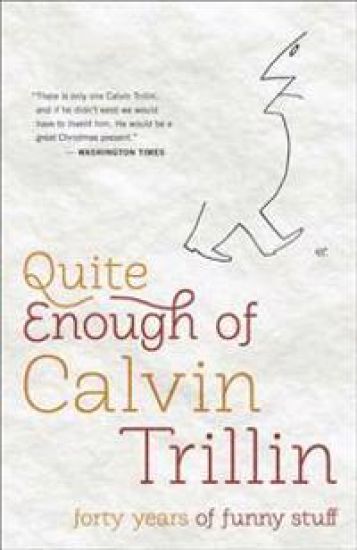
"Brilliant . . . The dean of American comic writers showcases his varied talents mocking the public and private lives of politicians, average citizens and himself."--The Star-Ledger Calvin Trillin has committed blatant acts of funniness all over the place--in The New Yorker, in one-man off-Broadway shows, in his "deadline poetry" for The Nation, in comic novels, and in what USA Today called "simply the funniest regular column in journalism." Now Trillin selects the best of his funny stuff and organizes it into topics like high finance ("My long-term investment strategy has been criticized as being entirely too dependent on Publishers Clearing House sweepstakes") and the literary life ("The average shelf life of a book is somewhere between milk and yogurt"). He addresses the horrors of witnessing a voodoo economics ceremony and the mystery of how his mother managed for thirty years to feed her family nothing but leftovers ("We have a team of anthropologists in there now looking for the original meal"). He even skewers deserving political figures in poetry. In this, the definitive collection of his humor, Calvin Trillin is prescient, insightful, and invariably hilarious. "A literary treasure . . . There is only one Calvin Trillin, and if he didn't exist we would have to invent him."--The Washington Times "Funny is to Trillin what drinking is to Uncle Jed in Annie Get Your Gun--it's what he does 'natur'lly.' He's also a lot more than funny. Quite Enough of Calvin Trillin is the twenty-eighth book he's published over not far short of a half-century, and their range of subjects is remarkable."--Jonathan Yardley, The Washington Post "Trillin made his reputation over four decades as the author of 'U.S. Journal' in the New Yorker but he] is incapable of resisting the temptation of comedy. The jokes kept on welling up and Mr. Trillin made a parallel reputation as a writer of funny stuff."--The Economist "Wry, whip-smart, understated, and entertaining."--The Miami Herald
Trillin on Texas

Trillin on Texas

Calvin Trillin

University of Texas Press
2011
sidottu
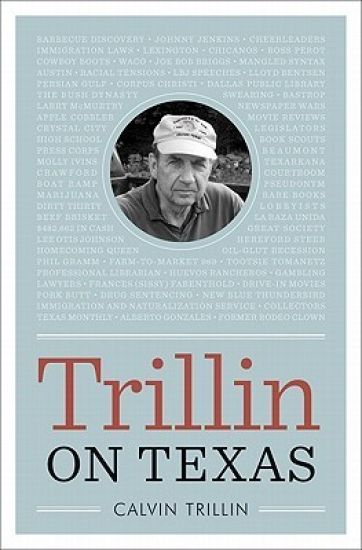
"Yes, I do have a Texas connection, but, as we say in the Midwest, where I grew up, not so's you'd know it." So Calvin Trillin introduces this collection of articles and poems about a place that turns up surprisingly often when he's ostensibly writing about something else. Whether reporting on the American scene for the New Yorker, penning comic verse and political commentary for the Nation, or writing his memoirs, Trillin has bumped into Texas again and again. He insists that "this has not been by design ...there has simply been a lot going on in Texas." Astute readers will note, however, that Trillin's family immigrated to the United States through the port of Galveston, and, after reading this book, many will believe that the Lone Star State has somehow imprinted itself in the family's imagination. Trillin on Texas gathers some of Trillin's best writing on subjects near to his heart-politics, true crime, food, and rare books, among them-which also have a Texas connection. Indulging his penchant for making "snide and underhanded jokes about respectable public officials," he offers his signature sardonic take on the Bush dynasty and their tendency toward fractured syntax; a faux, but quite believable, LBJ speech; and wry portraits of assorted Texas county judges, small town sheriffs, and Houston immigration lawyers. Trillin takes us on a mouthwatering pilgrimage to the barbecue joint that Texas Monthly proclaimed the best in Texas and describes scouting for books with Larry McMurtry-who rejects all of his "sleepers." He tells the stories of two teenagers who dug up half a million dollars in an ice chest on a South Texas ranch and of rare book dealer Johnny Jenkins, who was found floating in the Colorado River with a bullet wound in the back of his head. And he recounts how redneck movie reviewer "Joe Bob Briggs" fueled a war between Dallas's daily newspapers and pays tribute to two courageous Texas women who spoke truth to power-Molly Ivins and Sissy Farenthold. Sure to entertain Texans and other folks alike, Trillin on Texas proves once again that Calvin Trillin is one of America's shrewdest observers and wittiest writers.
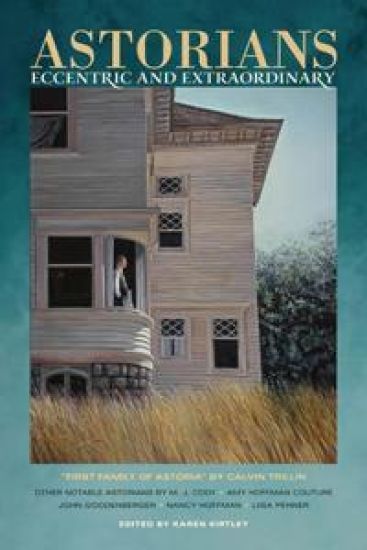
Astorians, Eccentric and Extraordinary

Astorians, Eccentric and Extraordinary

Karen Kirtley; Calvin Trillin; M. J. Cody; John E. Goodenb

Oregon State University
2010
nidottu
n 1993, The New Yorker published Calvin Trillin’s memorable article on the eccentric Flavel family of Astoria, the descendants of Captain George Flavel, whose ornate Queen-Anne-style mansion is a tourist draw today. With Trillin’s gracious consent, “First Family of Astoria” is reprinted in Part One of Astorians, Eccentric and Extraordinary, making its first appearance in book form.Part Two carries on the theme with portraits of fifty-five other notable Astorians. Five Oregon writers have captured the essence and the flavor of vivid personalities that include the notorious shanghaier Bridget Grant; the charming scoundrel Mayor Francis Clay Harley; the elusive English “barmaid” Jane Barnes, the first white woman in the Pacific Northwest; and Rolf Klep, who believed he could create a major maritime museum in an economically depressed town—and made it happen.In biology, it is said that the richest life forms reside at the edge of the ecosystem. Astoria epitomizes edges—the edge of the country, the edge of a great river, the edge of the Pacific Ocean, and the edge of our American culture. This book celebrates the larger-than-life quality that has appeared with regularity in the town’s two-hundred-year history. As Steve Forrester, publisher of The Daily Astorian, notes in the book’s introduction: “Extraordinary people are not necessarily eccentric. But eccentrics are driven to do extraordinary things.”
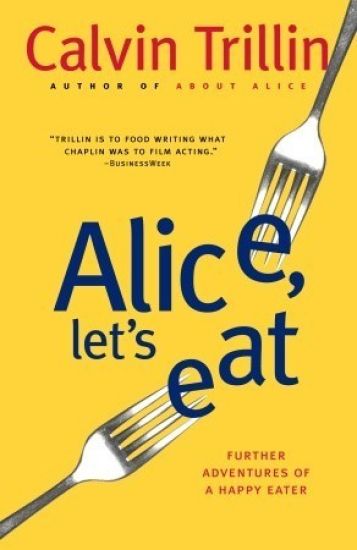
Alice, Let's Eat: Further Adventures of a Happy Eater
"Trillin is our funniest food writer. He writes with charm, freedom, and a rare respect for language."-New York magazine In this delightful and delicious book, Calvin Trillin, guided by an insatiable appetite, embarks on a hilarious odyssey in search of "something decent to eat." Across time zones and cultures, and often with his wife, Alice, at his side, Trillin shares his triumphs in the art of culinary discovery, including Dungeness crabs in California, barbecued mutton in Kentucky, potato latkes in London, blaff d'oursins in Martinique, and a $33 picnic on a no-frills flight to Miami. His eating companions include Fats Goldberg, the New York pizza baron and reformed blimp; William Edgett Smith, the man with the Naughahyde palate; and his six-year-old daughter, Sarah, who refuses to enter a Chinese restaurant unless she is carrying a bagel ("just in case"). And though Alice "has a weird predilection for limiting our family to three meals a day," on the road she proves to be a serious eater-despite "seemingly uncontrollable attacks of moderation." Alice, Let Eat amply demonstrates why The New Republic called Calvin Trillin "a classic American humorist." "One of the most brilliant humorists of our times . . . Trillin is guaranteed good reading."-Charleston Post and Courier "Read Trillin and laugh out loud."-Time
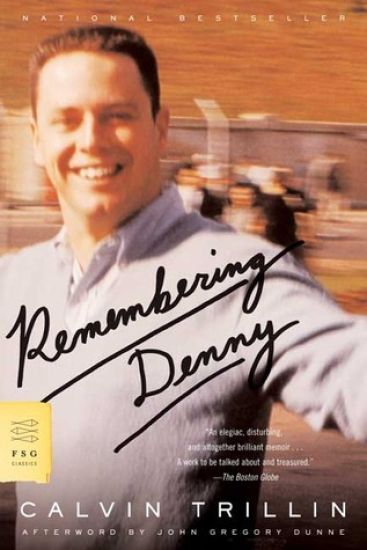
Remembering Denny

Remembering Denny

Calvin Trillin

Farrar, Straus and Giroux
2005
nidottu
A reissue of Calvin Trillin's memoir of his relationship with a brilliant but tragic Yale classmate that is also a rumination on social change in the 1950s and 1960s Remembering Denny is perhaps Calvin Trillin's most inspired and powerful book: a memoir of a friendship, a work of investigative reporting, and an exploration of a country and a time that captures something essential about how America has changed since Trillin--and Denny Hansen--were graduated from Yale in 1957. Roger "Denny" Hansen had seemed then a college hero for the ages: a charmer with a dazzling smile, the subject of a feature in Life magazine, a member of Phi Beta Kappa, a varsity swimmer, a Rhodes scholar...perhaps a future president, as his friends only half-joked. But after early jobs in government and journalism, Hansen's life increasingly took a downward turn and he gradually lost touch with family and old friends before eventually committing suicide--an obscure, embittered, pain-racked professor--in 1991. In contemplating his friend's life, Calvin Trillin considers questions both large and small--what part does the pressure of high expectations place on even the most gifted, how difficult might it have been to be a closeted homosexual in the unyielding world of the 1960s Foreign Service, how much responsibility does the individual bear for all that happens in his life--in a book that is also a meditation on our country's evolving sense of itself.
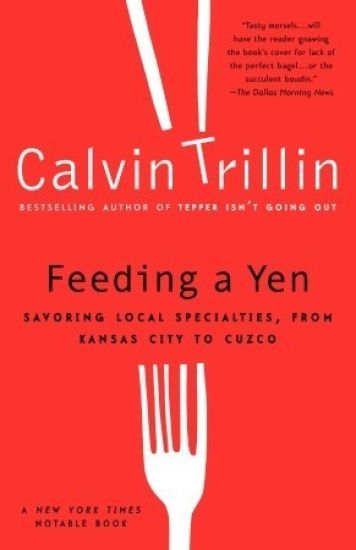
Feeding a Yen: Savoring Local Specialties, from Kansas City to Cuzco
Calvin Trillin has never been a champion of the "continental cuisine" palaces he used to refer to as La Maison de la Casa House. What he treasures is the superb local specialty. And he will go anywhere to find one. As it happens, some of his favorite dishes can be found only in their place of origin. Join Trillin on his charming, funny culinary adventures as he samples fried marlin in Barbados and the barbecue of his boyhood in Kansas City. Travel alongside as he hunts for the authentic fish taco, and participates in a "boudin blitzkrieg" in the part of Louisiana where people are accustomed to buying these spicy sausages and polishing them off in the parking lot. ("Cajun boudin not only doesn't get outside the state, it usually doesn't even get home.") In New York, Trillin even tries to use a glorious local specialty, the bagel, to lure his daughters back from California. Feeding a Yen is a delightful reminder of why New York magazine called Calvin Trillin "our funniest food writer."
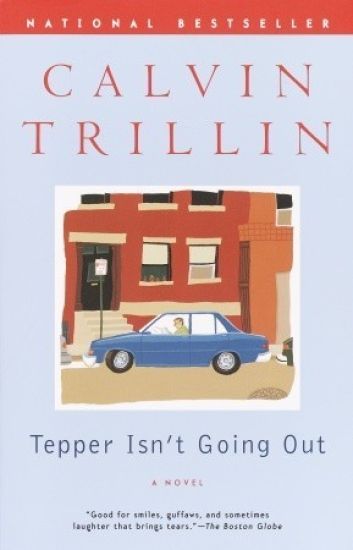
Tepper Isn't Going Out

Tepper Isn't Going Out

Calvin Trillin

Random House Trade
2003
nidottu
Murray Tepper would say that he is an ordinary New Yorker who is simply trying to read the newspaper in peace. But he reads while sitting behind the wheel of his parked car, and his car always seems to be in a particularly desirable parking spot. Not surprisingly, he is regularly interrupted by drivers who want to know if he is going out. Tepper isn't going out. Why not? His explanations tend to be rather literal: the indisputable fact, for instance, that he has twenty minutes left on the meter. Tepper's behavior sometimes irritates the people who want his spot. ("Is that where you live? Is that car rent-controlled?") It also irritates the mayor--Frank Ducavelli, known in tabloid headlines as Il Duce--who sees Murray Tepper as a harbinger of what His Honor always calls "the forces of disorder." But once New Yorkers become aware of Tepper, some of them begin to suspect that he knows something they don't know. And an ever-increasing number of them are willing to line up for the opportunity to sit in his car with him and find out. Tepper Isn't Going Out is a wise and witty story of an ordinary man who, perhaps innocently, changes the world around him. BONUS: This edition contains an excerpt from Calvin Trillin's Quite Enough of Calvin Trillin.
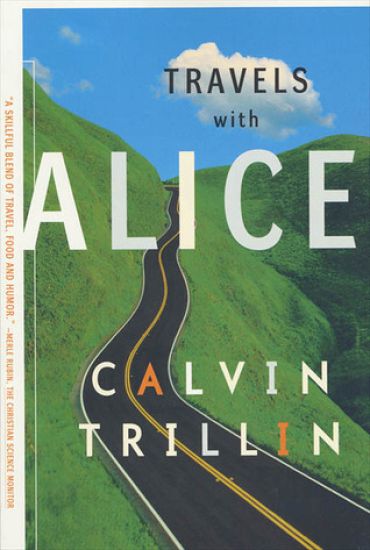
Travels with Alice

Travels with Alice

Calvin Trillin

Farrar, Straus and Giroux
1999
nidottu
This delightful book collects Calvin Trillin's accounts of his trips to Europe with his wife, Alice, and their two daughters. In Taormina, Sicily, they cheerfully disagree with Mrs. Tweedie's 1904 assertion that the beautiful town "is being spoilt," and skip the Grand Tour in favor of swimming holes, table soccer, and taureaux piscine. In Paris, they spend a day on the Champs-Elys es comparing Freetime's "le Hitburger" to McDonald's Big Mac. In Spain, Trillin wonders whether he will run out of Spanish "the way someone might run out of flour or eggs." Filled with Trillin's characteristic humor, Travels with Alice is the perfect book for summer travelers.
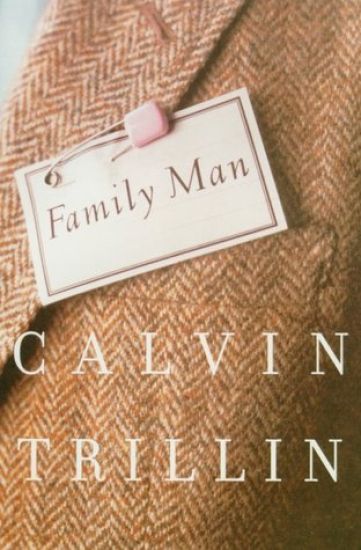
Family Man

Family Man

Calvin Trillin

Farrar, Straus and Giroux
1999
nidottu
Calvin Trillin begins his wise and charming ruminations on family by stating the sum total of his child-rearing advice: "Try to get one that doesn't spit up. Otherwise, you're on your own." Suspicious of any child-rearing theories beyond "Your children are either the center of your life or they're not," Trillin has clearly reveled in the role of family man. Acknowledging the special perils to the privacy of people living with a writer who occasionally remarks, "I hope you're not under the impression that what you just said was off the record," Trillin deals with the subject of family in a way that is loving, honest, and wildly funny in "Family Man."
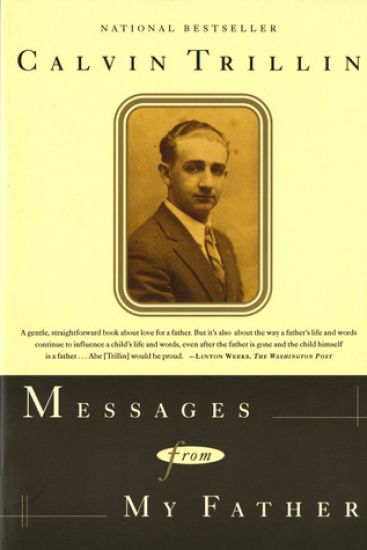
Messages from My Father: A Memoir

Messages from My Father: A Memoir

Calvin Trillin

Farrar, Strauss Giroux-3pl
1997
nidottu
Calvin Trillin, the celebrated New Yorker writer, offers a rich and engaging biography of his father, as well as a literate and entertaining fanfare for the common (and decent, and hard-working) man. Abe Trillin had the western Missouri accent of someone who had grown up in St. Joseph and the dreams of America of someone who had been born is Russia. In Kansas City, he was a grocer, at least until he swore off the grocery business. He was given to swearing off things--coffee, tobacco, alcohol, all neckties that were not yellow in color. Presumably he had also sworn off swearing, although he was a collector of curses, such as "May you have an injury that is not covered by workman's compensation." Although he had a strong vision of the sort of person he wanted his son to be, his explicit advice about how to behave didn't go beyond an almost lackadaisical "You might as well be a mensch." Somehow, though, Abe Trillin's messages got through clearly. The author's unerring sense of the American character is everywhere apparent in this quietly powerful memoir, Messages from My Father.
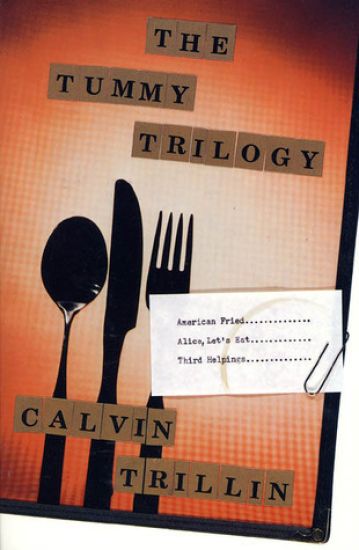
The Tummy Trilogy

The Tummy Trilogy

Calvin Trillin

Farrar, Straus Giroux Inc
1994
nidottu
In the 1970s, Calvin Trillin informed America that its most glorious food was not to be found at the pretentious restaurants he referred to generically as La Maison de la Casa House, Continental Cuisine. With three hilarious books over the next two decades--"American Fried; Alice, Let's Eat; and" Third Helpings--he established himself as, in Craig Claiborne's phrase, "the Walt Whitman of American eats." Trillin's three comic masterpieces are now available in what Trillin calls "The Tummy Trilogy.
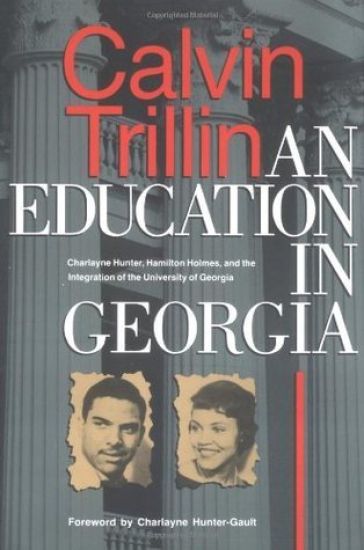
An Education in Georgia

An Education in Georgia

Calvin Trillin

University of Georgia Press
1992
pokkari
In January 1961, following eighteen months of litigation that culminated in a federal court order, Hamilton Holmes and Charlayne Hunter became the first black students to enter the University of Georgia. Calvin Trillin, then a reporter for Time Magazine, attended the court fight that led to the admission of Holmes and Hunter and covered their first week at the university—a week that began in relative calm, moved on to a riot and the suspension of the two students "for their own safety," and ended with both returning to the campus under a new court order.Shortly before their graduation in 1963, Trillin came back to Georgia to determine what their college lives had been like. He interviewed not only Holmes and Hunter but also their families, friends, and fellow students, professors, and university administrators. The result was this book—a sharply detailed portrait of how these two young people faced coldness, hostility, and occasional understanding on a southern campus in the midst of a great social change.