Kirjojen hintavertailu. Mukana 12 657 676 kirjaa ja 12 kauppaa.

Kirjailija

Camille T. Dungy

Kirjat ja teokset yhdessä paikassa: 12 kirjaa, julkaisuja vuosilta 2006-2026, suosituimpien joukossa Trophic Cascade. Vertaile teosten hintoja ja tarkista saatavuus suomalaisista kirjakaupoista.

Mukana myös kirjoitusasut: Camille T Dungy

12 kirjaa

Kirjojen julkaisuhaarukka 2006-2026.

America, A Love Story

America, A Love Story

Camille T. Dungy

WESLEYAN UNIVERSITY PRESS
2026
nidottu
New poems on love, family, and art from the author of Soil: The Story of a Black Mother's Garden America, A Love Story is Camille T. Dungy's powerful testament to living and loving as a Black woman and mother in today's America, and her first book of poetry in almost a decade. Piercingly honest and deeply compassionate, this poetry moves through the mounting griefs of contemporary American life with unwavering clarity. The book is part indictment, part celebration—full of gratitude, fear, resistance, and hope. Dungy explores intimacy, parenting, racism, history, and the natural world with clarity and depth. Some poems reflect on the past; others respond to the work of contemporary Black artists. Many are formally playful, including a series of 700-character poems inspired by the 700 hours of sleep a mother loses in her child's first year. Gorgeous, bright, and bold, these poems speak from the edges—between mother and child, body and earth, self and country. They hold tension and tenderness in equal measure, creating a space for love amidst uncertainty. [sample poem] To enter our own empty house She was seven when we stopped using keys. One less thing to lose. Now we punch a combination. Easy, but hopefully not so easy a stranger could guess. This is where I should stop. They are bound to be angry, my beloveds. I am giving away all our secrets again. Vulnerability is the root of much fury. = I was small. A stone in the yard hid a metal case with a lid that slid like a matchbox top to reveal our key. Lifting that rock I thought of bashing someone's head. I thought of harm lurking, dressed in the body of some stranger. = Sometimes, I wrestle my daughter. I make her tiny body work itself out from under the weight I make of my own. In this way I try to teach her how it feels to break free.
America, A Love Story

America, A Love Story

Camille T. Dungy

WESLEYAN UNIVERSITY PRESS
2026
sidottu
New poems on love, family, and art from the author of Soil: The Story of a Black Mother's Garden America, A Love Story is Camille T. Dungy's powerful testament to living and loving as a Black woman and mother in today's America, and her first book of poetry in almost a decade. Piercingly honest and deeply compassionate, this poetry moves through the mounting griefs of contemporary American life with unwavering clarity. The book is part indictment, part celebration—full of gratitude, fear, resistance, and hope. Dungy explores intimacy, parenting, racism, history, and the natural world with clarity and depth. Some poems reflect on the past; others respond to the work of contemporary Black artists. Many are formally playful, including a series of 700-character poems inspired by the 700 hours of sleep a mother loses in her child's first year. Gorgeous, bright, and bold, these poems speak from the edges—between mother and child, body and earth, self and country. They hold tension and tenderness in equal measure, creating a space for love amidst uncertainty. [sample poem] To enter our own empty house She was seven when we stopped using keys. One less thing to lose. Now we punch a combination. Easy, but hopefully not so easy a stranger could guess. This is where I should stop. They are bound to be angry, my beloveds. I am giving away all our secrets again. Vulnerability is the root of much fury. = I was small. A stone in the yard hid a metal case with a lid that slid like a matchbox top to reveal our key. Lifting that rock I thought of bashing someone's head. I thought of harm lurking, dressed in the body of some stranger. = Sometimes, I wrestle my daughter. I make her tiny body work itself out from under the weight I make of my own. In this way I try to teach her how it feels to break free.
Soil: The Story of a Black Mother's Garden

Soil: The Story of a Black Mother's Garden

Camille T. Dungy

SIMON SCHUSTER
2024
nidottu
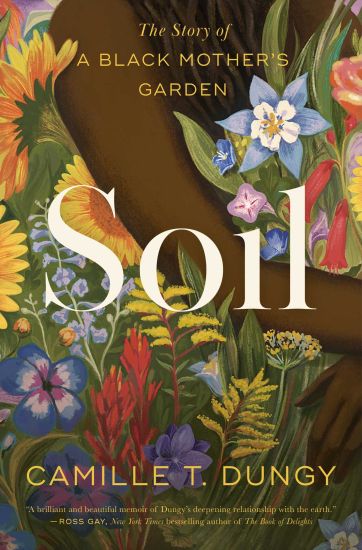
A "heartfelt and thoroughly enriching" (Aimee Nezhukumatathil, New York Times bestselling author of World of Wonders) work that expands on how we talk about the natural world and the environment as National Book Critics Circle finalist Camille T. Dungy diversifies her garden to reflect her heritage. In Soil: The Story of a Black Mother's Garden poet and scholar Camille T. Dungy recounts the seven-year odyssey to diversify her garden in the predominantly white community of Fort Collins, Colorado. When she moved there in 2013, with her husband and daughter, the community held strict restrictions about what residents could and could not plant in their gardens. In resistance to the homogenous policies that limited the possibility and wonder that grows from the earth, Dungy employs the various plants, herbs, vegetables, and flowers she grows in her garden as metaphor and treatise for how homogeneity threatens the future of our planet, and why cultivating diverse and intersectional language in our national discourse about the environment is the best means of protecting it. "Brilliant and beautiful" (Ross Gay, New York Times bestselling author of The Book of Delights), Soil functions as the nexus of nature writing, environmental justice, and prose to encourage you to recognize the relationship between the people of the African diaspora and the land on which they live, and to understand that wherever soil rests beneath their feet is home.
Soil: The Story of a Black Mother's Garden

Soil: The Story of a Black Mother's Garden

Camille T. Dungy

SIMON SCHUSTER
2023
sidottu
A seminal work that expands how we talk about the natural world and the environment as National Book Critics Circle Criticism finalist Camille T. Dungy diversifies her garden to reflect her heritage. In Soil: The Story of a Black Mother's Garden, poet and scholar Camille T. Dungy recounts the seven-year odyssey to diversify her garden in the predominately white community of Fort Collins, Colorado. When she moved there in 2013, with her husband and daughter, the community held strict restrictions about what residents could and could not plant in their gardens. In resistance to the homogenous policies that limited the possibility and wonder that grows from the earth, Dungy employs the various plants, herbs, vegetables, and flowers she grows in her garden as metaphor and treatise for how homogeneity threatens the future of our planet, and why cultivating diverse and intersectional language in our national discourse about the environment is the best means of protecting it. Definitive and singular, Soil functions at the nexus of nature writing, environmental justice, and prose to encourage you to recognize the relationship between the peoples of the African diaspora and the land on which they live, and to understand that wherever soil rests beneath their feet is home.
The Long Devotion

The Long Devotion

Camille T. Dungy; Carmen Giménez Smith

UNIVERSITY OF GEORGIA PRESS
2022
pokkari
The Long Devotion is a collection of poems, essays, and writing prompts that celebrates motherhood and creates a space, as poet Molly Spencer has written, to “tell an unlovely truth about family life and not have to take it back.”The poets in this book represent and describe a wide range of experiences. They write about encountering the world anew through their children; intersections of parenting and race; single parenting; adoptive, foster, and step-parenting; life with chronic illness, mental illness, and disability; and the choice to remain childless. The book is divided into four parts. “Difficulty, Ambivalence, and Joy” considers the wonder and challenges of parenting—including infertility, pregnancy, miscarriage, and life with children—and trying to write in the midst of those demands. “The Body and the Brain” explores the cerebral and bodily labor of caregiving and writing. “In the World” brings parents and their children into contact with the natural and political landscape. Finally, “Transitions” looks at how parenting and writing change as children grow up. Poems range from linear narratives and imagistic lyric to poetry comics, speculative futures, and experimental forms. Essays and poems suggest ways to write through the disruptions and chaos of family life. Prompts invite readers to use the work in this book as a starting point for their own poetry.As candid accounts of motherhood become more prevalent across literary, pop culture, and digital spaces, the way we talk about writing and mothering is changing. Poets have long challenged traditional motherhood narratives. This book brings together a new generation of exciting and provocative voices for the first time.
Trophic Cascade

Trophic Cascade

Camille T. Dungy

Wesleyan University Press
2018
nidottu
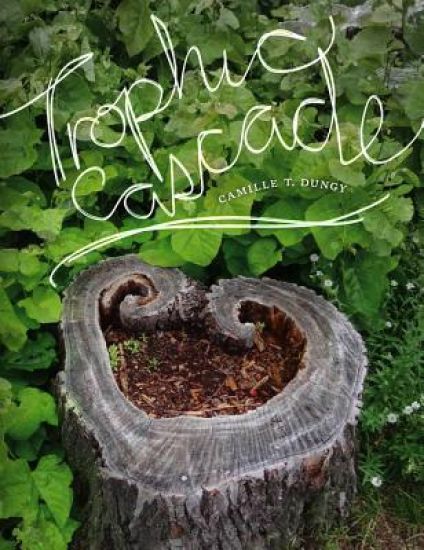
In this fourth book in a series of award-winning survival narratives, Dungy writes positioned at a fulcrum, bringing a new life into the world even as her elders are passing on. In a time of massive environmental degradation, violence and abuse of power, a world in which we all must survive, these poems resonate within and beyond the scope of the human realms, delicately balancing between conflicting loci of attention. Dwelling between vibrancy and its opposite, Dungy writes in a single poem about a mother, a daughter, Smokin’ Joe Frazier, brittle stars, giant boulders, and a dead blue whale. These poems are written in the face of despair to hold an impossible love and a commitment to hope. A readers companion will be availabe at wesleyan.edu/wespress/readerscompanions.
Guidebook to Relative Strangers

Guidebook to Relative Strangers

Camille T. Dungy

WW Norton Co
2018
nidottu
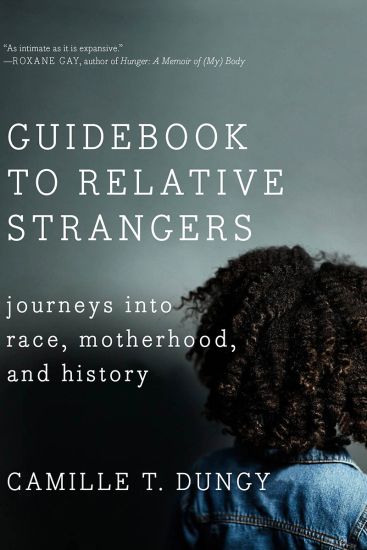
As a working mother and poet-lecturer, Camille Dungy’s livelihood depended on travel. She crisscrossed America and beyond with her daughter in tow, history shadowing their steps, always intensely aware of how they were perceived, not just as mother and child but as black women. From the San Francisco of settlers’ dreams to the slave-trading ports of Ghana, from snow-white Maine to a festive yet threatening bonfire in the Virginia pinewoods, Dungy finds fear and trauma but also mercy, kindness, and community. Penetrating and generous, this is an essential guide for a troubled land.
Ghost Fishing

Ghost Fishing

Camille T. Dungy

University of Georgia Press
2018
pokkari
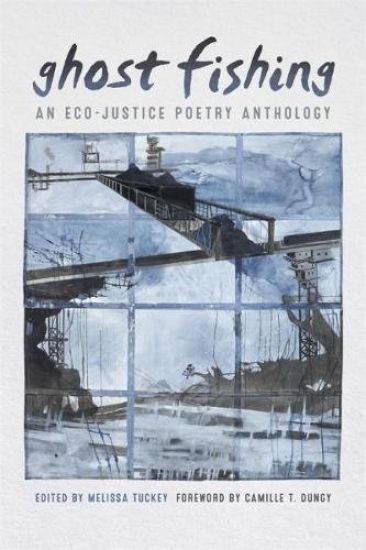
Ghost Fishing is the first anthology to focus solely on poetry with an eco-justice bent. A culturally diverse collection entering a field where nature poetry anthologies have historically lacked diversity, this book presents a rich terrain of contemporary environmental poetry with roots in many cultural traditions.Eco-justice poetry is poetry born of deep cultural attachment to the land and poetry born of crisis. Aligned with environmental justice activism and thought, eco-justice poetry defines environment as “the place we work, live, play, and worship.” This is a shift from romantic notions of nature as a pristine wilderness outside ourselves toward recognition of the environment as home: a source of life, health, and livelihood.Ghost Fishing is arranged by topic at key intersections between social justice and the environment such as exile, migration, and dispossession; war; food production; human relations to the animal world; natural resources and extraction; environmental disaster; and cultural resilience and resistance. This anthology seeks to expand our consciousness about the interrelated nature of our experiences and act as a starting point for conversation about the current state of our environment.Contributors include Homero Aridjis, Brenda Cárdenas, Natalie Diaz, Camille T. Dungy, Martín Espada, Ross Gay, Joy Harjo, Brenda Hillman, Linda Hogan, Philip Metres, Naomi Shihab Nye, Tolu Ogunlesi, Wang Ping, Patrick Rosal, Tim Seibles, Danez Smith, Arthur Sze, Eleanor Wilner, and Javier Zamora.
Trophic Cascade

Trophic Cascade

Camille T Dungy

Wesleyan University Press
2017
sidottu
In this fourth book in a series of award-winning survival narratives, Dungy writes positioned at a fulcrum, bringing a new life into the world even as her elders are passing on. In a time of massive environmental degradation, violence and abuse of power, a world in which we all must survive, these poems resonate within and beyond the scope of the human realms, delicately balancing between conflicting loci of attention. Dwelling between vibrancy and its opposite, Dungy writes in a single poem about a mother, a daughter, Smokin’ Joe Frazier, brittle stars, giant boulders, and a dead blue whale. These poems are written in the face of despair to hold an impossible love and a commitment to hope.
Suck on the Marrow

Suck on the Marrow

Camille T Dungy

Red Hen Press
2012
sidottu
Every day we are forced to integrate the world's news into our personal lives; we all have to decide what parts of the flood of news resonate with us and what we need to turn away from, out of necessity or sensitivity. Obliterations—a collection of erasure poems that use The New York Times as their source texts—springs from that seemingly immediate process of personalizing news information. By cutting, synthesizing and arranging existing news items into new poems, the erasure process creates a link between the authors' poetic sensibilities and the supposedly more "objective" view of the newsmakers. Each author used the same articles but wrote separate erasures without seeing the other's versions, highlighting the wonderful similarities and differences that arise when two works—or any two people with individual tastes and lenses—share the same stories.
Suck on the Marrow

Suck on the Marrow

Camille T Dungy

Red Hen Press
2010
nidottu
**Winner of the American Book Award **Silver Medalist for the California Book Award Suck on the Marrow is a historical narrative, revolving around six main characters and set in mid-19th century Virginia and Philadelphia. The book traces the experiences of fugitive slaves, kidnapped Northern-born blacks, and free people of color, exploring the interdependence between plantation life and life in Northern and Southern American towns and illuminating the connections between the successes and difficulties of a wide range of Americans, free and slave, black and white, Northern and Southern. This neo-slave narrative treats the truths of lives touched by slavery with reverence but is not afraid to question the ways the old stories have too often been told. In addition to creating new stories, Suck on the Marrow develops new ways of telling those tales.
What to Eat, What to Drink, What to Leave for Poison
"Camille Dungy has a garden of verses that spring up with the sunshine or hide with you in the dusk. "Cleaning" best sums up What to Eat, What to Drink, What to Leave for Poison, an amazing poetry collection, when Dungy pens "understanding clearly/what is fatal to the body./I only understand too late/what can be fatal to the heart." Take an ice tea and sit on the veranda or take a glass of wine and prop up in bed but whatever way you like your poetry, this book is a must." —Nikki Giovanni, author of The Collected Poems of Nikki Giovanni and Black Feeling, Black Talk "The sorrow here is ironic and unsentimental and yet Camille Dungy's vision is all joy. Even as anti-psalms, these poems are pure transcendence." —Chris Abani, author of GraceLand and Dog Woman "Camille Dungy shares with us in this manuscript her sharp, clear and honest ear and her unswerving commitment to the voice of life. She is a brave poet writing true poems and I salute the music and courage of her work." —Lucille Clifton, author of Blessing the Boats and Mercy