Kirjojen hintavertailu. Mukana 12 595 353 kirjaa ja 12 kauppaa.

Kirjailija

Carey Jewitt

Kirjat ja teokset yhdessä paikassa: 15 kirjaa, julkaisuja vuosilta 2001-2025, suosituimpien joukossa English in Urban Classrooms. Vertaile teosten hintoja ja tarkista saatavuus suomalaisista kirjakaupoista.

15 kirjaa

Kirjojen julkaisuhaarukka 2001-2025.

English in Urban Classrooms

English in Urban Classrooms

Jill Bourne; Anton Franks; John Hardcastle; Carey Jewitt; Ken Jones; Gunther Kress; Euan Reid

Routledge
2004
sidottu
English in Urban Classrooms is a ground-breaking text that spans a range of issues central to school English today. It extends not only to the spoken and written language of classrooms, but also to other modes of representation and communication that are important in English teaching. This includes image, gesture, gaze, movement and spatial organisation.The team of experienced and expert authors collectively examine how English is shaped by policy, institutions and the social relations of the classroom. By connecting issues of policy and social context, the book provides a detailed account of factors such as:the characteristics of urban multi-cultural schoolsteacher formation and traditionthe ethos of school English departmentsthe institutional changes that have shaped school English in urban classroomsstudents' experiences of learning.This book offers a fascinating and enlightening read, not only to those involved in English teaching, but also to educational researchers, policymakers, linguists and those interested in semiotics and multi-modality.
English in Urban Classrooms

English in Urban Classrooms

Jill Bourne; Anton Franks; John Hardcastle; Carey Jewitt; Ken Jones; Gunther Kress; Euan Reid

Routledge
2004
nidottu
English in Urban Classrooms is a ground-breaking text that spans a range of issues central to school English today. It extends not only to the spoken and written language of classrooms, but also to other modes of representation and communication that are important in English teaching. This includes image, gesture, gaze, movement and spatial organisation.The team of experienced and expert authors collectively examine how English is shaped by policy, institutions and the social relations of the classroom. By connecting issues of policy and social context, the book provides a detailed account of factors such as:the characteristics of urban multi-cultural schoolsteacher formation and traditionthe ethos of school English departmentsthe institutional changes that have shaped school English in urban classroomsstudents' experiences of learning.This book offers a fascinating and enlightening read, not only to those involved in English teaching, but also to educational researchers, policymakers, linguists and those interested in semiotics and multi-modality.

Introducing Multimodality

Introducing Multimodality

Carey Jewitt; Jeff Bezemer; Kay O'Halloran

TAYLOR FRANCIS LTD
2025
sidottu
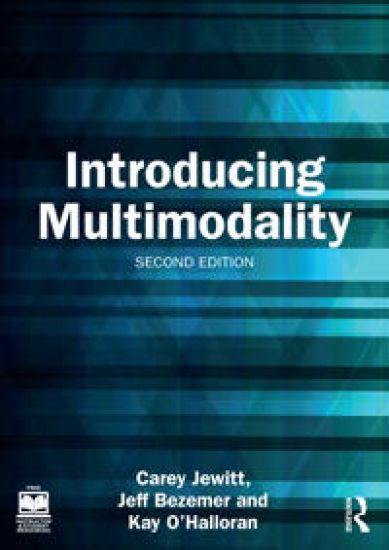
This accessible introduction to multimodality illuminates the potential of multimodal research for understanding the ways in which people communicate.Readers will become familiar with the key concepts and methods in various domains while learning how to engage critically with the notion of multimodality. Now fully revised to engage with new research, include new case studies and present a more global outlook, the book challenges widely held assumptions about language and presents the practical steps involved in setting up a multimodal study, including:formulating research questionscollecting research materialsassessing and developing methods of transcriptionconsidering the ethical dimensions of multimodal researchWith a wide range of examples, clear practical support and a glossary of terms, Introducing Multimodality is the ideal reference for undergraduate and postgraduate students in multimodality, semiotics, applied linguistics and media and communication studies. Online materials including an updated study guide, exercises and links to relevant resources are available on the Student and Instructor website at www.routledge.com/cw/jewitt and the Routledge Language and Communication Portal.
Introducing Multimodality

Introducing Multimodality

Carey Jewitt; Jeff Bezemer; Kay O'Halloran

TAYLOR FRANCIS LTD
2025
nidottu
This accessible introduction to multimodality illuminates the potential of multimodal research for understanding the ways in which people communicate.Readers will become familiar with the key concepts and methods in various domains while learning how to engage critically with the notion of multimodality. Now fully revised to engage with new research, include new case studies and present a more global outlook, the book challenges widely held assumptions about language and presents the practical steps involved in setting up a multimodal study, including:formulating research questionscollecting research materialsassessing and developing methods of transcriptionconsidering the ethical dimensions of multimodal researchWith a wide range of examples, clear practical support and a glossary of terms, Introducing Multimodality is the ideal reference for undergraduate and postgraduate students in multimodality, semiotics, applied linguistics and media and communication studies. Online materials including an updated study guide, exercises and links to relevant resources are available on the Student and Instructor website at www.routledge.com/cw/jewitt and the Routledge Language and Communication Portal.
Digital Touch

Digital Touch

Carey Jewitt; Sara Price

JOHN WILEY AND SONS LTD
2024
sidottu
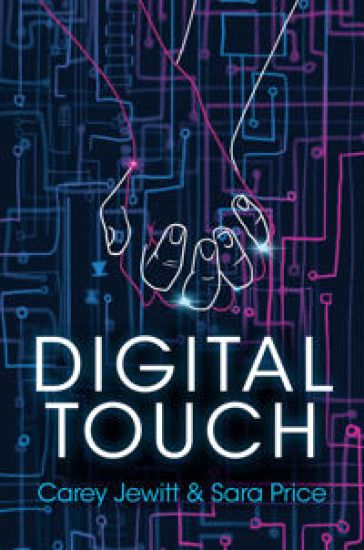
Touch matters. It is fundamental to how we know ourselves and each other, and it is central to how we communicate. Digital touch is embedded in many technologies, from wearable devices and gaming hardware to tactile robots and future technologies. What would it be like if we could hug or touch digitally across distance? How might this shape our sense of connection? How might we establish trust or protect our privacy and safety? Digital Touch is a timely and original book that addresses such questions. Offering a rich account of digital touch, the book introduces the key issues and debates, as well as the design and ethical challenges raised by digital touch. Using clear, accessible examples and creative scenarios, the book shows how touch – how we touch, as well as what, whom and when we touch – is being profoundly reshaped by our use of technologies. Above all, it highlights the importance of digital touch in our daily lives and how it will impact our relationships and way of life in the future. The first work of its kind, Digital Touch is the go-to book for anyone wanting to get to grips with this crucial emerging topic, especially students and scholars of Digital Media and Communication Studies, Digital Humanities, Sensory Studies, and Science and Technology Studies.
Digital Touch

Digital Touch

Carey Jewitt; Sara Price

JOHN WILEY AND SONS LTD
2024
nidottu
Touch matters. It is fundamental to how we know ourselves and each other, and it is central to how we communicate. Digital touch is embedded in many technologies, from wearable devices and gaming hardware to tactile robots and future technologies. What would it be like if we could hug or touch digitally across distance? How might this shape our sense of connection? How might we establish trust or protect our privacy and safety? Digital Touch is a timely and original book that addresses such questions. Offering a rich account of digital touch, the book introduces the key issues and debates, as well as the design and ethical challenges raised by digital touch. Using clear, accessible examples and creative scenarios, the book shows how touch – how we touch, as well as what, whom and when we touch – is being profoundly reshaped by our use of technologies. Above all, it highlights the importance of digital touch in our daily lives and how it will impact our relationships and way of life in the future. The first work of its kind, Digital Touch is the go-to book for anyone wanting to get to grips with this crucial emerging topic, especially students and scholars of Digital Media and Communication Studies, Digital Humanities, Sensory Studies, and Science and Technology Studies.
Interdisciplinary Insights for Digital Touch Communication

Interdisciplinary Insights for Digital Touch Communication

Carey Jewitt; Sara Price; Kerstin Leder Mackley; Nikoleta Yiannoutsou; Douglas Atkinson

Springer Nature Switzerland AG
2020
nidottu
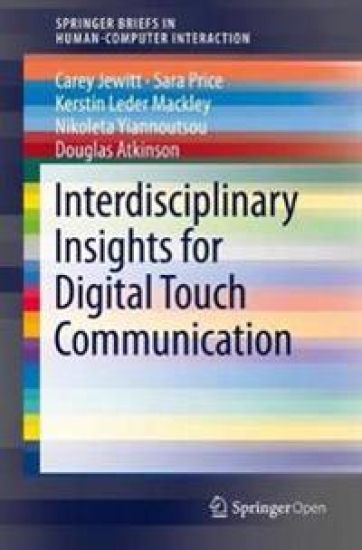
Communication is increasingly moving beyond ‘ways of seeing’ to ‘ways of feeling’. This Open Access book provides social design insights and implications for HCI research and design exploring digitally mediated touch communication. It offers a socially orientated map to help navigate the complex social landscape of digitally mediated touch for communication: from everyday touch-screens, tangibles, wearables, haptics for virtual reality, to the tactile internet of skin. Drawing on literature reviews, new case-study vignettes, and exemplars of digital touch, the book examines the major social debates provoked by digital touch, and investigates social themes central to the communicative potential and societal consequences of digital touch: · Communication environments, capacities and practices · Norms associations and expectations · Presence, absence and connection · Social imaginaries of digital touch · Digital touch ethics and values The book concludes with a discussion of the significance of social understanding and methods in the context of Interdisciplinary collaborations to explore touch, towards the design of digital touch communication, ‘ways of feeling’, that are useable, appropriate, ethical and socially aware.
Introducing Multimodality

Introducing Multimodality

Carey Jewitt; Jeff Bezemer; Kay O'Halloran

Routledge
2016
sidottu
This accessible introduction to multimodality illuminates the potential of multimodal research for understanding the ways in which people communicate. Readers will become familiar with the key concepts and methods in various domains while learning how to engage critically with the notion of multimodality. The book challenges widely held assumptions about language and presents the practical steps involved in setting up a multimodal study, including: formulating research questions collecting research materials assessing and developing methods of transcription considering the ethical dimensions of multimodal research.A self-study guide is also included, designed as an optional stand-alone resource or as the basis for a short course. With a wide range of examples, clear practical support and a glossary of terms, Introducing Multimodality is an ideal reference for undergraduate and postgraduate students in multimodality, semiotics, applied linguistics and media and communication studies. Online materials, including colour images and more links to relevant resources, are available on the companion website at www.routledge.com/cw/jewitt and the Routledge Language and Communication Portal.
Introducing Multimodality

Introducing Multimodality

Carey Jewitt; Jeff Bezemer; Kay O'Halloran

Routledge
2016
nidottu
This accessible introduction to multimodality illuminates the potential of multimodal research for understanding the ways in which people communicate. Readers will become familiar with the key concepts and methods in various domains while learning how to engage critically with the notion of multimodality. The book challenges widely held assumptions about language and presents the practical steps involved in setting up a multimodal study, including: formulating research questions collecting research materials assessing and developing methods of transcription considering the ethical dimensions of multimodal research.A self-study guide is also included, designed as an optional stand-alone resource or as the basis for a short course. With a wide range of examples, clear practical support and a glossary of terms, Introducing Multimodality is an ideal reference for undergraduate and postgraduate students in multimodality, semiotics, applied linguistics and media and communication studies. Online materials, including colour images and more links to relevant resources, are available on the companion website at www.routledge.com/cw/jewitt and the Routledge Language and Communication Portal.
Multimodal Teaching and Learning

Multimodal Teaching and Learning

Gunther Kress; Carey Jewitt; Jon Ogborn; Tsatsarelis Charalampos

Bloomsbury Academic
2014
nidottu
This book takes a radically different look at communication, and in doing so presents a series of challenges to accepted views on language, on communication, on teaching and, above all, on learning. Drawing on extensive research in science classrooms, it presents a view of communication in which language is not necessarily communication - image, gesture, speech, writing, models, spatial and bodily codes. The action of students in learning is radically rethought: all participants in communication are seen as active transformers of the meaning resources around them, and this approach opens a new window on the processes of learning.
Technology, Literacy, Learning

Technology, Literacy, Learning

Carey Jewitt

Routledge
2008
nidottu
With the recent explosion of technology into the world of education across the globe, this book sets out a framework for rethinking the three key areas of schooling that are most affected by technology's impact on education today: knowledge as curriculum; learning and pedagogy and literacy across the curriculum. A well-known author in this field, Jewitt takes the reader through an analysis of teaching and learning with materials such as CD-ROMs, websites, the Internet, computer programming applications and computer games, relating each in turn to the main curriculum topics.Through this detailed scrutiny the following questions emerge:How do the new technologies reshape knowledge as curriculum?How does the use of new technologies in the classroom reshape learning pedagogy?As writing moves from page to screen, what is the impact on students' situated literacy practices and how does it effect learning?Through these questions, this book demonstrates that mode, technology and curriculum knowledge are fundamentally connected and describes how teacher and student roles in the classroom could be altered in the face of new technologies.
Technology, Literacy, Learning

Technology, Literacy, Learning

Carey Jewitt

Routledge
2005
sidottu
With the recent explosion of technology into the world of education across the globe, this book sets out a framework for rethinking the three key areas of schooling that are most affected by technology's impact on education today: knowledge as curriculum; learning and pedagogy and literacy across the curriculum. A well-known author in this field, Jewitt takes the reader through an analysis of teaching and learning with materials such as CD-ROMs, websites, the Internet, computer programming applications and computer games, relating each in turn to the main curriculum topics.Through this detailed scrutiny the following questions emerge:How do the new technologies reshape knowledge as curriculum?How does the use of new technologies in the classroom reshape learning pedagogy?As writing moves from page to screen, what is the impact on students' situated literacy practices and how does it effect learning?Through these questions, this book demonstrates that mode, technology and curriculum knowledge are fundamentally connected and describes how teacher and student roles in the classroom could be altered in the face of new technologies.
Multimodal Literacy

Multimodal Literacy

Carey Jewitt

Peter Lang Publishing Inc
2003
nidottu
Multimodal Literacy challenges dominant ideas around language, learning, and representation. Using a rich variety of examples, it shows the range of representational and communicational modes involved in learning through image, animated movement, writing, speech, gesture, or gaze. The effect of these modes on learning is explored in different sites including formal learning across the curriculum in primary, secondary, and higher education classrooms, as well as learning in the home. The notion of literacy and learning as a primary linguistic accomplishment is questioned in favor of the multimodal character of learning and literacy. By illustrating how a range of modes contributes to the shaping of knowledge and what it means to be a learner, Multimodal Literacy provides a multimodal framework and conceptual tools for a fundamental rethinking of literacy and learning.
Multimodal Teaching and Learning

Multimodal Teaching and Learning

Gunther Kress; Carey Jewitt; Jon Ogborn; Tsatsarelis Charalampos

Continuum International Publishing Group Ltd.
2001
nidottu
'Multimodal Teaching and Learning: The Rhetorics of the Science Classroom achieves the rare goal of explicating multimodality as both theory and practice. This is an importantly concrete analysis, derived from extended, careful, and interdisciplinary observation, which challenges our thinking about how meaning and knowledge are shaped by our modes of communication. The book appeals to a wide range of scholars and practitioners far beyond the science classroom.' Professor Ron Scollon, Department of Linguistics, Georgetown University. This book takes a radically different look at communication, and in doing so presents a series of challenges to accepted views on language, on communication, on teaching and, above all, on learning. Drawing on extensive research in science classrooms, it presents a view of communication in which language is not necessarily communication - image, gesture, speech, writing, models, spatial and bodily codes. The action of students in learning is radically rethought: all participants in communication are seen as active transformers of the meaning resources around them, and this approach opens a new window on the processes of learning.
Multimodal Teaching and Learning

Multimodal Teaching and Learning

Gunther Kress; Carey Jewitt; Jon Ogborn; Tsatsarelis Charalampos

Continuum International Publishing Group Ltd.
2001
sidottu
'Multimodal Teaching and Learning: The Rhetorics of the Science Classroom achieves the rare goal of explicating multimodality as both theory and practice. This is an importantly concrete analysis, derived from extended, careful, and interdisciplinary observation, which challenges our thinking about how meaning and knowledge are shaped by our modes of communication. The book appeals to a wide range of scholars and practitioners far beyond the science classroom.' Professor Ron Scollon, Department of Linguistics, Georgetown University. This book takes a radically different look at communication, and in doing so presents a series of challenges to accepted views on language, on communication, on teaching and, above all, on learning. Drawing on extensive research in science classrooms, it presents a view of communication in which language is not necessarily communication - image, gesture, speech, writing, models, spatial and bodily codes. The action of students in learning is radically rethought: all participants in communication are seen as active transformers of the meaning resources around them, and this approach opens a new window on the processes of learning.