Kirjojen hintavertailu. Mukana 12 390 323 kirjaa ja 12 kauppaa.

Kirjailija

Carin Kuoni

Kirjat ja teokset yhdessä paikassa: 4 kirjaa, julkaisuja vuosilta 2017-2024, suosituimpien joukossa Bigert & Bergström : Works 1986-2016. Vertaile teosten hintoja ja tarkista saatavuus suomalaisista kirjakaupoista.

4 kirjaa

Kirjojen julkaisuhaarukka 2017-2024.

Bigert & Bergström : Works 1986-2016

Bigert & Bergström : Works 1986-2016

Sara Arrhenius; Staffan Boije af Gennäs; Lydia Chatziiakovou; Simon Critchley; Aris Fioretos; Stefanie Hessler; Jeffrey Kastner; Carin Kuoni; Sina Najafi; Cecilia Sjöholm; Nato Thompson; Christopher Turner; Sven-Olov Wallenstein

Art and Theory
2017
sidottu
Swedish artists Mats Bigert and Lars Bergström first began their creative partnership in 1986, and have since become internationally recognized for a wide range of art projects ranging from large-scale sculptures and installations to performance and film. The duo are known for their analysis of current societal and environmental issues, often using humour as a tool. They tend to focus on scientific, climate-related and social issues, and the intersection between them. This detailed monograph covers their entire artistic oeuvre, from its very beginnings to the present moment a wealth of material that allows for an in-depth examination of their practice and its continuing relevance.
Breaking Protocol

Breaking Protocol

Carin Kuoni

Inventory Press LLC
2024
nidottu
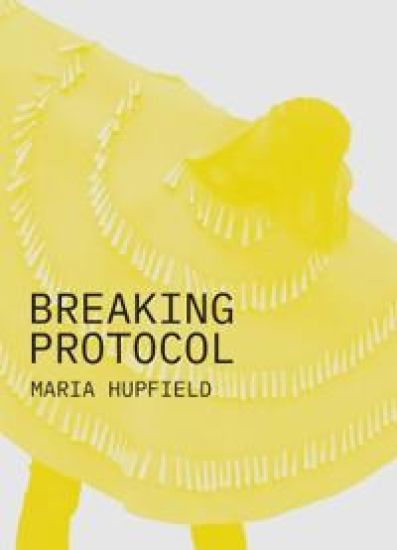
Collaborative conversations on Indigenous performance art, convened by a leading practitioner For Breaking Protocol, transdisciplinary artist Maria Hupfield embarked on a research project on the protocols of Indigenous performance—tracing Indigenous knowledge systems, land-preservation practices and feminist scholarship to illuminate strategies for enacting refusal within decolonial frameworks. The book draws from Hupfield’s “Coffee Break”—a series of conversations held over Zoom during the pandemic, in which Hupfield invited international Indigenous performance artists to discuss their work (from dance to stand-up comedy), who in turn invited other artists to join the conversations. Building on these exchanges, Breaking Protocol asks what we can learn from Indigenous, place-based artistic modes of making and practice to open spaces for reciprocity and multiplicity. Contributors include: Rebecca Belmore, Lori Blondeau, Pelenakeke Brown, Katherine Carl, Re’al Christian, Christen Clifford, TJ Cuthand, Raven Davis, Vanessa Dion Fletcher, Akiko Ichikawa, Ursula Johnson, Suzanne Kite, Charles Koroneho, Carin Kuoni, Cheryl L’Hirondelle, Gabrielle L’Hirondelle Hill, Jackson 2Bears Leween, Tanya Lukin Linklater, Cathy Mattes, Meagan Musseau, Wanda Nanibush, Peter Morin, Archer Pechawis, Rosanna Raymond, Skeena Reece, Georgiana Uhlyarik, Charlene Vickers and Laakkuluk Williamson Bathory.
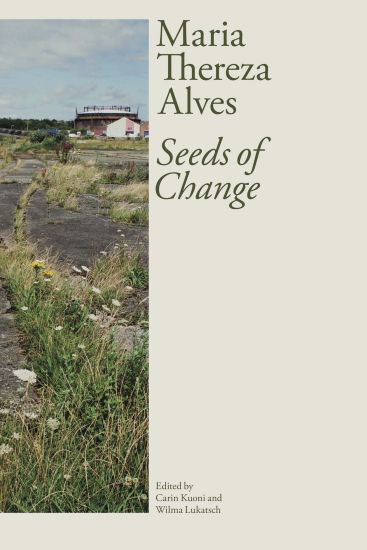
Maria Thereza Alves

Maria Thereza Alves

Carin Kuoni; Wilma Lukatsch

Michigan Publishing Services
2023
nidottu
In an era of climate change, extractivist economies, and forced mobility, who and what belongs? Throughout her prolific career, Brazilian artist Maria Thereza Alves has focused precisely on this question. Perhaps her most iconic, generative, and expansive work is Seeds of Change, a twenty-year investigation into the hidden history of ballast flora—displaced plant seeds found in the soil used to balance shipping vessels during the colonial period.The project examines the influx and significance of imported plants, materializing at port cities across several continents: Marseille, Reposaari, Liverpool, Exeter and Topsham, Dunkerque, Bristol, Antwerp, and most recently New York, where it was awarded the Jane Lombard Prize for Art and Social Justice by the Vera List Center for Art and Politics at The New School. In each city, Seeds of Change has revealed the entangled relationship between “alien” plant species and the colonial maritime trade of goods and enslaved peoples, contrasting their seemingly innocuous beauty with the violent history associated with their arrival. By focusing on ballast flora, Alves invites us to de-border postcolonial historical narratives and consider a “borderless history.”The first monograph of Alves’s historic project, Seeds of Change is edited by Carin Kuoni and Wilma Lukatsch and features essays by the artist as well as Katayoun Chamany, Seth Denizen, Jean Fisher, Yrjö Haila, Richard William Hill, Heli M. Jutila, J. Kehaulani Kauanui, Lara Khaldi, Tomaž Mastnak, Marisa Prefer, and Radhika Subramaniam.
Studies into Darkness

Studies into Darkness

Carin Kuoni

Michigan Publishing Services
2022
nidottu
There have been few times in US American history when the very concept of freedom of speech—its promise and its contradictions—has been under greater scrutiny. Guided by acclaimed artist, filmmaker, and activist Amar Kanwar, the Vera List Center for Art and Politics at The New School convened a series of public seminars on freedom of speech with the participation of some of the most original thinkers and artists on the topic. Structured as an open curriculum, each seminar examined a particular aspect of freedom of speech, reflecting on and informed by recent debates around hate speech, censorship, sexism, and racism in the US and elsewhere. Studies into Darkness emerges from these seminars as a collection of newly commissioned texts, artist projects, and resources that delve into the intricacies of free speech. Providing a practical and historical guide to free speech discourse and in-depth investigations that extend far beyond the current moment, and featuring poetic responses to the crises present in contemporary culture and society around expression, this publication provocatively questions whether true communication is ever attainable. Contributions by Zach Blas, Mark Bray, Natalie Diaz, Aruna D’Souza, Silvia Federici and Gabriela López Dena, Jeanne van Heeswijk, shawné michaelain holloway, Prathibha Kanakamedala and Obden Mondésir, Amar Kanwar, Carin Kuoni, Lyndon, Debora, and Abou, Svetlana Mintcheva, Mendi + Keith Obadike, Vanessa Place, Laura Raicovich, Michael Rakowitz, Kameelah Janan Rasheed, and Nabiha Syed.