Kirjojen hintavertailu. Mukana 12 181 938 kirjaa ja 12 kauppaa.
Kirjailija
Carl Abrahamsson
Kirjat ja teokset yhdessä paikassa: 19 kirjaa, julkaisuja vuosilta 2012-2024, suosituimpien joukossa The Fenris Wolf 9. Vertaile teosten hintoja ja tarkista saatavuus suomalaisista kirjakaupoista.
Carl Abrahamsson; Vanessa Sinclair; Gary Lachman; Katelan Foisy; Sharron Kraus; Demetrius Lacroix; Graham Duff; Ken Henson; Peter Grey; Val Denham; Claire-Madeline Culkin; Steven Reisner; Katy Bohinc; Olga Cox Cameron; Ingo Lambrecht; Elliott Edge; Charlotte Rodgers; Alkistis Dimech; Fred Yee; Robert Ansell; Ray O Neill; Derek Elmore; Julio Mendes Rodrigo; Eve Watson
This volume contains material from the conference Psychoanalysis, Art & the Occult (London, 2016), with contributions from Gary Lachman, Vanessa Sinclair, Katelan Foisy, Sharron Kraus, Demetrius Lacroix, Graham Duff, Ken Henson, Peter Grey, Val Denham, Claire-Madeline Culkin, Steven Reisner, Katy Bohinc, Olga Cox Cameron, Ingo Lambrecht, Elliott Edge, Charlotte Rodgers, Alkistis Dimech, Fred Yee, Robert Ansell, Ray O Neill, Derek M Elmore, Julio Mendes Rodrigo, Eve Watson, and Carl Abrahamsson. Topics include Sigmund Freud and the Occult, Art as Alchemy, the art of John Balance, Cut-Ups as a magical and psychoanalytic tool, Maori shamanism within therapy, Animistic art, Dance as ritual, Androgynous aspects in Austin Osman Spare’s art, Salvador Dali’s meeting with Jacques Lacan, Rebis: the Double Being, David Bowie’s Non-Human Effect, similarities between ritual magic and psychoanalysis, and much more.
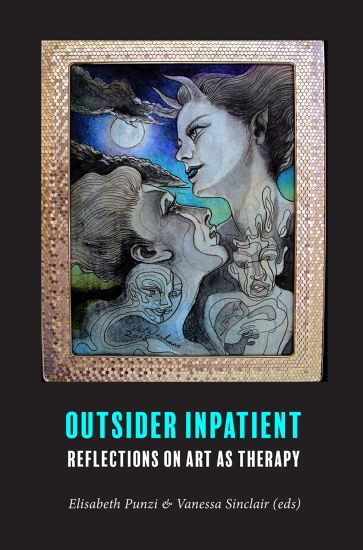
Outsider Inpatient is an anthology of perspectives about the value of art and creativity within psychiatric environments. It specifically shines the light on experiences at Lillhagen Hospital in Gothenburg, Sweden, where inpatients were allowed to paint and decorate the entire walls of long corridors in the basements of the hospital. Also included are valuable thoughts about creativity in general from clinicians, art historians, psychoanalysts, and artists. What constitutes "outsider" art? How can creativity be used in the treatment of (in)patients? Why do certain artists create the way they do, and how does it affect them? Outsider Inpatient is an informative study about a topic that has created as much controversy and criticism as it has support and adherents, in environments as diverse as clinical psychiatry and psychology, art theory, social sciences, psychoanalysis and philosophy. This book has been produced in cooperation with the Center for Critical Heritage Studies and the University of Gothenburg, and contains texts by Elisabeth Punzi, Per Magnus Johansson, Johannes Nordholm, Inez Edstr m, Christian Munthe, Carl Abrahamsson, Vanessa Sinclair, and Val Denham.Trapart Books 2021, 6 x 9" paperback, 100 pages, illustrated.
The Fenris Wolf is a research journal focused on the human mind, developments in comparative magico-anthropology, and on the occultural implications and applications of these fields of study. This volume, the tenth, contains material by Ludwig Klages, David Beth, Henrik Dahl, Peter Sj stedt-H, Jesse Bransford, Max Razdow, Christopher Webster, Kendell Geers, Kadmus, Billie Steigerwald, Fred Andersson, Zaheer Gulamhusein, Charlotte Rodgers, Craig Slee, Damien Patrick Williams, Philip H. Farber, Thomas Bey William Bailey, Mitch Horowitz, Ramsey Dukes, Anders Lundgren, Peggy Nadramia, Nina Antonia, Jack Stevenson, Andrea Kundry, Joan Pope, Genesis Breyer P-Orridge, Vanessa Sinclair, Claire-Madeline Corso, and Carl Abrahamsson, on topics as diverse as magico-anthropology, sexual magic, eroto-psychedelic art, Friedrich Nietzsche's use of psychoactive drugs, the occult meaning of the Fenris Wolf in Scandinavian Asatro, joint dreaming, mytho-historical traces within V lkish photography, the magic and influence of African art, disease as magical incentive, Cripkult, daoism, buddhism and machine consciousness, memetic entities, memetic magick, the transformative power of causative thinking, an interview with author Gary Lachman about Colin Wilson and his magical writings, dark Hollywood, Mike "Hellboy" Mignola and the Lovecraft connection, the full story of Benjamin Christensen's cinematic masterpiece "Witchcraft Through the Ages (1922), the full story of Anton LaVey's Satanic Bible, the gnostic-alchemical eroticism in the art of Joan Pope, Genesis P-Orridge's memories of a life of occultural experimentation, and much more..."Wherever we look in and into time and space, there is that one fundamental phenomenon which seems more ingrained and integrated in the human psyche than anything else. Soundly embedded inside the survival instinct, the human being's relationship to magic has never really disappeared."- Carl Abrahamsson, from the chapter "Onwards to the Source "
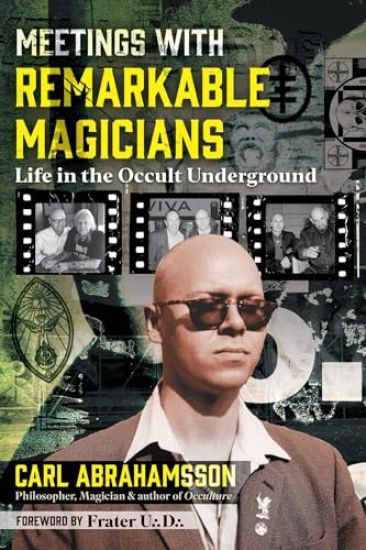
An unconventional memoir of a man immersed in magic and the occult• Explores the author’s extensive connections with infamous occultists and organizations, including Genesis P-Orridge and Thee Temple Ov Psychick Youth, Anton LaVey and the Church of Satan, and the Ordo Templi Orientis• Details the underlying occult impulses and magical experiences guiding the author’s artistic journey, his experiences in psychedelic culture and the punk subculture, and his experimentation with sex magic, occulture, and sigil magicWhat does it mean to live a life as an occultist? There may be no single answer, but for Carl Abrahamsson, it has entailed work in music, art, and film as well as deep engagement with renowned occult figures and organizations for more than 40 years.Illustrating the possibilities of a life infused with magic, Abrahamsson reflects on his decades spent in the company of some of the most unconventional thinkers of the late 20th and early 21st centuries. He reveals his involvement with psychedelic culture, the punk subculture, and numerous occult figures and organizations, including Genesis P-Orridge and Thee Temple Ov Psychick Youth, Anton LaVey’s Church of Satan, the Ordo Templi Orientis, and a branch of the American Golden Dawn.Interwoven with his occult experiences and meetings with infamous practitioners of magic, Abrahamsson describes his evolution as a multidisciplinary artist, always imbuing his diverse artistic practice with a developing occult philosophy. He also details his ongoing efforts to disseminate the occult arts via publishing companies like Psychick Release, Looking Glass Press, Edda Publishing, Trapart Books, and the occultural journal The Fenris Wolf—as well as fieldwork in Tibet, Nepal, and India through the Institute of Comparative Magico-anthropology. Through each encounter and reflection on the magical, shamanic, and mystical practices that structured his own life, Abrahamsson illuminates how it’s possible to experience a life of wisdom and miracles.
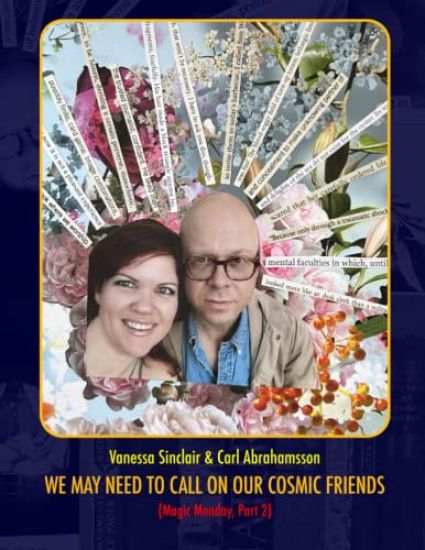
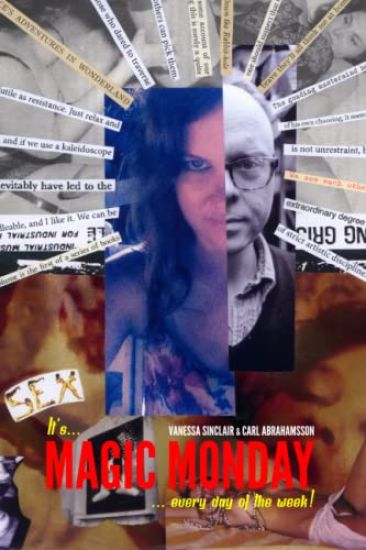
How do you integrate magic in your day-to-day life? Swedish author Carl Abrahamsson and American artist and psychoanalyst Vanessa Sinclair have successfully merged their interests in Psychoanalysis, Art and the Occult with their daily routines as a married couple. Every Monday on Patreon, they write about their ideas, theories, practices, experiences, collaborations, successes and perhaps even occasional failures, too. Once a year, their posts are antholgized into books like this one.Relentlessly rubbing out the boundaries between these interesting fields, Abrahamsson & Sinclair enthusiastically experiment with artistic expression in various media while strengthening agency and success in their occult work. All the while learning about themselves and each other in their quest for deeper insights.This book contains chapters on magic, mysticism, their relationships with Genesis Breyer P-Orridge, necromancy, the power of exposure and honesty, the cut-ups of William Burroughs and Brion Gysin as a magical technique, pathography, dreams, creativity, the unconscious, the dangers of inertia & entropy, occult documents from the "Society of Sentience," inspiration, herbal magic, writing a cut-up novel, meetings with infamous Satanist Anton LaVey, the tarot, keeping a diary, film as magic, glitchcraft, wisdoms of psychoanalysis, pansexuality, intuitive altar-building, initiation & secrecy, yoga, and much more.In their casual and inspiring style, Abrahamsson & Sinclair intimately share of themselves and their lives so that the readers can cherry-pick morsels of wisdom as they see fit. Included are also over a hundred color images: portraits, photographs, film stills, collages and cut-ups from Abrahamsson & Sinclair's vast and experimental output."Vanessa Sinclair is a female William Burroughs for the age of desperation." - Val Denham, artist"In marked contrast to the surface level reflections that the psychological model can be prone to, Vanessa Sinclair's work provides a necessary and significant counterweight. This work gives us a vital and re-energised perspective on how the insights of psychoanalytic thinking, language and artistic expression can have true transformative power..." - Steve Dee, author"Carl performs magick; he concretises meaning and brings forth revelation into his carefully focused vision." - Genesis Breyer P-Orridge, artist"Carl guides a new generation of thinkers into a future that asks what if and gets even more strange, surreal, beautiful, and mystical than one can dream." - Gabriela Herstik, author of Inner Witch: A Modern Guide to the Ancient Craft and Sacred Sex: The Magick and Path of the Divine Erotic."Carl Abrahamsson is not only among today's leading occult writers and artists, but is, in fact, one of this generation's most vital public intellectuals. Carl is our magickal Moses hoisting a fiery serpent in the cultural wilderness." - Mitch Horowitz, PEN Award-winning author of Occult America and Uncertain Places
Tankar formulerade av f rfattaren Carl Abrahamsson under det f rsta pandemi ret, 2020-2021. Sj lva reflekterandet och formulerandet ledde till ett faktiskt f rflyttande fr n storstad till sm stad, fr n tidsbesatthet till tidl shet, fr n grumlighet till klarhet. Sm pens er med magisk kraft att f r ndra en livssituation till det b ttre n r de tr ffas i det dolda bakom p rmarna i en och samma bok. ven det till synes flyktiga l mnar sp r efter sig - en liten tanke r cker gott och v l f r att skapa stor f r ndring, likt en fj rils vingslag i evigheten och det o ndliga."Ovissheten om huruvida n gon l ser eller inte l ser dessa mina pens er r mig lika futil som vissheten om att jag verkligen inte r intresserad av andras. Ska man m tas halvv gs n r man egentligen redan r framme, eller stanna kvar i b rjan till dess andra hastat iv g och f rbi? Futil r mig ven vissheten om denna ovisshet."
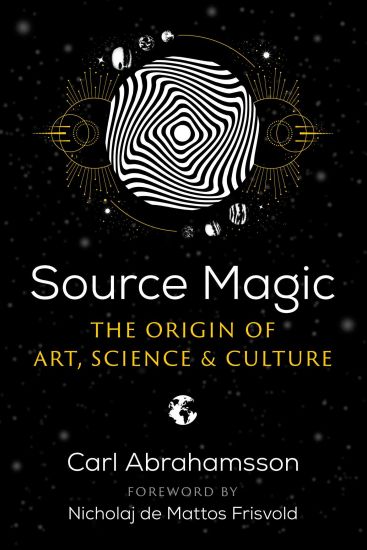
Since the dawn of time, magic is the node around which all human activities and culture revolve. As magic entered the development of science, art, philosophy, religion, myth, and psychology, it still retained its essence: that we have a dynamic connection with all other forms of life.Exploring the source magic that flows beneath the surface of culture and occulture throughout the ages, Carl Abrahamsson offers a “magical-anthropological” journey from ancient Norse shamanism to the modern magick of occultists like Genesis P-Orridge. He looks at how human beings relate to and are naturally attracted to magic. He examines in depth the consequences of magical practice and how the attraction to magic can be corrupted by both religious organizations and occult societies. He shows how the positive effects of magic are instinctively grasped by children, who view the world as magical.The author looks at magic and occulture as they relate to psychedelics, Witchcraft, shamanism, Thee Temple ov Psychick Youth (TOPY), the panic rituals of the Master Musicians of Joujouka in Morocco, psychological individuation processes, literary “magical realism,” and the cut-up technique of Beat icons like William S. Burroughs and Brion Gysin. He explores the similarities in psychology between poet Ezra Pound and magician Austin Osman Spare. He looks at the Scandinavian Fenris Wolf as a mythic force and how personal pilgrimages can greatly enrich our lives. He also examines the philosophy of German author Ernst Jünger, the magical techniques of British filmmaker Derek Jarman, and the quintessential importance of accepting our own mortality.
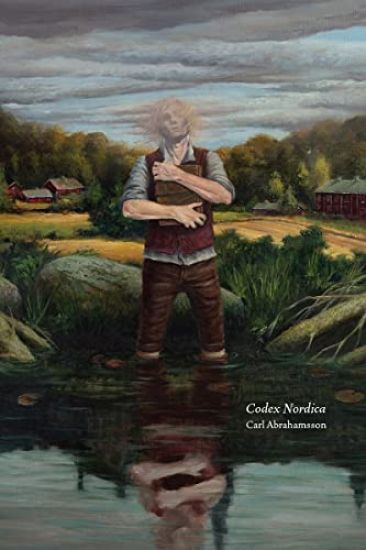
I spillrorna efter långvariga krig och katastrofer är Sverige ett löst sammanhållet feodalt rike omgärdat av okända hot och plågat av inre stridigheter. Regenten Soldan Ridderberg styr med järnhand, med hjälp av de mäktigaste adelsmännen. Han värnar om den unge Hjalmar Stackelstad, som tillåtits leva isolerad på en gård och arbeta med att uttolka ”Codex Nordica” – en samling tankar om en återuppbyggnad grundad i humanistiska ideal och inte endast rå makt. Tillsammans med den äldre vännen Jonas Trädgårds jobbar Stackelstad och Ridderberg med att få till stånd en omröstning för att få Codex att bli hela landets rättesnöre. Somliga adelsmän är för, andra emot. I det att man röner vissa framgångar och Stackelstad tar allt mer synlig plats, blir han mer och mer misstänksam mot alla. Varför har han fått leva ett så privilegierat liv? Vilken betydelse har manuskriptet egentligen? Är det överhuvudtaget möjligt att återgå till ett civiliserat liv efter en så lång tid av kaos? I det att Stackelstad och Trädgårds sprider tankarna på Mellansveriges gods och gårdar, ökar motståndet – både det osynliga och det synliga. Den intellektuelle som förankrats i ideal och eftertanke möter motvilligt de ränker och det våld han hittills skyddats från. Men det är nu inte längre fråga om att vilja eller inte vilja för Stackelstad. Han befinner sig oundvikligen i framtidens absoluta mittpunkt – både Sveriges och sin egen.
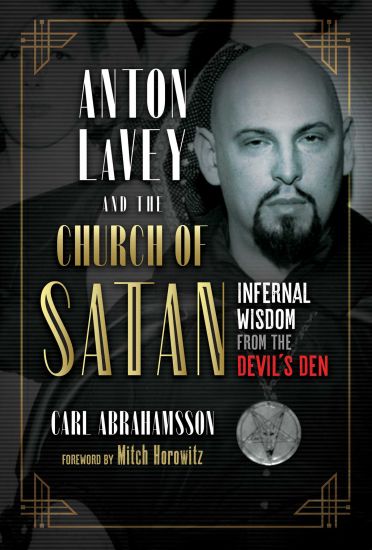
An intimate exploration of the life, philosophy, and lasting occult influence of Anton LaVey, the founder of the Church of Satan With his creation of the infamous Church of Satan in 1966 and his bestselling book The Satanic Bible in 1969, Anton Szandor LaVey (1930-1997) became a controversial celebrity who basked in the attention and even made a successful career out of it. But who was Anton LaVey behind the public persona that so easily provoked Christians and others intolerant of his views? One of privileged few who spent time with the “Black Pope” in the last decade of his life, Carl Abrahamsson met Anton LaVey in 1989, sparking an “infernally” empowering friendship. In this book Abrahamsson explores what LaVey was really about, where he came from, and how he shaped the esoteric landscape of the 1960s. The author shares in-depth interviews with the notorious Satanist’s intimate friends and collaborators, including LaVey’s partner Blanche Barton, his son Xerxes LaVey, current heads of the Church of Satan Peter Gilmore and Peggy Nadramia, occult filmmaker Kenneth Anger, LaVey’s personal secretary Margie Bauer, film collector Jack Stevenson, and film historian Jim Morton. Abrahamsson also shares never-before-published material from LaVey himself, including discussions between LaVey and Genesis P-Orridge and transcripts from LaVey’s never-released “Hail Satan!” video. Providing inside accounts of the Church of Satan and activities at the Black House, this intimate exploration of Anton LaVey reveals his ongoing role in the history of culture and magic.
An occult thriller set in an international environment. Unearthed plans and designs stemming from radical inventor Nikola Tesla could solve the world's energy problems. These plans suddenly generate a vortex of interest from various powers. Thrown into this maelstrom of international intrigue is Victor Ritterstadt, a soul searching magician with a mysterious and troubled past. From Berlin, over Macedonia and all the way to Nepal, Ritterstadt sets out on an inner quest. Espionage, love, UFOs, magic, telepathy, conspiracies, LSD, and more in this shocking story of a world about to be changed forever."It's a thrilling roller coaster ride through psychedelic adventures, juicy romantic interludes, metaphoric dreamscapes, high Himalayan yoga enclaves, telepathic portals, 60's flashbacks, magical constructs, secret government pursuits and many more twists that kept all three of my eyes open. It's a story that you'll definitely want to keep non-stop reading, which I enthusiastically recommend." - George Douvris, Links by George"Mother, Have A Safe Trip is a highly entertaining and thought-provoking novel. Chock-full of psychedelia, the book is also a much welcome addition to the far too few fictional works published dealing with psychedelic culture." - Henrik Dahl, Psychedelic Press"The dialogues are great. But it's too short. I wanted more." - Genesis Breyer P-Orridge, Artist"It's a wonderful read. A lovely book." - June Newton/Alice Springs, Photographer
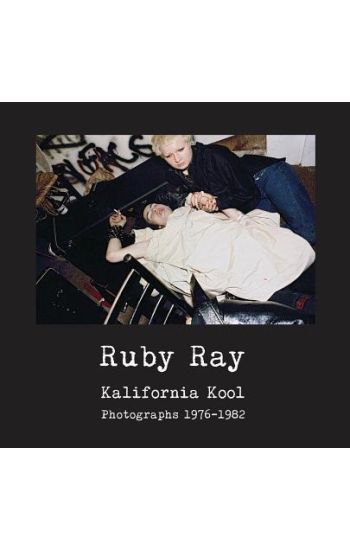
Punk and industrial culture in late '70s and early '80s San Francisco Spanning music, art and literature, the industrial and punk scenes of San Francisco in the late 1970s and early 1980s were diverse but united by a DIY, anti-authoritarian attitude. Photographer Ruby Ray was there to capture it all in the same spirit. With her work appearing in the legendary punk zine Search & Destroy and its successor RE/Search, Ray was at the epicenter of, and a key participant in, a vital cultural moment vibrant with provocation and creativity. A local experimental music and art scene supported artists like Bruce Conner, William S. Burroughs and Louise Nevelson and attracted groundbreaking bands like Devo, the Mutants, Boyd Rice and the Dead Kennedys, as well as established international bands like Throbbing Gristle, the Clash and the Sex Pistols (in fact, Ray was there to shoot their famous final concert at the Winterland Ballroom). Ruby Ray: Kalifornia Kool collects the photographer’s images from this time: live shots, backstage parties, apartments overflowing with youthful exuberance, elegant portraits of key people and photographic experiments. Her work captures a time and a place where West Coast open-mindedness, youth, art, music and electricity merged. As Carl Abrahamsson puts it in his introduction to this volume, “Ruby’s images open up a portal to a mythic and frenzied scene and show that it’s true: all mythologies are real.” Ruby Ray (born 1952) is an American photographer, well known for her photography of the early punk, post-punk and industrial movements in California in the late 1970s and early 1980s. She began her photography career in 1977, when her photographs began appearing in Search & Destroy.
Explores the role of magic and the occult in art and culture from ancient times to today • Examines key figures behind esoteric cultural developments, such as Carl Jung, Anton LaVey, Paul Bowles, Aleister Crowley, and Rudolf Steiner • Explores the history of magic as a source of genuine counter culture and compares it with our contemporary soulless, digital monoculture Art, magic, and the occult have been intimately linked since our prehistoric ancestors created the first cave paintings some 50,000 years ago. In this deep exploration of “occulture”--the liminal space where art and magic meet--Carl Abrahamsson reveals the integral role played by magic and occultism in the development of culture throughout history as well as their relevance to the continuing survival of art and creativity. Blending magical history and esoteric philosophy with his more than 30 years’ experience in occult movements, Showing how art and magic were initially one and the same, the author reveals how the magic of art can be restored if art is employed as a means rather than an end--if it is intense, emotional, violent, and expressive--and offers strategies for creating freely, magically, even spontaneously, with intent unfettered by the whims of trends, a creative practice akin to chaos magick that assists both creators and spectators to live with meaning. He also looks at intuition and creativity as the cornerstones of genuine individuation, explaining how insights and illuminations seldom come in collective forms. Exploring magical philosophy, occult history, the arts, psychology, and the colorful grey areas in between, Abrahamsson reveals the culturally and magically transformative role of art and the ways the occult continues to transform culture to this day.
Writer Carl Abrahamsson started taking photos to go along with the interviews he made for the fanzines “Lollipop” and “Acts Of Interstellar Torture” (1985-1988). From this vast and snap-happy collection comes “FanzinEra”, a selection which includes portraits and live shots of underground superstars like: Iggy Pop, Sonic Youth, Lydia Lunch, Richard Kern, Nick Zedd, Joe Coleman, The Gun Club, The Cramps, Union Carbide Productions, The Leather Nun, Screamin’ Jay Hawkins, Alex Chilton, The Church, The Go-Betweens, Long Ryders, Died Pretty, The Scientists, The Saints, Sort Sol, Sator, John Lydon, Legendary Stardust Cowboy, New Order, The Godfathers, Genesis P-Orridge, Henry Rollins, Pere Ubu, Hüsker Dü, The Shamen, The Jesus and Mary Chain, Zodiac Mindwarp and the Love Reaction, Dom Dummaste, The Stomachmouths, The Nomads, The Creeps, Pushtwangers, Livingstones, Wylde Mammoths, Blue For Two and Cortex... ... To name but a few! Also included are textual flashbacks and quotes from the interviews, and an introduction by photographer Richard Kern.