
Kirjailija
Carl Boggs
Kirjat ja teokset yhdessä paikassa: 24 kirjaa, julkaisuja vuosilta 1989-2025, suosituimpien joukossa Intellectuals and the Crisis of Modernity. Vertaile teosten hintoja ja tarkista saatavuus suomalaisista kirjakaupoista.
24 kirjaa
Kirjojen julkaisuhaarukka 1989-2025.

This book explores the long and complex history of antiwar movements in the United States, with emphasis on the 1960s sustained protests against the Vietnam War as historical and conceptual point of departure. While some movements have enjoyed short-term success, helping to end particular wars and other types of U.S. foreign interventions, the general outcome has been that of failure: no movement has been able to overturn the powerful institutions of warmaking in American society - nor in fact has there been a political strategy to achieve such a goal. The result is that, with the end of any specific cycle of mass protest, the warfare state (still fully intact, with strong popular legitimacy) prepares for the next round of military ventures while the permanent war system expands year by year, decade by decade. This book explores some possible resolutions to this historical impasse.

This book explores a full history of United States relations with both the Soviet Union and Russia, beginning with U.S. efforts to invade Russia during the Woodrow Wilson years. That relationship has been presented, from the American side, in terms of a perpetual Soviet/Russian threat, from the Leninist period through Stalin, Khrushchev, Brezhnev, Gorbachev, and, more recently, the tenure of Vladimir Putin. The argument here is that the Soviet Union and Russia have never posed a serious threat to the U.S. The only "threat" has been in the form of independent Soviet or Russian geopolitical power across Eurasia, as it prevents the U.S. from achieving economic and political supremacy in that region. The Great Fear has long been sustained by the ideological force of Russophobia, a form of political demonology that justifies high levels of military spending, military interventions, regime-change operations, and proxy wars orchestrated by the military-industrial complex. The main narrative here is that the real threat works in reverse -- it is precisely the military power of NATO and other Western powers that poses and existential threat to the Russians, who occupy the biggest landmass in the world with unprecedented levels of natural resources.

Fugitive Politics explores the intersection between politics and ecology, between the requirements for radical change and the unprecedented challenges posed by the global crisis, a dialectic has rarely been addressed in academia.Across eight chapters, Carl Boggs explores how systemic change may be achieved within the current system, while detailing attempts at achieving change within nation-states. Boggs states that any notion of revolution seems fanciful in the current climate, contending that controlling elites have concentrated their hold on corporate power along three self-serving fronts: technology (Big Tech) and the surveillance order, militarism and the warfare state, and intensification of globalized power. Combined with this Boggs cites the fundamental absence of revolutionary counter-forces, arguing that after decades of subservice relevant, allied to the rise of identity politics and social movements, the Marxist theoretical legacy is now exhausted and will not provide an exit from the crisis. Boggs concludes that the only possibility for fundamental change will come from an open style of politics, in the Jacobin tradition, operating within the overall structures of the current democratic state.Written for both an academic and a general readership, in the U.S. and beyond, Fugitive Politics will be of vital importance to those studying political theory, political philosophy, political history, Marxism and Marxist theory, authoritarian politics, ecology, environmental politics, and climate politics.

Fugitive Politics explores the intersection between politics and ecology, between the requirements for radical change and the unprecedented challenges posed by the global crisis, a dialectic has rarely been addressed in academia.Across eight chapters, Carl Boggs explores how systemic change may be achieved within the current system, while detailing attempts at achieving change within nation-states. Boggs states that any notion of revolution seems fanciful in the current climate, contending that controlling elites have concentrated their hold on corporate power along three self-serving fronts: technology (Big Tech) and the surveillance order, militarism and the warfare state, and intensification of globalized power. Combined with this Boggs cites the fundamental absence of revolutionary counter-forces, arguing that after decades of subservice relevant, allied to the rise of identity politics and social movements, the Marxist theoretical legacy is now exhausted and will not provide an exit from the crisis. Boggs concludes that the only possibility for fundamental change will come from an open style of politics, in the Jacobin tradition, operating within the overall structures of the current democratic state.Written for both an academic and a general readership, in the U.S. and beyond, Fugitive Politics will be of vital importance to those studying political theory, political philosophy, political history, Marxism and Marxist theory, authoritarian politics, ecology, environmental politics, and climate politics.

The major Communist parties in Western Europe claim a commitment to a "democratic road to socialism." Often this is a genuine evolution of traditional Marxist/Leninist ideology based on the assumption that political and economic power can be obtained through gradual change rather than revolution and through the utilization of democratic processes. How well is this strategy working? Not very well, concludes the author of this book. Carl Boggs bases his analysis on a theoretical assessment of the historical and strategic development of Eurocommunism — of those par ties and movements (notably in France, Italy, and Spain) that seek a transition to socialism based on the democratization of existing political and economic structures (the so-called parliamentary road to socialism). After examining the logic and premises of this conception, he moves to a critique of the major Eurocommunist theoreticians—e. g., Togliatti, Berlinguer, Ingrao, Napolitano, Carrillo, Marchais, Elleinstein, Poulantzas, and Claudin. He concludes that their ideas fail to resolve the historic Marxist conflict between democratization and rationalization (understood here in terms of the drive toward statism, bureaucratization, and further refinement of the social division of labor under capitalism). In fact, says Dr. Boggs, Eurocommunism will probably represent a sort of historical resolution of legitimation and production crises within Mediterranean capitalism that extends rather than overturns hierarchical social and authority relations, the capitalist state, and the social division of labor. Such a resolution might broadly parallel the function of social democracy in Northern Europe in a previous phase of capitalist development.

Facing Catastrophe: Food, Politics, and the Ecological Crisis
Carl Boggs
Political Animal Press
2020
nidottu

The major Communist parties in Western Europe claim a commitment to a "democratic road to socialism." Often this is a genuine evolution of traditional Marxist/Leninist ideology based on the assumption that political and economic power can be obtained through gradual change rather than revolution and through the utilization of democratic processes. How well is this strategy working? Not very well, concludes the author of this book. Carl Boggs bases his analysis on a theoretical assessment of the historical and strategic development of Eurocommunism — of those par ties and movements (notably in France, Italy, and Spain) that seek a transition to socialism based on the democratization of existing political and economic structures (the so-called parliamentary road to socialism). After examining the logic and premises of this conception, he moves to a critique of the major Eurocommunist theoreticians—e. g., Togliatti, Berlinguer, Ingrao, Napolitano, Carrillo, Marchais, Elleinstein, Poulantzas, and Claudin. He concludes that their ideas fail to resolve the historic Marxist conflict between democratization and rationalization (understood here in terms of the drive toward statism, bureaucratization, and further refinement of the social division of labor under capitalism). In fact, says Dr. Boggs, Eurocommunism will probably represent a sort of historical resolution of legitimation and production crises within Mediterranean capitalism that extends rather than overturns hierarchical social and authority relations, the capitalist state, and the social division of labor. Such a resolution might broadly parallel the function of social democracy in Northern Europe in a previous phase of capitalist development.

Deep historical trends suggest the United States could be moving toward a distinctly novel form of fascism, embracing elements of the historical phenomenon as it appeared in such countries as Italy, Germany, Japan, and Spain while departing in significant ways. A twenty-first century fascism would hardly be revolutionary or totalitarian, as it would involve no dramatic break with the past, following a logic of continuity and building on firmaments of entrenched power going back to World War II. This new type of fascist regime would be driven by a tightening confluence of sectoral interests in American society: corporate, state, military, and cultural – interests favoring oligarchy, authoritarianism, the warfare system, and surveillance order within an expanding globalized matrix of power. The dominant historical forces emphasized by such theorists as C. Wright Mills (The Power Elite) and Sheldon Wolin (Democracy, Inc.), an important foundation of this book, have grown stronger and more pervasive across the decades. An integrated power structure has been fueled by new advances in technology, a money-saturated political system, and neoliberal globalism bolstered by the spread of right wing populism that, among other things, has catapulted Donald Trump into the U.S. presidency. In this book, Carl Boggs explores new political and ideological terrain in systematically considering the prospects for a gradual development of fascism in contemporary American society and, by extension, elsewhere across the advanced industrial world. He persuasively argues that modern fascistic trends, arguably most visible in the U.S., demonstrate a closer affinity with Mussolini’s Italy (corporate state) than with the more extreme Nazi German model of tyranny and genocide. A very timely scholarly enterprise, this book will be of interest to students of contemporary radical politics, fascism more broadly, US political history, ideologies and party politics.
Deep historical trends suggest the United States could be moving toward a distinctly novel form of fascism, embracing elements of the historical phenomenon as it appeared in such countries as Italy, Germany, Japan, and Spain while departing in significant ways. A twenty-first century fascism would hardly be revolutionary or totalitarian, as it would involve no dramatic break with the past, following a logic of continuity and building on firmaments of entrenched power going back to World War II. This new type of fascist regime would be driven by a tightening confluence of sectoral interests in American society: corporate, state, military, and cultural – interests favoring oligarchy, authoritarianism, the warfare system, and surveillance order within an expanding globalized matrix of power. The dominant historical forces emphasized by such theorists as C. Wright Mills (The Power Elite) and Sheldon Wolin (Democracy, Inc.), an important foundation of this book, have grown stronger and more pervasive across the decades. An integrated power structure has been fueled by new advances in technology, a money-saturated political system, and neoliberal globalism bolstered by the spread of right wing populism that, among other things, has catapulted Donald Trump into the U.S. presidency. In this book, Carl Boggs explores new political and ideological terrain in systematically considering the prospects for a gradual development of fascism in contemporary American society and, by extension, elsewhere across the advanced industrial world. He persuasively argues that modern fascistic trends, arguably most visible in the U.S., demonstrate a closer affinity with Mussolini’s Italy (corporate state) than with the more extreme Nazi German model of tyranny and genocide. A very timely scholarly enterprise, this book will be of interest to students of contemporary radical politics, fascism more broadly, US political history, ideologies and party politics.
In Empire Versus Democracy, Carl Boggs traces the authoritarian trajectory of American politics since World War II, with emphasis on the growing concentration of corporate and military power that has accompanied the United States assumption of leading superpower on the world scene. The rise of the U.S. as unchallenged imperial nation has meant the steady expansion of a permanent war economy and security state that, working in tandem with large business interests, has led to proliferation of American armed-forces bases around the world, recurrent military interventions, swollen government bureaucracy, massive public expenditures, heavy reliance on surveillance and secrecy, and diminished resources for social infrastructure and social programs. Boggs shows that, as in the case of the Roman and other previous empires, enlargement of U.S. imperial power has resulted in a decline of civic engagement and local participation along with skewed priorities favoring the war economy and security state. Inevitably, this has meant a weakening of electoral and legislative politics, overwhelmed by the centers of enormous wealth and power. The goal of this new, unique Series is to offer readable, teachable "thinking frames" on today’s social problems and social issues by leading scholars, all in short 60 page or shorter formats, and available for view on http://routledge.customgateway.com/routledge-social-issues.html For instructors teaching a wide range of courses in the social sciences, the Routledge Social Issues Collection now offers the best of both worlds: originally written short texts that provide "overviews" to important social issues as well as teachable excerpts from larger works previously published by Routledge and other presses.

The post-World War II emergence of a full-blown state of perpetual war is arguably the most important feature of contemporary American politics. This book examines the "warfare state" in terms of a broad ensemble of structures, policies, and ideologies: permanent war economy, national security-state, global expansion of military bases, merger of state, corporate, and military power, an imperial presidency, the nuclear establishment, and superpower ambitions. Carl Boggs makes the argument that the "Good War" led to an authoritarian system that has expanded throughout the post-war decades, undermining liberal-democratic institutions and values in the process. He goes on to suggest that current American electoral politics show no sign of rolling back the warfare state and in fact, may push it to a new threshold bordering on American fascism.

The post-World War II emergence of a full-blown state of perpetual war is arguably the most important feature of contemporary American politics. This book examines the "warfare state" in terms of a broad ensemble of structures, policies, and ideologies: permanent war economy, national security-state, global expansion of military bases, merger of state, corporate, and military power, an imperial presidency, the nuclear establishment, and superpower ambitions. Carl Boggs makes the argument that the "Good War" led to an authoritarian system that has expanded throughout the post-war decades, undermining liberal-democratic institutions and values in the process. He goes on to suggest that current American electoral politics show no sign of rolling back the warfare state and in fact, may push it to a new threshold bordering on American fascism.
This book explores the increasingly broad terrain of drugs in American society with an emphasis on politics. It begins with the War on Drugs initiated by President Richard Nixon in the early 1970s and extends to the current day with the vast power of the pharmaceutical industry (Big Pharma), expansion of global criminal syndicates, militarization of the drug war, and struggles between states and federal government over the legalization of marijuana. From the beginning, the drug war produced increasing authoritarian tendencies in American politics, visible not only in swollen national bureaucracies and burgeoning police functions, but in the rise of the largest prison-industrial complex in the world, a surveillance state, and the weakening of personal privacy and freedoms. At the same time, the legal drug system with some of the most profitable business operations anywhere has expanded to create a huge medical edifice, affecting the delivery of health care, development of modern psychology, evolution of the treatment industry, and many other areas of contemporary life, including the world of sports and recreation. Although prohibitionism remains very much alive, targeting a wide range of illicit drugs, today it is the hundreds of widely-marketed chemical substances sold by Big Pharma that result in some of the most serious health problems affecting society. This book explores the long historical trajectory of both the War on Drugs and the growth of Big Pharma, focusing on social outcomes and political consequences in the US and beyond.

The newly expanded and revised edition of The Hollywood War Machine includes wide-ranging exploration of numerous popular military-themed films that have appeared in the close to a decade since the first edition was published. Within the Hollywood movie community, there has not been even the slightest decline in well-financed pictures focusing on warfare and closely-related motifs. The second edition includes a new chapter on recent popular films and another that analyzes the relationship between these movies and the bourgeoning gun culture in the United States, marked in recent years by a dramatic increase in episodes of mass killings.
The newly expanded and revised edition of The Hollywood War Machine includes wide-ranging exploration of numerous popular military-themed films that have appeared in the close to a decade since the first edition was published. Within the Hollywood movie community, there has not been even the slightest decline in well-financed pictures focusing on warfare and closely-related motifs. The second edition includes a new chapter on recent popular films and another that analyzes the relationship between these movies and the bourgeoning gun culture in the United States, marked in recent years by a dramatic increase in episodes of mass killings.
This book explores the increasingly broad terrain of drugs in American society with an emphasis on politics. It begins with the War on Drugs initiated by President Richard Nixon in the early 1970s and extends to the current day with the vast power of the pharmaceutical industry (Big Pharma), expansion of global criminal syndicates, militarization of the drug war, and struggles between states and federal government over the legalization of marijuana. From the beginning, the drug war produced increasing authoritarian tendencies in American politics, visible not only in swollen national bureaucracies and burgeoning police functions, but in the rise of the largest prison-industrial complex in the world, a surveillance state, and the weakening of personal privacy and freedoms. At the same time, the legal drug system with some of the most profitable business operations anywhere has expanded to create a huge medical edifice, affecting the delivery of health care, development of modern psychology, evolution of the treatment industry, and many other areas of contemporary life, including the world of sports and recreation. Although prohibitionism remains very much alive, targeting a wide range of illicit drugs, today it is the hundreds of widely-marketed chemical substances sold by Big Pharma that result in some of the most serious health problems affecting society. This book explores the long historical trajectory of both the War on Drugs and the growth of Big Pharma, focusing on social outcomes and political consequences in the US and beyond.
In Empire Versus Democracy, Carl Boggs traces the authoritarian trajectory of American politics since World War II, with emphasis on the growing concentration of corporate and military power that has accompanied the United States assumption of leading superpower on the world scene. The rise of the U.S. as unchallenged imperial nation has meant the steady expansion of a permanent war economy and security state that, working in tandem with large business interests, has led to proliferation of American armed-forces bases around the world, recurrent military interventions, swollen government bureaucracy, massive public expenditures, heavy reliance on surveillance and secrecy, and diminished resources for social infrastructure and social programs. Boggs shows that, as in the case of the Roman and other previous empires, enlargement of U.S. imperial power has resulted in a decline of civic engagement and local participation along with skewed priorities favoring the war economy and security state. Inevitably, this has meant a weakening of electoral and legislative politics, overwhelmed by the centers of enormous wealth and power. The goal of this new, unique Series is to offer readable, teachable "thinking frames" on today’s social problems and social issues by leading scholars, all in short 60 page or shorter formats, and available for view on http://routledge.customgateway.com/routledge-social-issues.html For instructors teaching a wide range of courses in the social sciences, the Routledge Social Issues Collection now offers the best of both worlds: originally written short texts that provide "overviews" to important social issues as well as teachable excerpts from larger works previously published by Routledge and other presses.
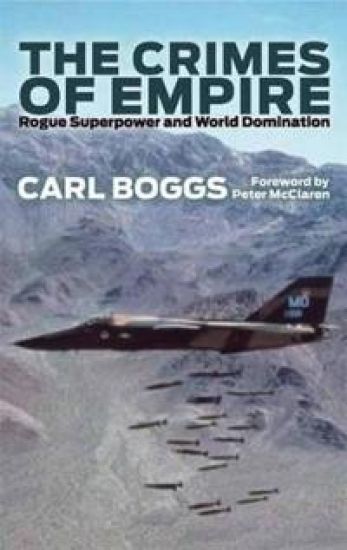
Imperial nations advance their own interests by exploiting other societies. To those on the receiving end this is obvious, while inside the empire, a powerful ideological system of justification tends to hide all but the worst excess. Carl Boggs argues that that the US began life two centuries ago as a nascent colonialist regime plundering and conquering the Native Tribes. The Indian wars were followed by perpetual militarism and warfare fuelled by a deep sense of national exceptionalism. The Crimes Of Empire examines several trends in this process, and illustrates the new depths plumbed since 9/11. Violation of international agreements, treaties and laws, the use of prohibited weapons, support for death squads and torture are just some of the practices that America uses to prove technical superiority and media control, thus prolonging the American nightmare.