Kirjojen hintavertailu. Mukana 12 390 323 kirjaa ja 12 kauppaa.

Kirjailija

Carl J. Ekberg

Kirjat ja teokset yhdessä paikassa: 9 kirjaa, julkaisuja vuosilta 2000-2022, suosituimpien joukossa Francois Vallé and His World. Vertaile teosten hintoja ja tarkista saatavuus suomalaisista kirjakaupoista.

9 kirjaa

Kirjojen julkaisuhaarukka 2000-2022.

Francois Vallé and His World

Francois Vallé and His World

Carl J. Ekberg

University of Missouri Press
2017
nidottu
Winner of the Kemper & Leila Williams Prize in Louisiana History for excellence in historical scholarship for the year 2002, awarded by The Historic New Orleans Collection, The Louisiana Historical Association.In François Vallé and His World, Carl Ekberg provides a fascinating biography of François Vallé (1716–1783), placing him within the context of his place and time. Vallé, who was born in Beauport, Canada, immigrated to Upper Louisiana (the Illinois Country) as a penniless common laborer sometime during the early 1740s. Engaged in agriculture, lead mining, and the Indian trade, he ultimately became the wealthiest and most powerful individual in Upper Louisiana, although he never learned to read or write.Ekberg focuses on Upper Louisiana in colonial times, long before Lewis and Clark arrived in the Mississippi River valley and before American sovereignty had reached the eastern bank of the Mississippi. He vividly captures the ambience of life in the eighteenth-century frontier agricultural society that Vallé inhabited, shedding new light on the French and Spanish colonial regimes in Louisiana and on the Mississippi River frontier before the Americans arrived.Based entirely on primary source documents—wills and testaments, parish registers of baptisms, marriages, and burials, and Spanish administrative correspondence—found in archives ranging from St. Louis and Ste. Genevieve to New Orleans and Seville, François Vallé and His World traces not only the life of François Vallé and the lives of his immediate family members, but also the lives of his slaves. In doing so, it provides a portrait of Missouri’s very first black families, something that has never before been attempted. Ekberg also analyzes how the illiterate Vallé became the richest person in all of Upper Louisiana, and how he rose in the sociopolitical hierarchy to become an important servant of the Spanish monarchy.François Vallé and His World provides a useful corrective to the fallacious notion that Missouri’s history began with the arrival of Lewis and Clark at the turn of the nineteenth century. Anyone with an interest in colonial history or the history of the Mississippi River valley will find this book of great value.
Dawn's Light Woman & Nicolas Franchomme

Dawn's Light Woman & Nicolas Franchomme

Carl J. Ekberg; Sharon K. Person

SOUTHERN ILLINOIS UNIVERSITY PRESS
2022
nidottu
Native women’s marital rights and roles in colonial Illinois society Kaskaskia, Illinois, once the state’s capital, torn from the state by flood waters, and now largely forgotten, was once the home to a couple who helped transform the region in the 1720s from a frontier village to a civil society. In the heart of France’s North American empire, the village was a community of French -Canadian fur traders and Kaskaskia Indians who not only lived together but often intermarried. These Indigenous and French intermarriages were central to colonial Illinois society, and the coupling of Marguerite 8assecam8c8e (Dawn’s Light Woman) and Nicolas Franchomme, in particular, was critical to expanding the jurisdiction of French law. While the story of Marguerite and Nicolas is unknown today, it is the story of how French customary law (Coutume de Paris) governed colonial marriage, how mixed Indian-French marriages stood at the very core of early colonial Illinois society, and how Illinois Indian women benefited, socially and legally, from being married to French men. All of this came about due to a lawsuit in which Nicolas successfully argued that his wife had legal claim to her first husband’s estate—a legal decision that created a precedent for society in the Illinois Country. Within this narrative of a married couple and their legal fight—based on original French manuscripts and supported by the comprehensively annotated 1726 Illinois census—is also the story of the village of Kaskaskia during the 1720s, of the war between Fox Indians and French settlers, with their Indian allies, in Illinois, and of how the spread of plow agriculture dramatically transformed the Illinois Country’s economy from largely fur trade–based to expansively agricultural.
St. Louis Rising

St. Louis Rising

Carl J. Ekberg; Sharon K. Person

University of Illinois Press
2015
nidottu
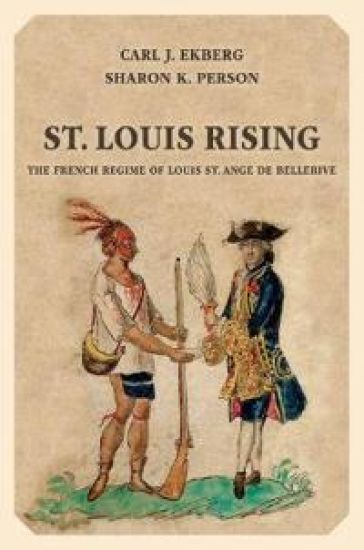
The standard story of St. Louis's founding tells of fur traders Pierre Laclède and Auguste Chouteau hacking a city out of wilderness. St. Louis Rising overturns such gauzy myths with the contrarian thesis that French government officials and institutions shaped and structured early city society. Of the former, none did more than Louis St. Ange de Bellerive. His commitment to the Bourbon monarchy and to civil tranquility made him the prime mover as St. Louis emerged during the tumult following the French and Indian War. Drawing on new source materials, the authors delve into the complexities of politics, Indian affairs, slavery, and material culture that defined the city's founding period. Their alternative version of the oft-told tale uncovers the imperial realities--as personified by St. Ange--that truly governed in the Illinois Country of the time, and provide a trove of new information on everything from the fur trade to the arrival of the British and Spanish after the Seven Years' War.
St. Louis Rising

St. Louis Rising

Carl J. Ekberg; Sharon K. Person

University of Illinois Press
2015
sidottu
The standard story of St. Louis's founding tells of fur traders Pierre Laclède and Auguste Chouteau hacking a city out of wilderness. St. Louis Rising overturns such gauzy myths with the contrarian thesis that French government officials and institutions shaped and structured early city society. Of the former, none did more than Louis St. Ange de Bellerive. His commitment to the Bourbon monarchy and to civil tranquility made him the prime mover as St. Louis emerged during the tumult following the French and Indian War. Drawing on new source materials, the authors delve into the complexities of politics, Indian affairs, slavery, and material culture that defined the city's founding period. Their alternative version of the oft-told tale uncovers the imperial realities--as personified by St. Ange--that truly governed in the Illinois Country of the time, and provide a trove of new information on everything from the fur trade to the arrival of the British and Spanish after the Seven Years' War.
Colonial Ste. Genevieve

Colonial Ste. Genevieve

carl J. Ekberg

Southern Illinois University Press
2014
nidottu
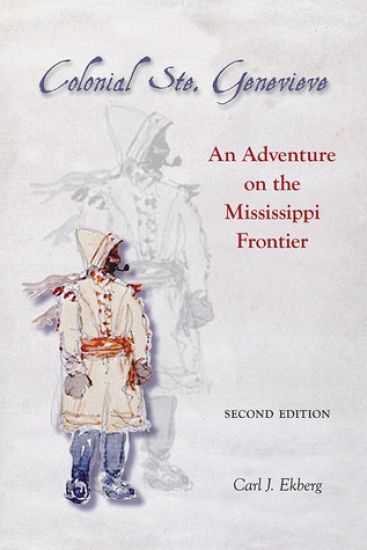
Dr. Ekberg's masterwork on the old French town south of St. Louis brings into sharp focus life in colonial America. ""Ekberg has rendered a rich portrait of community life on the most fascinating of American frontiers, the composite world of French Creoles and American Indians in the Mississippi Valley. This is an important book and a good read to boot."" That's how Yale University's John Mack Faragher praised this book.
History as They Lived It

History as They Lived It

Margaret K. Brown; Carl J. Ekberg

Southern Illinois University Press
2013
nidottu
Settled in 1722, Prairie du Rocher was at the geographic centre of a French colony in the Mississippi Valley, which also included other villages in what is now Illinois and Missouri: Cahokia, Kaskaskia, Fort de Chartres, St. Philippe, Ste. Genevieve, and St. Louis. Located in an alluvial valley near towering limestone bluffs, which inspired the village’s name French for “prairie of the rock” Prairie du Rocher is the only one of the seven French colonial villages that still exists today as a small compact community.The village of Prairie du Rocher endured governance by France, Great Britain, Virginia, and the Illinois territory before Illinois became a state in 1818. Despite these changes, the villagers persisted in maintaining the community and its values. Margaret Kimball Brown looks at one of the oldest towns in the region through the lenses of history and anthropology, utilising extensive research in archives and public records to give historians, anthropologists, and general readers a lively depiction of this small community and its people.
A French Aristocrat in the American West

A French Aristocrat in the American West

Carl J. Ekberg

University of Missouri Press
2010
sidottu
A narrative of the remarkable life of Pierre-Charles de Lassus de Luzieres, who fled revolutionary France in 1790 and trekked to the America. There he founded the city of New Bourbon and became its Spanish commandant, promoted westward settlement across the Mississippi, and, perhaps most importantly wrote extensive commentaries on the Mississippi frontier at the close of the colonial era.
Stealing Indian Women

Stealing Indian Women

Carl J. Ekberg

University of Illinois Press
2010
nidottu
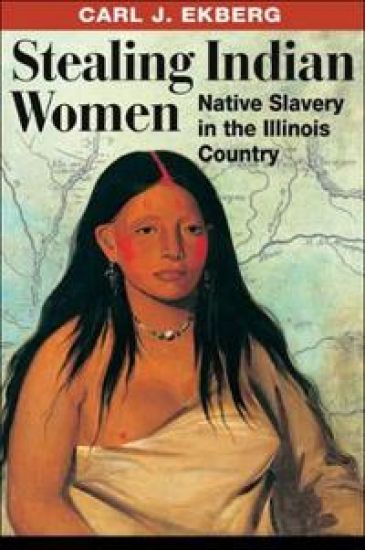
Based almost entirely on original source documents from the United States, France, and Spain, Carl J. Ekberg’s Stealing Indian Women provides an innovative overview of Indian slavery in the Mississippi Valley. His detailed study of a fascinating and convoluted criminal case involving various slave women and a métis (mixed-blood) woodsman named Céladon illuminates race and gender relations, Creole culture, and the lives of Indian slaves--particularly women--in ways never before possible.
French Roots in the Illinois Country

French Roots in the Illinois Country

Carl J. Ekberg

University of Illinois Press
2000
nidottu
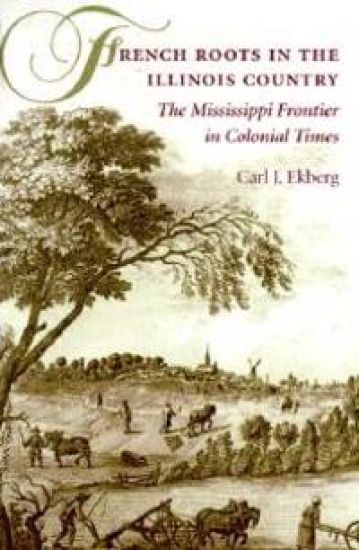
Winner of the Kemper and Leila Williams Book Prize for the Best Book on Louisiana History, French Roots in the Illinois Country creates an entirely new picture of the Illinois country as a single ethnic, economic, and cultural entity. Focusing on the French Creole communities along the Mississippi River, Carl J. Ekberg shows how land use practices such as medieval-style open-field agriculture intersected with economic and social issues ranging from the flour trade between Illinois and New Orleans to the significance of the different mentalities of French Creoles and Anglo-Americans.